Lübeck works well as a base for excursions because the sightseeing core is compact and the station sits close to it. The main station is described as a short ten-minute stroll from the picturesque Old Town, with bus connections as well. The Old Town occupies an island between the Trave and Wakenitz, and the historic centre was named a UNESCO World Heritage Site in 1987.
The real decision is not where to go but which kind of day you want. Coastal resort, second Hanseatic town, castle-and-lake landscape, big-city museums and salt-trade history each reward a different pace and a different mode of transport. Treat the options below as suggestions to choose between rather than a checklist to complete.
Why Lübeck Is a Strong Day-Trip Base
Before committing to excursions, it helps to map the city itself. The official Lübeck tourism site notes that seven church towers shape the Old Town skyline and that 90 winding passages and courtyards survive. That is enough to fill a focused day on foot, and it tells you how much time you have left over for trips out of town.
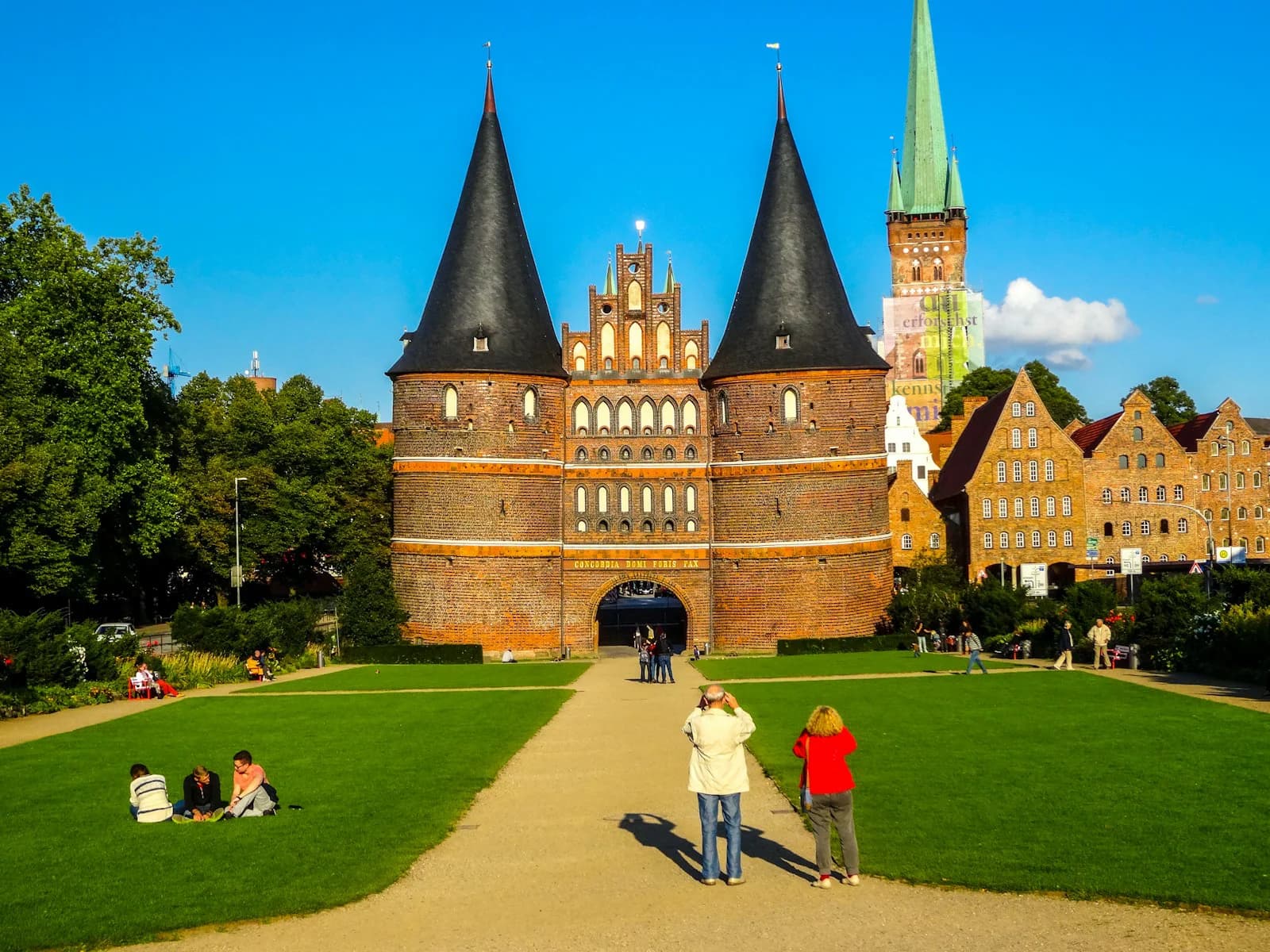
Practical guides generally suggest that one to two full days is plenty of time to see the main attractions in Lübeck, and that longer stays open up day trips. A structured one day in Lübeck itinerary covers the Holsten Gate, the market square and the riverside salt warehouses in a walkable order, which is useful groundwork for judging your remaining time.
Travemünde: The Baltic Coast Without a Plan
Travemünde is the closest Baltic option and the easiest to treat casually, because it belongs to the wider Lübeck experience rather than being a separate city break. The official Lübeck tourism site calls it a unique seaside resort. Hamburg's visitor pages describe a white sandy beach, a 100-year-old promenade and Germany's biggest Baltic port, which is why the district suits a slow day rather than a schedule of sights.
The seaside district gives you a different texture of the same Hanseatic story: lighthouse quarter, ferry traffic and open water instead of gabled houses and courtyards. Independent guides note that seafood restaurants line the banks of the Trave and the promenade overlooking Travemünde Beach, with stalls selling fish sandwiches at the fishermen's harbour. If you want a paid interior rather than free public ground, check individual attractions directly before travelling.
Because Travemünde is reachable from Lübeck by train or bus, it suits travellers without a car and travellers who want a low-commitment afternoon. Confirm current timetables and any transport tickets with the operator on the day, since frequencies and validity conditions change. A resort day also depends heavily on weather, so keep it flexible rather than fixed.
Wismar and Rostock: Pick One Hanseatic Town
Wismar and Rostock are the two obvious coastal Hanseatic candidates, and the most common planning error is trying to fit both into one day. Wismar suits travellers who want a compact, quiet brick centre that can be walked end to end without rushing. Rostock is the larger city, with a port district and a broader urban character that takes longer to absorb.
Choose on trip style rather than distance. If you want a calm, photogenic old town with a short walk between the market square and the harbour, Wismar is the cleaner match. If you want a bigger city where the port, shopping streets and university quarter all compete for attention, Rostock gives you more to fill a full day. Both are best treated as suggested excursions where you verify your own connections.
German rail and regional transport operators publish current timetables and fare conditions, and those pages are the right place to check rather than a fixed number in a guide. Build your return plan around the last realistic connection you have confirmed, and keep in mind that both towns work well from a car as well as from the train.
Schwerin: A Grounds-First Castle Day
Schwerin is the lake-and-castle day, and it works best if you decide early whether you are visiting grounds or interiors. The parkland and lake setting let you build a relaxed day around walking, views and a picnic without committing to ticketed rooms. That free-versus-paid split changes both the cost and how long the day feels.
Treat the castle as two separate products: the outdoor landscape and the museum interiors, which are ticketed separately from the park. Do not assume a castle complex shares one ticket across every building, because many historic sites price collections individually. Check the castle's own visitor information for current admission and any timed-entry arrangement before you travel. Independent guides who know the region recommend Schwerin for its castle and grounds, which is a useful endorsement of the grounds-first approach.
If you are travelling by train, keep the walk from the station to the castle area and the return connection in mind. Verify rail times and any regional ticket conditions on the operator's site rather than relying on a fixed duration quoted in an older article. A grounds-first visit also gives you an easy exit if the weather turns.
Hamburg: The Big-City Counterpoint
Hamburg is the trip for travellers who want museums, harbour scale and shopping rather than medieval streets. Hamburg's visitor site lists Lübeck among its own day trips, and the reverse journey works just as well, making the two cities an easy pairing. Expect a genuine big-city day rather than a quiet historic one.
The trade-off is that Hamburg rewards time and punishes rushing. Pick one district or one museum cluster and accept that you will not see the rest. Verify current opening arrangements, transport tickets and any timed entry directly with the venues or the city transport operator, because these change seasonally.
Hamburg also makes sense as a combined arrival or departure day if your wider itinerary passes through it. If you are building a longer northern Germany route, a 2 days in Lübeck itinerary helps you judge whether Hamburg deserves its own overnight stop instead of a rushed afternoon.
Lüneburg: The Salt-Trade Connection
Lüneburg earns its slot for a specific historical reason rather than pure prettiness. Lübeck imported salt from the mines around Lüneburg, and the salt warehouses beside the Holsten Gate are where it was stored before being traded onward to other Baltic countries. That supply chain is why the two towns belong in the same story.
When you walk the Obertrave and look at the salt storehouses, you are looking at the downstream end of a trade route that starts inland. One guide describes the Salzspeicher as six identical buildings that once stored the salt mined near Lüneburg. Seeing Lüneburg afterwards makes that riverside stretch more legible.
Lüneburg is also the most historically linked of the inland options, which makes it a stronger choice than a randomly pretty town if you care about why Lübeck became wealthy. Verify your transport options and the town's own visitor information before you go, and do not rely on a fixed journey figure from an older source.
Train or Car: What Actually Decides It
Train wins when your destination has a station close to its historic core and you do not want to think about parking. Lübeck's Old Town is within walking distance of the main station, and the station also has bus connections, which makes onward travel straightforward. That convenience is the main argument for leaving the car behind.
Car wins when you want to combine several stops in one outing, such as a coastal pause on the way to a second town, or when your destination sits away from the rail line. Driving in Lübeck's centre is best avoided because many streets are narrow and large parts of the old town are pedestrian areas. Even if you drive, plan to leave the car on the edge and walk in.
Whichever you choose, verify your own timetables, fares and ticket validity with the transport operator on the day of travel. Regional day tickets, saver fares and seasonal timetables all change, and none of those conditions can be carried over reliably from an older guide. Build in slack so a delayed connection does not end your day.
How Long Each Day Trip Needs
As a suggestion for planning, allow about half a day for Travemünde if you only want the beach and promenade, and a full day if you add the harbour and lighthouse quarter. Treat these as suggestions rather than official guidance, because beach time, weather and how much you walk all change the maths.
Plan a full day each for Wismar, Rostock, Schwerin or Lüneburg, and a single long day for one district of Hamburg. If you have three days in Lübeck, a 3 days in Lübeck itinerary format lets you keep one full day for the city itself and spread the excursions across the others. Stacking two Hanseatic towns into one afternoon is the mistake that ruins the pacing.
Budget for transfer time on both ends rather than just the headline journey, and check the last return connection before you commit to a late dinner. If you would rather keep costs low, the free things to do in Lübeck guide keeps you in the city on days when an excursion does not fit.
Practical Details: Luggage, Base and Mistakes
If you are passing through Lübeck on an arrival or departure day, luggage storage at the station shapes whether a day trip is realistic. One guide notes that there are lots of storage lockers at the train station, which is worth knowing before you haul bags over cobblestones and through courtyards. Check current locker availability and station facilities on the day rather than assuming.
Decide whether you are starting from the Old Town or from the station, because the two give you different mornings. Leaving from the Altstadt means a walk to the station before your excursion even begins, while leaving from the station is faster but skips the riverside. If you are based on the island, allow extra time on excursion mornings.
Three mistakes recur: stacking two similar Hanseatic towns in one day, assuming a museum complex shares a single ticket, and booking a fixed return before checking the last connection. On the ticket question, treat ticketed collections as separate products and confirm scope on the venue's own pages. On the return question, always check the final realistic service before you travel.
Food and What to Bring Back
Marzipan is the Lübeck-specific souvenir, and Niederegger is among the best-known producers, founded in the city in 1806 and still popular today. A shop visit costs you nothing and gives you a taste test before buying. For the wider picture of what to eat and see in the city, a broader Lübeck culture and food guide is worth reading first.
Coastal stops favour fish and quick seafood over long sit-down meals, especially in Travemünde where the harbour and promenade set the tone. That suits a day trip better than a formal restaurant booking, because you keep your schedule flexible. Confirm individual venue hours on the day, since seaside places often follow seasonal patterns.
Plan Your Day Trip Around Your Base
The cleanest way to choose is to decide what kind of day you want before you look at a map. Coast, second Hanseatic town, castle lake, big city or salt history each answer a different mood, and each suits a different amount of energy. Once you have picked one, the transport question usually answers itself.
Verify timetables, fares, ticket validity and any opening arrangements with the transport operator or the venue directly, on the day, rather than carrying over numbers from an older guide. Keep your return plan flexible and your luggage light, and the city's compact geography will do most of the work for you. For the full picture of what to see in the city itself, the Lübeck: Landmark Visitor Guides hub is the natural next stop, and the Lübeck: Itineraries and City Travel Guides pillar covers longer stays.
Frequently Asked Questions
Which day trip from Lübeck is best for a first visit?
For a first visit, Travemünde is the lowest-effort choice because it belongs to the same city and gives a complete change of scene without a long commitment. If you want a second historic town instead, choose one Hanseatic destination such as Wismar or Rostock rather than trying to combine them. Whichever you pick, confirm your own transport connections before you go.
Can you visit the Baltic coast from Lübeck without a car?
Yes. Travemünde is described as reachable from Lübeck by train or bus, and it is the most straightforward coastal option for travellers without a car. Verify current services, timetables and ticket conditions with the transport operator on the day, because frequencies and validity rules change seasonally.
Is Hamburg or Lüneburg the better inland day trip?
They answer different questions. Hamburg suits travellers who want museums, harbour scale and shopping, while Lüneburg suits travellers interested in the salt trade that supplied Lübeck's riverside warehouses. Choose Hamburg for a big-city day and Lüneburg if you want the historical link made concrete.
Should you take the train or drive for day trips from Lübeck?
Take the train when the destination has a station close to its historic core and you would rather not deal with parking and narrow streets. Drive when you want to combine several stops in one outing or reach somewhere off the rail line. In both cases, check current timetables and fares yourself rather than relying on figures from older guides.
How long should you allow for a day trip from Lübeck?
As a suggestion, allow about half a day for a simple Travemünde beach visit and a full day if you add the harbour and lighthouse quarter. Plan a full day each for Wismar, Rostock, Schwerin or Lüneburg, and a single long day for one district of Hamburg. These are planning suggestions, not official guidance.
Sources
- Die offizielle Tourismusseite der Hansestadt Lübeck
- Lübeck: Top Things To Do In a Day | Lili of The World
- The Can't-Miss Things to Do in Lübeck, Germany | Tall Girl Big World
- Luebeck Hanseatic City
- 2026 Recommended Comprehensive guides in Lubeck (Updated October)| Trip Moments
- LUBECK - a guide to Germany's most ravishing city | bye:myself
- Guide to Lubeck - A Culture and culinary experience - Finally Lost
- Lübeck Hauptbahnhof, Lubeck, Germany - Reviews, Ratings, Tips and Why You Should Go – Wanderlog