
Three days gives you room to treat Lübeck as a place rather than a checklist. The Old Town island sits inside the Trave and Wakenitz waterways, and much of what draws visitors lies within a short walk, so your time goes into looking rather than travelling. A reasonable suggested pace is one orientation day on foot, one museum day, and one open day.
The city presents itself as the queen of the Hanseatic League, with brick Gothic churches, merchant houses and a skyline the official tourism site describes as seven church towers. That same source counts around 90 twisting passages and foundation courtyards still to be discovered, which rewards unhurried walking.
This plan divides the stay into an orientation day on foot, a museum-focused day, and a third day you can point at the water, the coast or the parts of the island you want to revisit. Nothing here needs to be booked wholesale; pick the pieces that match your energy and the weather.
Why three days fits Lübeck
Lübeck's historic centre is an island, and that single geographical fact shapes every plan you make. The official city tourism site describes the Altstadtinsel as a UNESCO World Heritage island ringed by water, with the waterways running out toward the Baltic.
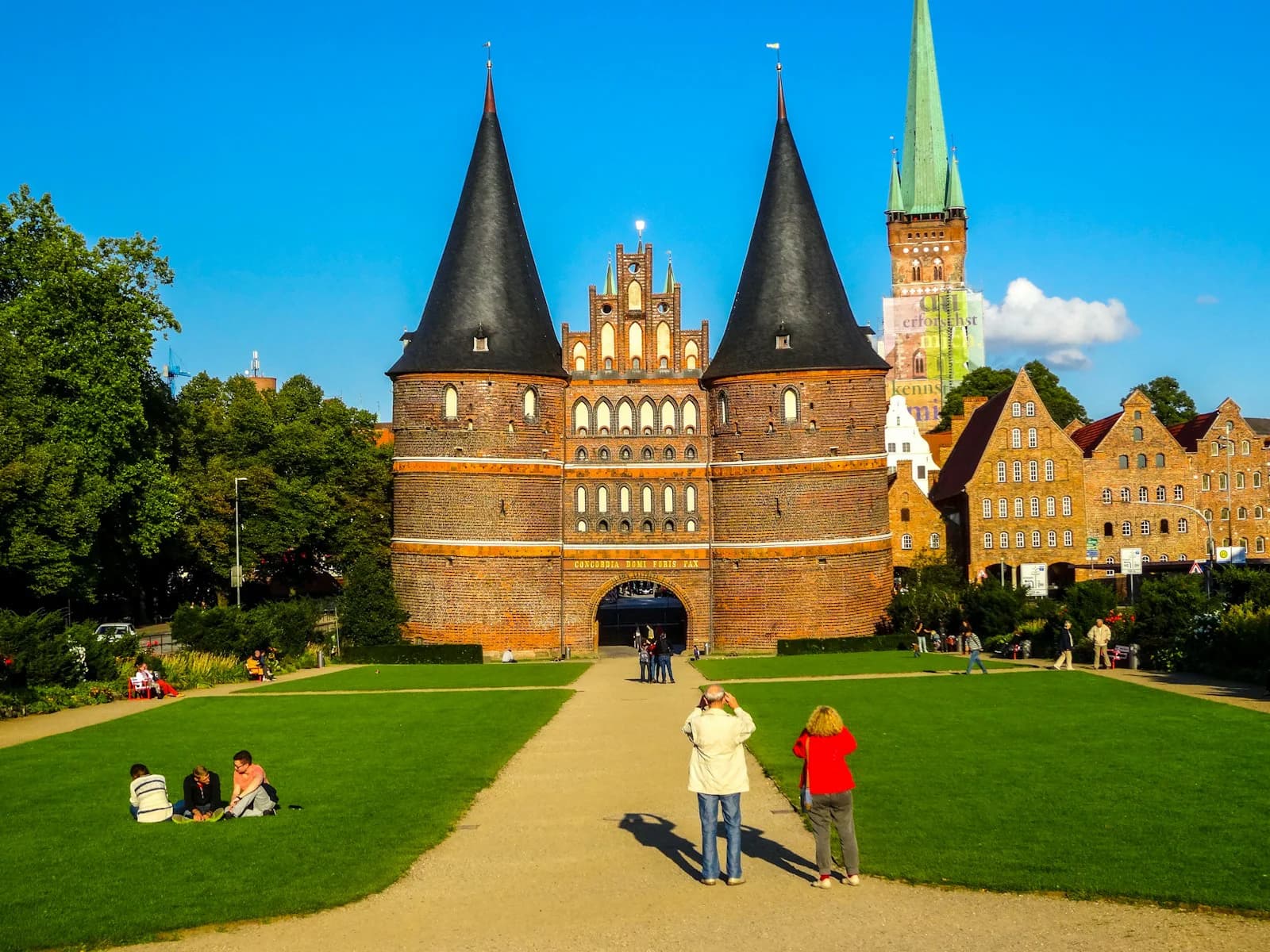
The Holstentor works as your first orientation point because it sits on the western approach, where visitors arriving from the station meet the old fortification line. Viatravelers notes that the gate's twin towers lean noticeably after centuries of settling into soft ground, which is a good reason to look at the building closely rather than only photograph it.
A one-day visitor usually sees the gate, the market square and a church or two, while a two-day stay adds a museum. Three days lets you add a waterfront half-day or a coastal excursion without cutting the Old Town short.
At a glance: how to shape the three days
Day one stays west and central: arrive, settle in, walk in through the Holstentor side, then drift toward the market core and the churches. Day two is indoors-heavy, pairing a major museum with a smaller collection and leaving the late afternoon for courtyards and quiet lanes.
Day three is deliberately open. Keep it local if you want slow mornings and repeat visits, shift it to the museum harbour and waterfront, or take the coastal run out to Travemünde as an optional excursion with its own trade-off in time.
Outdoor settings such as the streets, squares and waterfront are free to wander. Interiors such as churches, museums and the gate's exhibition space are separate paid visits, so assume each collection has its own admission rather than one shared ticket.
Day 1: Arrival and the Holstentor gateway
If you arrive by train, you will come in from the south side of the island, which puts the Holstentor directly on your path. Drop your bags first, then walk the gate's western front so the twin towers and the leaning brickwork are your introduction to the city rather than a mid-trip stop.
The gate's interior houses a museum about the city's Hanseatic trading past, with ship models, trade goods and medieval documents, according to the Viatravelers guide. Treat it as one paid visit among several rather than the only gateway experience, and check the operator's own listing before you plan your afternoon around it.
From the gate, follow the main street inward rather than trying to cover the whole island on day one. Your aim is a mental map of where the market sits, where your hotel sits, and which direction the river runs, not a completed sightseeing list.
Day 1: Churches and the market core
Marienkirche is the landmark most people pair with the market square, and the official city site lists five Gothic churches among the island's defining structures. Viatravelers describes Marienkirche as the mother church of Brick Gothic architecture and notes that two bells crashed to the floor during the 1942 bombing and remain embedded in the stone as a memorial.
The Rathaus square puts you beside the town hall and within sight of the marzipan house that has stood opposite it. A coffee and a slice of almond cake here is a natural pause before you continue into the surrounding streets.
Note that church interiors and their towers are paid, separately managed visits, and opening arrangements change with services and seasons. Rather than relying on an old listing, check each church's own published visitor information on the day you plan to go inside.
Day 1: Where to eat and how to end the evening
Northern German cooking dominates the Old Town, with fish dishes, hearty stews and the historic merchants' dining rooms that appear on the city's restaurant lists. Book anything that looks like a landmark dining room if you want a table at a reasonable hour, and leave the rest to walk-ins.
Evening light on the brick facades is one of the island's quiet pleasures, and a short loop back toward the water costs you nothing. Keep the route simple on arrival day; a twenty-minute walk with a view of the towers across the river is a better end than a rushed second museum.
If you would rather not decide on the spot, note two or three options near your accommodation during the afternoon and choose between them later. That approach also protects you if a kitchen is full or a room is closed for a private event, which no guide can predict.
Day 2: A museum day, taken one ticket at a time
The European Hansemuseum opened in 2015 on the site of a medieval Augustinian monastery and traces six centuries of Hanseatic trade through reconstructed scenes, according to Viatravelers. Plan it as a half-day visit on its own, because the exhibition design asks you to move through slowly rather than skim.
St. Anne's art collections sit in a former convent and form a separate visit with its own admission. Build the day so the two museums are not back to back; a walk through the courtyards between them gives your eyes a rest and keeps the day from blurring into one long corridor.
Museum opening days and any renovation closures are published by each institution, and they do not move in step with one another. Check the individual museum's own page the week you travel instead of assuming a shared schedule, and never assume one ticket covers both.
Day 2: Literary Lübeck and the Buddenbrook connection
Buddenbrookhaus is the museum tied to Thomas Mann and the novel that carries the city's merchant world onto the page. Viatravelers describes it as contextualising Mann's depiction of the city's merchant class, and it works well as a compact second stop of a museum day rather than as the anchor.
A third-party travel listing currently shows the house as temporarily closed with opening hours to be determined, and that status reflects a single dated snapshot rather than a permanent condition. Verify the current situation directly with the museum before you build your afternoon around it.
If the house is unavailable, the literary thread still runs through the city: the official tourism site quotes Mann on Lübeck, and the streets around the market reward anyone who has read him. Treat the museum as one expression of that heritage rather than the only place it exists.
Day 2: Courtyards, passages and the quieter lanes
Lübeck's passages and foundation courtyards are the part of the island most visitors miss, and the official tourism site counts around 90 of them surviving today. They sit behind ordinary street frontages, so the reward comes from turning off the main routes rather than following a marked trail.
Many courtyards are residential, which means you walk through them quietly and keep to communal paths. Look for plaques or open gateways rather than pushing at private doors, and step back out the way you came if a passage feels closed rather than public.
Late afternoon is the right slot for this kind of wandering, after museum hours have thinned the crowds. Pair it with the craftsmen's quarter and the streets near the hospital complex, where the scale drops and the island starts to feel lived in.
Day 3, option A: The museum harbour and waterfront
The museum harbour is the home port for a fleet of traditional sailing vessels, described by the official city tourism site as the home harbour of more than twenty carefully maintained traditional sailors. Viewing the harbour from the shore is free, and it is the most direct way to connect Lübeck's present with its trading past.
Walk the riverbanks on both sides rather than settling at the first good view, because the water ring around the island changes character as you move. The Trave and Wakenitz sides offer different light, different buildings and different angles on the church towers.
Whether any vessel is open for boarding depends on the operator and the season, so treat a harbour visit as a waterside walk with a possible bonus. Check locally before you go if boarding a specific ship matters to you.
Day 3, option B: A coastal day at Travemünde
Travemünde is Lübeck's Baltic-facing district, and Viatravelers names a beach season that runs through the summer months. It is best presented as an optional excursion rather than a fixed part of this itinerary, because it trades Old Town hours for coast hours.
The same guide describes the seaside suburb as reachable from the Hauptbahnhof in roughly thirty minutes by bus or train, a figure attributed to that source and worth confirming against a live timetable before you commit. Think of it as a half-day or full-day swap, not an add-on to a full museum programme.
The trade-off is straightforward: a coastal day removes your only remaining cushion for the island's quieter corners and repeat visits. Take it if sea air matters more than a second pass through the courtyards; skip it if your three days are already tight.
Day 3, option C: A slower third day
Staying local means choosing depth over distance. Revisit the church you liked, spend proper time in the marzipan house and its museum upstairs, and walk the hospital area near the Heiligen-Geist complex, which Viatravelers describes as one of the oldest surviving social welfare institutions in the world.
Marzipan has been made here since the fifteenth century according to that same guide, and the confection is protected by a geographical indication, so the shops are a genuine piece of local identity rather than a souvenir afterthought. Buy in small quantities and check what travels well before you stock up.
This version of day three also suits cold or wet weather, when a coastal trip loses much of its appeal. Keep it flexible: decide in the morning based on the forecast rather than locking it in weeks ahead.
Getting there and getting around
Hamburg is the practical arrival point, with Viatravelers placing the airport roughly sixty-five kilometres south and trains running from Hamburg Hauptbahnhof to Lübeck Hauptbahnhof in around forty-five minutes. Treat those figures as approximate planning estimates from that source and confirm times on the day.
Inside the island you do not need a car, and the same guide notes that the major sights sit within about a fifteen-minute walk of one another. That is the strongest argument for basing yourself centrally and leaving the vehicle parked, or not hiring one at all.
Cycling and boat rental appear on the city's activity listings if you want a different angle on the waterways. For a three-day trip, though, walking remains the default, and it is the mode the island was laid out for.
When to go: a season-by-season view
Viatravelers recommends May through September for pleasant weather and identifies summer and the December market period as the busiest stretches. Its monthly figures put winter highs around four to six degrees Celsius and summer highs in the low twenties, with rain spread across the year.
Those numbers are planning estimates rather than official climate data, so use them to choose layers and daylight expectations rather than to predict a specific week. Spring and autumn offer fewer crowds, while December concentrates visitors around the market squares.
The same source also publishes a daily budget range for the city, which is useful as a broad planning band rather than a precise figure. Check current accommodation and transport rates yourself, since those move faster than any guide can track.
Practical notes and what a three-day plan cannot cover
Three days will not fit every church, museum and courtyard, and trying to do so turns the island into a schedule. Decide before you arrive which single museum matters most, build the second day around it, and let the rest be optional rather than mandatory.
Admission prices, opening hours and any combined-ticket arrangements are set by each site and are not published in a form this guide can state reliably. Check the individual museum, church or operator's own page for the exact figures before you go, and budget a margin for one or two extra entries.
Pack for changeable weather and long walking days, with a waterproof layer and shoes that cope with cobbles. Leave slack in each afternoon, because the island's best moments tend to appear in the gaps you did not plan.
If you are comparing German city breaks, note that Lübeck's pace is much slower than a capital's, and three days here is closer in feel to three days in Dresden than to a compressed stop in Berlin. Choose accordingly rather than stacking it onto an already crowded route.
Plan Your Visit
Build your three days around the island's shape: arrive through the Holstentor side, give the churches and market square a full first day, and reserve the second for whichever museums matter most to you. Then decide whether day three belongs to the waterfront, the coast or the courtyards you want to see again.
Confirm the volatile details yourself before you travel. Museum opening days, any temporary closures, ticket arrangements and transport timetables are published by the operators, and a quick check on the day you plan each visit is worth more than any archived listing.
Keep the plan loose enough to absorb weather and mood, and you will leave with a sense of the city rather than a list of things you saw. That is the real argument for giving Lübeck three days instead of one.
Frequently Asked Questions
Is three days enough time in Lübeck?
Three days is comfortable for the Old Town island. One day covers the Holstentor approach, the market square and a church or two; a second day absorbs a major museum and a smaller collection; the third gives you room for the waterfront, an optional coastal trip or a slower pass through the courtyards. A one-day or two-day visit is still worthwhile, but you will move faster and skip more.
Do you need a car for a three-day Lübeck itinerary?
No. The Old Town island is compact and pedestrian, and the major sights sit within a short walk of one another, according to Viatravelers. A car only becomes relevant for outlying areas or a coastal excursion, and even then public transport connects the station with the surrounding districts. Parking inside the island is limited, so basing yourself centrally and walking is the simpler choice.
Is a day trip to Travemünde worth adding to a three-day Lübeck trip?
It depends on what you are willing to give up. Travemünde is Lübeck's Baltic-facing district and works as an optional half-day or full-day excursion, but the trip consumes Old Town time that you would otherwise spend in the courtyards and quieter lanes. Take it if sea air appeals more than a second pass through the island, and check current transport times before committing.


