

Passau occupies a small wedge of Bavaria pressed against the Austrian border, and its position at the confluence of the Danube, Inn and Ilz turns a short stay into a series of real choices. You can leave the city on foot, by bike, by boat or by train, and each of those modes delivers a different kind of day. What follows is a decision guide rather than a list of attractions: it groups trips by how you travel and how much time you actually have.
One anchored detail worth knowing before you build a plan: the baroque pilgrimage church of Mariahilf above the Innstadt is reached by a covered stairway of 321 steps, and Passau Tourism lists it as open daily from 7 a.m. to 8 p.m. That is a genuine half-day outing on foot, entirely inside the city, and it is a useful yardstick for judging whether a cross-border or long-distance trip fits the same day.
Why Passau Works as a Base
The University of Passau describes the city as a starting point for excursions by foot, bike, public transport or car, and that framing is the honest one: the base is good because several travel modes are genuinely available, not because any single destination is close. The same overview notes high-speed train links toward capital cities and UNESCO sites, a heritage railway into the Bavarian Forest National Park, boat tours and river cruises, and the Danube cycle path that runs through town. Treat those as categories of trip and verify the specifics with the operator before you build a day around one.
Deutsche Bahn is the practical tool for anything rail-based, and it is also where fares and timetables should be checked rather than assumed. Because ticket prices and saver offers change, you get a defensible plan by entering your date on the DB site and reading the connection it returns, not by trusting a number you saw somewhere else. If you are weighing several rail options, compare them in one sitting so you can see which one actually fits a day.
The old town itself is compact and walkable, which matters because it means you can leave in the morning and still see something worthwhile after returning. Passau Tourism is the reference point for what is ticketed locally, including the sightseeing passes that exist for the city, so read the current inclusions there rather than assuming a card covers an excursion outside Passau.
How to Choose a Day Trip
Sort your options by travel mode first, because that single decision removes most of the guesswork. On foot you are limited to what is reachable from the old town and the riverside paths; by bike you extend that range considerably along the Danube cycle path; by train you can reach larger cities; by boat you trade flexibility for a fixed route; and by car you unlock destinations that public transport serves poorly. Pick the mode before you pick the place.
Then set a time budget honestly. A day trip that consumes most of the daylight and leaves no margin is a poor trade if the destination itself needs several hours to be worth the journey, and it is a worse trade if you are relying on a connection that runs infrequently. Count the return leg as part of the trip, not as an afterthought.
Ask what you actually want to see, because the answer changes the destination. If you want river scenery, a boat or a riverside walk is the efficient choice; if you want a historic city, rail makes more sense; if you want forest and hills, you are heading inland rather than along the water. Being explicit about this prevents the common mistake of choosing a destination for its name rather than for what it contains.
The Danube Side: Boat Cruises and River Scenery
Passau Tourism maintains a dedicated section for boat cruises and Danube river cruises, which is where you should look for what is actually operating from the city rather than relying on general advice. River levels, season and operator decisions all affect whether a given sailing runs, so a cruise is the one category where checking a current listing is not optional. Plan a boat day around the operator's published departure information, not around a hoped-for timetable.
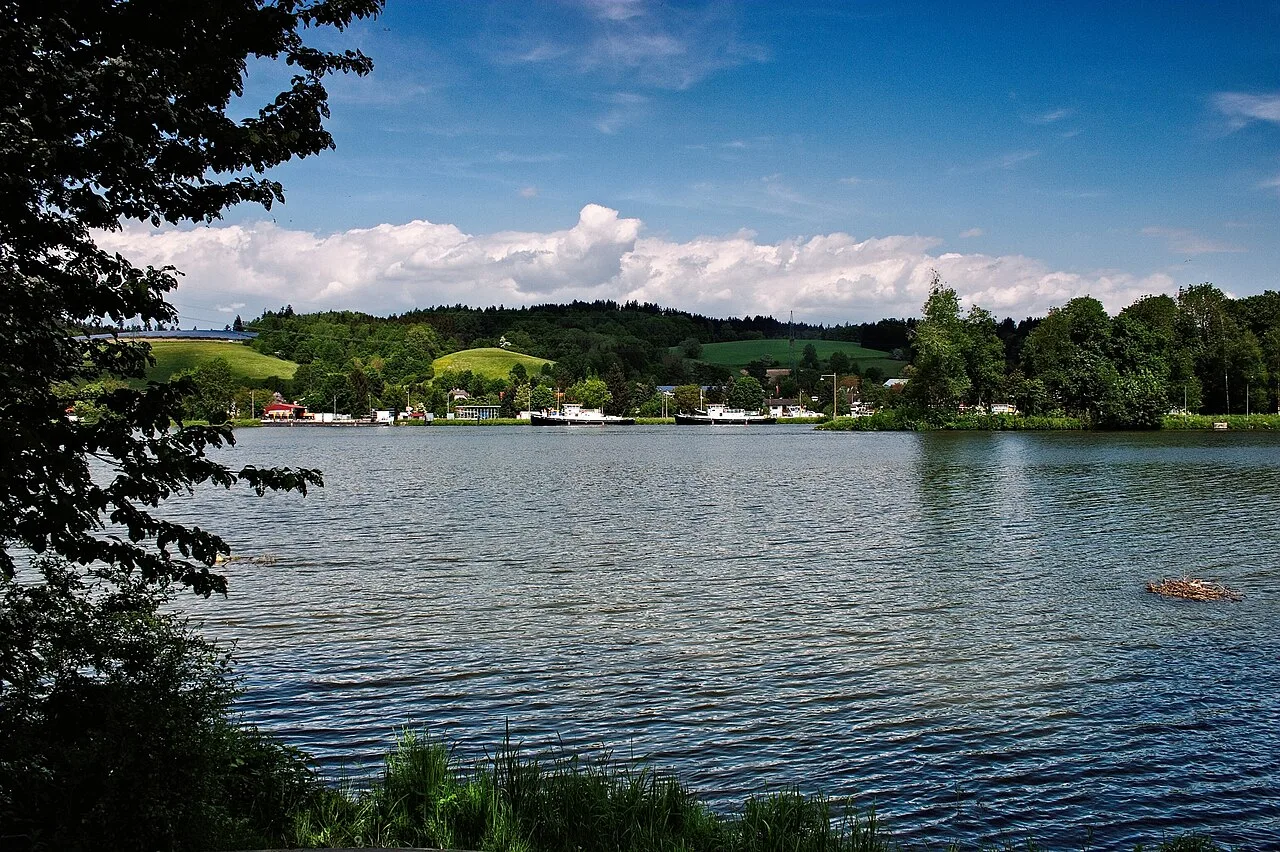
Weltenburg Abbey and the Danube gorge are frequently discussed as excursions from this stretch of the river, and the scenery between Kelheim and the abbey is a genuine draw for anyone interested in limestone cliffs and river bends. What is less certain is how straightforward they are as a day trip from Passau specifically, since the distance and the available connections matter more than the reputation of the destination. If this is on your list, confirm with an operator that a route from Passau exists on your dates before you commit a day to it.
There is a sound argument for treating the river itself as the day rather than a single abbey as the objective. A cruise or a riverside stretch delivers the landscape, the villages and the pace without requiring you to solve a long ground connection, and for travelers with limited time that is often the better return. Decide which you want before you start comparing schedules: the journey or the arrival.
Regensburg as a Day Trip
Regensburg is the most commonly suggested city day trip from Passau, and it is a reasonable candidate: it is a substantial historic city with a walkable core, which means the destination rewards several hours rather than a quick look. The trade-off is that it is a rail day, so the quality of the trip depends on the connections available on your date and how much of the day you are willing to spend traveling. Check the timetable and the fare together and decide whether the balance suits you.
Do not treat a rail day trip as automatically efficient just because the city is well known. If the connections are sparse, an unlucky schedule can leave you with a short visit and a long wait, which is a poor use of a day when Passau itself has several unvisited sights. Build the return leg first, then fill the hours you actually have.
If you are staying in Passau for several days, a rail city trip works best as one component of a longer plan rather than the whole plan. A 3 days in Passau itinerary gives you room to pair an excursion with the local sights, so the excursion does not crowd out the city you came to see.
Cross-Border Austria on Foot
The most distinctive short outing from Passau crosses into Austria without any vehicle at all. The University of Passau describes a walk from the campus along the Inn, upriver for roughly seven kilometers, crossing the river at the dam in Ingling to reach a cider farm where cider, apple juice and traditional snacks are served. From there it notes that the small Austrian town of Wernstein lies about two kilometers further upriver, which turns the outing into a half-day rather than a full one.
This is the option worth choosing when you want the border crossing to be part of the experience rather than an administrative step on a train. The distance is walkable, the reward is food and river scenery rather than a ticketed attraction, and you can extend or cut it short depending on how you feel. Because it is a hike rather than a scheduled service, the only planning you need is footwear, weather and daylight.
Treat this as a half-day and keep the rest of the day free for Passau itself. That way a change in weather costs you an afternoon rather than an entire itinerary, and you still have the old town, the cathedral and the fortress available as a fallback.
Into the Bavarian Forest
The Bavarian Forest is the inland counterweight to the river trips, and the University of Passau points to a heritage railway running into the national park as one way to reach it without a car. The same area includes a canopy walkway described as suitable for those comfortable with heights, and the open-air museum at Tittling, where around 150 buildings dating from roughly 1580 to 1850 have been assembled and where crafts such as textile printing and glass painting are demonstrated. Those are three quite different days, so pick according to whether you want rail heritage, elevated forest views or reconstructed rural history.
Forest days demand more planning than river days because the transport is thinner and the stops are further apart. Check the current operating days and connections for whichever component you are targeting, and give yourself margin for the return, since a missed connection here is harder to absorb than one in the city. If the schedule looks fragile on your date, a car makes the same ground far more forgiving.
The open-air museum is the most self-contained of the three and the easiest to recommend to travelers who want a defined visit rather than a hike. It is also the option that suffers least from poor weather, which matters in a region where rain is common. If your dates are uncertain, this is the safer booking.
Longer Options Where a Car Helps
Some of the best-known destinations in the region are impractical as car-free day trips from Passau, and it is worth being blunt about that. The University of Passau places Chiemsee, Herrenchiemsee and the Neuschwanstein area in its by-car category, describing Chiemsee as Bavaria's largest lake with islands including the Herreninsel and its palace, and Neuschwanstein near Füssen in the Allgäu as a site that draws very large numbers and where booking ahead is advised. Without a car these become long, multi-leg journeys that consume the entire day and often require an overnight.
If you do have a car, the calculation changes completely and these become realistic full-day targets. If you do not, the honest advice is to save them for a trip based elsewhere rather than to force them into a Passau stay. Choosing the achievable option is not a compromise; it is the difference between a good day and a day spent in transit.
Salzburg and Český Krumlov appear in regional excursion listings for this corner of Bavaria, which reflects Passau's position near the Austrian and Czech borders rather than any short journey. They are worth considering only if you have a car or are willing to accept a long day with an early start. Verify connections and cross-border requirements yourself rather than relying on a general listing.
Car-Free Planning and the Cycle Path
Car-free travel from Passau is genuinely feasible for the river and city options, and the Danube cycle path is the clearest example. The University of Passau notes that the route follows the river on both banks and connects Donaueschingen in Bavaria to the Danube delta in Romania, and that many locals ride multi-day sections toward Vienna. You do not need to attempt a long-distance stage to enjoy it; a short riverside stretch is a legitimate half-day by itself.
Use Deutsche Bahn to sanity-check any rail component before you commit, including whether a connection actually runs on your date and what the fare would be. The same page that mentions regional and discount cards is also a reminder that offers are time-limited, so read the conditions on the date you travel rather than assuming a fare you saw earlier still applies.
If you plan to mix a cycle stage with a train return, check whether bikes are carried on the specific service you intend to use and whether a reservation is needed. That single detail decides whether a one-way ride is realistic, so resolve it before you set out.
The Passau: Landmark Visitor Guides hub collects the individual sight guides for the city, which is the right place to check what is ticketed locally before you assume a city pass covers it. It also helps you see how much of Passau you would be skipping if you spent the day elsewhere, which is a useful check on your priorities.
Sights Worth Keeping in Passau
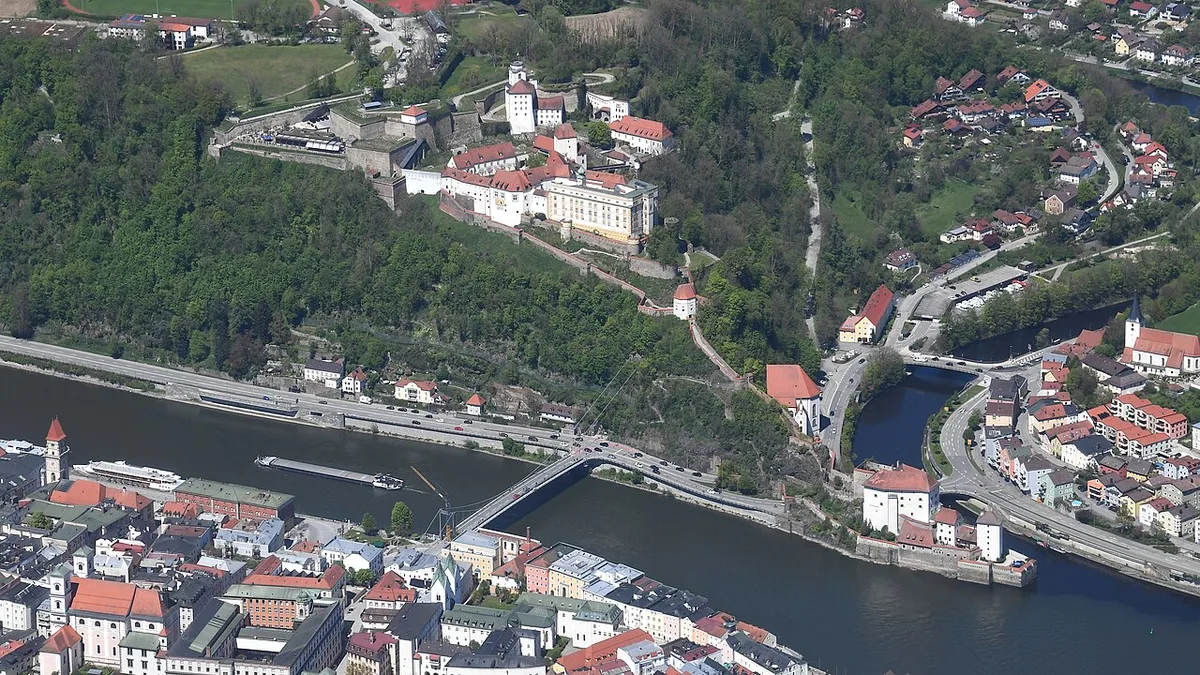
Local days are not filler, and Passau has enough ticketed content to justify staying. The Oberhausmuseum inside the Veste Oberhaus presents exhibitions on medieval life, Passau's history and its role as a trading center, and Passau Tourism states that admission covers all exhibitions including the observation tower, St. George's Chapel and the Linde Battery viewpoint. Be aware that the fortress complex itself is described as not accessible for disabled visitors, with no disabled access to the observation tower or exhibition rooms, so check the accessibility notes before you plan around it.
St. Stephen's Cathedral is the other fixed point, and it is worth knowing how the organ currently sounds. Passau Tourism states that the cathedral holds the world's largest cathedral organ with 17,974 pipes and 233 registers, and also notes that since 2023 the instrument has been restored section by section and does not sound at its full extent during concerts. That is a material detail if the organ is your reason for going, so set expectations accordingly.
Museum tickets in Passau are separate, so do not assume one purchase opens everything. If you want to compare the local options before deciding how much time to keep for the city, the best museums in Passau worth visiting gives you a way to weigh them against an excursion day.
Practical Pitfalls to Plan Around
The most common mistake is assuming that one ticket covers a complex of sights. In Passau the Oberhausmuseum admission is generous, covering its exhibitions and the tower, but museum tickets across the city are otherwise distinct, and the same principle applies at excursion destinations where a site may have free grounds and separately ticketed interiors. Read what a specific ticket actually includes before you count on it.
Seasonality and restoration work are the second pitfall. Organ concerts run seasonally, and the cathedral organ is under section-by-section restoration, so a visit outside the concert season or during works gives you a different experience from the one you may have read about. Check the current position rather than a description from another year.
The third is treating a suggested duration as a guarantee. Any timetable in a guide, including this one, is a planning aid rather than a published fact, and operators change schedules for reasons that have nothing to do with your trip. Confirm the specifics on the operator's own page for your date, and keep one flexible day in your plan for the option that turns out to fit best.
Plan Your Day Trip from Passau
Choose the mode before the destination, confirm the connection on the operator's own site for your travel date, and keep one free day for the option the timetable actually rewards. That approach handles the volatility that any fixed itinerary cannot, whether the uncertainty sits in a rail connection, a river level or a museum's ticket scope.
If you are still assembling the wider trip, comparing how other German cities organize their excursion options can sharpen your instincts about what is realistic in a single day. The day trips from Munich and day trips from Berlin guides show how travel time reshapes the same kind of decision in different regions.
Frequently Asked Questions
What are the best day trips from Passau without a car?
The realistic car-free options are the ones that use walking, cycling, rail or boat. A riverside walk or cycle stretch along the Danube, a boat trip from the city, a rail day to a larger historic city, and the cross-border walk along the Inn toward the Austrian cider farm and Wernstein are all achievable. Forest destinations are possible but depend on limited services, so check the timetable for your specific date before committing.
Is Regensburg a realistic day trip from Passau?
It can be, but it is a rail day and the quality depends on the connections available when you travel. Check the timetable and fare together on the operator's site for your date, then decide whether the hours left in Regensburg justify the time spent traveling. If connections are sparse, the city is better saved for a trip based closer to it.
Can you visit Austria, Germany and Czechia in one day from Passau?
Passau's position near both borders makes the idea tempting, but crossing three countries in one day means a great deal of time in transit and very little time at any destination. The cross-border walk into Austria is the only border crossing that is genuinely a day trip on its own. Treat any three-country plan as an ambitious full day with a car and verify connections and requirements yourself.
How do you get to the Bavarian Forest National Park from Passau?
The University of Passau notes a heritage railway running into the national park as one option, alongside the canopy walkway and the open-air museum at Tittling in the surrounding area. Services to forest destinations are thinner than city connections, so check current operating days and connections for your date rather than assuming a daily service. A car makes this area considerably easier to cover.
Is a Danube boat trip from Passau worth it?
A boat trip is the most direct way to experience the river landscape without solving a ground connection, and Passau Tourism maintains a dedicated section on cruises from the city. Whether a specific sailing runs depends on season, river levels and the operator, so check a current listing rather than relying on a general description. If scenery is your priority, the river itself is often the better investment than a distant destination.
Do you need a car for day trips around Passau?
No for river, city and cross-border options, which work by foot, bike, rail or boat. Yes for the well-known destinations further into Bavaria, where reaching the site without a car consumes most of the day. If you do not have a car, choose from the achievable options rather than forcing a long journey into a single day.
Sources
- DB Fahrplan, Auskunft, Tickets, informieren und buchen - Deutsche Bahn
- Excursions and attractions around Passau - University of Passau
- Pilgrimage Church "Mariahilf" in Passau | Passau Tourism
- Museum Veste Oberhaus in Passau | Passau Tourism
- Passau Tourism | www.tourism.passau.de/en | Passau Tourism
- St. Stephen's Cathedral Passau | Passau Tourism


