

Universitätsplatz and the University of Rostock's main building sit at the centre of Rostock's old town, and the institution's founding in 1419 makes this one of the oldest academic settings on the Baltic coast. The university is an active teaching and research institution rather than a museum, so the square functions as a working campus space rather than a ticketed attraction. The university's own website presents it as a place of study and research with a public events calendar, not a heritage site with visitor amenities (Universität Rostock). For wider planning, see St. Mary's Church Rostock.
The main building carries the address Universitätspl. 1, 18055 Rostock, placing it directly on the square in the old town (Trip.com). A suggested duration for exploring Universitätsplatz and viewing the main building exterior is 20 to 40 minutes—enough time to walk the square, see the facade, and continue toward Neuer Markt. This is a planning suggestion, not an official figure.
One limitation to set early: the university does not publish visitor opening times, ticket prices, or courtyard and library access rules for the main building. Rather than guess, this guide flags what is documented and where to check before you travel. The one nearby university venue with clearly published visitor terms is the Botanical Garden, which operates as a separate destination.
Understanding the University of Rostock
The University of Rostock was founded in 1419 and is described as the third oldest university in Germany, with a historic campus in the town centre and a modern site on the outskirts (Wanderlog). That dual geography matters, because the building you see on Universitätsplatz represents the historic face of a much larger institution with faculties, institutes, and a public events programme.
Because the institution is operational, weekday mornings bring students and staff through the quarter, while quieter periods tend to fall outside term-time and outside the middle of the day. If you want to experience the square as a place rather than a thoroughfare, plan around that rhythm. There is no documented rule that the square is closed to the public, but there is also no published guarantee that it is free of construction, events, or temporary barriers on the day you arrive.
The university sits within a Hanseatic city whose old town is described as the only largely intact Hanseatic city centre on Germany's Baltic coast, which is why the academic quarter reads as part of a wider historic fabric (Historic Germany). Rostock itself offers a harbour, Brick Gothic churches, and a pedestrian core, so the university is one thread among several in the old town.
Finding Universitätsplatz and Orienting Yourself
The main building's listed address is Universitätspl. 1, 18055 Rostock, which is the most reliable starting point for a map search (Trip.com). The square sits inside the old-town pedestrian core, close to Kröpeliner Strasse and the Neuer Markt area, so you can reach it on foot while walking the historic centre. Rostock's official city portal confirms the centre is served by a dense network of S-Bahn, tram, bus, and ferry connections, but you should check current route and timetable details with the local transport operator before setting out.
A practical walking order follows the audio-guide stop sequence used by the city's own tour: University Square first, then the university's main building, then the Abbey of the Holy Cross (Guidemate). That sequence keeps you moving in one direction through the academic quarter instead of doubling back, and it ends near the cultural-history museum housed in the former monastery.
Rostock Tourist Information operates from Universitätsplatz 6, in the Barocksaal, which makes the square a sensible first stop if you want a city map, current leaflets, or advice on what is open that day (Historic Germany). Staff there can confirm whether any part of the university quarter is affected by events or works during your stay.
The Main Building, the Square, and the Surrounding Quarter
The university's main building fronts Universitätsplatz in the old town, and the square also carries the Blücher monument, a bronze figure unveiled in 1819 honouring the local commander of the anti-Napoleonic wars (Wanderlog). Because the monument and the academic building share the same address space, visitors sometimes treat the whole square as one attraction. It is better understood as a public urban space with a historic facade as its backdrop.
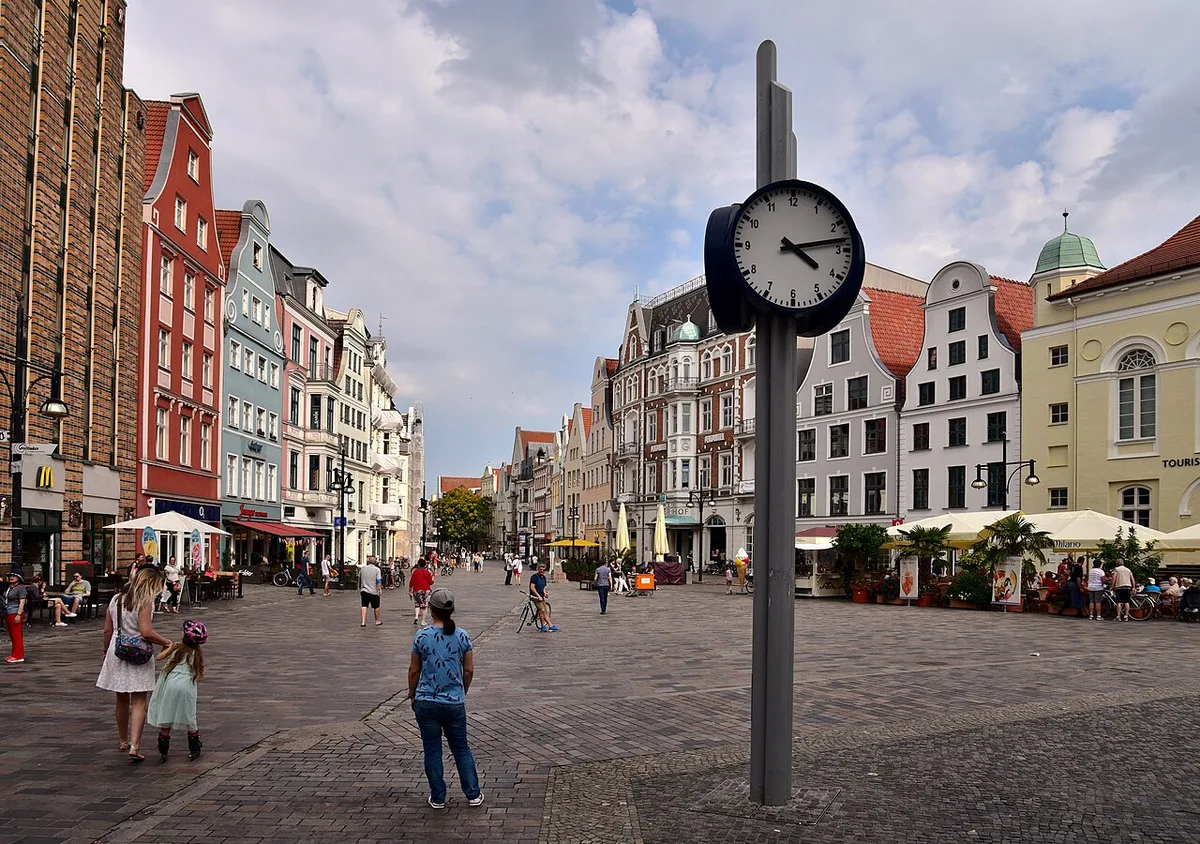
What you can reliably do here is walk the square, look at the brick facade, and read the setting as part of Rostock's Hanseatic streetscape. What you cannot reliably do is assume the interior is open, free, or ticketed, because the university does not publish those terms for visitors. If entering a historic interior matters to you, choose a venue that publishes its access rules instead of hoping the university building will be open.
For a paid alternative, St Mary's Church publishes its own visitor information separately, including entrance fees and summer-only guided tours, and it is a different organisation from the university. Its visitor page states that access cannot be guaranteed and that visiting is not possible during prayer and worship, so it is worth checking the day's restrictions before you go (Marienkirche Rostock). That makes the church the clearer choice when you specifically want a guaranteed ticketed interior.
Free Versus Restricted: What Is Documented and What Is Not
The clearest free-versus-restricted distinction in this part of Rostock is not the university itself, but the Botanical Garden. The university's garden pages state plainly that admission is free, that the outdoor garden follows seasonal hours from March through October, and that the Loki Schmidt Greenhouses keep their own shorter weekday schedule and close at weekends and on holidays (Botanical Garden). Those terms apply to the garden only and tell you nothing about the main building.
For the main building, the honest position is that the university does not publish visitor access rules, so courtyards, interiors, and library use should be treated as undetermined rather than open or closed. Do not plan a trip around entering the Hauptgebäude unless you have confirmed arrangements directly with the university. If you need certainty, ask the institution or the tourist information office before you travel.
Public squares and streets around the old town function as public space, which is a different category from a building interior. That is why a walking visit to Universitätsplatz is realistic even when no interior is accessible, and why the square is often paired with other free outdoor stops. Keep the distinction in mind when you read any listing that implies the whole quarter is one ticketed experience.
The Botanical Garden as a Separate Visit
The Botanical Garden sits apart from the town-centre academic quarter and has its own visitor entrance on Hamburger Strasse, opposite the Holbeinplatz transit stop, with a delivery entrance on Hans-Sachs-Allee (Botanical Garden). The garden publishes its own directions by S-Bahn, tram, and bus, and you should check the current timetable with the local operator before setting out. Because it is roughly a separate destination rather than an extension of Universitätsplatz, give it its own slot in your day.
Published visitor rules are specific: guided tours in German run nearly every Sunday at 2 pm with English available on request, contributions are on a donation basis, children's groups have a minimum age of five, bicycles may not be ridden or pushed through the garden, dogs must stay outside, and children up to 14 need an adult with them (Botanical Garden). Wireless access is available in the greenhouses and parts of the outdoor garden, though full internet use requires a university or eduroam login. These are the garden's rules, not the university main building's.
The garden is also a good option if you want a slow, low-cost hour with benches, mown lawn areas you may walk on, and labelled plant collections, including red labels for poisonous or allergenic plants and yellow labels for conservation taxa. Walking on unmown meadow areas is prohibited, and removing plant material is both forbidden and potentially prosecuted. Reading those labels before you touch anything is worthwhile, especially with children.
Other Ticketed Interiors Nearby
If you want a historic interior with published access terms, St Mary's Church is the clearest option in the quarter, and it publishes separate summer and winter opening times plus entrance fees for adults and reduced-rate visitors. Its guided tours run in summer only and are normally in German, with the organ visit sometimes available in English, and tours carry a surcharge on top of the entrance fee (Marienkirche Visitor Information). Check the church's own visitor page for the current schedule and fees.
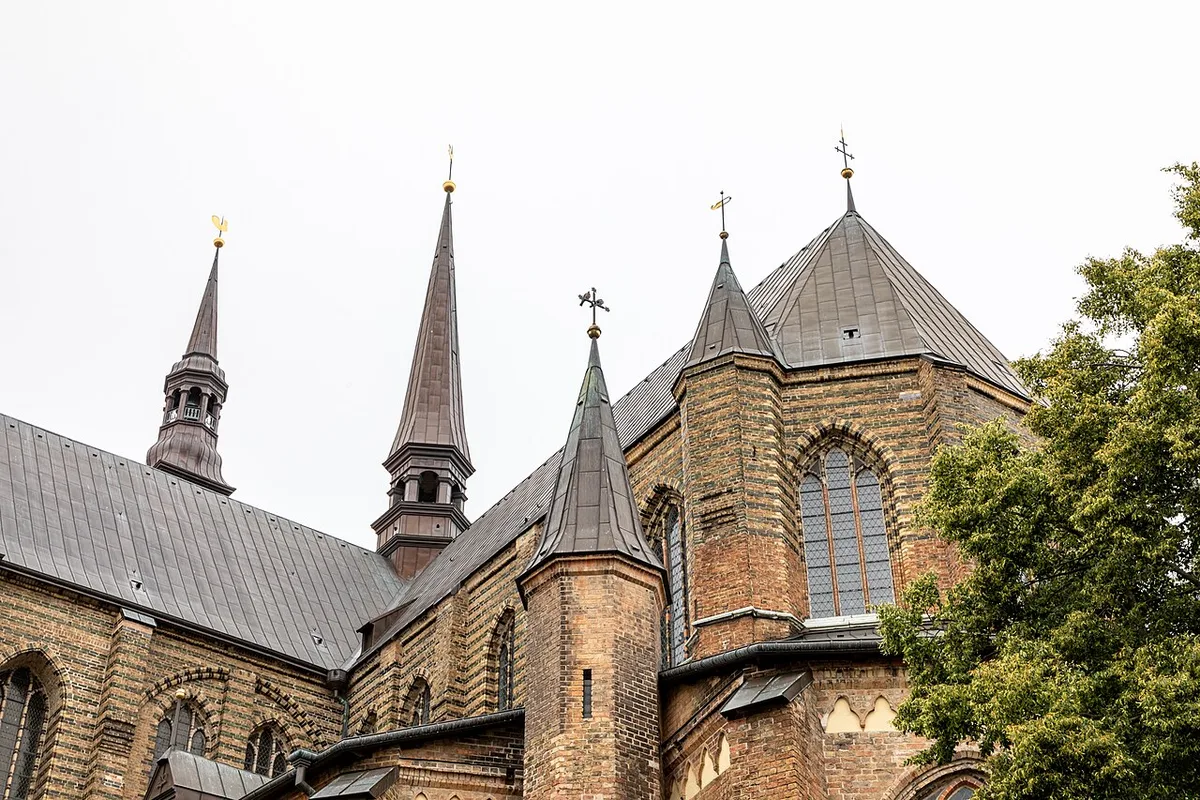
The church's own site also notes that it is not a museum with guaranteed accessibility, that prayer and worship times block visiting, and that there are no public toilets on site (Marienkirche Visitor Information). Those caveats are useful because they apply to many historic interiors in the old town. Planning around service times is usually the difference between a smooth visit and a locked door.
Other old-town stops pair naturally with the university quarter: the Neuer Markt with its town hall, the Fountain of Joy at the top of Kröpeliner Strasse, and the surviving city gates. A guided or self-guided route through these keeps the academic square as one chapter rather than the whole outing.
Practical Planning for the University Quarter
A suggested duration for Universitätsplatz and the main building exterior is 20 to 40 minutes, which is enough to walk the square, look at the facade and the Blücher monument, and continue toward the Neuer Markt. If you add the Abbey of the Holy Cross or a church interior, allow closer to two hours for the whole academic quarter. This duration is a planning suggestion, not an official figure.
On timing, the square tends to be calmest early in the day and busiest when the university, cafes, and shopping streets are active, so early mornings suit quieter wandering. Mid-day brings the academic and commercial life that makes the quarter interesting, but it also brings more foot traffic. Decide which version of the place you want to see before you set your start time.
If you are arriving from a cruise call at Warnemünde, note that the town is not walkable from the centre in the sense of a short stroll, and cruisers typically connect by S-Bahn, taxi, or organised excursion. The train station sits immediately outside the Warnemünde cruise terminal, and independent travellers should build in buffer time for the return (Professor Melissa). Organised excursions remain the lower-risk option if your ship's departure is fixed.
Where This Fits a Rostock Itinerary
The university quarter works best as a mid-walk pause between the shopping stretch of Kröpeliner Strasse and the civic heart at Neuer Markt. That placement keeps your route linear through the old town and avoids a special detour just for the square. Pair it with the city wall and gates if you have a full day, or with a church interior if you want one indoor stop.
For a longer cultural day, the Kunsthalle Rostock opened in 1969 and shows modern and contemporary art, making it a sensible counterweight to the historic brick buildings. It sits near a park and pairs well with a slow afternoon rather than a rushed morning. Check its current exhibition and opening details before you build it into a plan.
The quiet recommendation is to treat Universitätsplatz as a brief punctuation mark in a longer old-town walk, not as a destination with a queue. That framing sets accurate expectations, and it leaves room for the stops that publish exactly what they offer.
Plan Your Visit
Universitätsplatz is worth a short stop because it places you inside a working Hanseatic academic quarter, with the university's 1419 founding as genuine historical context. Approach it as public space around a historic facade, not as a ticketed attraction with published hours. That single expectation keeps the visit satisfying.
Before you travel, decide whether you want an exterior look or a guaranteed interior. If it is the latter, choose St Mary's Church or another venue that publishes its own access and fees, and confirm the day's restrictions. If it is the former, walk the square and let the university quarter be one part of a broader old-town route.
Frequently Asked Questions
Is the University of Rostock main building free to enter?
The university does not publish visitor access terms for the main building, so it is not possible to say whether entry is free or ticketed. Treat the interior as undetermined and ask the institution or Rostock Tourist Information on Universitätsplatz before you plan around going inside. The exterior and the surrounding square can be viewed as public urban space.
Can you visit the Botanical Garden for free, and do you need to book?
The Botanical Garden publishes free admission, and independent visits do not require a booking. Guided tours run nearly every Sunday in German with English on request and operate on a donation basis, and those should be arranged through the garden's office. Check the garden's own visitor page for the current seasonal hours before setting out.
How long should you spend at Universitätsplatz?
Allow roughly 20 to 40 minutes to walk the square, view the main building facade, and continue toward the Neuer Markt. If you add the Abbey of the Holy Cross or a church interior, budget closer to two hours for the quarter. This is a planning suggestion rather than an official figure.
Is Universitätsplatz worth visiting if you are only in Rostock for a day?
Yes, as a brief stop rather than a headline attraction. It fits naturally into an old-town walk between Kröpeliner Strasse and Neuer Markt, and the audio-guide stop order keeps you moving without doubling back. If your day is tight, prioritise a venue that publishes clear access terms and treat the square as a short pause.
Sources
- Startseite - Universität Rostock
- University of Rostock - Opening Hours, Reviews & Photos [2026] | Trip.com
- Your Visit - Botanischer Garten - University of Rostock
- New Market Square And Town Hall, Discover Rostock: city tour with audio guide - Audio walk city tour | guidemate
- Rostock, Germany skyline: the 38 most iconic buildings and best views in Rostock
- Rostock - Historic Highlights of Germany
- Willkommen in Rostock
- Warnemünde Cruise Port Guide: Beach, Rostock & Top Tips
- Marienkirche Rostock
- Visitor Information for St. Mary’s Church – Marienkirche Rostock


