

The Kunsthalle Rostock is the city's contemporary art museum and the first purpose-built art museum building in the GDR. Conceived in 1964 and opened in 1969 as a prestige project of East German cultural policy, it occupies a listed modern structure rather than an adapted historic building, and that origin shapes its galleries and collection focus.
The single most useful planning fact is the closure day: the museum is open Tuesday to Sunday from 11:00 to 18:00 and closed on Mondays, according to the operator's own site. Visit MV's listing adds that it is also closed on public holidays, which matters around Easter, May, and the December holidays.
As a suggestion rather than any official recommendation, allow roughly two hours for the galleries, more if a temporary show catches you or you join a talk. The museum sits at Hamburger Strasse 40 in 18069 Rostock, north of the old town, so it works best as its own stop in a half-day loop rather than a quick detour from Kröpeliner Strasse.
What the Kunsthalle Actually Is
The Kunsthalle Rostock was the first and only new art museum building constructed in the German Democratic Republic, designed as a prestige project of East German cultural policy. Conceived in 1964 and opened five years later, it has since become the largest exhibition venue for contemporary art in Mecklenburg-Vorpommern, as the museum describes itself.
Understanding that context changes what you look at. This is a museum built by a state to project cultural seriousness, and its architecture, proportions, and stairwells are part of the argument it was making in 1969, not merely a backdrop for temporary exhibitions.
The Building Itself Is Part of the Attraction
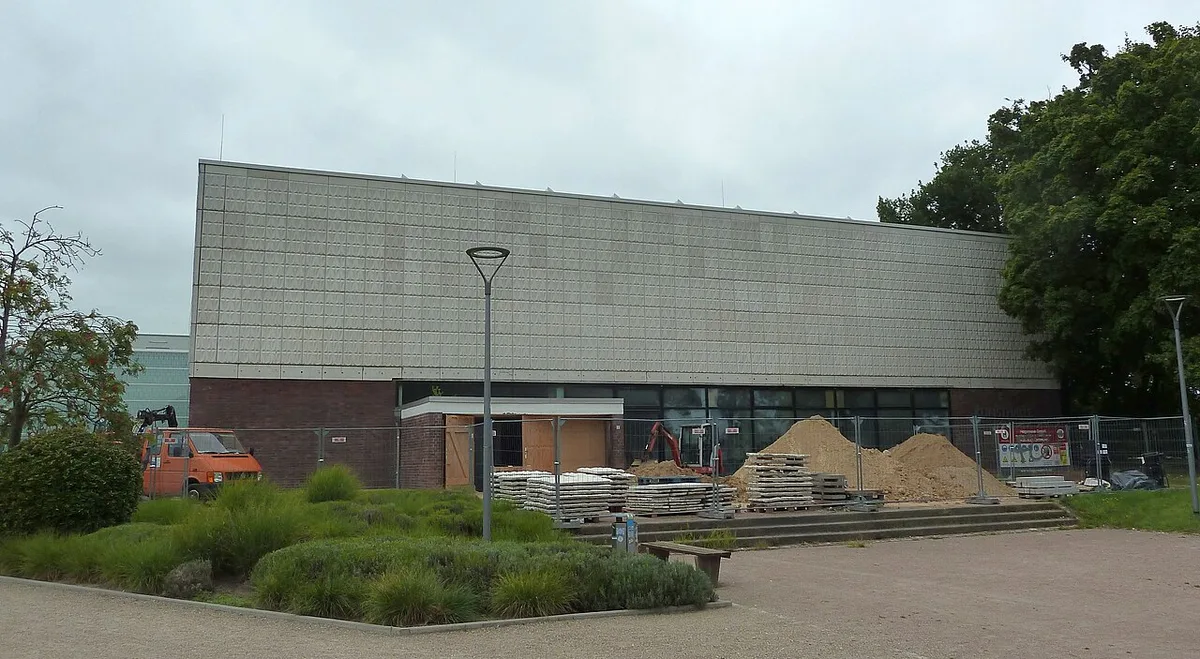
The building dates from 1969 and carries listed status, according to Visit MV's description of the Kunsthalle. That makes it unusual among German city galleries, most of which occupy adapted historic buildings rather than purpose-built modernist halls.
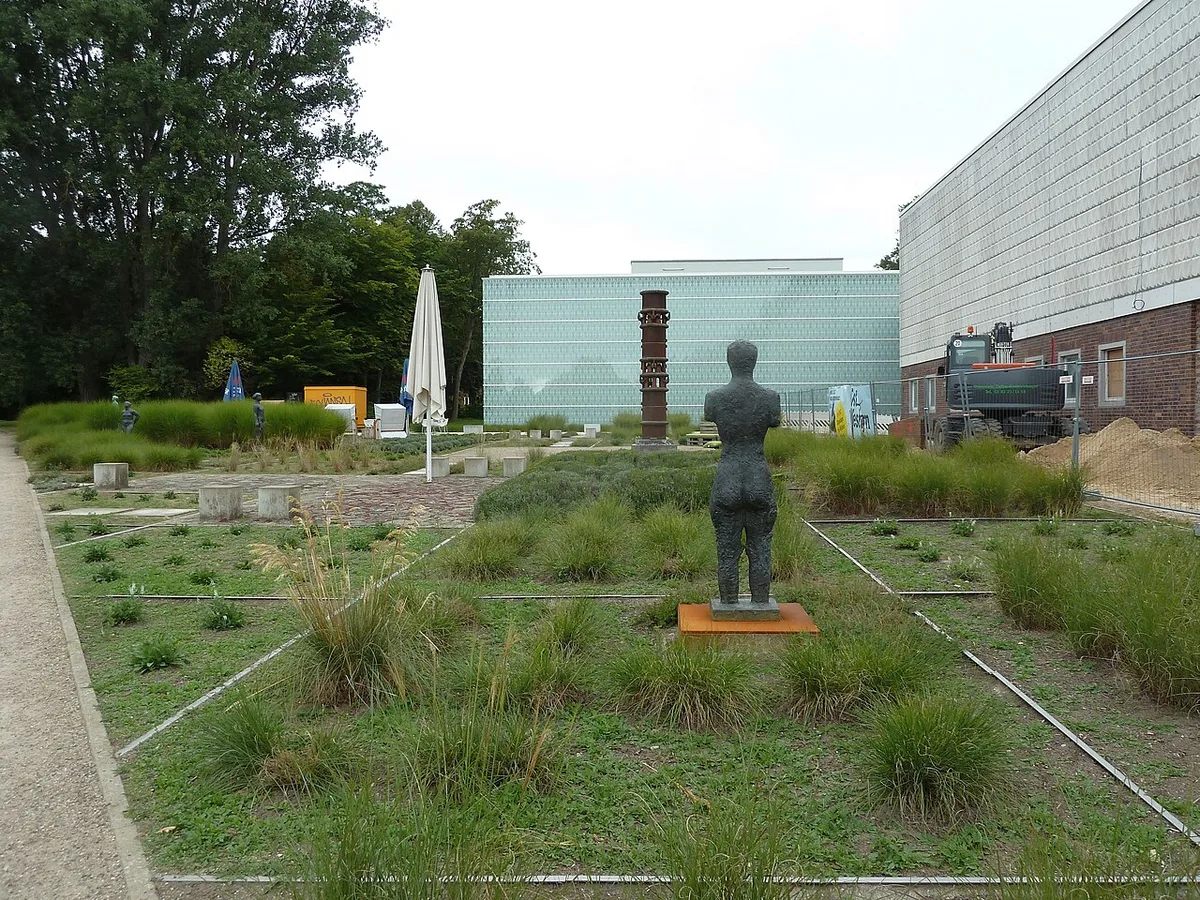
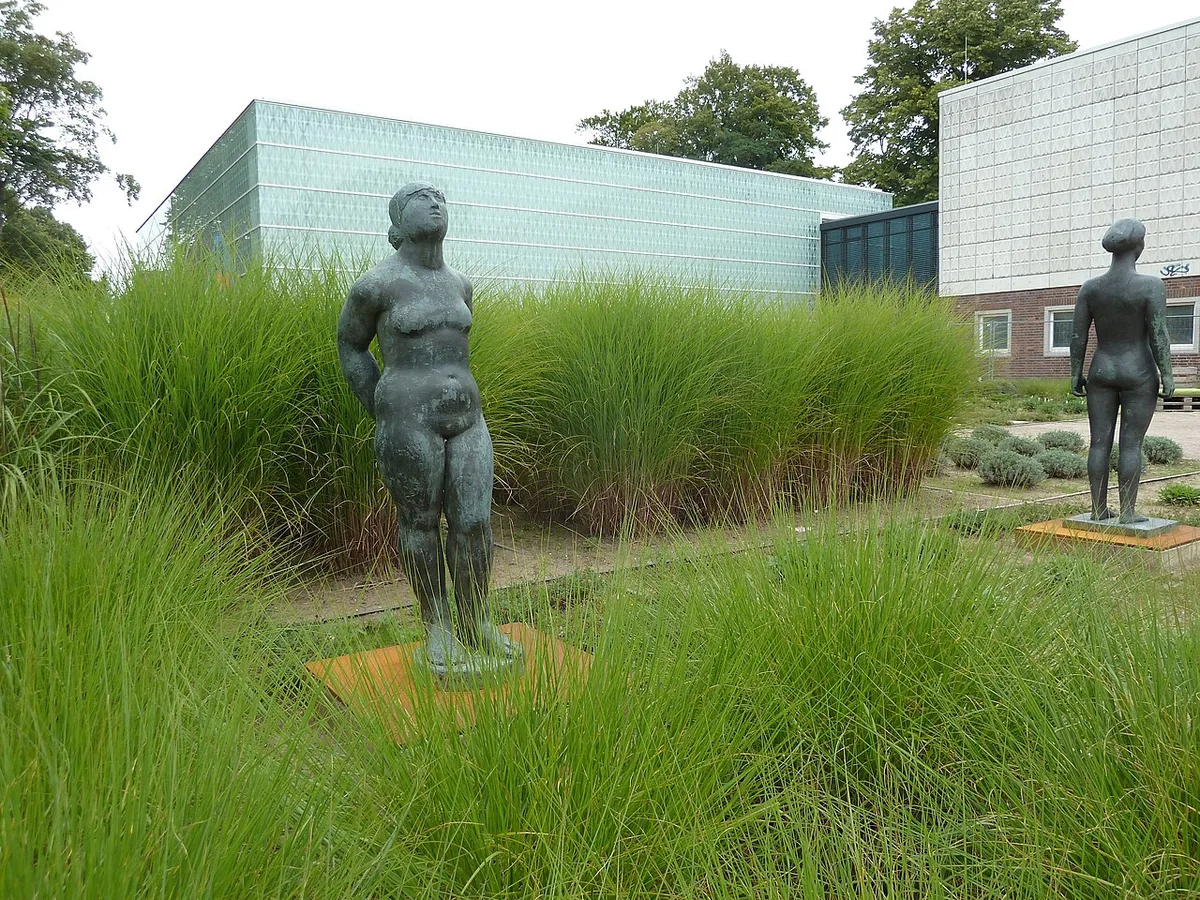
If you photograph architecture, budget extra time for the facade, the light well, and the sightlines into the park opposite, rather than treating them as a five-minute stop before the art. Photography rules inside the galleries can change with each exhibition, so check at the ticket desk before you assume anything.
Current and Upcoming Exhibitions
The operator lists Susanne Kandt-Horn's show Eines Tages running 27 September 2026 to 21 February 2027, Chiharu Shiota's Verbundenheit from 3 October 2026 to 10 January 2027, and the group exhibition Wer bin ich, dank dir? on grief from 3 October to 29 November 2026. A sculpture depot presentation runs 6 August 2026 to 31 December 2027 and draws on the collection itself.
Hedwig Holtz-Sommer's Auf das Menschliche kommt es an is the one entry where sources disagree: the museum posts 14 August to 22 November 2026, while Visit MV lists 18 September to 22 November 2026. Either way, only the November closing date is safe to plan around; the opening date is worth confirming at the source.
Two of these shows are explicitly about grief and bereavement, so visitors travelling with children or seeking lighter material should read the exhibition descriptions before committing. Check the operator's Ausstellungen pages, specifically the Aktuell and Vorschau tabs, shortly before your trip; touring exhibition dates can shift and last-minute changes rarely reach third-party listings.
Collection Focus: GDR, Regional, and Baltic Art
The Kunsthalle was originally conceived as an exhibition pavilion for the Biennale of the Baltic Sea Countries, organised from 1969 to coincide with the Rostock Baltic Sea Week. Its founding director, Dr. Horst Zimmermann, began assembling an in-house collection from 1964, which turned a biennial venue into a permanent museum with collecting, preserving, and research duties.
The holdings centre on East German modern art, regional Mecklenburg work, and Scandinavian and Baltic artists, with graphics, paintings, and sculpture acquired mainly between 1964 and 1990 or donated. After reunification the museum went through difficult years with changing directors and thin funding, until a private association took over its running in 2009.
This is the key expectation to set: if you want a greatest-hits survey with blockbuster names in every room, the Kunsthalle will not deliver that. If you want GDR-era and Baltic-region material that almost no comparable German city gallery shows at this depth, it delivers something you cannot easily find elsewhere.
Big Names: Exhibition History, Not Permanent Holdings
Since 2009 the Kunsthalle has shown nationally and internationally known artists including Gerhard Richter, Arnulf Rainer, Georg Baselitz, Richard Serra, Norbert Bisky, and the photographer Eugenio Recuenco. These are documented past exhibition credits, not a guarantee that any of their works hang today.
Several third-party pages imply that pieces by Baselitz or Robert Rauschenberg are simply there to be seen, which is not how a temporary-exhibition programme works. If a specific name is the reason for your visit, check the current exhibition list before you travel rather than trusting a city guide written years earlier.
Location, Hours, and Closure Days
The address is Hamburger Strasse 40, 18069 Rostock, north of the historic centre rather than inside it. Plan the Kunsthalle and the old town around Neuer Markt as separate legs of your day, not as stops on one continuous walking circuit.
Opening hours are Tuesday to Sunday 11:00 to 18:00, with Monday closed, as published by the operator and independently by the state tourism board. Neither route planning, tram or bus specifics, nor parking availability is stated here because these change and should be checked on the operator's Anreise information or an up-to-date local journey planner on the day.
One listed event breaks the Monday pattern: on Monday 12 October 2026 the city's green spaces office runs Rostocks Grün im Wandel in the Kunsthalle from 15:00 to 18:00. It is presented as an open event with free admission and no registration required, but it is a programme item, not evidence that the museum opens on Mondays generally.
Tickets: What to Confirm Before You Go
The Kunsthalle has not published current admission prices in the material available for this guide, so no figure is quoted here. Treat any ticket price shown on a third-party travel site as unverified: such pages go stale quickly and often apply to a season that has ended.
Ticket scope is the other thing to check directly with the museum, since event pricing and any concessions can differ from standard admission. Do not assume a Kunsthalle ticket covers any other museum in Rostock; combined offers vary by venue, event, and season, and the operator's Besuch pages are the only reliable place to confirm what a ticket includes.
Suggested Time Budget and How to Pair the Visit
Our suggestion, clearly not an operator recommendation, is about ninety minutes for a focused walk through the current shows, or a half day if a talk, workshop, or lecture is scheduled. The venue runs a regular programme of talks and educational events, and some sessions are open and free without registration, so the calendar can change what your visit looks like.
The building sits in Rostock's northern museum-and-park belt, so pairing it with one other cultural stop works better than trying to fold it into a city-centre walk. If the weather turns, a Kunsthalle visit is one of the stronger indoor options in the city, and it combines well with a Kulturhistorisches Museum Rostock visit nearer the centre on another leg of the day.
For a two-day stay that balances art, Hanseatic architecture, and harbour time, build the itinerary around the Kunsthalle as one block and the old town as another, rather than zigzagging between them. Our Rostock guides lay out the city's landmarks and day plans so you can sequence those blocks without backtracking.
Who Should Skip It
Travellers with a single day in Rostock who came for the Hanseatic brick architecture, the Neuer Markt, and the harbour should probably prioritise those. The Kunsthalle is a genuine museum with a specific regional and East German focus, and it rewards visitors who arrive knowing that.
If your taste runs to encyclopaedic surveys of European painting, this is not that museum. Those who come specifically for GDR-era art, Baltic and Scandinavian connections, or 1960s museum architecture will get far more from the building than a generic city-highlights list suggests.
Plan Your Visit
Treat the Kunsthalle as a decision, not a default stop: if its East German, regional, and Baltic collection focus matches your interests, it earns a half day. Confirm the current exhibition dates and any programme changes on the operator's site, because touring shows and event scheduling are the two things most likely to move.
Pair it with one other northern or central Rostock museum instead of trying to squeeze it into an old-town walk, and keep Monday and public holidays clear. If you are building a broader trip, our Rostock guides cover the city's other landmarks and how to fit them into a day.
Ticketing and access details change more often than the exhibitions do, so check the museum's visit information before you set out rather than relying on cached travel pages. A five-minute confirmation prevents the common frustration of arriving on a closure day or finding the show you wanted has already changed.
Frequently Asked Questions
Is the Kunsthalle Rostock worth visiting?
It is worth it if you are interested in East German modern art, Baltic and Scandinavian connections, or purpose-built 1960s museum architecture, which the Kunsthalle has in a combination few German cities can match. It is less rewarding if you want a broad survey of European painting or a quick stop between old-town sights. Check the current exhibition list before deciding, because the programme changes through the year.
Is the Kunsthalle Rostock open on Mondays?
No. The museum is closed on Mondays and open Tuesday to Sunday from 11:00 to 18:00, and the state tourism board adds that it is also closed on public holidays. A single listed event took place at the venue on Monday 12 October 2026, but that was a scheduled programme item, not a change to regular opening hours. Reconfirm hours before travelling, especially around holidays.
How long does a visit to the Kunsthalle Rostock take?
As our own suggestion, not an official figure, allow around ninety minutes for the exhibitions and up to half a day if you attend a talk, lecture, or workshop. The museum hosts regular educational programming, and some sessions are free and open without registration, which can extend a visit considerably. Anyone photographing the building or reading every label should plan for the longer end.
Are Richter or Baselitz works always on display at the Kunsthalle Rostock?
No. Gerhard Richter, Georg Baselitz, Arnulf Rainer, Richard Serra, Norbert Bisky, and Eugenio Recuenco are documented as artists who have exhibited at the Kunsthalle since 2009, which makes them exhibition history rather than permanent holdings. Some third-party guides blur that distinction. If a specific artist is your reason for visiting, check the current exhibition listing first.
Can I see the same exhibitions in 2027 as in late 2026?
Only partly. Susanne Kandt-Horn's Eines Tages runs until 21 February 2027 and the sculpture depot presentation is listed until 31 December 2027, while Chiharu Shiota's Verbundenheit ends on 10 January 2027 and Wer bin ich, dank dir? closes on 29 November 2026. Hedwig Holtz-Sommer's show also ends in November 2026, though sources give different start dates. Confirm dates on the operator's site before booking travel.
Do I need to book Kunsthalle Rostock tickets in advance?
The museum does not publish a general advance-booking requirement in the material reviewed here, so the answer depends on the event rather than the venue. Individual talks, workshops, and special programmes may have their own registration arrangements, and some explicitly do not require registration. Check the operator's event calendar and visit pages for the specific date you plan.


