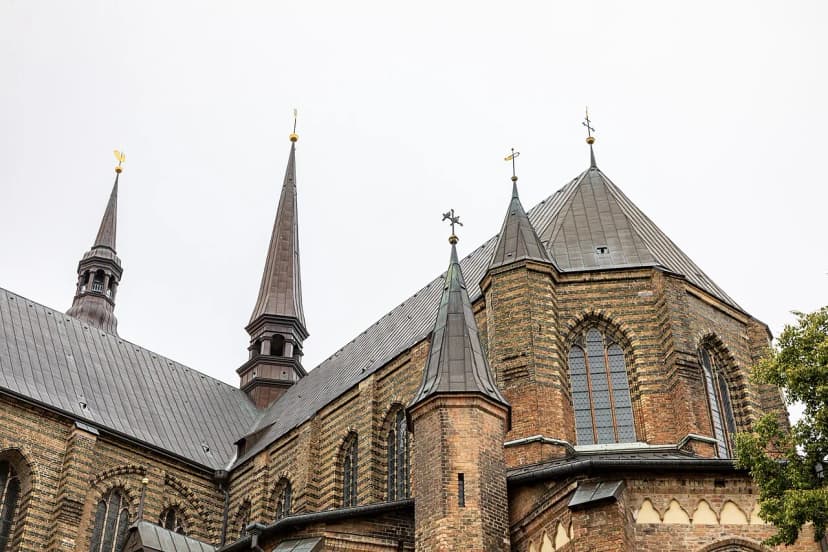
Bonn Minster rewards more than a doorway photograph, because roughly a thousand years of building sit in one footprint. Its Romanesque core carries later Gothic and Baroque layers, which is why the historian Heinrich Lützeler called it a European monument. The parish describes itself as a place of encounter that has been brought up to date through the centuries while staying true to its role as a house of God.
Plan on roughly one to one and a half hours if you want the church, the crypt and the cloister rather than a quick look at the nave. Treat that figure as a suggested planning estimate rather than an official duration, and add time if you sit through a service or a concert. Anyone with a train to catch should decide in advance whether the cloister is essential or optional.
Where Bonn Minster Sits in Bonn-Zentrum
The Minster stands in Bonn-Zentrum, the historic core of the former West German capital, on Münsterplatz. That square is the natural orientation point: it is the city's largest, it holds the Beethoven memorial, and visitors cross it repeatedly on foot. Because the church is woven into a pedestrian centre rather than set apart on a campus, you will likely pass it more than once during a day in Bonn.
Do not confuse Bonn Minster with the other churches in the centre, such as the Stiftskirche on Stiftsplatz, which is locally nicknamed the Kuhle Dom, or the Namen-Jesu-Kirche on Bonngasse. Bonn Minster is the one on Münsterplatz, and it is now a minor basilica. If your map app offers several similarly named results, check that you have the address for the Münsterplatz church.
Reading the Building: Romanesque Core and Later Layers
The church began as a Romanesque collegiate church dedicated to St. Cassius and Florentius, with construction running from the eleventh to the thirteenth century. That early phase gives the building its weight and its rounded forms, the characteristics of Rhenish Romanesque work. Look first at the massing of the exterior, then at how later hands adapted the interior rather than replacing it.
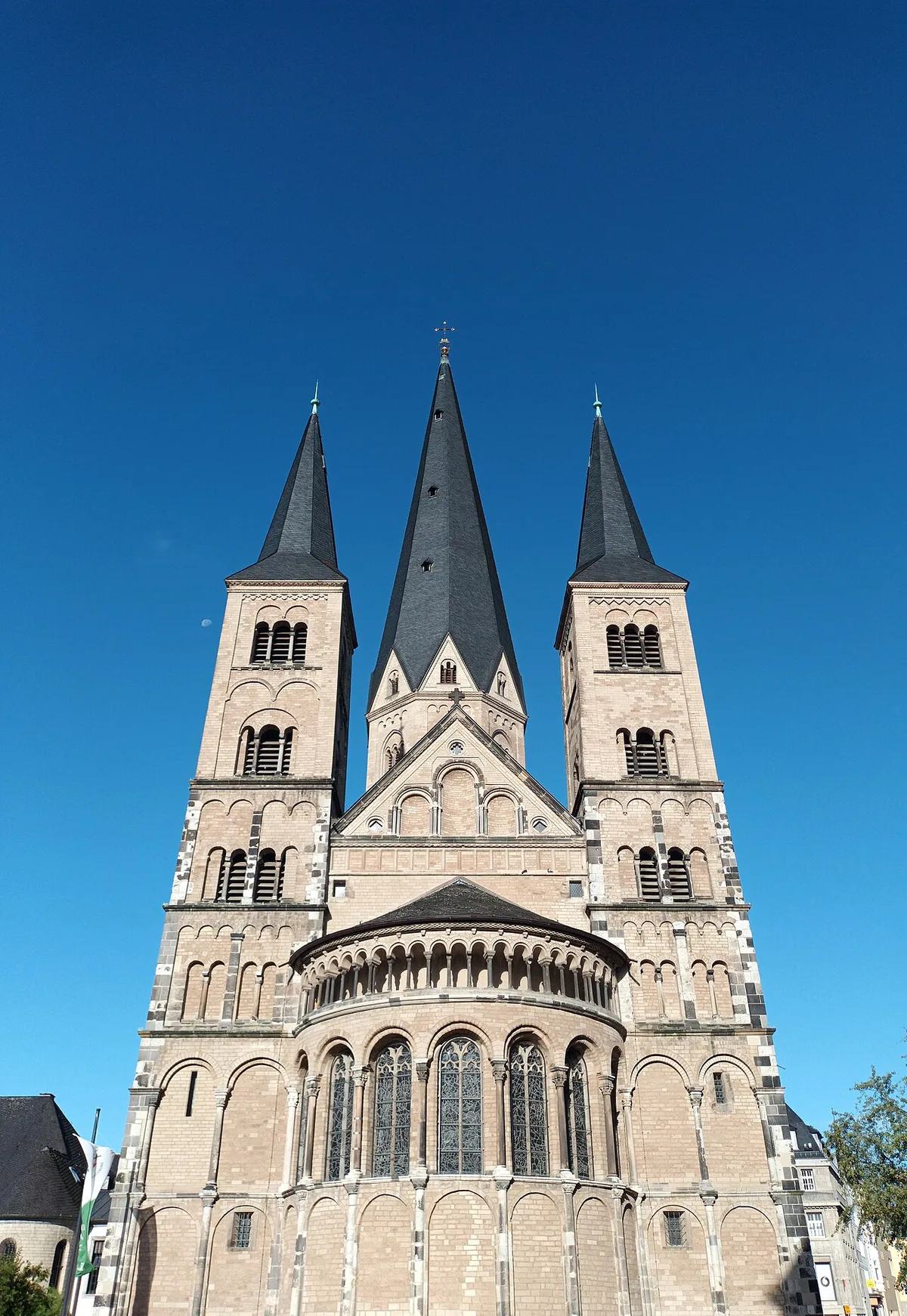
Later centuries added Gothic and Baroque elements, which is why the interior reads as a sequence rather than a single style. The Minster once served as the de facto cathedral for the Archbishopric of Cologne, since it was the major church of the Archbishop-Elector's residence. It is also said to have inspired the Kaiser Wilhelm Memorial Church in Berlin, as Kaiser Wilhelm II had studied in Bonn.
One caution: published figures for the building's height and attributions for its design conflict between sources, so avoid repeating a specific measurement as fact. If a dimension matters to you, check the parish's own material rather than a third-party summary. The architecture itself is the reliable evidence, and it is available simply by looking up.
Inside the Basilica: A Working Parish Church
Bonn Minster is a Catholic basilica first and a sight second, so services, concerts and parish events take priority over sightseeing. The parish calendar shows a full programme, including masses livestreamed from the basilica, choir and organ music, and the Stadtpatronefest, the city patrons' festival, which ran from 4 to 10 October 2026. Check the current schedule before you set out and plan around services rather than through them.
Inside, move slowly and quietly as you would in any active place of worship. Sit for a few minutes before walking the aisles, and keep voices low near anyone praying. Photography, seating and access to side areas can change with whatever the parish is doing that day, so take your cues from what is happening in front of you rather than from a fixed script.
Note also that free admission is not something the parish states as a policy, so do not assume either way. Entrance terms, any donations and any seasonal arrangements should be confirmed with the parish office, which publishes a phone number and email address alongside the church's own website. Ask about both the church and any additional spaces in the same enquiry.
The Crypt and Cloister: A Different Rhythm
The crypt and the cloister are what turn a ten-minute look into a genuine visit. The crypt sits low and close, asking you to slow down and read the space rather than scan it. The cloister is quieter again, a covered walk that works best unhurried, and it gives you a very different sense of the complex than the nave does.
Neither space should be treated as automatically open during every visit. Older third-party tips about renovation closures are outdated, and other summaries list the cloister as accessible again, but neither is a substitute for the parish's own information. Confirm with the parish office before you travel if the crypt and cloister are the reason you are coming.
Accessibility inside these areas is another point to verify rather than assume. General visitor information notes that wheelchair access at the Minster is limited, without setting out step counts or door widths. If you use a wheelchair or have limited mobility, describe your needs to the parish office directly and ask which parts of the visit are realistically reachable.
Guided Tour or Self-Guided Walk-Through?
The Minster offers guided tours, which the parish advertises as one of its regular activities. Whether a tour is running on the day you visit is a scheduling question, not a fixed feature of the building, so ask rather than plan around it. Tours typically require you to be somewhere at a set time, which shapes the rest of your day.
Choose the guided format if you want interpretation: what the layers mean, who the patron saints were, and why the building was adapted instead of rebuilt. Choose a self-guided walk-through if you mainly want atmosphere and control, because you can sit as long as you like and leave when a service begins. The trade-off is that without a guide you will miss much of what you are looking at, especially in the crypt.
A workable compromise is to read up before you arrive and then use a tour only if the timing happens to suit. The parish website is the place to look for programme announcements, including the special events it promotes in the basilica. That approach keeps your schedule flexible without settling for a superficial visit.
How Much Time to Allow
Allow about one to one and a half hours for the church, crypt and cloister together, which is the figure visitor information suggests for a reasonably thorough look. That estimate assumes you are moving at a normal pace and not attending a service. Treat it as a planning figure, not an official duration set by the parish.
Adjust downward if you only want the nave and exterior, and upward if you plan to sit for a while, attend a mass or a concert, or wait out a shower. If the crypt or cloister turns out to be unavailable on the day, the visit compresses quickly, so build in a little slack. A tighter schedule works better in the morning, before fatigue and crowds set in.
If the Minster is one stop on a broader day, pair it with the square itself and the streets around it rather than adding another major interior straight away. Two church interiors back to back tends to blur both. A short walk between them resets your attention and keeps the second visit worthwhile.
Practical Planning and Contact Details
The parish office can be reached by phone on +49 228 985880 and by email at pfarrbuero@bonner-muenster.de, with further information on its website. Use that contact for questions about visiting conditions, guided tours and the crypt and cloister, because opening hours, service times and any temporary restrictions are published there and can change. Do not rely on a travel blog for any of those details.
The city's own tourism pages are the second place to check, particularly for what is happening in Bonn-Zentrum during your dates. Cross-checking one official parish source against one city source catches most problems before you travel. If the two disagree on times, trust the parish, since it operates the building.
Budget for admission to be clarified on site or by phone rather than from an old article, because nothing here establishes a ticket price or a combined ticket. The same applies to any booking requirement. Ask about both at once and you will have a complete picture in a single enquiry.
What to Combine With Bonn Minster
Münsterplatz itself is worth a slow circuit, with the Beethoven memorial as its most prominent feature. From there, the old town hall is a short walk, and its Rococo frontage and twin staircase make it an easy second stop on the same outing. The Altes Rathaus Bonn visitor guide covers what to look at in more detail if you want to plan that leg properly.
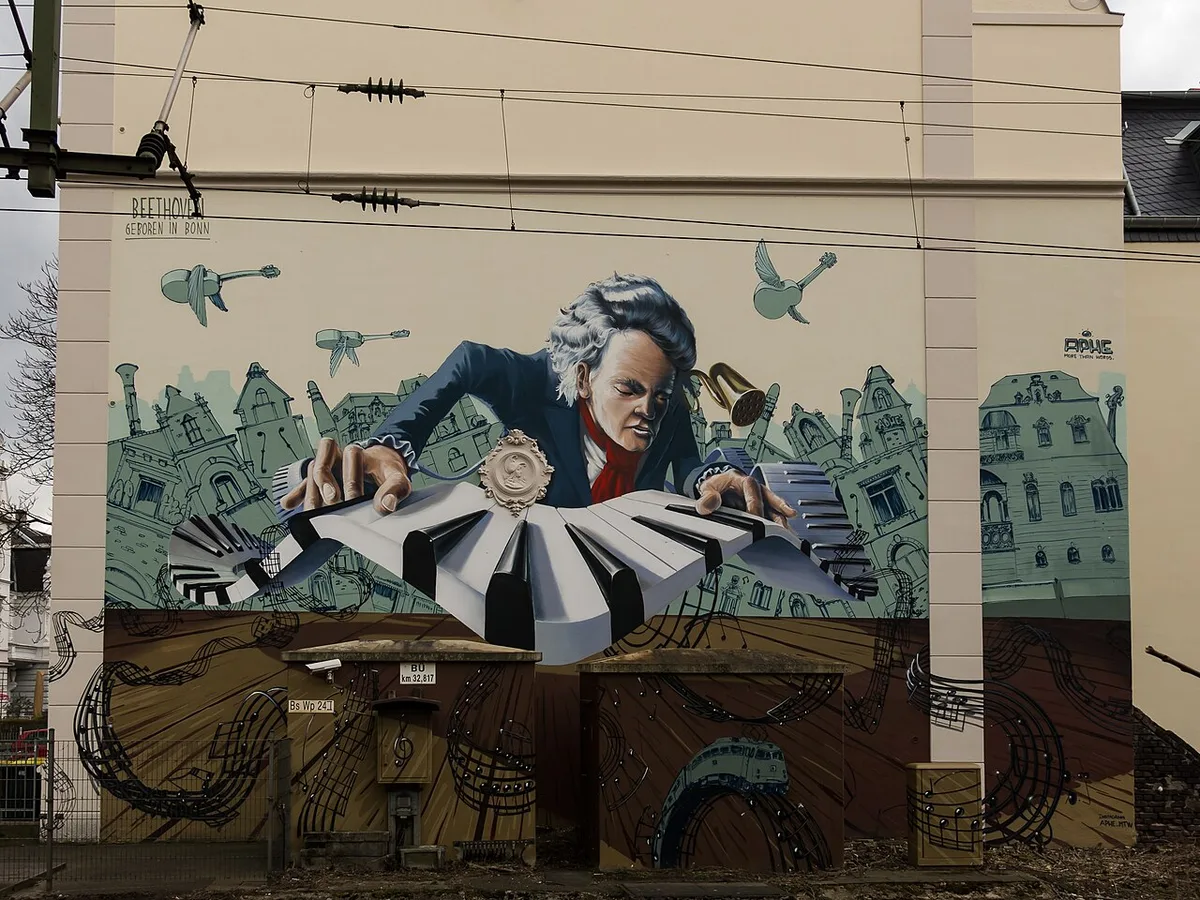
The Beethoven House on Bonngasse is the other obvious pairing, since the composer was born in the back house there in December 1770. It is a compact museum spread over three floors rather than a large institution, and the Beethoven House Bonn visitor guide explains what the visit involves. Check its own published opening hours and admission terms, because these are separate from the Minster's arrangements.
If you are assembling a walking day, a self-guided route through the Altstadt keeps the Minster, the square and the composer's birthplace in a sensible order without doubling back. The Bonn Old Town walking tour route sets out one way to sequence them. Keep the church early in the route, while you still have the patience to sit still.
Responsible Visiting Around Services and Events
Because the Minster is an active parish, worship comes first. The parish calendar includes regular masses, choral and organ vespers, and concerts, and it livestreams some services for people who cannot attend in person. If you arrive during a service, either join respectfully at the back or return later; do not continue a sightseeing circuit through the nave.
Concerts and special events can affect access to parts of the building on a given day, and the parish promotes these through its own announcements. Check the programme in the days before you travel rather than weeks ahead. Local news and the city's tourism pages are useful secondary checks if you want confirmation.
The practical rule is simple: if the building is in use for prayer, step back, keep quiet and come back later. That single habit makes the visit better for everyone and is the reason a flexible schedule is worth more here than a tightly packed one.
Plan Your Visit
The decision that shapes a visit to Bonn Minster is whether you want interpretation or atmosphere. If you want to understand the Romanesque core and the later Gothic and Baroque layers, ask the parish office about guided tours. If you want quiet, plan a self-guided hour and let the crypt and cloister set the pace.
Whichever you choose, confirm current visiting conditions directly with the parish before you travel, and cross-check the city's tourism pages for anything happening in Bonn-Zentrum that week. Slot the Minster early in your day rather than at the end, when you are more likely to rush it. One unhurried hour here beats three hurried stops elsewhere.
Frequently Asked Questions
Is Bonn Minster free to visit?
The parish does not publish a free-entry policy, and no reliable source confirms one, so treat admission terms as something to confirm rather than assume. Contact the parish office by phone or email, or check the church's own website, before you travel. If you are also asking about guided tours, raise both questions in the same enquiry.
How long should I spend at Bonn Minster?
Visitor information suggests allowing about one to one and a half hours to see the church, the crypt and the cloister at a normal pace. That is a planning estimate rather than an official duration. Add time if you attend a service or concert, and shorten it if the crypt or cloister turns out to be unavailable on the day.
Are there guided tours of Bonn Minster?
The parish advertises guided tours among its regular activities, so the format exists, but whether one runs on your date depends on the current programme. Ask the parish office when you contact them, and check the church website for announcements. If the timing does not suit, a self-guided visit still covers the church, crypt and cloister.
Can I visit the crypt and cloister at Bonn Minster?
Both are part of what visitors explore, and general visitor information describes a visit covering the church, crypt and cloister. Availability can vary, so confirm before you travel rather than assuming either space is always open. The parish office is the source to ask, since it runs the building day to day.
Is Bonn Minster wheelchair accessible?
Published visitor information notes that wheelchair access at the Minster is limited, without giving detailed measurements or rules for the crypt and cloister. Because that is a general note rather than an official access policy, describe your specific needs to the parish office before you go. They can tell you which parts of the visit are realistically reachable.
Is Bonn Minster still closed for renovation?
Older third-party tips claiming a renovation closure are outdated and should not be treated as current. The building operates as an active parish church, and visit conditions depend on the day's services and events rather than a blanket closure. Check the parish website or call the office for the current situation.