

Augsburg Cathedral sits in the southern old town, a short walk from Rathausplatz, so it belongs in the same morning as the Town Hall rather than in a separate trip. The city's tourism board places the Romanesque-Gothic cathedral among Augsburg's defining sights, which is why it appears on almost every first-visit itinerary. This guide explains the building, the published details worth knowing before you go, and the points you should still confirm with the Diocese of Augsburg.
If you only have a short window, the two elements most worth protecting from a rushed queue of photos are the stained glass and the medieval tomb slabs. A walk along the old town that includes the cathedral, the Town Hall square and the Basilica of St. Ulrich and Afra is a sensible half-day shape, and a source describing the cathedral architecture supports treating it as a substantial monument rather than a five-minute stop.
Before travelling, check the Diocese of Augsburg's cathedral page for current opening times, whether services restrict tourist access, and whether any interior space has its own arrangements. Rules that appear in older travel articles can be out of date; the operator's own page is the one to trust on the day. This guide deliberately avoids hard numbers it cannot source and tells you where to look instead.
Why Augsburg Cathedral Is Worth a Stop on Any Augsburg Itinerary
Augsburg was founded by the Romans in 15 BC and is one of Germany's oldest cities, and the cathedral stands on ground that has been sacred for well over a thousand years. The city's tourism board lists the Romanesque-Gothic cathedral among its headline sights alongside the Fuggerei and the Renaissance Town Hall, so the building is not a hidden corner but a genuine anchor of the old town.
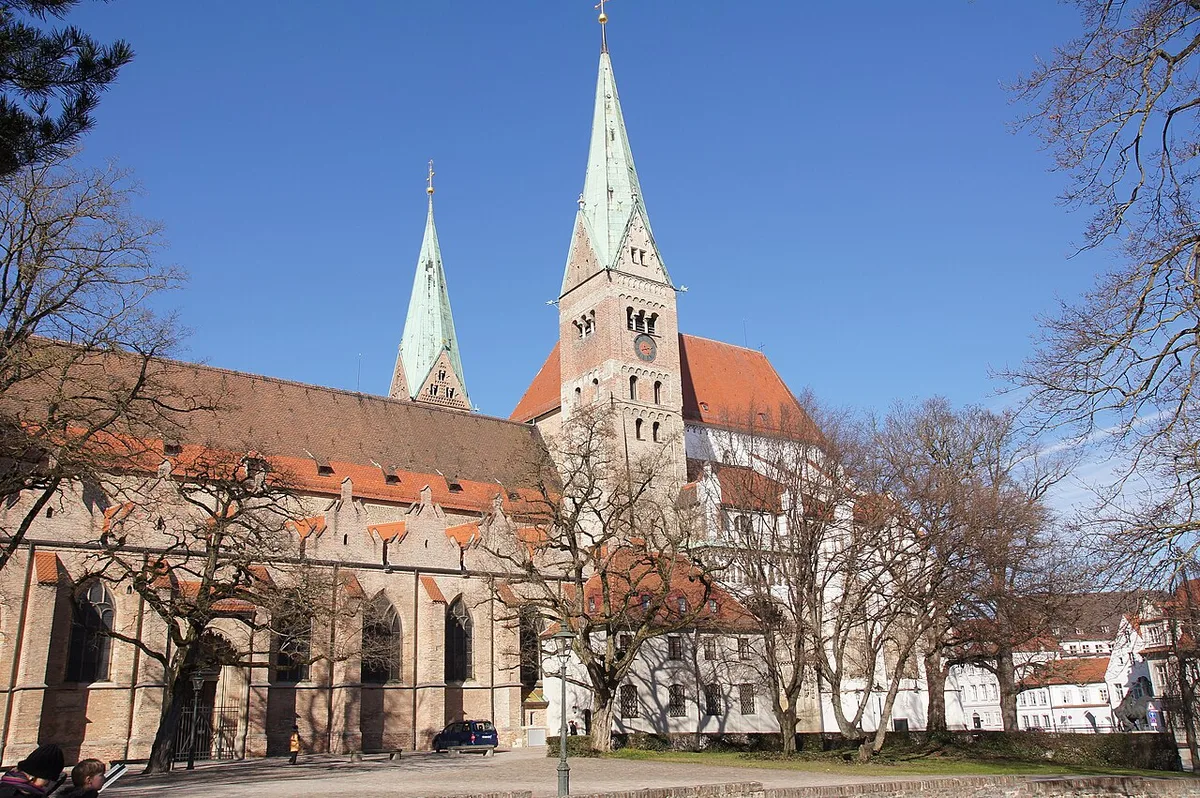
The cathedral also sits within a compact, walkable centre, so it works best as one solid stop inside a loop rather than a standalone excursion. A self-guided walking route places it after the Town Hall and Perlach Tower and before the Fuggerei, which is a reasonable sequence if you are on foot and prefer not to double back. You can reverse it without losing anything, since the whole old town is close together.
If you are planning a fuller day in the city, pair the cathedral with the Renaissance set pieces rather than treating it in isolation. The Augsburg hub gathers itinerary and city-guide material that helps you decide how much fits into one day on foot.
Romanesque Bones, Gothic Additions: How the Building Evolved
The present church is essentially an eleventh-century Romanesque building with Gothic work added in the fourteenth and fifteenth centuries. A detailed walkthrough notes that the Gothic chancel and two figural portals belong to those later campaigns, which is why the interior reads as two architectural periods stitched together. Look up and forward from the nave to see where heavier Romanesque forms give way to the taller Gothic east end.
The site's older history is the part most visitors miss. Beneath the Romanesque church is a crypt from a Carolingian building that once stood here, preserved in the structure above. A visitor account of the cathedral describes a long underground crypt and a Madonna inside the church, which gives a sense of how deep the site's history runs. Whether that crypt is open during your trip is exactly the sort of detail to confirm with the diocese rather than assume. For wider planning, see Visiting Augsburg's Roman Collection.
The cathedral is among the city's most visited sights, so midday can be busy. If you want the architecture rather than the company, aim for the earlier or later edges of the day, when services are less likely to be underway. Quiet is both courteous and practical here, because the space remains in active liturgical use. For wider planning, see Augsburg Rathaus and Goldener Saal.
What to Look For Inside: Old Glass, Tomb Slabs and the Gothic Chancel
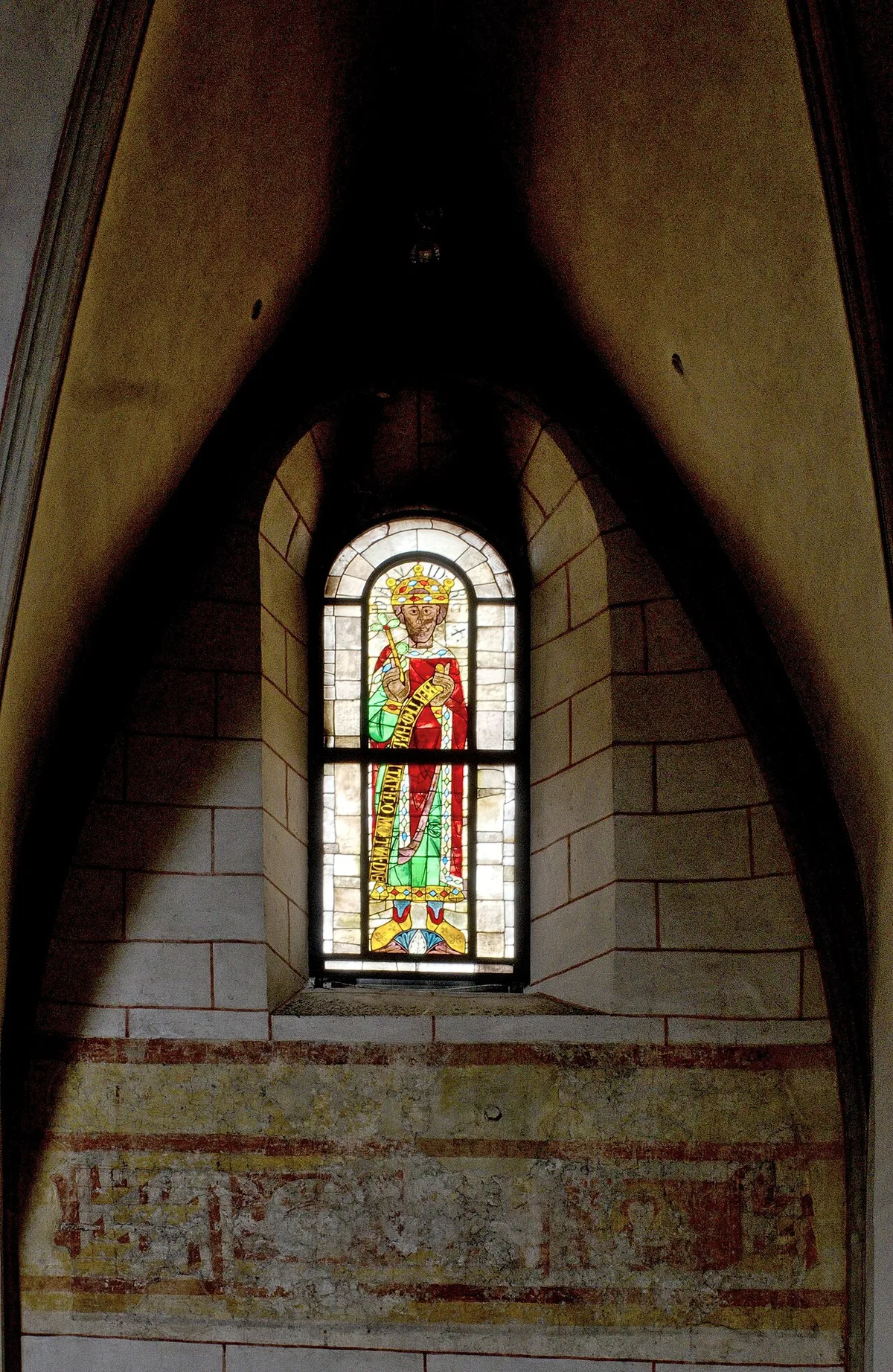
Start with the stained glass, which is one of the reasons the cathedral is singled out at all. A walking-tour source describes the southern clerestory windows as likely the oldest in the church, showing prophets including David, Jonah, Daniel, Moses and Hosea, thought to be part of a larger original series now partly missing. Move around the church rather than standing in one spot, because the glass reads differently from different angles.
Then look for the tombstones. The cathedral holds a group of carved grave slabs from the late thirteenth century onward, and a visitor account describes the courtyard around the chapel area filled with hundreds of old memorial slabs bearing Latin inscriptions and carved likenesses. The individual names and translations are not set out in the sources used here, so treat them as something to read on site rather than research in advance.
Do not overlook the portals on your way in and out, since the figural carvings belong to the Gothic phase and are easy to walk straight past. The chancel is where the building's later architecture is clearest. Circle the exterior once if the light is good, because the two towers are visible across the city and read differently from close up.
The Three Patron Statues in Front of the Cathedral
Directly outside the cathedral stand three life-size bronze figures representing the diocese's patrons: Saint Ulrich, Saint Afra and Saint Simpert. A walking-tour description explains the iconography: Ulrich is shown on horseback raising a cross in reference to the Battle of Lechfeld, Afra is depicted enduring her martyrdom, and Simpert appears with an infant and a wolf. Each figure compresses a local story into a single pose, so a few minutes with them pays off before you go in.
The group sits above a triangular basin of Flossenburger granite, with water flowing from two fish heads. That fountain detail is easy to miss if you approach from the side or have your head down in a map. Read the figures before entering the church so you can connect them to what you see later at the basilica of St. Ulrich and Afra, which shares their dedication.
Free or Paid? Church Entry Versus Any Ticketed Areas
The practical starting point is that churches in Germany are generally free to enter, while any special area such as a crypt, museum space or tower is governed by the operator. That distinction comes from material about visiting Augsburg and its churches, and it shapes expectations rather than settling a price. It also means you cannot assume that a single ticket covers everything, if anything is ticketed at all.
What the current situation is for this cathedral, and whether any interior space carries an entry fee, is not something to guess at. Check the Diocese of Augsburg's cathedral page before you go, and if it does not answer your question, contact the parish office directly. The city's tourist information point on Rathausplatz is a reasonable place to ask once you are in Augsburg, though the diocese remains the authority on the church itself.
Do not carry expectations from other Augsburg sights into this one. The Fuggerei, for example, charges for its museum spaces while its lanes are visited on paid entry, and the city's museums each set their own terms. Those are different operators with different policies, so the cathedral's free-or-paid answer has to come from the cathedral's own sources.
A Sensible Time Budget: Short Look Versus a Slower Visit
No official visit duration exists for the cathedral, so treat any figure as a planning suggestion rather than a rule. A short visit of roughly twenty to thirty minutes covers the nave, the Gothic chancel and a walk past the glass, which is enough if you are moving through the old town on a schedule. A slower visit of an hour or more lets you sit with the stained glass, look properly at the tombstones and read the three statues outside without rushing.
If you plan to pair the cathedral with the Town Hall and its Golden Hall, budget separately for that stop, because the town hall is a different site with its own arrangements. A guide to the Renaissance town hall and its ceremonial hall explains what the interiors involve and helps you decide whether to climb the neighbouring tower as well. Building both into one afternoon is realistic on foot.
Add the cathedral to a longer itinerary only if you have room for the old town as a whole, since part of its value comes from its neighbours. The Augsburg hub collects itinerary ideas that show how the church fits into a half-day or full-day route.
Where the Cathedral Sits in the Old Town
The cathedral stands in the southern part of the historic centre, within a short walk of Maximilianstrasse and the Town Hall square. A family travel account notes that the cathedral is one of the city's most visited sights and gains from being right beside the Fronhof park, which has statues, Roman tombs and a small playground. That makes the cathedral a natural pause between the busy shopping street and the quieter southern quarter.
From Rathausplatz you can walk to the cathedral and continue on to the Basilica of St. Ulrich and Afra, keeping everything on foot. A self-guided walking route maps this stretch and includes the waterworks and canals as later stops, which is a good way to cover the city's Renaissance face and its water heritage in one loop. If you would rather understand the water system in more depth, a dedicated guide is worth reading beforehand.
For Roman-era context near the same walk, the city's Roman collection is a useful indoor counterpart on a wet day. A guide to that collection explains what it holds and how it connects Augsburg to its Roman founding.
Nearby Green Space and the Walk Toward St. Ulrich and Afra
The Fronhof park immediately beside the cathedral is the easiest place to sit after your visit, and it mixes greenery with visible Roman remains. A weekend guide to the city recommends spending a few quiet moments in the nearby Hofgarten after the cathedral, describing it as an urban oasis. If you want a longer walk rather than a bench, head south toward the Basilica of St. Ulrich and Afra, which stands on Maximilianstrasse and is visible from a distance.
That basilica shares patron saints with the cathedral statues you have just seen, so the two visits reinforce each other. A walking-tour description notes that it is a place of worship, prayer and pilgrimage rather than a sight only, with Gothic architecture and Renaissance altars. Keep the same etiquette you used at the cathedral.
If you are travelling with children and want to balance a quiet church visit with something active, the zoo at Brehmplatz is one option for later in the day. Its own site sets out current opening hours and admission, so check there rather than relying on old summaries.
Practical Etiquette and Planning Notes for a Working Church
Because the cathedral is a functioning church, dress and behaviour matter more than they would in a museum. A trip-planning source advises dressing conservatively when entering German churches, covering shoulders and knees, and carrying a light layer so you can adjust. Keep your voice low, avoid blocking aisles during services, and check whether a service is in progress before walking in.
The practical essentials that change with time, including opening hours, service schedules and any tour offerings, should come from the Diocese of Augsburg rather than from a third-party page. If you also plan to climb the Perlach Tower for the city view, note that the tower has had its own closure and renovation history and its status should be checked independently before you count on the ascent.
Travelling with children changes the rhythm of a church visit, so plan a short look and then move to somewhere they can move around. Augsburg's wider family options are gathered in city-level guides, which is a better place to plan the rest of the day than an attraction page.
Common Mistakes First-Time Visitors Make
The most common error is treating the cathedral as a quick photo stop and missing the stained glass and tombstones, which are the two elements that make the building distinctive. Give the clerestory a proper look and walk around to see the carved slabs rather than filing past them. A second mistake is assuming that anything ticketed elsewhere in Augsburg applies here; the cathedral and the city's museums are separate operations.
A third is arriving mid-service and treating the church as an attraction that stays open to tourism regardless. It does not, and stepping quietly back outside is the respectful response. Finally, do not confuse the cathedral with the basilica of St. Ulrich and Afra; they are separate buildings, both worth visiting, and roughly a comfortable walk apart.
Plan Your Visit
Augsburg Cathedral rewards a visit that starts outside with the three bronze patrons, continues through the Gothic chancel and the old clerestory glass, and ends among the carved tombstones. Budget twenty to thirty minutes if you are moving quickly and an hour or more if you want to read the building properly. Treat that shape as a suggestion for pacing, not an official duration.
Confirm what matters on the day with the Diocese of Augsburg: current opening times, whether any interior area is ticketed, and whether anything is restricted. Then place the church inside a walk that takes in Rathausplatz and continues toward St. Ulrich and Afra, so one morning covers both the city's Renaissance face and its religious core.
Frequently Asked Questions
Is Augsburg Cathedral free to enter?
Churches in Germany are generally free to enter, and this cathedral is an active church rather than a ticketed museum. That said, any special area such as a crypt, museum space or tower would be governed by the operator and could have its own arrangements. Check the Diocese of Augsburg's cathedral page or ask at the parish before your visit so you know exactly what applies on the day.
How long should I spend at Augsburg Cathedral?
There is no official visit duration, so any figure is only a suggestion. Allow roughly twenty to thirty minutes for the nave, the Gothic chancel and a look at the stained glass, or an hour or more if you want to study the medieval tombstones and read the three patron statues outside. If you are also visiting the Town Hall or St. Ulrich and Afra, plan a half day for the southern old town.
Is the crypt or any part of Augsburg Cathedral ticketed?
The cathedral is built over a crypt from an earlier Carolingian church, and visitors often ask whether they can see it. Whether that crypt or any other interior area is currently accessible, and under what terms, is not something to assume. Confirm directly with the Diocese of Augsburg, since access rules and any charges are set by the church and can change with the liturgical calendar.
Who are the three statues in front of Augsburg Cathedral?
They represent the diocese's patrons: Saint Ulrich, shown on horseback with a raised cross in reference to the Battle of Lechfeld, Saint Afra, depicted enduring her martyrdom, and Saint Simpert, shown with an infant and a wolf. The bronze figures stand above a triangular granite basin with water flowing from two fish heads, so take a moment with them before going inside.
Sources
- Welcome to Augsburg - Regio Augsburg Tourism
- 2026 Augsburg Travel Guide: must-see attractions, popular food, hotels, transport & travel experiences (updated in October)| Trip Moments
- Self-guided walking tour of Augsburg
- Augsburg, Germany | family weekend trip to Bavaria - places and notes
- Perlachturm (Augsburg)
- Staycation Collection — Exploring Augsburg: Our Comprehensive Weekend Guide
- Augsburg Cathedral and Town – Our Frankfurt Germany Mission


