
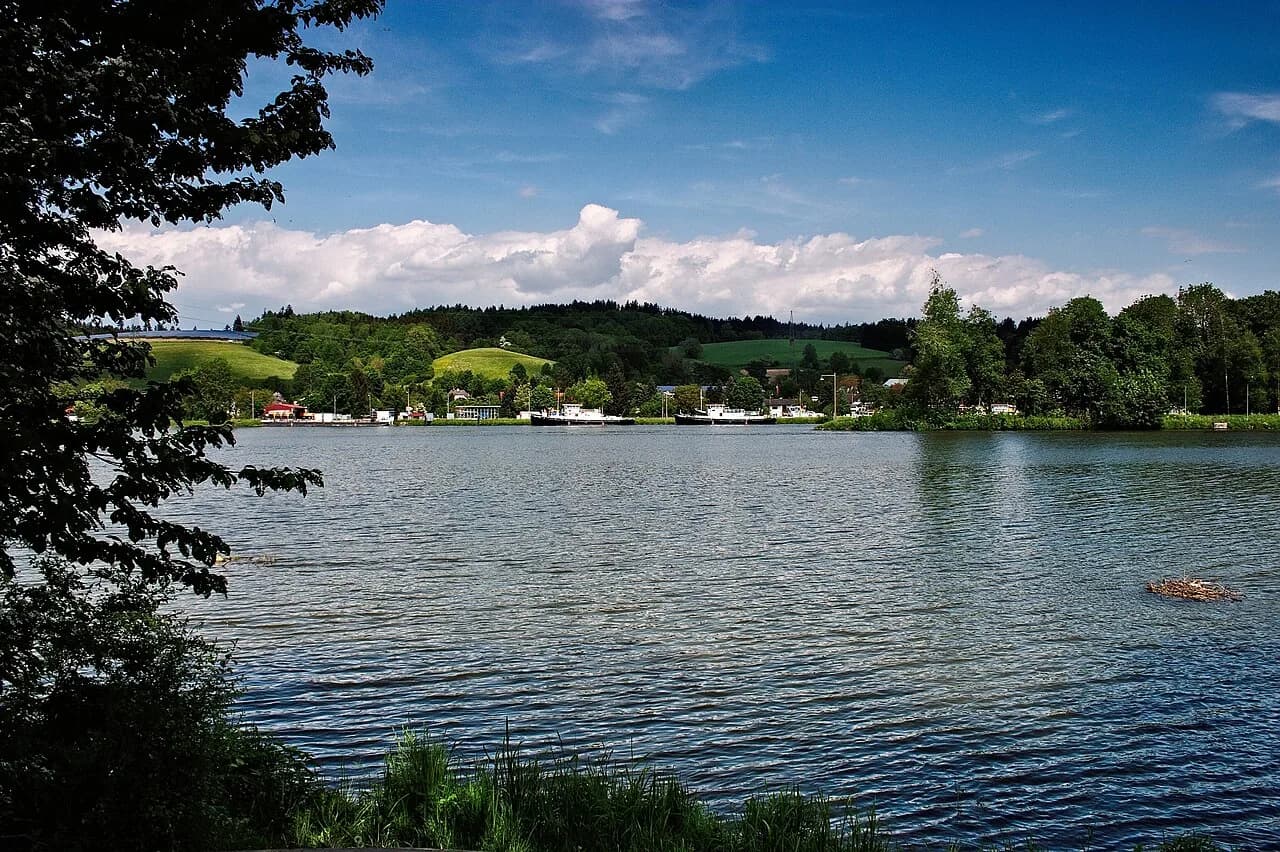
Passau photographs well for one structural reason: three rivers arrive from three different directions and merge at a single old-town tip. Bavaria tourism describes the Danube coming from the west, the Ilz from the north and the Inn from the south before they continue east together. That geometry gives you a city where water, skyline and hillside fortress can all sit in one frame.
Why Passau Photographs Well: Three Rivers, One Tip
The old town occupies the wedge between the rivers, and its highest point is where St. Stephen's Cathedral stands. Passau Tourism notes the cathedral sits at the highest point of the Altstadt, so any elevated shot from the opposite bank or hillside stacks a vertical landmark against a horizontal river line. If you shoot only at water level, you lose that axis and the city reads flat.
The rivers carry different loads and speeds, which is the real photographic asset here. One trip report describes the Danube flowing gently while the Inn runs faster, creating a visible boundary line at the triangular tip of the old town. That line is your subject: expose for the brighter water and let the darker one hold detail, rather than trying to balance both perfectly.
Two practical habits help on a single walk. Carry one mid-range zoom instead of swapping primes in river wind, and shoot the same frame twice with different foregrounds so you can judge at home which depth reads better. Neither is a rule, just a way to leave with options rather than one version of each view.
The Dreiflüsseeck: Shooting the Confluence Itself
The confluence, signposted as Dreiflüsseeck, is where three rivers meet at the eastern tip of the old town, and the Passau three rivers confluence viewpoint guide explains how the location is reached and framed. What matters compositionally is that the colour seam between the two larger rivers moves with flow and recent rain, so treat any single visit as one sample rather than how it always looks.
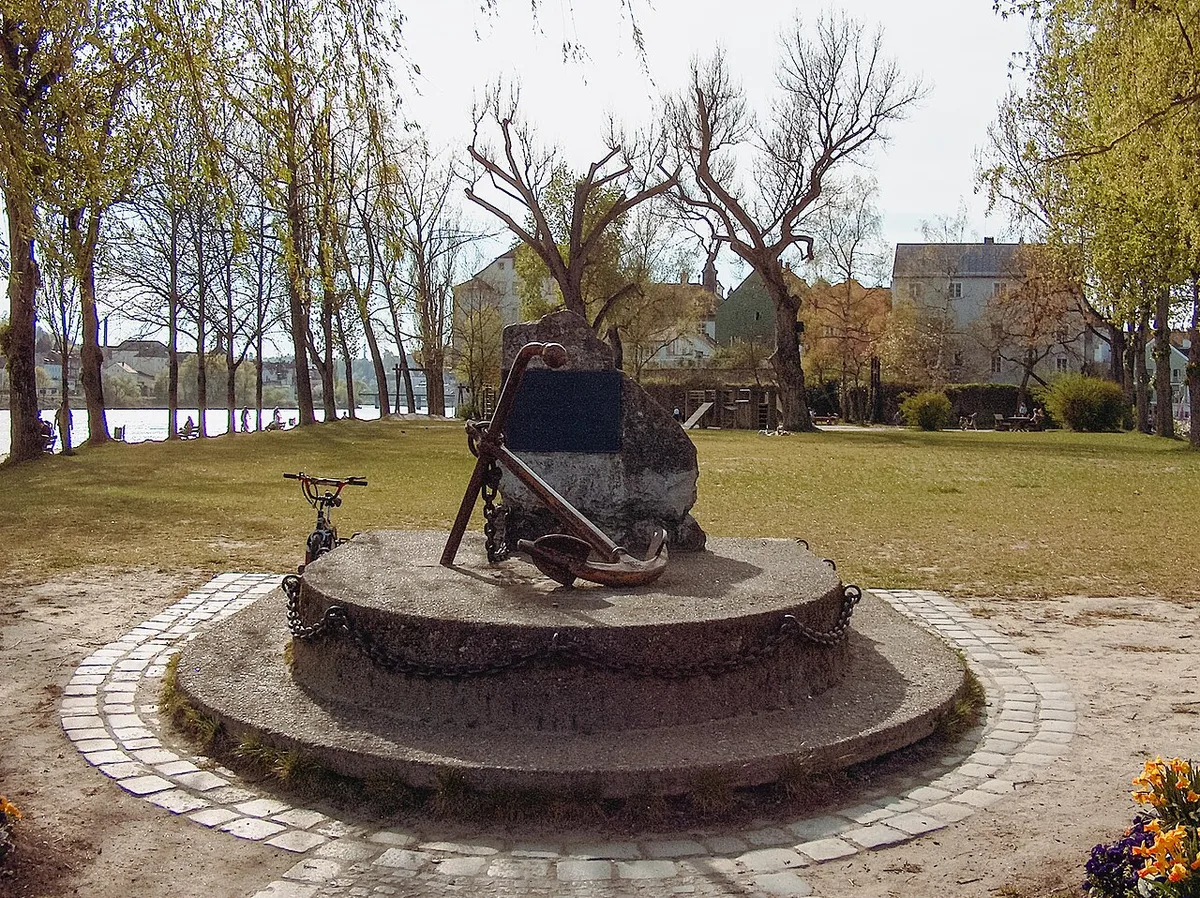
Do not assume the confluence view is unobstructed or always open. A small park near the meeting of the Danube and Inn is described as well placed for seeing the confluence, but riverside sites like this can be fenced, flooded or crowded without notice. Build in a plan B such as a bridge or the opposite bank so a single blocked sightline does not end your shoot.
For a cleaner frame, use the riverbank edge, a moored boat or a railing as an anchoring foreground rather than empty water. Shoot wide first to record the seam, then zoom to compress the far bank and the towers above it into one plane. A polarising filter cuts glare and helps separate the two water tones, though it costs you roughly a stop of light.
Old-Town Lanes: Framing Baroque Facades and Pedestrians
The Altstadt lanes are narrow, which is exactly why they work: the walls frame a vertical slot of sky and a slice of the next facade. Light is the hard part, because one side of a lane usually sits in shade while the other catches direct sun, giving a contrast range no phone will hold in one exposure. Meter for the lit wall and let the shade go dark, or bracket and blend later.
Pedestrians are your fastest way to add scale, so decide whether you want them sharp or as a blur. A slow shutter turns passers-by into soft streaks that suggest a busy lane; a fast shutter freezes someone mid-step and gives a clear human reference. Whichever you choose, frame the lane first and wait for a figure to enter the gap rather than chasing people with the camera.
One honest warning from a 2017 account of the lanes: they have been taken over largely by shops and galleries, and an artists' quarter is marked by painted cobblestones. That matters for composition because signage, awnings and cafe furniture sit low in your frame. If you want period facades, tilt up slightly or use the upper storeys as your subject.
River Reflections: Water as a Compositional Tool
Still water doubles a skyline only when the surface is calm, so reflections are a wind decision as much as a light decision. Early mornings generally give flatter water, but treat that as a habit rather than a guarantee and check conditions on the day. A low camera position, close to the water's edge, exaggerates the mirrored half of the frame.
The Inn riverbank is the strongest reflective stretch for a straight-on city view, and the promenade passes the striking Schaiblingsturm tower on the way toward the confluence. Bavaria's official tourism site describes walking along the Inn past that tower and on to where the three rivers meet, which makes it a natural single route for reflections plus an end-point view.
For a tighter composition, use a foreground object to break the mirror: a bollard, a moored boat or the tower itself keeps the frame from becoming a symmetrical slab. If the surface ripples, stop fighting it and switch to the texture instead, shooting along the water rather than across it. Both approaches beat a flat, half-reflected skyline.
Elevated Viewpoints 1: Mariahilf Above the Innstadt
Mariahilf sits high above the Innstadt, and the climb is part of the picture. Passau Tourism states that a covered stairway of 321 steps leads up to the pilgrimage chapel, entered from the Neutorgraben, and the same figure appears in the Road of Emperors and Kings description of the site. Treat the number as the tourism authority's figure and expect a genuine stair climb rather than a lift.
The reward is a view of the Innstadt side of the city rather than a full fortress panorama. The Road of Emperors and Kings page describes the outlook from the monastery as over the so-called Italian side of Passau. For composition that means rooftops and the river below, with Mariahilf's own baroque towers available as a foreground if you turn around on the way up.
Accessibility is limited here: Passau Tourism lists the church as having limited wheelchair access, with disabled parking in the courtyard and a public accessible lavatory at the church. Anyone with mobility concerns should plan around the stairway rather than assume a step-free approach. Check current details before climbing, since access arrangements are the operator's to change.
Elevated Viewpoints 2: Veste Oberhaus, Tower and Linde Battery
Veste Oberhaus gives you the opposite bank's view: the old town from above, plus the river confluence in one frame. Visit Passau's best viewpoints in Passau guide covers the fortress terrace and other elevated spots, and the fortress is the standard answer when you want the whole city compressed into a single wide composition.
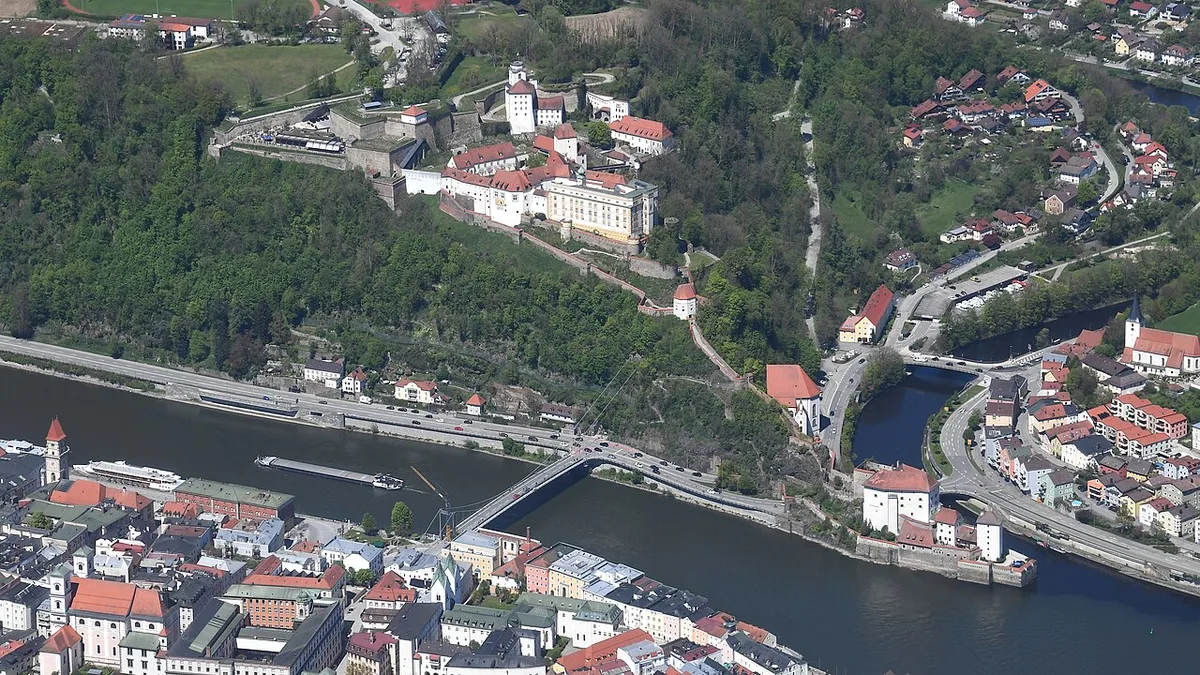
Within the fortress there are two distinct shooting positions, and they are not interchangeable. The Danube region tourism listing states that from the observation tower and the Linde Battery you get panoramic views of the Bavarian Forest, the Old Town and the confluence of the Danube, Inn and Ilz. The tower gives height and a tighter look down; the battery gives a broader sweep across the river junction.
Be precise about what a ticket covers. The same operator listing says admission to the museum includes access to all exhibitions plus the observation tower, St. George's Chapel and the Linde Battery viewpoint. That does not mean every part of the complex or every separate collection shares one entry, so read the fortress ticket terms before assuming a single purchase opens everything.
Expect uneven surfaces and interiors that are not step-free. Passau Tourism's Oberhausmuseum page lists the castle complex itself as not accessible for disabled visitors, with an elevator serving the New Rampart viewpoint and the outer and inner baileys, and no disabled access to the observation tower, exhibition rooms, St. George's Chapel or the Linde Battery. If you need step-free access, that rules out the tower and battery viewpoints specifically.
Mariahilf or Veste Oberhaus? Choosing One View
If you can only do one, decide by which river you care about. Mariahilf looks across the Inn toward the Innstadt and the Italian-influenced side of town, while Veste Oberhaus looks down on the old town with the confluence and the forest hills behind it. The fortress shot is the more complete city portrait; the Mariahilf shot is the more intimate rooftop view.
Time and effort differ too. Mariahilf is a stairway climb with limited accessibility, whereas the fortress has a road approach, a bus shuttle running to museum opening times and an elevator serving parts of the complex. If you are carrying a heavy tripod or shooting late, the fortress side is the more forgiving of the two.
A workable compromise is one at one end of the day and the other on a different visit entirely. Trying to race between an Inn-side stairway and a Georgsberg fortress in one afternoon usually means arriving at the second at the wrong light. Pick one frame, execute it slowly, and treat the other as the reason to come back.
St. Stephen's Cathedral: Scale, Organ and the Restoration Caveat
The cathedral is an interior subject more than an exterior one, because the architecture is on a scale that resists a normal lens. Passau Tourism describes it as a major baroque church north of the Alps with five separate organ installations, 17,974 pipes and 233 registers. Bring something wider than you think you need for the nave and look up for the ceiling and gallery details.
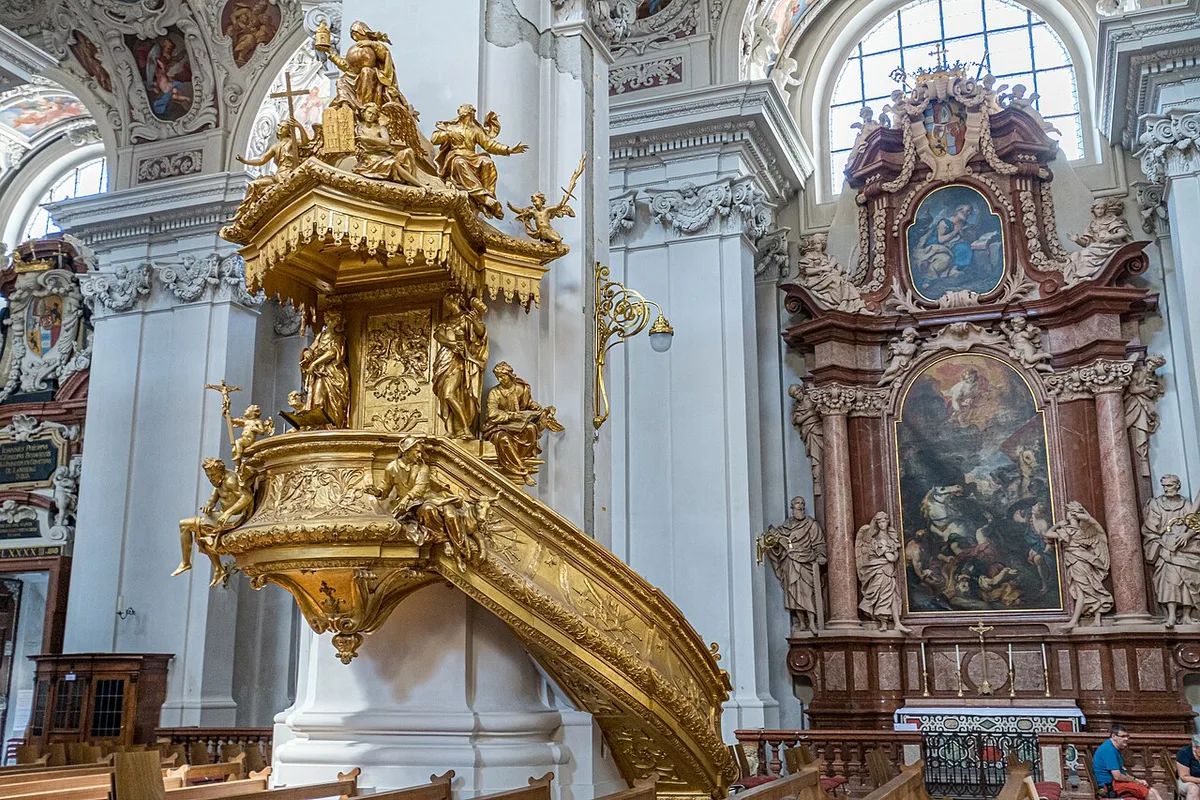
There is a real limitation to plan around: the cathedral's own tourism page notes that since 2023 the organ has been restored section by section and does not sound in its full extent at concerts. A separate music listing adds that parts of the rear of the church are temporarily obscured by scaffolding and that full-range playing is not expected until around 2028. If a full-instrument moment is the whole point of your visit, that is a reason to check the current programme rather than assume it.
Cathedral concerts are a lighting event as much as a listening one, and the church pages state that the building is closed during organ concerts from 10:45 to 11:20 in the morning. Confirm performance days and times on the diocese's music pages before arranging a shoot around a concert, since the organ restoration affects what you will actually hear and see.
For interiors, respect the space: no flash during services, keep shutter noise in mind and avoid blocking aisles. Beyond the nave, the cathedral sits on the old town's highest point, so the surrounding squares give you the exterior facades and domes in the same walk. Passau's landmark guides cover the cathedral alongside the surrounding squares and fountains if you want to extend the route.
Three Suggested Durations for a Photo-Focused Visit
These are suggestions for pacing a walk, not official visiting times. A two-hour version covers the old town lanes and one riverside stretch, enough for a cathedral facade, a couple of lane frames and the confluence approach at the tip of the old town. It will not include either elevated viewpoint, so accept that as the trade-off.
A half-day version adds one of the two hills. Choose Mariahilf if you want the Innstadt rooftops and a stairway climb, or Veste Oberhaus if you want the city and the confluence from above. Whichever you pick, leave the other hillside for a second visit rather than trying to shoot both in the same block of light.
A full day lets you split the light deliberately: old-town lanes and interiors earlier, an elevated viewpoint and riverbank reflections later. That is also realistic if you want to add the fortress interiors, which sit behind a separate admission decision from the views. If you only have one day in the city, a 3 days in Passau itinerary structure helps you see where such a photography block fits.
Free Grounds vs Paid Interiors, and Other Practical Decisions
Separate free outdoor space from ticketed interiors before you plan a day. Riverbanks, bridges, public squares and the walk through the lanes cost nothing, while the Oberhausmuseum complex, the observation tower and any cathedral concerts are paid. That distinction decides how many locations you can afford to visit in one trip and which ones you treat as the anchor of the day.
Openings vary by season and site, so verify each one on the operator's page instead of trusting a general guide. The Oberhausmuseum lists different summer and winter opening windows for the museum and the observation tower, and the cathedral has its own seasonal daily hours, so check the specific page for the specific day you plan to shoot. Passau Tourism's official site publishes current hours and access notes for the city's sights.
If you are extending a German photo trip, the same composition thinking applies in bigger cities. Our sister guides to the best photo spots in Berlin cover how to handle scale and crowds in a much larger old town. If you would rather compare Passau with another Bavarian city, the best photo spots in Munich guide takes a similar per-location approach.
Plan Your Passau Photo Walk
The honest summary is that Passau rewards a small number of locations shot well rather than a long list shot quickly. The confluence gives you a colour seam, the lanes give you framing and scale, the riverbanks give you reflections, and the two hills give you entirely different city portraits. Confirm current opening hours, ticket scope and concert programmes directly with Passau Tourism and the site operators before you commit a day to any single view.
Frequently Asked Questions
Can you photograph the confluence of the three rivers in Passau?
Yes, the confluence is a public riverside location at the tip of the old town, and the classic view looks across the water toward the city. It should not be treated as always clear or always open, because riverside sites can be fenced, flooded or crowded on the day you visit. Plan an alternative vantage point such as a bridge or the opposite bank so a blocked sightline does not waste the trip.
Is Mariahilf or Veste Oberhaus better for a Passau panorama?
They show different things. Mariahilf looks across the Inn toward the Innstadt and the Italian-influenced side of the city, while Veste Oberhaus looks down on the old town with the river confluence and the forest hills beyond. If you want the complete city silhouette, the fortress side is the broader view; if you want a closer, more intimate rooftop scene, Mariahilf suits better. Doing both in one afternoon usually means arriving at the second at the wrong light, so split them across two visits if you can.
How long do you need for a photo walk in Passau?
These are suggestions rather than official times. Two hours covers the old-town lanes and one riverside stretch, including the confluence approach. Half a day adds one elevated viewpoint, either Mariahilf or Veste Oberhaus. A full day lets you split the light and add a paid interior such as the Oberhausmuseum complex, but be prepared to choose between the two hillsides rather than shooting both back to back.
Is Passau worth visiting for photography?
It is unusually compact for a city with this much water and verticality. The confluence, the baroque lanes, the cathedral and two elevated viewpoints can all sit inside a single walkable area, which means less time in transit and more time waiting for light. The main limitation is that the strongest viewpoints are weather-dependent and one of them involves a long stairway climb.
How do the Danube, Inn and Ilz rivers look in a photo?
The Danube and Inn typically show a visible boundary where their water tones meet, which is the single most photogenic feature at the confluence. Cloudy or rainy weather can muddy both rivers and reduce the contrast between them. Arrive prepared to shoot what you find rather than a particular expected colour split, and check conditions locally before making the confluence your main shot of the day.
Sources
- THE BEST Passau Scenic Walking Areas (2026)
- Pilgrimage Church "Mariahilf" in Passau | Passau Tourism
- Pilgrimage Church of Mariahilf in Passau | Road of Emperors and Kings
- Museum Veste Oberhaus in Passau | Passau Tourism
- Passau in Bavaria, Germany: 10 Sights and Highlights
- Passau Tourism | www.tourism.passau.de/en | Passau Tourism
- Passau | Vaya con Gringos
- St. Stephen's Cathedral Passau | Passau Tourism
- Music in the High Cathedral "Stephans Dom" - Passau < Chill out ...
- Veste Oberhaus & Oberhaus Museum


