

Passau sits where the Danube arrives from the west, the Ilz from the north and the Inn from the south, then leaves as one river heading east. The meeting point, the Dreiflüsseeck, is the narrow eastern tip of the old town, and it is one of the few major European city sights you can walk up to without a ticket. The confluence is not a single managed attraction: Bavaria's official tourism portal describes how you walk along the Inn past the striking Schaiblingsturm tower to reach the junction at the eastern tip of the old town.
What the Dreiflüsseeck Actually Is
The Dreiflüsseeck is not a building, a gate or a ticketed platform. It is the triangular spit of open riverside land at the eastern end of the Altstadt, where the Danube and the Inn run together at the tip, with the Ilz joining the system from behind the castle ridge. Passau Tourism lists Dreiflüsseeck - Where Three Rivers Meet as a sight in its own right, separate from the museums and churches around it.
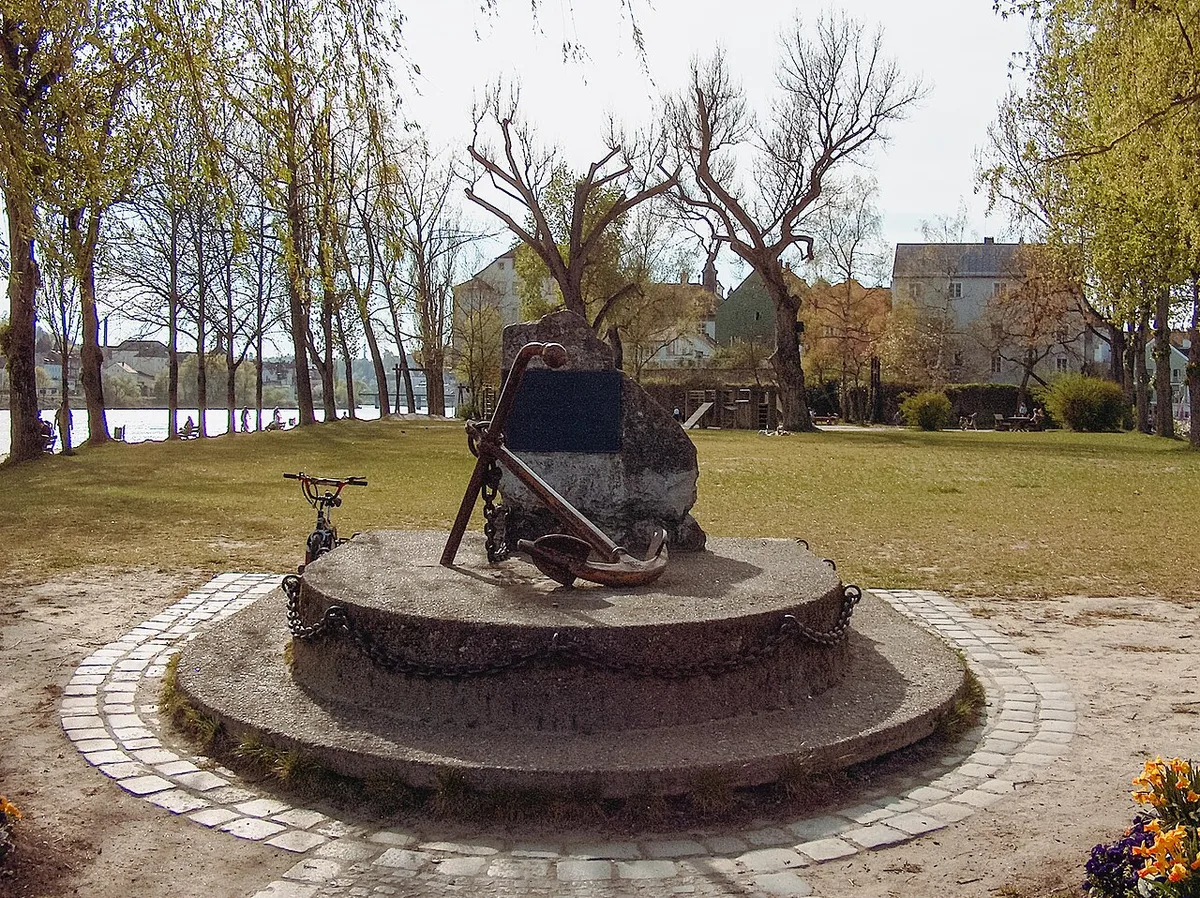
Practically, that means you are visiting a piece of public waterfront rather than a viewpoint with a gate and an opening time. One visitor account notes that a tributary of the Ilz flows into the Danube from behind the old castle, which is exactly why the third river is often hidden from the tip itself. Plan for the spot to take a short while, with the walking to and from it forming the larger part of the outing.
Free Ground-Level Access at the Tip
There is no entrance fee and no published opening or closing time for the confluence area itself; one travel listing records it simply as open all day, with a suggested sightseeing window of roughly one to two and a half hours for the surrounding point. Treat that as a listing's estimate rather than an official visit duration, because the tip is public riverside ground and your stay depends on how long you linger.
What you cannot do from ground level is see all three rivers at once in a single clean frame. At the tip the Danube and Inn dominate the foreground, while the Ilz sits behind the ridge line. If a three-river panorama is the goal, budget for a climb as well as the waterfront walk, which is why the free tip and the paid viewing options work as a pair rather than substitutes. If you are prioritising no-cost stops, this fits naturally into a day of free things to do in Passau alongside the squares and church exteriors.
Reading the Water: Why the Rivers Look Different
The Inn carries alpine meltwater from the Austrian Alps, the Danube drains a much larger and slower catchment, and the Ilz is the smallest of the three. One travel listing describes the Inn as containing more calcium, so its colour reads as a lighter blue and it runs faster, while the Danube moves slowly and appears darker, and the Ilz is narrower and relatively darker still. Those are tendencies rather than fixed colours, and the same listing's claim that the three rivers always show a clear demarcation should not be read as a guarantee.
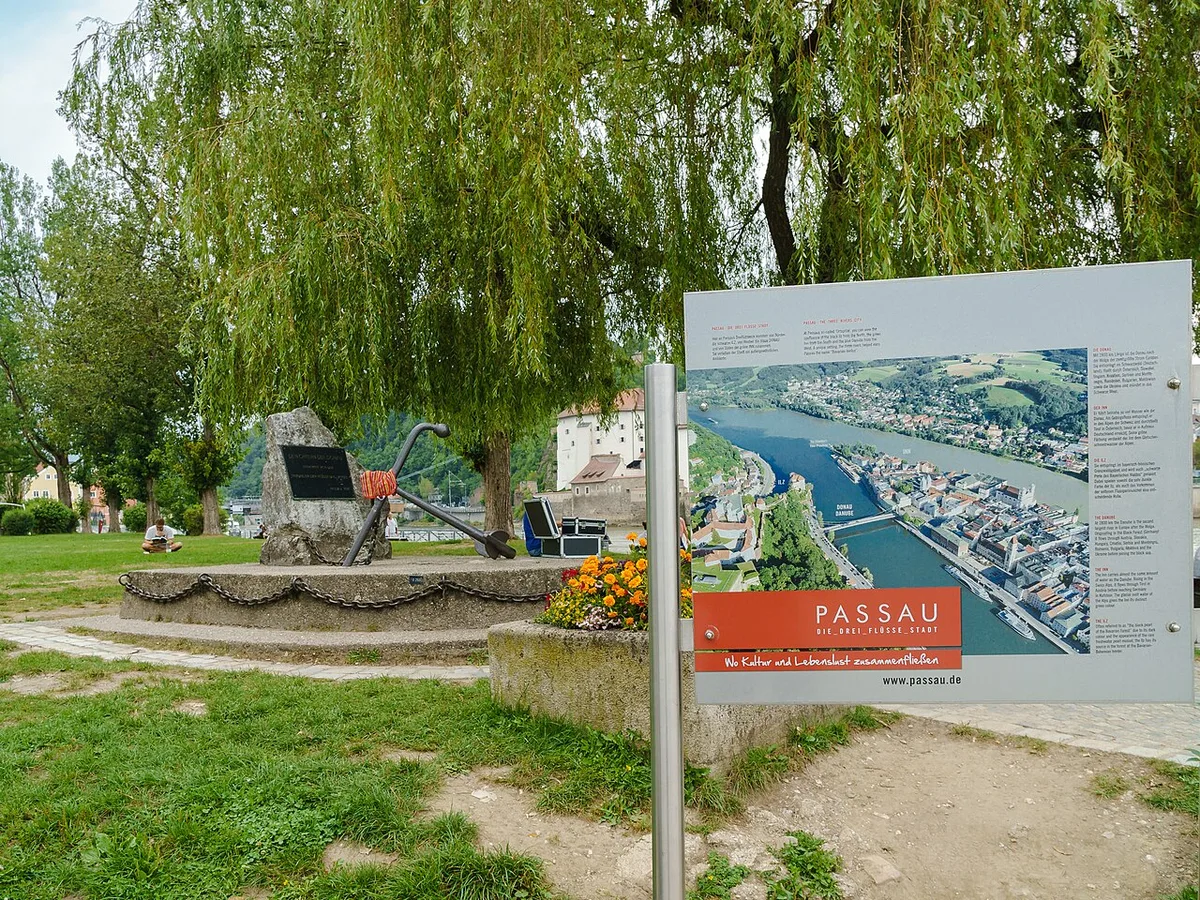
Whether you actually see a sharp seam depends on flow, water level and the light on the day, so no guide can promise three distinct bands. After heavy rain upstream, sediment loads rise and the contrast can flatten or shift; in low, clear water the boundary can read more crisply. Check river levels and recent weather before building your day around a photograph, and treat any visible line as a bonus rather than the reason for the trip.
Bridge Views Above the Water
Bridges give a higher, longer look at how the currents interact, because you are standing over the meeting zone rather than beside it. Several bridges cross the three rivers in Passau, and the same listing notes that standing on them makes the character of each river easier to feel than from the bank. The Inn Bridge in particular appears on a self-guided audio route as a viewpoint stop where you linger for the views.
Treat bridge viewpoints as complements to the tip, not replacements: from a bridge you read current and colour, while from the tip you get the geometry of the confluence against the old town facades. Do not expect published access rules for each bridge, because they are ordinary public crossings rather than ticketed viewpoints. If you are collecting angles for photography, the wider set of best photo spots in Passau covers the bridge and riverside options in more depth.
The Aerial Alternative: Veste Oberhaus and Its Observation Tower
The fortress on the Georgsberg ridge is the classic elevated viewpoint over the confluence, and it is a ticketed visit rather than open ground. The Oberhausmuseum occupies the historic walls of the former prince-bishops' residence, described by the operator as one of the largest surviving castle complexes in Europe, and its newly reopened Observation Tower adds multimedia installations on the climb plus a panorama from the upper platform. Independent listings describe that tower view as taking in the city, the confluence of the three rivers and the Bavarian Forest, which is precisely the frame you cannot get at water level.
The trade-off is straightforward: the tip is free, close to the water and quick, while the fortress costs an entrance fee and a climb but reveals the river junction as a shape on the map. Because the tower season is shorter than the museum season, a winter visit may give you the exhibitions and the fortress grounds without the upper platform. Confirm the tower is operating on your dates before promising yourself the panorama, and see the Veste Oberhaus Passau fortress visitor guide if the fortress itself is your main reason for the climb.
Veste Oberhaus Practicalities: Hours, Fees, Shuttle and Access Limits
Passau Tourism publishes the museum's hours by season rather than as year-round daily opening. As stated on the operator page, the museum runs from March 15 to November 15, Monday to Friday 9 a.m. to 5 p.m. and Saturdays, Sundays and holidays 10 a.m. to 6 p.m., with a December 25 to January 6 daily window of 10 a.m. to 4 p.m. that closes on December 31. The Observation Tower keeps a shorter season, March 15 to November 8, opening Monday to Friday 9:30 a.m. to 5 p.m. and weekends and holidays 10:30 a.m. to 6 p.m. Re-check these before travelling, since seasonal hours change between years.
The operator-stated entrance fee covers the Oberhausmuseum including the tower, quoted at 7.00 EUR for adults, 5.00 EUR reduced, 14.00 EUR for a family of two adults, 7.00 EUR for one adult with children, free for children under six, 5.00 EUR per person for groups of 15 or more, and 3.00 EUR per person for school classes. Treat those figures as the operator's published prices at the time of the source and verify them on the tourism site before you buy, because fees and inclusions are revised periodically. Note that this is the fortress ticket specifically; it does not imply a shared ticket with other museums in Passau.
A bus shuttle runs according to museum opening times, daily on the half hour from Town Hall Square up to the fortress and back, and the operator says showing your bus ticket earns a discount on museum entry. For step-free needs, the operator's own accessibility notes are unusually specific and worth reading in full: the castle complex itself is not accessible for disabled visitors, an elevator reaches the New Rampart viewpoint and the Outer and Inner Bailey, an assisting person is recommended, and there is no disabled access to the Observation Tower, the exhibition rooms, St George's Chapel or the Linde Battery viewpoint. The same page notes three steps to the ticket office and museum shop, that the shuttle and public buses are not suitable for wheelchair users, and that there is no wheelchair-accessible toilet in the castle. None of this tells you about the riverside paths between the old town and the confluence, so verify those separately if mobility is a concern.
Mariahilf and the 321-Step Stairway
Across the Inn, the baroque pilgrimage church of Mariahilf sits high above the Innstadt, reached by a covered stairway of 321 steps entered from the Neutorgraben. Passau Tourism lists the church as open daily from 7 a.m. to 8 p.m. and notes limited wheelchair accessibility for the church itself, with disabled parking in the courtyard and a public accessible lavatory in the church. The stairway is a devotional route rather than a confluence viewpoint, so judge the climb on its own merits.
The payoff is a view back over the Inn city, described on a Danube cultural route as the most beautiful view of the so-called Italian side of Passau. That makes Mariahilf a complementary high point for townscape rather than a place to study how the three rivers braid together. It appears as a finishing stop on a self-guided audio route through the city, which shows how naturally it combines with the old town and the fortress on a half-day circuit.
Building a Route: Confluence, Fortress and Old Town
A sensible suggestion is to start low and end high. Walk the Inn side past the Schaiblingsturm to the eastern tip for the ground-level confluence view, cross into the Altstadt for its lanes and squares, then finish at the fortress for the aerial panorama while the light is better for looking down. Putting the climb last avoids carrying a paid ticket around all morning and lets you skip it if the weather closes in.
Between the confluence and the fortress, the old town fills the middle of the day with the Altes Rathaus, Residenzplatz and the cathedral, all within the same compact area. If you want a structured self-guided framework rather than improvising, the city's itineraries and city travel guides can help you order the stops by area. Keep the plan flexible, because river viewpoints are weather-dependent and a misty morning followed by a clear afternoon changes which stop deserves the best hour.
How Much Time to Allow
A reasonable suggestion, and not an official figure, is to give the confluence tip fifteen to thirty minutes once you are standing there, with the walk to it taking whatever your own pace requires. Add roughly two hours if you intend to tour the Oberhausmuseum and climb the tower, and consider the Mariahilf stairway as a separate block rather than something to squeeze into the same hour.
One travel listing recommends one to two and a half hours for the Meeting Point of Danube and Inn Rivers area, but that is a third-party estimate covering the broader point rather than a measured time on the ground. Use it as a rough upper bound for a leisurely visit that includes photos and nearby lanes. If your stay in Passau is only a few hours, drop the fortress interior first and keep the free tip plus a bridge crossing.
Seasonal and Weather Factors That Change the View
Passau's old town sits on low ground between the rivers and has a long flood history, which is your best clue that water levels matter for what you see. A walk through the Altstadt often passes high-water markers on facades, reminders that the confluence is a working river junction, not a decorative fountain. After sustained rain in the Alps or the Bavarian Forest catchments, expect faster, muddier water and a less distinct boundary.
Light matters as much as water. Early and late in the day the low sun can make one river glint while the other reads flat, which sometimes makes the seam easier to photograph than to see with the naked eye. Winter shortens usable daylight and shuts the Observation Tower earlier than the museum, so a cold-weather visit is better planned around the free riverside walk and the old town.
What to Skip or Defer on a Short Visit
If you have only a couple of hours, skip the museum interiors and treat the fortress as optional; the confluence itself costs nothing and needs no booking. Defer Mariahilf unless the climb appeals in its own right, since it views the Inn city rather than the river junction. Do not skip the short walk from the old town to the water simply because a cruise or tour coach drops you at the cathedral square, because the tip is the whole point of the detour.
Do not assume St. Stephen's Cathedral doubles as a river viewpoint: it is a baroque interior and organ destination, not an elevated terrace over the confluence. Passau Tourism states cathedral opening hours of 6:30 a.m. to 7 p.m. from April to October and 6:30 a.m. to 6 p.m. from November to March, with closure during organ concerts from 10:45 a.m. to 11:20 a.m. The cathedral's organ has also been under section-by-section restoration since 2023 and does not sound at full extent at concerts, so plan a cathedral stop for the interior and the music rather than for the view.
Plan Your Visit
Choose your viewpoint by what you want to see. The free tip of the old town gives you the sensation of standing at the meeting of the waters; Veste Oberhaus gives you the map-like overview; Mariahilf gives you the Inn city from above. None of them duplicates the others, and no itinerary needs all three on the same day.
Before you go, confirm the facts that move: the fortress museum and tower seasons, the entrance fee, the shuttle's operation according to museum opening times, and Mariahilf's daily hours. Passau Tourismus publishes all of these, and its pages are the quickest single check. Build in slack for weather, and let the day decide how much time the confluence gets.
Frequently Asked Questions
Is the Dreiflüsseeck in Passau free to visit?
Yes. The Dreiflüsseeck is the open-air, eastern tip of the old town where the Danube and Inn meet, and there is no gate, ticket or published closing time for the riverside itself. Travel listings record the spot as accessible all day. What costs money are the enclosed attractions nearby, most notably the Oberhausmuseum and its observation tower inside Veste Oberhaus, which are ticketed separately.
Where is the best viewpoint for the three rivers confluence in Passau?
It depends what you mean by best. The old-town tip gives the closest, most immediate view of the Danube and Inn converging, and it is free. Veste Oberhaus, high on the Georgsberg ridge, gives the wide panorama in which you can trace all three rivers and the old town at once, but it requires an entrance ticket and a climb. Bridges over the rivers offer a useful middle option, letting you look down at current and colour rather than across at them.
Can you really see three different water colours at the confluence?
Sometimes, but not reliably. The rivers arrive with different sediment loads, speeds and catchment sizes, which is why the Inn is described as containing more calcium and looking lighter and faster than the Danube, with the Ilz darker again. A sharp visible boundary depends on water level, recent rainfall and the light, so a visit after heavy rain may show a muddier, flatter meeting than a settled, clear day. Treat a crisp seam as a lucky bonus rather than a guaranteed sight.
How long do you need at the Dreiflüsseeck?
Standing at the tip itself takes only a short while, since there is no queue, tour or exhibition to work through. A travel listing suggests around one to two and a half hours for the broader riverside point, which suits a leisurely visit with photos and a wander into the adjacent lanes. If you add the Oberhausmuseum and its tower, budget a separate block of time, and treat the Mariahilf stairway climb as its own stop.
Can you see the confluence from Veste Oberhaus?
Yes, the fortress ridge is the classic elevated vantage point over the river junction. The Observation Tower at Veste Oberhaus is described as having panoramic views across Passau, the confluence of the three rivers and the Bavarian Forest. Keep in mind that the tower keeps a shorter season than the museum, so check that it is open on your dates before relying on it for the view.
Is the Veste Oberhaus observation tower open all year?
No. Passau Tourism publishes a tower season of March 15 to November 8, with weekday hours from 9:30 a.m. to 5 p.m. and weekend and holiday hours from 10:30 a.m. to 6 p.m., while the museum itself runs from March 15 to November 15 plus a short late-December to early-January window. Hours and seasons are revised from time to time, so confirm the current schedule on the tourism website before you plan around the tower.
Sources
- Passau, a niche destination in Germany, lies at the confluence of the Danube and Inn rivers | Trip.com Passau
- Passau: Confluence of Culture Audio Tour | WeGoTrip
- Meeting Point of Danube and Inn Rivers Tickets [2026] - Promos, Prices, Reviews & Opening Hours | Trip.com
- THE BEST Passau Lookouts (2026)
- Pilgrimage Church "Mariahilf" in Passau | Passau Tourism
- Pilgrimage Church of Mariahilf in Passau | Road of Emperors and Kings
- Museum Veste Oberhaus in Passau | Passau Tourism
- Passau in Bavaria, Germany: 10 Sights and Highlights
- Passau Tourism | www.tourism.passau.de/en | Passau Tourism
- Passau | Vaya con Gringos
- St. Stephen's Cathedral Passau | Passau Tourism


