

Poppelsdorf Palace sits at the far end of the Poppelsdorfer Allee, the broad chestnut-lined avenue that runs south from Bonn's old town and delivers you almost directly to its forecourt. The building is a Baroque palace, not a conventional museum with daily opening hours, and that single distinction shapes everything about how you should plan the trip. You come for the facade, the dome, the courtyard and the grounds, then decide separately whether the interiors are open and worth your time.
The palace was designed in the Baroque style by the French architect Robert de Cotte and built during the 18th century as a residence for the Archbishop of Cologne. It was badly damaged by Allied air raids in 1944 and restored in a plainer form in 1955, which is why the exterior reads as handsome rather than lavish. Today the complex belongs to the University of Bonn, which is the reason the interiors house academic collections instead of period rooms.
What Poppelsdorf Palace Is and Where It Sits
Poppelsdorf is a district south of Bonn's centre, known for nineteenth-century buildings and for the palace and botanical garden that anchor it. The walk from the old town follows the Poppelsdorfer Allee, a straight, tree-lined axis that makes the approach part of the experience rather than a chore. Because the avenue points directly at the palace, you never have to hunt for the entrance once you commit to the route.
The complex is a working university site, so treat it as a campus landmark with public spaces rather than a ticketed attraction with a single gate. That means the grounds, the forecourt and the garden paths are the reliable parts of a visit, while interior access depends on the institution that occupies the building. It is a genuine architectural sight, but a light-touch one.
The Baroque Exterior and Grounds: What You See Without a Ticket
The showpiece is the long ochre facade with its central dome, symmetrical wings and formal parterre garden layout in front. The palace reads as a French-influenced Baroque composition, with the dome giving the building a clear silhouette from the avenue, and the symmetry carrying through into the garden beds and paths. Photographers generally get the cleanest view from the approach along the allee, where the dome lines up above the trees.
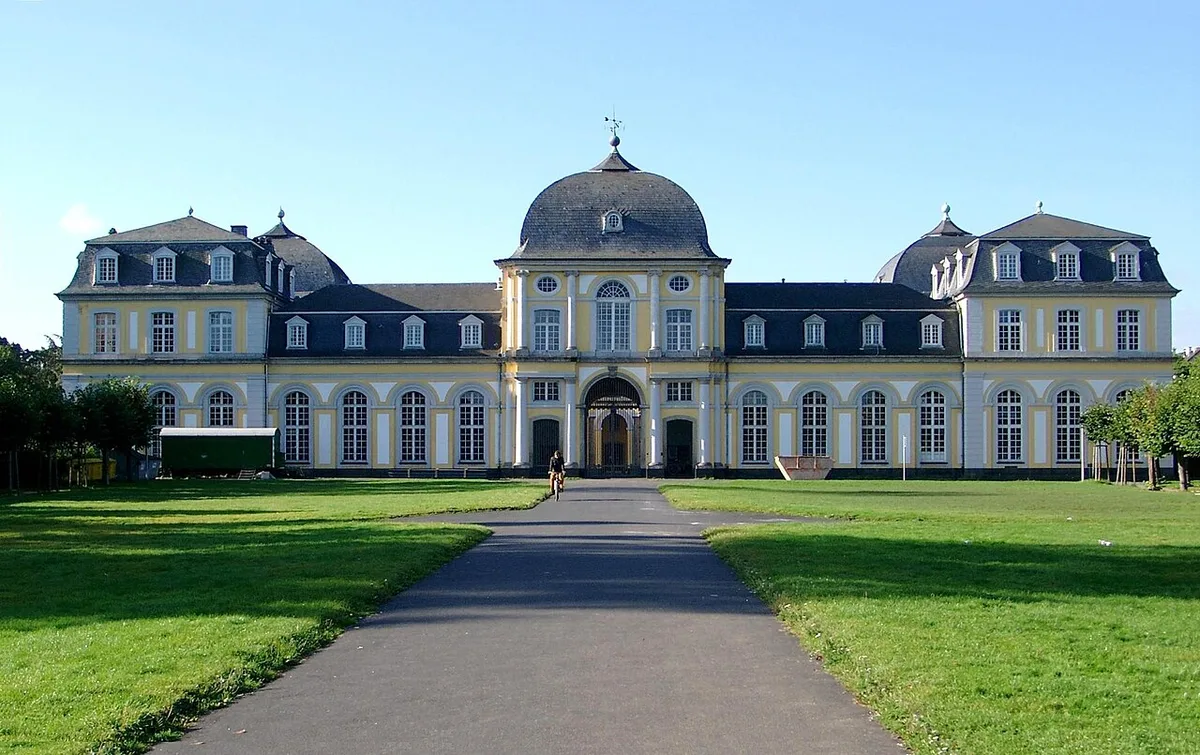
The grounds are laid out as a formal garden with a pond, and they function as an open campus space used by students and locals as much as by visitors. You can walk the forecourt, study the facade details and continue into the adjoining garden without planning around a ticket desk. The area is at its best in daylight, since the whole point is the architecture seen against the garden structure.
If you want a structured way to record the visit, the dome, the garden axis and the reflection in the pond give you three distinct compositions within a few minutes of each other. For more angles around the city, including riverside and old-town frames, see this Bonn photography spots and guide. Light matters more here than gear, so late afternoon often beats midday for the facade.
Inside the Palace: the Mineralogical Museum
The palace interior houses the University of Bonn's natural sciences collections, and the Mineralogical Museum is the component visitors can actually enter. Its four rooms display minerals, gems and meteorites, which is a compact, specialised experience rather than a broad museum tour. Reports on which days it opens do not agree, so confirm the current schedule on the university's own pages before you build a day around it.
Beware of treating the palace as a museum with standard daily hours, because third-party listings circulate opening windows that the operator does not necessarily publish. There is also no basis for assuming a single ticket covers the palace interior and the garden; treat them as separate questions and check each one. If the mineral rooms are closed on your dates, the exterior and garden still justify the walk.
The Adjoining Botanical Garden
The Botanical Garden grew out of the palace grounds and is now a university collection as well as a public green space. For many visitors it is the main event: a peaceful, scholarly garden where students and researchers work among the beds, and where the atmosphere changes with the season. It sits directly beside the palace, so pairing the two costs you no extra travel time.
Third-party write-ups quote wildly different plant counts for the garden, which is exactly why you should not rely on a blog figure as a planning fact. The useful detail is that the collection is broad and includes tropical and exotic material alongside outdoor beds, which means the garden rewards a slow walk rather than a checklist. Confirm current access and any seasonal restrictions on the university's own garden pages.
Unlike the palace interior, the garden is commonly described as free to enter, making it one of the most rewarding no-cost stops in the city. If you are assembling a low-budget day, it belongs alongside other free things to do in Bonn rather than in the paid-museum column. Because sources disagree about exact hours, check before making a special trip in the early morning or evening.
Combining Palace and Garden in One Short Visit
A sensible editorial suggestion is to allow roughly ninety minutes for the whole ensemble, split between the approach, the facade and forecourt, and a circuit of the garden. That figure is our suggestion, not an official duration, and it stretches easily if the mineral rooms are open or if you photograph seriously. If your time is tighter, drop the interior rather than the garden.
Visit in this order: walk the allee southwards, pause in the forecourt for the dome and the facade, then move into the garden and finish with the mineral rooms if they happen to be open. Doing the interior last means a delayed opening does not wreck the rest of the plan. This sequence also keeps you moving in one direction, away from the city centre.
If you would rather build the palace into a longer day of sightseeing, the Bonn: Itineraries and City Travel Guides collection shows how the southern district fits with the old town and the Rhine. Keep the visit as a half-day anchor rather than a full-day destination. The palace rewards a calm hour more than a rushed two.
Getting There from Central Bonn
The classic approach is on foot from the old town along the Poppelsdorfer Allee, which is flat, shaded and lined with mature chestnut trees. Because the avenue runs directly to the palace, you can treat the walk as orientation rather than transport. Bonn's compact centre and extensive pedestrian zones make this an easy add-on to a morning in the Altstadt.
If walking is not appealing, the city's integrated tram, bus and regional rail network reaches the wider district, and single tickets are sold from vending machines around the city. The VRS network links Bonn with Cologne and the surrounding region, and U-Bahn lines run south from the main station toward the museum district. Trams are frequent, yet the walk is short enough that many visitors simply do it on foot.
Good Pairings Nearby
The Electoral Palace and its Hofgarten lie between the old town and Poppelsdorf, and they are an obvious architectural pairing because the same university now occupies both. Walking south through the Hofgarten on the way to the allee turns two separate sights into one continuous route. It also gives you a natural rest stop before the palace.
The Arithmeum, the university's mathematics museum, sits in the same university orbit and appeals to visitors who like technical collections rather than painting. It is a useful alternative on days when the mineral rooms are closed, and it keeps you in the same southern part of the city. Pair it with the palace only if you have a genuine interest in calculating machines.
If you continue further south and west you reach the Museum Mile, whose institutions include the Haus der Geschichte and the Bundeskunsthalle with its changing exhibitions. These are ticketed or separately managed venues, so budget them as distinct visits rather than extensions of a palace stroll. A short Bonn trip is often better served by choosing one museum and doing the palace grounds properly.
Practical Decisions Before You Go
The single most useful split is between what is freely visible and what requires access: the facade, courtyard and garden layout versus the interior collections. Because sources conflict about palace and garden opening days, verify both on official university pages on the day you plan to go. Do not assume the garden and the mineral rooms share one ticket, and do not assume palace concerts are running.
For accessibility and family questions inside the palace or garden, the responsible approach is to ask the operating institution directly rather than rely on a general guide. The University of Bonn manages the site, so its contact points are the authoritative channel for step-free routes, lifts and pushchair access. Build in flexibility if anyone in your group needs step-free movement.
What to Skip and When to Choose Elsewhere
If you are travelling for a specific interior collection, do not make Poppelsdorf your primary Bonn stop without confirming that the mineral rooms are open on your dates. Visitors who want a large, reliably open museum should look instead at the city's major institutions, where published hours and ticketing are clearer. The palace is strongest as an architectural and garden visit, not as a rainy-day museum.
Skip the detour entirely if your schedule only allows one stop in Bonn and you have no interest in Baroque architecture or botanical collections. Otherwise, keep it as a relaxed half-day that combines a pleasant walk with a free garden. That framing rarely disappoints, whereas expecting a fully visitable palace often does.
Plan Your Visit
Poppelsdorf Palace works best when you treat it as two experiences: a freely visible Baroque exterior and garden ensemble, and a separately managed set of university interiors. Decide which of those two you actually want before you go, and the visit plans itself. The walk down the chestnut-lined allee is half the reason to make the trip.
Confirm opening days for the mineral rooms and the garden on official university pages rather than on aggregator listings, and do not assume a shared ticket or a guaranteed guided tour. If the interiors are closed, the grounds still justify the stroll, especially combined with the Hofgarten on the way back. For a broader sense of what else fits around this district, browse the wider Bonn guides and build the day from there.
Frequently Asked Questions
Is Poppelsdorf Palace free to visit?
The exterior, forecourt and surrounding grounds can be seen without buying anything, and the adjoining Botanical Garden is generally described as free to enter. Interior spaces such as the university's mineral collection are a separate question with their own access arrangements. Because published information about current access is inconsistent, check the operator's own pages before you travel.
Can you go inside Poppelsdorf Palace?
The palace is a university building, and the interior component most often described for visitors is the Mineralogical Museum, which occupies a small number of rooms. Whether it is open on a given day varies in third-party reporting, so confirm the current schedule on official university pages rather than relying on a travel listing. If the rooms are closed, the exterior and garden remain the reliable parts of the visit.
Is the Botanical Garden part of the same visit or a separate ticket?
The garden sits directly beside the palace and is normally treated as a free public green space, so it pairs naturally with a look at the facade and courtyard. There is no reliable basis for saying the garden and the palace interior share a single ticket, and they are managed as different things. Check each separately if entry conditions matter to you.
How long should you spend at Poppelsdorf Palace and the gardens?
As an editorial suggestion rather than an official figure, allow roughly ninety minutes for the approach, the facade and forecourt, and a circuit of the garden. Add time if the mineral rooms are open or if you photograph the architecture seriously. The visit is a relaxed half-day at most, and much shorter if you only want the classic view.
What is the Mineralogical Museum at Poppelsdorf Palace?
It is the University of Bonn's mineralogical collection housed inside the palace, and it displays minerals, gems and meteorites across a small set of rooms. It is a specialised natural-science collection rather than a broad historical palace tour. Opening days are reported inconsistently by third parties, so verify with the university before planning around it.
Is Poppelsdorf Palace worth visiting on a short Bonn trip?
It is worth it if you value Baroque architecture and a quiet botanical garden, especially since the approach along the Poppelsdorfer Allee is a pleasant walk from the old town. It is a weaker choice if you want a large, reliably open museum with straightforward ticketing. Treat it as a garden and architecture stop rather than a full palace tour.


