

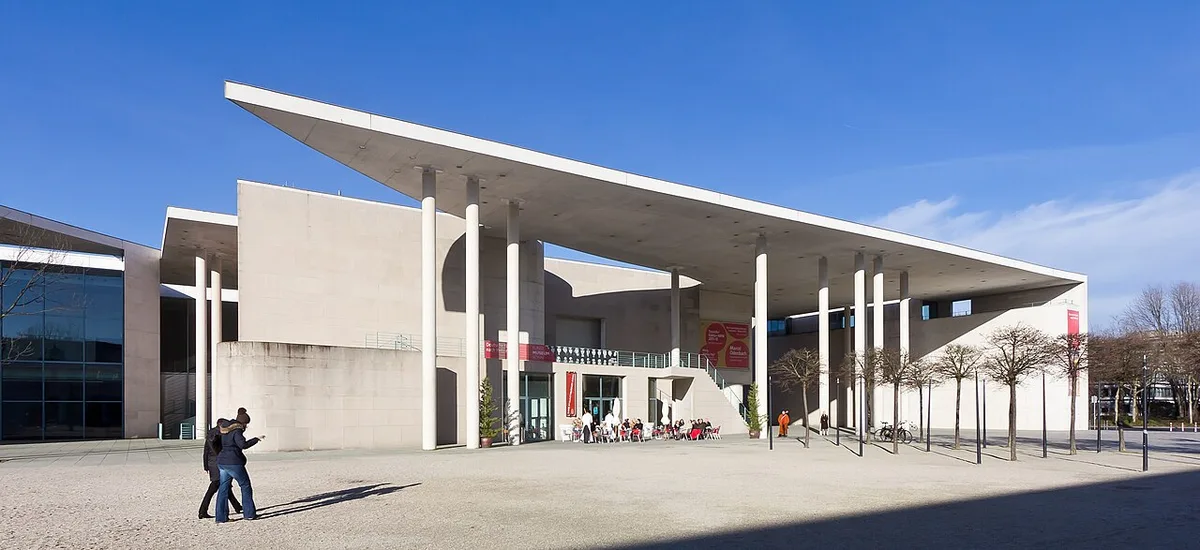
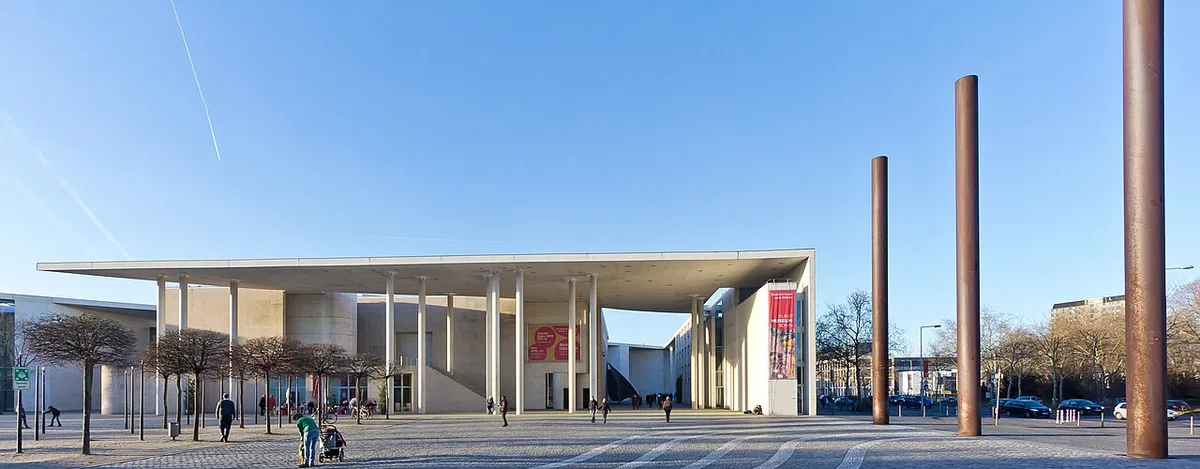
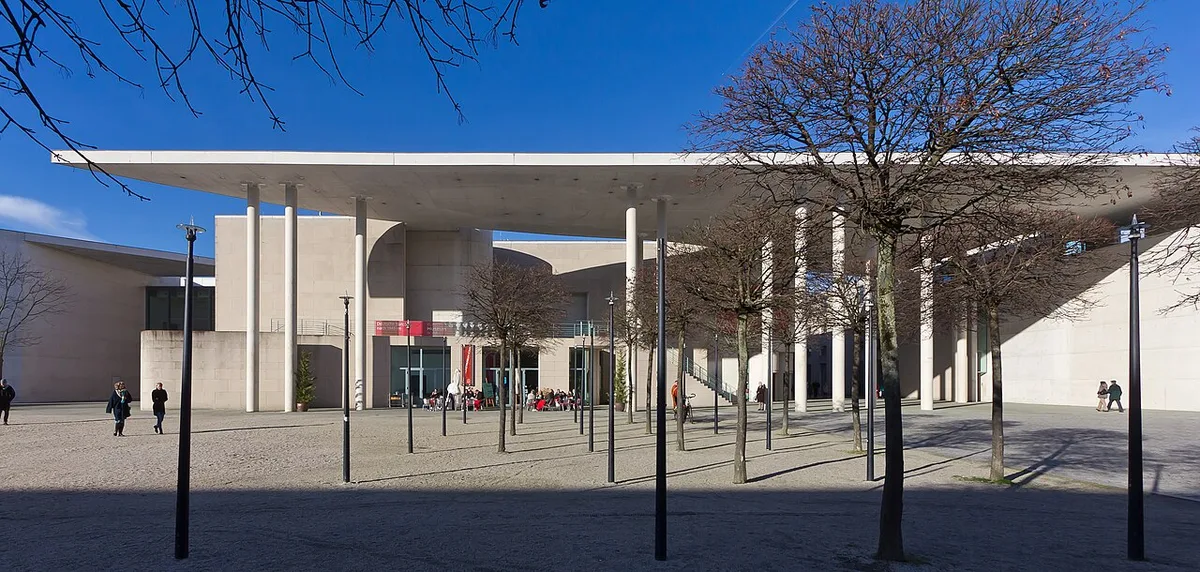
The Kunstmuseum Bonn sits on the Museumsmeile, the stretch of Bonn that concentrates the city's largest museums along one corridor. Its published address is Helmut-Kohl-Allee 2, 53113 Bonn, which puts it directly beside the Bundeskunsthalle and within a short walk of the Haus der Geschichte. Knowing that geography matters, because the most common planning mistake is treating these venues as one museum rather than three separate institutions.
The concrete detail to build your day around is this: the museum describes its holdings as a collection of roughly 9,000 works, centred on a major August Macke group and Rhenish Expressionism, plus a substantial body of art made in Germany after 1945. That combination is unusual, because it means one building covers both early twentieth-century Expressionism and post-war and contemporary positions. If either end of that range appeals to you, the museum is a strong fit; if neither does, your time is better spent next door.
Where the Kunstmuseum Sits on the Museumsmeile
The Museumsmeile groups several major venues within walking distance of one another along Helmut-Kohl-Allee and the adjacent streets. The Kunstmuseum Bonn and the Bundeskunsthalle share a forecourt area, and the Haus der Geschichte stands nearby on Willy-Brandt-Allee. That proximity is the reason the area works so well for a single half-day, and also the reason visitors assume a single ticket covers everything.
For orientation, plan on foot rather than by vehicle once you arrive, because the walk between the Kunstmuseum and the Bundeskunsthalle is measured in minutes, not stops. Confirm the practical details of how you reach the district before you travel, since public transport arrangements around the Museumsmeile change with construction and service work. The Bundeskunsthalle publishes its own directions and periodically flags stop closures, so check its site close to your date rather than relying on an older route description.
Collection Strengths: Macke, Rhenish Expressionism and Art After 1945
The collection profile is the clearest reason to choose this museum over its neighbours. Its central holdings are grouped around August Macke and the wider Rhenish Expressionist circle, alongside a significant collection devoted to art in Germany after 1945. That means the same visit can move from early twentieth-century colour and figure painting into post-war abstraction, installation and conceptual work without leaving the building.
Because the museum's own digital offerings include short filmed introductions to collection and exhibition topics, you can preview its character before committing to a visit. These short tours are published in German, which is worth knowing if you do not read the language, because they will not substitute for an English-language orientation. Use them to check whether the current focus matches your interests, then plan the rest of your day around that answer.
Who This Museum Rewards, and Who Should Choose Differently
The Kunstmuseum rewards visitors who want to look at objects rather than read a narrative. If you enjoy following a painter's development across rooms, or tracing how German art shifted after the war, the collection gives you that structure. If you want blockbuster touring shows with heavy interpretation and dramatic staging, the Bundeskunsthalle next door is built for exactly that purpose.
History-focused travellers should weigh the alternative carefully. The Haus der Geschichte documents Germany since 1945 through original objects, reconstructed interiors and multimedia stations, and it publishes free entry to the museum and all its exhibitions. If your priority is twentieth-century German history rather than art, that free admission makes it an easy first stop, and it is a genuinely different experience rather than a lighter version of the Kunstmuseum.
Classical music fans have a third option in the same city, with the Beethoven-Haus operating as a museum, research centre and concert venue dedicated to the composer born in Bonn in 1770. It is a separate institution with its own admission and its own guided-tour arrangements, so treat it as a distinct booking decision rather than an add-on with a shared ticket. Its visitor information pages set out guided tours, family programmes and access provisions for visitors with particular needs.
Ticket Scope: What the Verbundkarte Does and Does Not Cover
The Bundeskunsthalle publishes a Verbundkarte that is valid for the Bundeskunsthalle and the Kunstmuseum Bonn for all concurrently running exhibitions, priced at 20 EUR or 10 EUR reduced. Treat that as the Bundeskunsthalle's published information about a joint ticket, not as a Kunstmuseum Bonn price list. The practical advantage is that you pay once and see both venues on the same day; the limitation is that the validity is tied to exhibitions running at the same time.
The most important thing to understand is what the Verbundkarte is not. It is not a city-wide museum pass, and it does not extend to the Haus der Geschichte, the Deutsches Museum Bonn or other institutions on the Museumsmeile. Each of those venues sets its own admission terms, so budget for them separately instead of assuming one purchase covers the corridor.
Current Kunstmuseum Bonn admission categories and any reduced or concessionary rates are published on the museum's own site and on the city's cultural pages rather than in third-party summaries. Those two sources are where you should check before you travel, because concession rules depend on proof of status and are not something to assume from a general listing. The same applies to any combined offers the museum may run with partners, which change over time.
Free and Paid Spaces Sit Side by Side on the Museumsmeile
One of the more confusing aspects of the district is that free and paid access can coexist within a single institution. The Bundeskunsthalle, for example, publishes free entry for all visitors up to and including the age of 18 on all days, and it also keeps a publicly accessible library and salon open without charge during set hours. Its roof is likewise accessible during regular opening hours, subject to weather.
That contrast matters because it can produce a misleading impression of what a neighbouring venue will cost you. Free thresholds and free-access spaces at the Bundeskunsthalle do not automatically apply at the Kunstmuseum Bonn, whose own conditions you should verify directly. Read each building's published terms separately rather than assuming a shared policy across the Museumsmeile.
A Suggested Visit Duration, and How It Changes
As a suggestion rather than an official figure, allow around 90 minutes to two hours for the Kunstmuseum Bonn if you want to engage with the collection rather than walk through it. Two hours suits a visitor who reads labels and lingers in the Expressionist rooms; ninety minutes suits someone content to move steadily through the highlights. Neither number comes from the museum, so treat it as a planning estimate you can adjust on the day. For wider planning, see Beethoven House Bonn Visitor Guide.
Adding any second venue roughly doubles the time, and adding two turns the outing into a full day. The honest trade-off is that a third stop usually reduces each visit to a skim, particularly at the Haus der Geschichte, whose permanent exhibition covering Germany since 1945 rewards a slower pace. If you only have a half-day, pick two venues and accept that you are choosing depth over coverage.
Building a Half-Day Versus a Full Museumsmeile Day
For a half-day, pair the Kunstmuseum with the Bundeskunsthalle and buy the shared Verbundkarte if the timing of the exhibitions lines up, since both buildings sit on the same forecourt and the walking between them is negligible. Start with the venue whose programme interests you more, because fatigue affects the second stop noticeably, and check what is actually on at each before you commit. For wider planning, see Bundeskunsthalle Bonn.
For a full day, add the Haus der Geschichte as a third stop and accept that you will cover its permanent exhibition selectively. Because its entry is free and its displays are dense, it absorbs time quickly, so decide in advance which decades you care about most. Ending the day with a walk along the Rhine works well, since the Museumsmeile runs alongside the river.
The August Macke Haus as a Smaller Alternative
If the Macke holdings are what draw you to the Kunstmuseum, consider the August Macke Haus in Bonn's old town as a complementary stop. It occupies the artist's former home and presents original rooms alongside changing Expressionism exhibitions, which gives a more personal and domestic context than a large gallery can. It is a separate institution with its own admission, so the two are not interchangeable and no shared ticket applies.
The old town location also lets you combine art with a different part of the city, including the historic centre around the Altes Rathaus. That makes the Macke Haus a reasonable substitute if your schedule cannot stretch to the Museumsmeile, though it does not replace the broader post-1945 collection. Decide based on whether you want one painter's world or a survey of a century of German art.
Practical Planning: Verify Before You Travel
Opening hours, admission categories and current exhibition dates at the Kunstmuseum Bonn are published on the museum's own website, and that is where you should confirm them shortly before your visit. Third-party summaries frequently lag behind changes and sometimes generalise about the Museumsmeile as a whole. A quick check of the official pages removes the guesswork about whether your chosen day works.
If you want to see what is on before buying anything, the museum publishes short online previews of exhibitions and collection groupings that indicate the current focus. They are produced in German, so they are most useful for confirming subject matter rather than understanding detailed interpretation. Use them as a check on your own interest, not as a substitute for the exhibition pages themselves.
Plan Your Visit
The Kunstmuseum Bonn is the right choice if you want August Macke, Rhenish Expressionism and German art after 1945 in one building, and it pairs naturally with the Bundeskunsthalle next door. Confirm hours, admission and what is currently on through the museum's official channels, and treat any planning figure in this guide as a suggestion rather than a published fact.
If your interests lean toward history, start free at the Haus der Geschichte and treat the Kunstmuseum as the add-on; if they lean toward a single painter's domestic world, the August Macke Haus may suit you better. Whatever you choose, resist the urge to fit three venues into one afternoon. Two well-paced stops will leave you with more than four rushed ones.
Frequently Asked Questions
Is the Kunstmuseum Bonn worth visiting for non-specialists?
It can be, depending on what you enjoy looking at. The collection spans August Macke and Rhenish Expressionism through to art made in Germany after 1945, so there is a wide range of visual styles rather than one narrow movement. If you like colour, figure painting and twentieth-century experimentation, you will find plenty. If you prefer strongly narrated exhibitions with heavy interpretation, the Bundeskunsthalle next door is built around temporary shows and may suit you better. Checking the museum's current programme pages before you go is the quickest way to judge.
Does one ticket cover the Kunstmuseum Bonn and the Bundeskunsthalle?
Yes, but only in a specific form. The Bundeskunsthalle publishes a Verbundkarte that is valid for the Bundeskunsthalle and the Kunstmuseum Bonn for all concurrently running exhibitions. That ticket is not a city-wide museum pass, and it does not extend to the Haus der Geschichte, the Deutsches Museum Bonn or other venues, each of which sets its own admission. Check the Bundeskunsthalle's ticket pages for the current scope and conditions before buying.
How long should I allow at the Kunstmuseum Bonn?
As a suggestion rather than an official figure, plan on roughly ninety minutes to two hours if you want to engage with the collection rather than walk through. Allow longer if the Expressionist rooms or the post-1945 holdings are your main interest. Adding the Bundeskunsthalle roughly doubles the time, and adding a third venue such as the Haus der Geschichte turns the outing into a full day. The museum does not publish a recommended duration, so treat these as planning estimates to adjust on the day.
How does the Kunstmuseum Bonn compare with the August Macke Haus?
They serve different purposes. The Kunstmuseum holds a large collection centred on August Macke and Rhenish Expressionism alongside a significant body of art made in Germany after 1945, so it gives you a broad survey across a century. The August Macke Haus occupies the artist's former home in the old town and offers original rooms with changing Expressionism exhibitions, which is a smaller and more personal experience. They are separate institutions with separate admission, and no shared ticket applies between them.
Which Bonn museums are on the Museumsmeile?
The corridor brings together several major institutions within walking distance, including the Kunstmuseum Bonn, the Bundeskunsthalle and the Haus der Geschichte, with the Deutsches Museum Bonn also in the district. Each venue has its own admission terms, opening hours and exhibition programme, so plan them as separate stops rather than assuming a single pass covers all of them. Free entry published by one venue does not carry over to its neighbours.


