
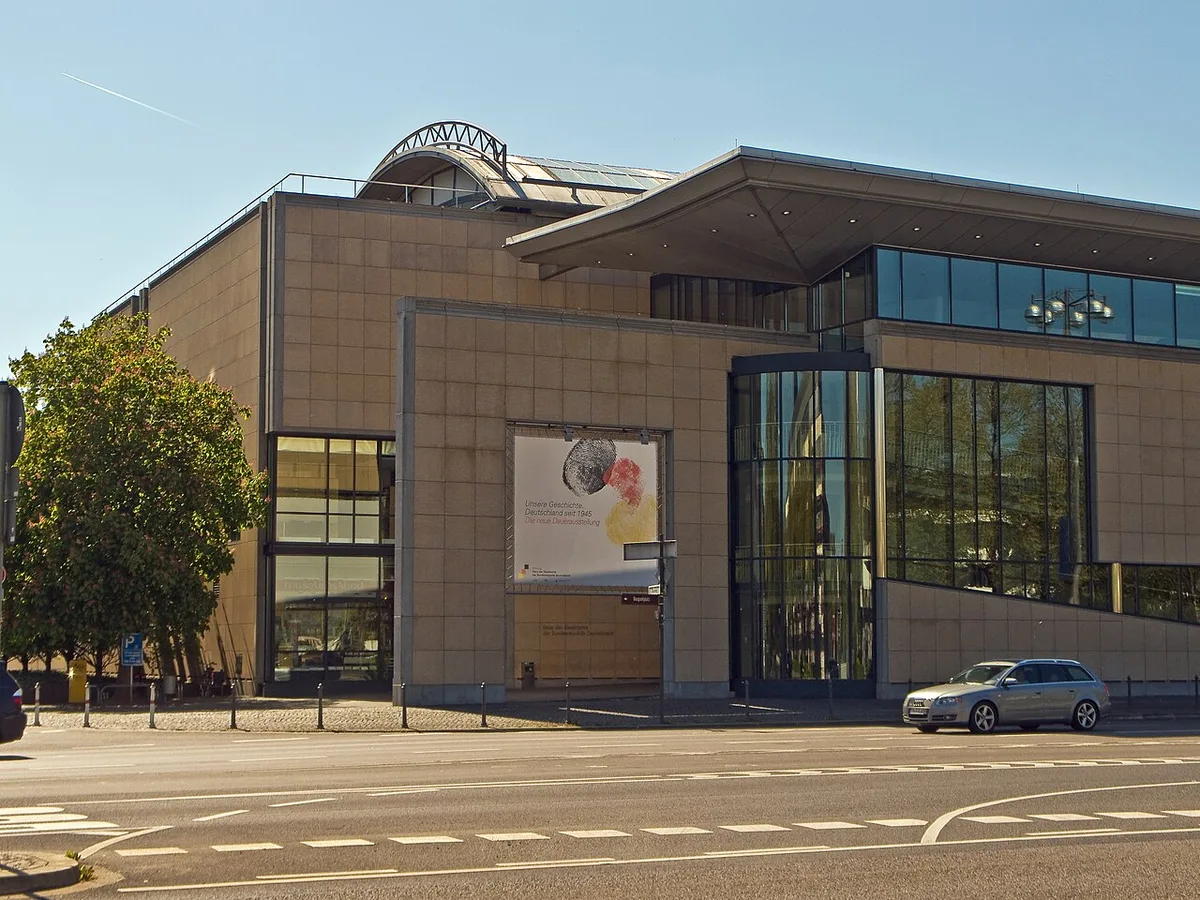
The Haus der Geschichte der Bundesrepublik Deutschland stands on the Museumsmeile in Bonn at Willy-Brandt-Allee 14, and it is the obvious anchor of a museum day in the former federal capital. Its subject is German history from 1945 to the present, told through objects, media stations and personal stories rather than paintings or sculpture. The detail that makes it easy to recommend is the admission model: as the museum states, entry to the museum and all exhibitions is free, so there is no ticket decision to weigh before you go.
One time limit shapes a 2026 visit. The permanent exhibition Du bist Teil der Geschichte. Deutschland seit 1945 opened on 18 September 2024 and runs until 10 January 2027, so the version you walk through is a defined edition rather than an open-ended display. A temporary exhibition, NACH HITLER, on Germany's reckoning with National Socialism, opened on 7 May 2026 and is listed to run until spring 2027. Both dates come from the museum's own pages and are worth checking again in the week you travel.
Budget roughly 90 minutes if you want an overview of one part of the permanent exhibition plus the audio guide's short route, or around half a day if you read labels, follow the full 30-station guide and stop for coffee. Those durations are planning suggestions, not an official recommendation from the museum, and they depend on how densely you read and how your group moves.
What Free Admission Actually Covers
The museum states that entry to the museum and all exhibitions is free. That covers the permanent exhibition and the temporary exhibitions shown in the building, so there is no separate exhibition surcharge to budget for. It also means the museum works well as a flexible stop: you can drop in for a focused hour without calculating value for money. Confirm the current position on the museum's visitor information before you travel, since admission terms are its to set.
Free admission does not extend to everything on the programme. The museum runs separately ticketed formats, such as a monthly after-work museum evening and a craft workshop, which are paid and usually need advance registration. Those events are not part of general admission, so read each event listing rather than assuming the whole programme is open to all comers.
Separate from the Haus der Geschichte, the neighbouring Museumsmeile venues manage their own ticketing. Do not assume one admission covers several buildings, and check each institution's page for the exhibition you plan to see. The Bundeskunsthalle Bonn exhibition guide and the Kunstmuseum Bonn visitor guide belong to different organisations with their own terms.
Opening Hours and the Rhythm of a Visit
According to the museum's own visitor information, opening hours are Tuesday to Friday from 9 to 18, and Saturday and Sunday from 10 to 18. Public holiday hours are handled separately on the same site, so if your visit falls on a holiday, that is the page to read rather than assuming normal times apply.
Weekday mornings often suit readers who want to move through the permanent exhibition at their own pace, while weekend afternoons tend to be livelier and slower if you want to stand and read long texts. The trade-off is calm versus convenience: a quiet weekday morning costs you nothing, while a weekend visit may fit your travel schedule better. These are patterns to weigh, not fixed rules.
Because the museum closes at 18 on all published days, a late-afternoon start leaves little room for the long route. If you are attempting a half-day deep dive, arrive with at least three hours to spare before closing. Verify the current times on the official page in the week you travel, since holiday arrangements are published there rather than in third-party listings.
Inside 'Du bist Teil der Geschichte. Deutschland seit 1945'
The permanent exhibition carries the title Du bist Teil der Geschichte. Deutschland seit 1945 and is dated 18 September 2024 to 10 January 2027. That end date matters for planning: a visit in 2026 sees a version with a fixed horizon, and anyone thinking about a return in 2027 should watch for news of what replaces it.
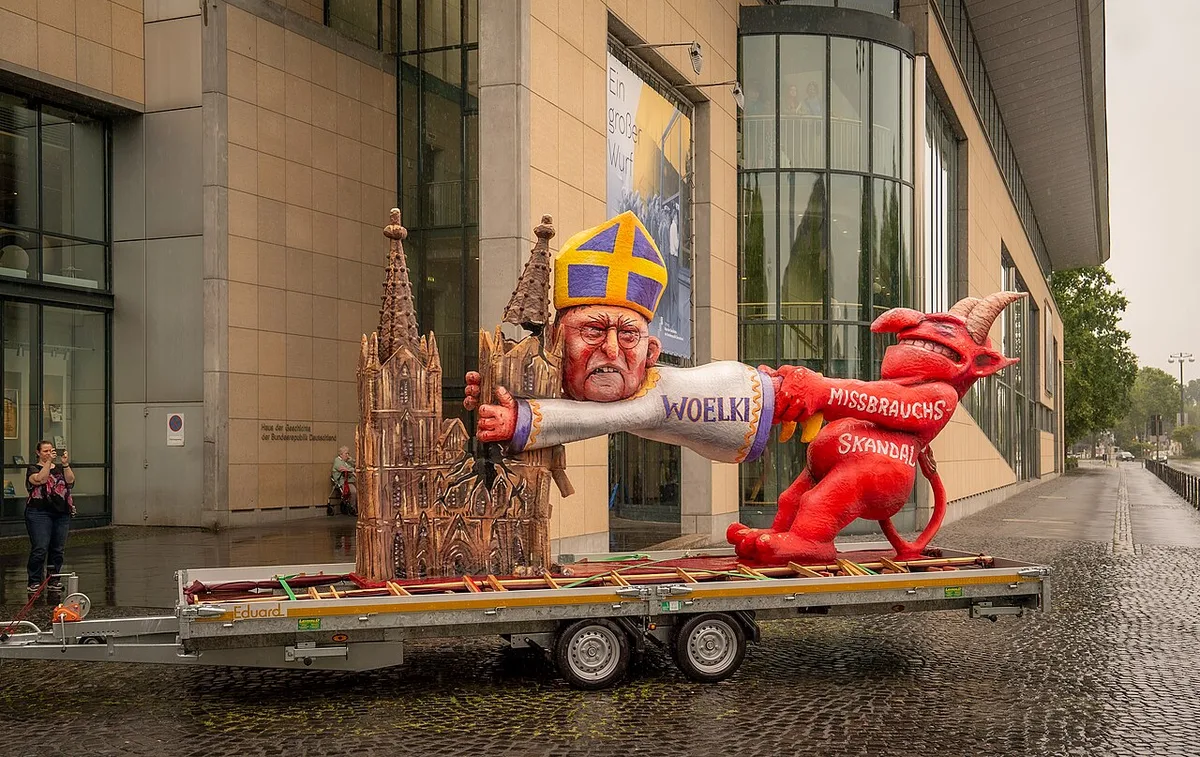
The exhibition rewards recognition more than exhaustive reading, so prioritise the eras you already know something about. Objects and media stations anchor themes including the divided Germany period, the Federal Republic, the GDR, migration, reunification and globalisation, which means you can navigate by era rather than by room number. If you are short on time, choose two or three themes and treat the rest as a reason to come back.
The presentation is aimed at a broad public rather than specialists, which is why it leans on personal stories and everyday objects. That also means it holds up when you skim: the arc makes sense without every panel being read. For a deeper layer, pair the permanent exhibition with the free audio guide rather than trying to read everything on the walls.
Temporary Exhibition 'NACH HITLER': Check Dates Before You Go
NACH HITLER, on Germany's confrontation with National Socialism, is dated 7 May 2026 to spring 2027 on the museum's site. Because the closing window is given as a season rather than a fixed day, treat the end date as approximate and confirm it before planning a trip around it. It is a temporary exhibition, so it will not be part of a future visit in the same form.
Temporary exhibitions are the part of the programme most likely to shift, so the museum's exhibitions page is the one to check in the final week before you travel. If the subject matter is your main reason for coming, confirm it is on view before you commit a half day to it. If it has closed by then, the permanent exhibition still justifies the trip on its own.
Temporary shows here often attract school groups and guided visits at predictable times, so a weekday morning may be the calmer window if you want to read the panels. Allow extra time if the temporary exhibition is your priority, because it sits on top of the permanent route rather than replacing it. Combining both in one visit is the reason a half-day suggestion exists at all.
The 'Lost Places' Exhibition and Its Closure Notice
The exhibition Verlassen, Verfallen, Vergessen. Lost Places in Deutschland is listed as closed from 8 October to 19 November 2026 because of construction work at the Museumsmeile stop. The closure notice concerns the U-Bahn gallery space rather than the whole museum, and it is dated, so it is a live scheduling risk rather than a permanent change.
Do not build your visit around this exhibition during that window, and do not assume it has reopened simply because the date has passed. Confirm its status on the museum's own exhibition and news pages, because construction schedules at a transport stop can move. The museum's other displays remain the reason to visit in the meantime.
If you are travelling specifically for Lost Places, treat the reopening as unconfirmed until the museum says otherwise, and keep the permanent exhibition as your fallback. That way a delay costs you an hour of re-planning rather than the point of your trip. If the exhibition has reopened by the time you read this, the rest of this guide still applies unchanged.
The Free Audio Guide with Video Guide: 30 Stations, Many Languages
The museum provides a free audio guide with video guide for the permanent exhibition Du bist Teil der Geschichte. Deutschland seit 1945, and it accompanies visitors at 30 stations covering German history. The stated duration is around one hour, which is a useful signal: the guide is not a full visit on its own, but it is a well-defined spine to build one around.
The most practical detail is how you access it: the guide can be used on your own smartphone, tablet or computer, in the exhibition, on the move or at home. That means you can prepare before you travel, preview the route or revisit a station afterwards instead of relying on a borrowed device on site. It also means a charged battery and your own headphones are worth packing.
The contributions are available in German, English, French, Spanish, Italian, Arabic, Russian and Polish, and also as audio description in German and English, in Leichte Sprache and as a video in German Sign Language with subtitles. Those options make the museum viable for mixed-language groups and for visitors who need accessible formats. If your group spans several languages, the guide is the simplest way to keep everyone oriented at the same stations.
How Long to Allow: A 90-Minute Skim vs a Half-Day Route
For a 90-minute overview, start with the audio guide's opening stations, then walk the permanent exhibition at speed, stopping only where an object catches your eye. Skip the long label texts, treat the temporary exhibition as a short add-on if it is open, and leave before museum fatigue sets in. This route suits travellers squeezing the museum between other Bonn stops.
For a half day, follow the audio guide from start to finish, then return to the eras you found most interesting for a second, slower pass. Add the temporary exhibition if it is on view, and take a proper break rather than pushing straight through. This version suits readers who want the museum to be the main event of the day.
Two variables decide which version you get: how much you read, and whether your group moves as one unit. Fast solo readers can cover more in 90 minutes than families with children can in three hours. Pick the version that matches your group, and treat neither duration as a figure published by the museum.
Location, Contact and Practical Details
The museum is at Willy-Brandt-Allee 14, 53113 Bonn, on the Museumsmeile, and the visitor service can be reached on 0228 9165-400 or -401. Those contact details are published by the museum and are the reliable route for questions about group visits, guided formats or the day's arrangements. Use the museum's own contact channel rather than a third-party listing for anything time-sensitive.
A museum café operates on site, and a navigation app guides visitors through the building and the permanent exhibition to points such as the café and accessible toilets. The app is a practical answer to the question of where things are once you are inside, rather than a substitute for planning. If you want a proper break in a half-day visit, the café is the obvious anchor point.
Because construction work at the Museumsmeile stop has affected one exhibition space, check the museum's current notices before travelling if your route passes that stop. The city's tourism page for the Haus der Geschichte is a second place to confirm the basics, but neither replaces the museum's live opening-hours and news pages on the day. Allow extra time for the entrance area if building work is ongoing when you visit.
Fitting the Museum into a Wider Bonn Itinerary
Bonn's museum cluster makes a two-museum day realistic without rushing, but each institution needs its own admission check. The Haus der Geschichte pairs naturally with art and exhibition venues on the same stretch, provided you confirm what is on and what it costs at each. Planning around the free admission here leaves more room in the budget for the paid venues.
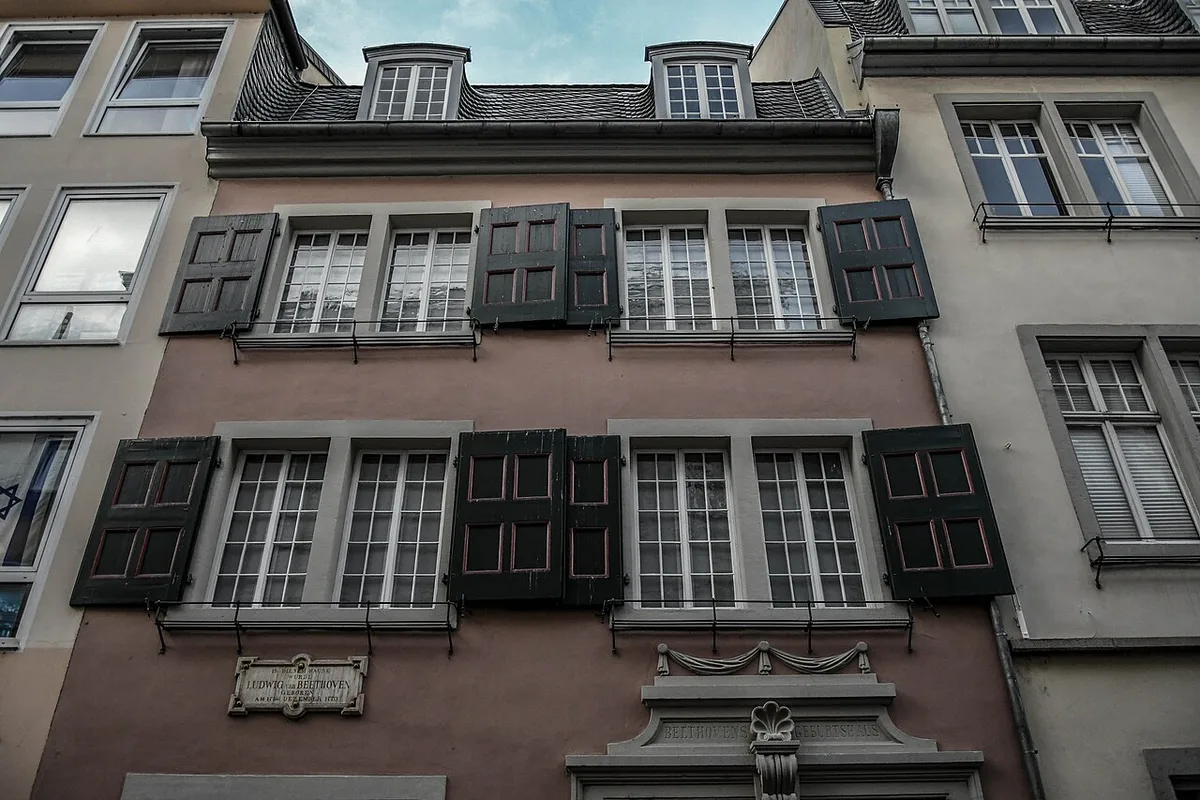
Bonn's other history and culture stops sit further into the city centre, so a sensible day separates the Museumsmeile from the old town rather than trying to walk both clusters at once. The Beethoven House Bonn visitor guide covers a birthplace and collection that complements the postwar story told here, and the Altes Rathaus Bonn visitor guide covers a civic landmark in the centre. Doing one cluster properly beats skimming both.
If you are building the trip from scratch, start with the Bonn: Landmark Visitor Guides for the full picture of what the city offers, then narrow to the museums that match your interests. Two well-chosen stops with a real lunch between them will leave you with more than four half-seen ones. The city itinerary surface is the place to compare options before committing a day.
Plan Your Visit
The Haus der Geschichte Bonn is one of the simplest museum recommendations in Germany to justify: entry to the museum and all exhibitions is free, the permanent exhibition is a defined edition running to 10 January 2027, and a free audio guide with 30 stations is available in eight spoken languages and accessible formats. That combination means you can plan a focused 90-minute visit or a half day without worrying about ticket value. Check the museum's own pages for the day's opening arrangements, holiday hours and the latest exhibition status before you set out.
Two checks are worth doing in the final week: whether NACH HITLER is still on view, and whether the Lost Places exhibition has reopened after its autumn 2026 closure. Both are published by the museum and both can change, so treat any third-party listing as a starting point rather than the final word. With those confirmed, the rest of the visit is straightforward.
Frequently Asked Questions
Is the Haus der Geschichte Bonn free to visit?
Yes. The museum states that entry to the museum and all exhibitions is free, so the permanent exhibition and the temporary exhibitions on view are covered by general admission. Separately organised evening and workshop formats are ticketed and usually need advance registration, so read each event listing if you are planning around one of those. Confirm the current position on the museum's own visitor information page before you travel.
How long should I allow for a visit?
A reasonable suggestion is about 90 minutes for an overview of the permanent exhibition, or around half a day if you follow the audio guide in full, add a temporary exhibition and take a break. The audio guide itself is listed as roughly one hour across 30 stations, which shows how much of a longer visit it can absorb. These are planning suggestions, not a duration published by the museum, so adjust for how much you read and whether you are moving as a group.
Is the Lost Places exhibition currently open?
The museum lists Verlassen, Verfallen, Vergessen. Lost Places in Deutschland as closed from 8 October to 19 November 2026 because of construction work at the Museumsmeile stop. Do not plan a visit around that exhibition during the closure, and do not assume it has reopened simply because the date has passed, since construction schedules can shift. Check the museum's own news and exhibition pages for its current status.
What languages is the audio guide available in?
The free audio guide with video guide covers 30 stations and is available in German, English, French, Spanish, Italian, Arabic, Russian and Polish. Additional formats include audio description in German and English, a version in Leichte Sprache, and a video in German Sign Language with subtitles. It can be used on your own smartphone, tablet or computer, both inside the exhibition and elsewhere, so you can prepare or revisit it at your own pace.
Do the Museumsmeile museums share one ticket?
No single shared ticket should be assumed across the Museumsmeile institutions. Each museum sets its own admission terms, and the Haus der Geschichte is free while neighbouring venues such as the Bundeskunsthalle manage their own ticketing and exhibitions. Check each institution's own admission page for the exhibition you plan to see, rather than expecting one purchase to cover several buildings.


