

Bonn does not have one single best viewpoint; it has three distinct kinds, and the trade-offs between them are the whole story. A river-level view from the Rhine bridges or the old fortification at Alter Zoll costs nothing and fits between two museum visits. The Drachenfels plateau, reached by a cog railway from Königswinter, is the widest outlook over the Rhine valley in the area.
The third group, elevated city vantage points, is the least precise. A collected list of commonly recommended places in Bonn puts everything from the Drachenfels and Poppelsdorf Palace to Beethoven-Haus Bonn into one pool of popular spots, which is useful for discovery but does not confirm that any particular roof terrace is publicly open. Treat that list as a starting point, then confirm access with each site before you build a day around it. A practical comparison of the three viewpoint types follows, with the operator's own notes on the Drachenfelsbahn where they settle planning questions.
Rhine Riverfront and Bridge Views
Bonn's riverfront is a low viewpoint by design, and that is its strength. Standing on a Rhine bridge or along the bank, you see the river itself: barges, the opposite shore, and the city skyline sitting close enough to read. This is the fastest view to reach and the one that fits most easily into a short break.
A river-level view is also the most weather-sensitive in a practical way. In flat light, the water and the far bank merge into grey; on a clear day, the current, the bridges upstream and the wooded hills behind the city separate into distinct layers. The city's own tourism pages are the place to check orientation information for the riverfront, and the Bonn: Itineraries and City Travel Guides page puts these low viewpoints into a larger plan.
Because these are public outdoor spaces, plan them as a walk rather than a destination. A promenade route that passes several bridges lets you judge the light at each point and stop where the composition works. The Bonn photography guide linked here covers light direction and framing for exactly this kind of river-level shot.
Alter Zoll and the Old Fortification
Alter Zoll is a small, specific stop rather than a viewpoint you plan a day around. A collected list of recommended viewpoints describes it as a 17th-century defensive structure on the University of Bonn grounds, with remnants of the Napoleonic era on site and views toward the Rhine. Its name refers to a medieval customs house that once stood here. If you are already near the university or the riverfront, it is a logical few minutes on foot; if not, it is not a destination in its own right.
The caveat matters here: this falls into the category of city-level viewpoint information, not operator-confirmed visitor guidance. The list confirms the place exists and is commonly recommended, but it does not settle access rules, the state of the surviving masonry, or whether any part is fenced. Verify current conditions with the city's own tourism pages rather than assuming a viewpoint is reachable on a given day.
Use it as a river-facing stop on a walk that also crosses a bridge, so you are never travelling only for Alter Zoll. The city's destination pages are the place to confirm what is currently open or under works before you commit a morning to it.
The Drachenfels Plateau: The Widest Outlook
The Drachenfels is the highest and most expansive of the three viewpoint types, and it sits outside Bonn, in Königswinter. The operator of the railway describes the Drachenfels as a hill known for vineyards, a historic cog railway and the remains of a medieval castle, and it is one of the most frequently listed viewpoints associated with the Bonn area. The payoff is a broad Rhine valley outlook rather than a street-level river perspective.
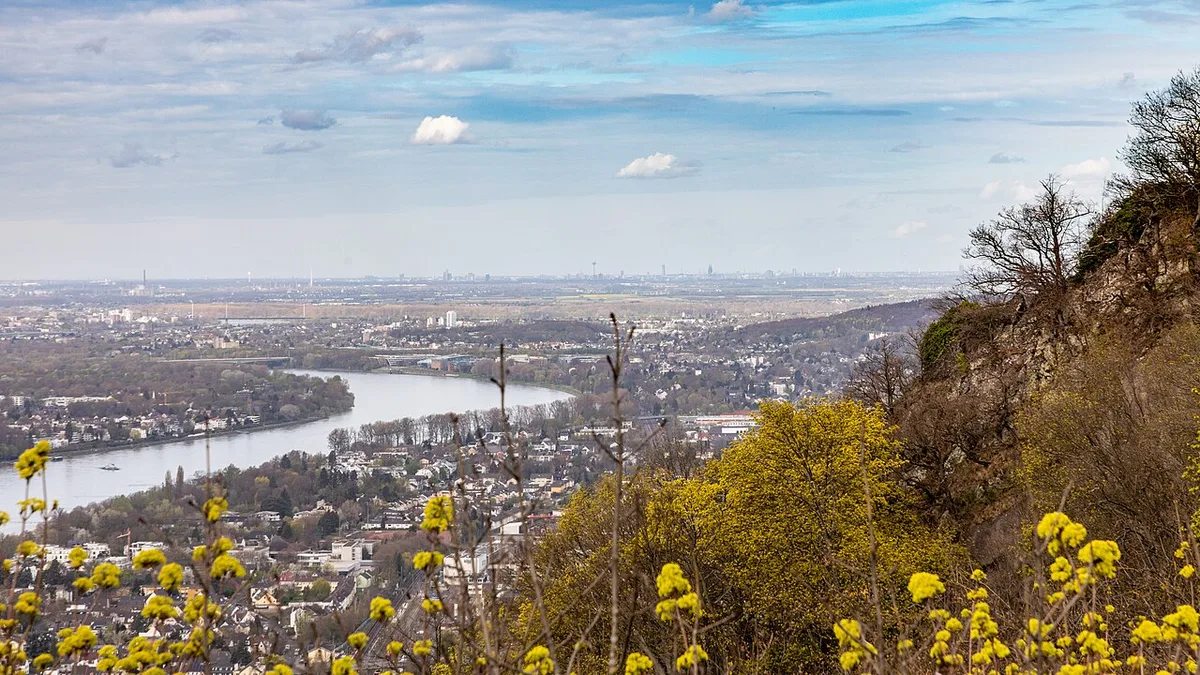
Walking up is possible, and the plateau can also be reached on foot, but the railway is the reason many visitors choose this viewpoint over a bridge. If your interest is specifically the summit and the view from it, the Drachenfels summit and viewpoint Bonn excursion guide covers the destination in more depth. Either way, budget for the height: the plateau is exposed, and the weather up there can differ from the city.
This is the one viewpoint in the comparison where you should check operational details before travelling. Current fares, and whether the railway runs on your date, are published by the operator and change by season; no fare or timetable should be assumed from a third-party page.
How the Drachenfelsbahn Works as a Route
The Drachenfelsbahn is not a single leap to the top; it is a line with intermediate stops, and understanding that changes how you plan the visit. The operator describes the railway, in service since 1883 and described as Germany's oldest cog railway, as a link between the old town of Königswinter and the Siebengebirge, ending at the Drachenfels plateau. It reports a route of 1520 m reaching 289 m in height and more than 40 million passengers carried, with electric railcars in use since 1953.
Along the route, the operator lists the Nibelungenhalle, Schloss Drachenburg, the Burghof and the plateau with its restaurant and event location as separate stops. That means a stop at the Nibelungenhalle and a visit to Schloss Drachenburg are one stop each, not something you combine with the summit in a single entry. If you want all three, the railway legs are part of the itinerary, not just transport.
The plateau itself is the terminus, so the view is the reward at the end of the line. Plan the stops you actually want rather than riding straight up and back, and check the operator's own site for the current service pattern on your chosen date.
Siebengebirge Context: A Protected Volcanic Range
The setting around the Drachenfels explains why the outlook is so wide. The operator describes the Siebengebirge as a volcanic low mountain range of around forty peaks, protected as a nature reserve since 1922 and one of the oldest such reserves in Germany. That combination of relatively modest height and open, protected slopes is what gives the plateau its long sightlines over the Rhine valley.
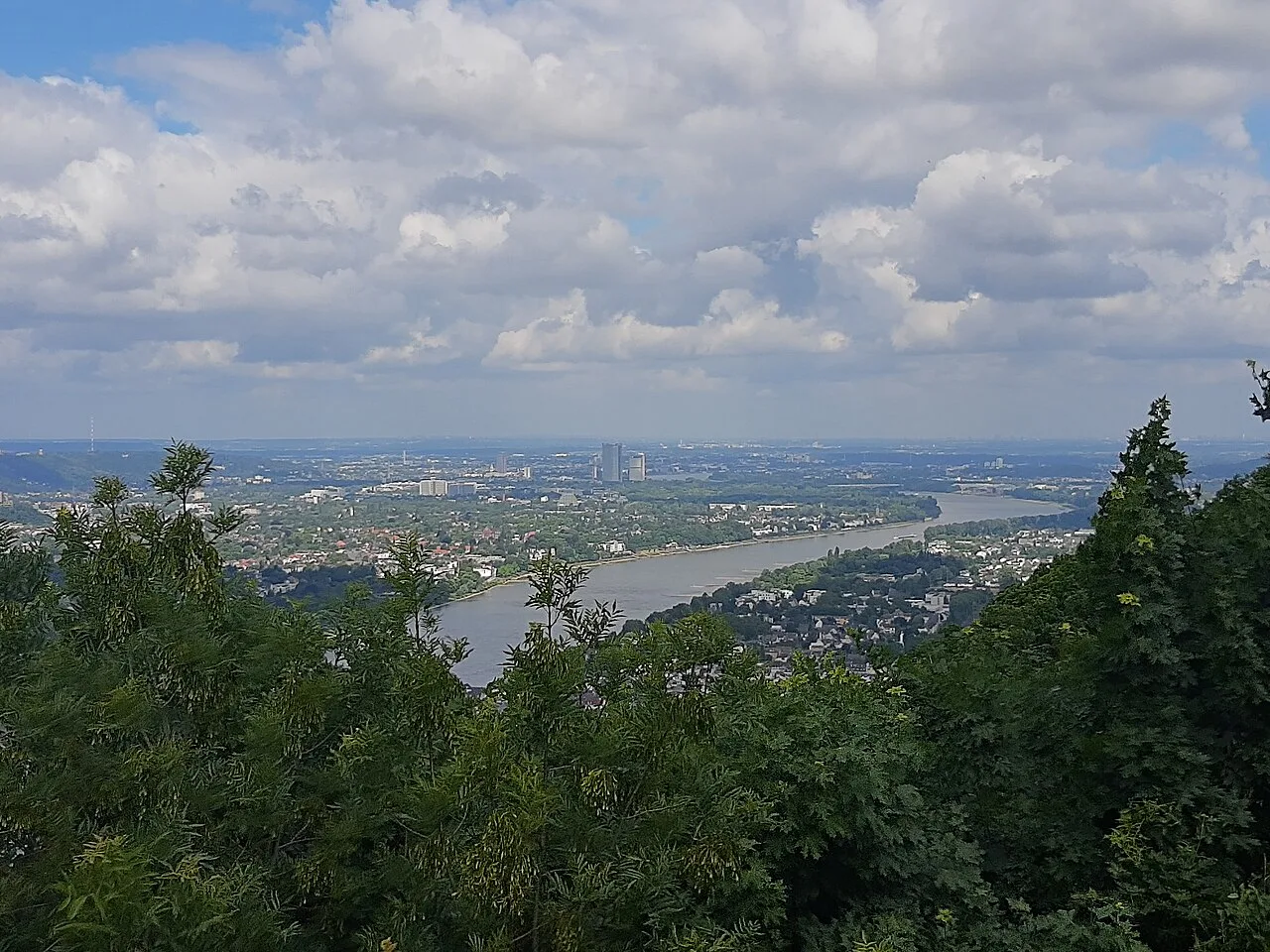
Season changes the view noticeably. The operator notes that broom flowers on the slopes in spring, and that in autumn clear air can carry the eye far across the Rhine valley. If a wide, layered view is your priority, autumn and clear spring days are the conditions to aim for rather than a fixed date.
From the plateau, the operator lists walking routes leading in all directions, toward the castle ruin, toward the Nachtigallental, and onward to Bad Honnef and Ittenbach. That turns the viewpoint into a trailhead as well, so a walker can descend on foot rather than returning by rail.
Duration and Effort: Morning or Full Day
The operator's own framing is that the Drachenfels can be experienced in a morning or extended into a whole day with a stop at the Nibelungenhalle, a guided tour of Schloss Drachenburg and a break up at the plateau. That is a suggestion from the operator, not an official minimum or fixed length of visit. Use it as a planning range: a short trip if you ride up, look and return; a full day if you build in the intermediate stops.
The contrast with a bridge or riverside view is the real decision. River-level viewpoints take minutes and require no planning; the plateau takes travel to Königswinter, exposure to the weather and a decision about the railway. If your day is already full of Bonn museums, a riverfront walk is the realistic choice, and the 3 days in Bonn itinerary is a better place to work out how the plateau fits alongside everything else.
Arrival at Königswinter: Follow the Signs
The operator gives unusually direct arrival advice: do not rely on a navigation system or Google Maps for the journey, because current construction sites and diversions cause some systems to route visitors incorrectly. Instead, it says, follow the signage in Königswinter, which leads reliably to the destination. This is a case where the older method is the more accurate one.
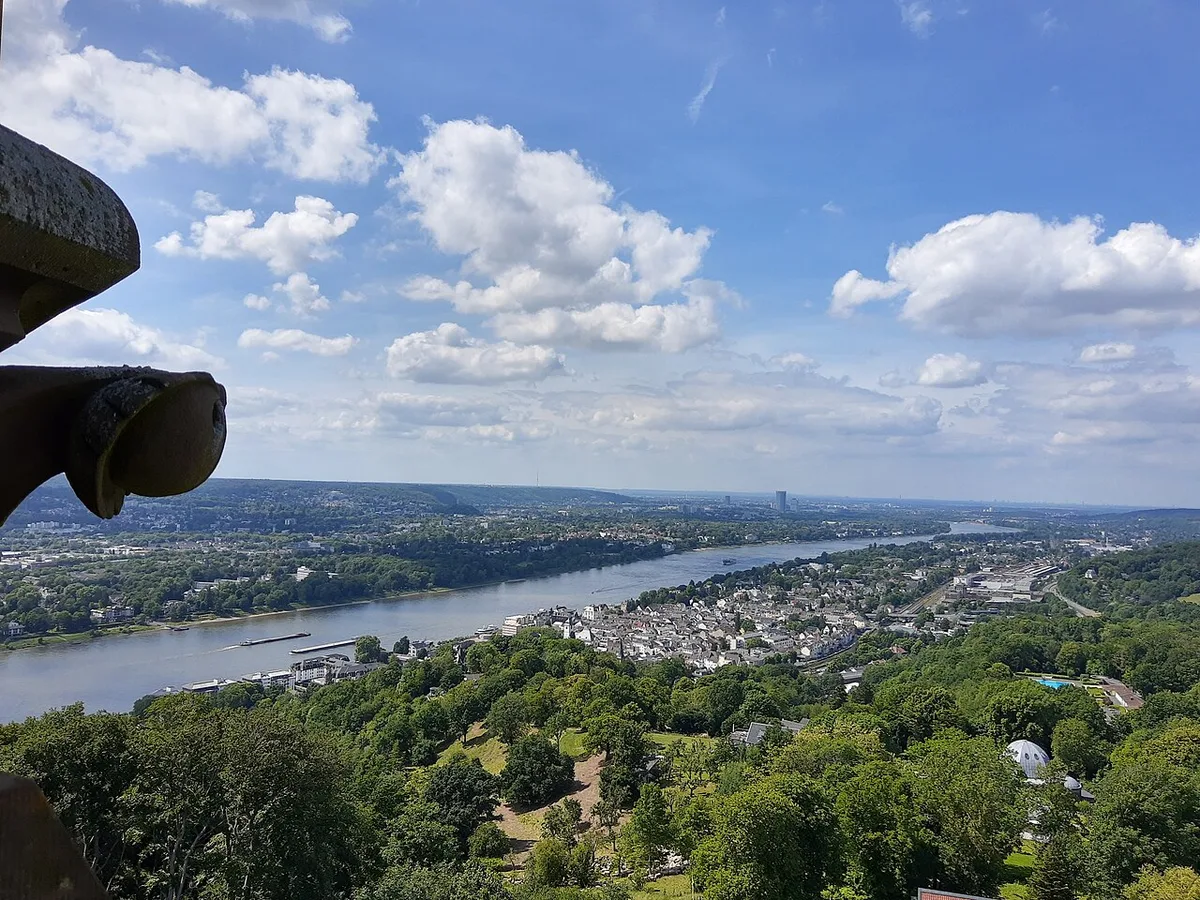
For anyone driving, that means reading signs rather than trusting a screen once you are in town. For anyone arriving by public transport, the same advice applies to the final approach on foot, so check the operator's arrival information before setting out and allow a little margin for the last stretch.
Drachenfels, Schloss Drachenburg and the railway are in Königswinter rather than in Bonn, so treat this as a short excursion from the city. Full itineraries and city-level planning for the home base belong on the Bonn: Itineraries and City Travel Guides page.
Paying at the Drachenfelsbahn: Bring Cash
The operator states that card payment is currently unavailable at the ticket machines at the valley station and the mountain station because of technical problems, and that this applies until further notice. Cash payment remains possible at all of the ticket machines, and the machine at the middle station does accept card payment. Note that this is the operator's statement about its own machines, not a general rule about payment in Königswinter.
The practical step is simple: carry enough cash for the railway if you intend to ride, even if you normally pay by card. Because this is described as a temporary technical issue, confirm the current position on the operator's site close to your visit rather than treating it as permanent.
City Vantage Points: Discovery, Not Ranking
The third viewpoint category is the least well defined. A collected list of the best views, scenic lookouts and viewpoints in Bonn gathers 26 places frequently mentioned across other articles and blogs, including the Drachenfels, Poppelsdorf Palace, Beethoven-Haus Bonn, Schloss Drachenburg, the Botanical Garden and Alter Zoll. It is explicitly a compilation of what those sources mentioned most often, so its ordering reflects repetition in coverage rather than a quality judgement.
That distinction matters when you search for a Bonn rooftop specifically. The list does not confirm which buildings have publicly accessible roofs, whether access is free, or what the opening arrangements are. It is a discovery tool: use it to find names you might not have considered, then check each site's own information for access before you go.
Free Views Versus Ticketed Interiors
Separate the grounds from the buildings. A palace or castle complex can offer an outdoor view you can reach without buying anything, while the interior, a guided tour or a specific collection is a separate ticket. The same logic applies along the Drachenfelsbahn route, where the Nibelungenhalle, Schloss Drachenburg and the castle ruin are distinct places with their own arrangements rather than one combined admission.
Before any visit, decide what you actually want: a view, an interior, or both. Then check the relevant operator or city page for what that admission covers, since ticket scope varies by site and is not something to assume from a single listing.
The official city tourism pages are the most reliable starting point for what is currently open in Bonn, while the Drachenfelsbahn operator publishes the conditions that apply to the railway itself.
Choosing Between the Three Viewpoint Types
Decide by effort and by what you want to see, not by a ranking. If you have a free hour and want the river, use a bridge or the Alter Zoll stretch, where the view is immediate and costs nothing to reach. If you want the widest Rhine valley outlook and can give up half a day, the Drachenfels plateau is the only one of the three that delivers it, and the railway determines how demanding the trip is.
If you are looking for a high city perspective without leaving Bonn, treat the elevated-viewpoint category cautiously and confirm access first. Poppelsdorf Palace, the Botanical Garden and the Alter Zoll all appear on city-level viewpoint lists, but their grounds and interiors differ in how, and whether, they can be visited. Cross-check the landmark visitor guide for Bonn before committing to a route.
Finally, the season and the day's light will shape the result more than the choice itself. The operator's own note on when the Rhine valley view reaches furthest points to clear autumn and spring air, and the same principle applies to any riverfront or rooftop view.
Plan Your Bonn Viewpoint Stop
Fix the viewpoint type first, then the logistics. River bridges and the Alter Zoll area give you a free, fast river view; the Drachenfels plateau above Königswinter gives the widest Rhine valley outlook at the cost of a trip, and the railway's current fares, service and payment conditions should be checked on the operator's site before you travel. City vantage points need the most verification because access is not documented in the lists that recommend them.
Two habits make the day work: confirm tickets and opening information with the operator or the city rather than a third-party summary, and carry cash for the Drachenfelsbahn while its card machines are reported to be out of service. Then let the weather decide between the river and the plateau.
For a broader Bonn plan, the city travel guide and landmark visitor guide here cover itineraries and individual sites, and the Bonn photography guide helps you pick light and framing once you have chosen your view.
Frequently Asked Questions
Do you have to take the Drachenfelsbahn to reach the Drachenfels plateau?
No. The railway is the easiest way up and is the reason many visitors choose this viewpoint, with intermediate stops at the Nibelungenhalle, Schloss Drachenburg and the Burghof, but the operator also lists walking routes from the plateau in several directions. Walking is a genuine alternative for anyone prepared for the climb, and descending on foot after riding up is a common combination.
How long does a Drachenfels visit take?
The operator frames it as a visit you can experience in a morning or extend into a whole day with a stop at the Nibelungenhalle, a guided tour of Schloss Drachenburg and a break at the plateau. That is the operator's own suggestion, not an official length of visit, and the truth depends on how many stops you actually make and how long you spend at the top.
Can I pay by card at the Drachenfelsbahn ticket machines?
The operator states that card payment is currently unavailable at the ticket machines at the valley and mountain stations because of technical problems, and that cash remains possible at all machines. The machine at the middle station does accept card payment. Because this is described as a temporary issue, check the operator's site shortly before travelling.
What can you see from the Rhine bridges and the Bonn riverfront?
These are low, river-level views: the water itself, the opposite bank, barges and the city seen from close by. They are quick, free to reach and easy to fit between other stops, but they do not give the wide valley panorama that the Drachenfels plateau offers. Light and weather make more difference here than at any other viewpoint type.
Which Bonn rooftops or elevated spots are open to the public?
That is not confirmed by the commonly cited lists of Bonn viewpoints, which gather frequently recommended places without documenting roof access or opening arrangements. Poppelsdorf Palace, the Botanical Garden and Alter Zoll appear in that category, but check each site's own information before planning around it. Treat city-level viewpoint lists as discovery tools rather than access guides.


