

Rostock gives families two distinct days inside one city. The historic Hanseatic centre sits inland on the Warnow river, while the seaside resort of Warnemünde occupies the coast, and the city's own visitor information places the Baltic about 12 kilometres north of the centre. That split is the single decision that shapes everything else, because you cannot stroll the old town and stand on the beach without factoring in a transfer.
The good news is that the connection is straightforward: the city describes the S-Bahn as the fastest way to link the centre with the beach station, with buses and passenger boats as alternatives. Because none of the sources give journey times, treat the transfer as a fixed block of your day rather than a quick hop. Deciding how much time each half deserves is more useful than trying to collect every sight.
Why Rostock Works for a Family Day
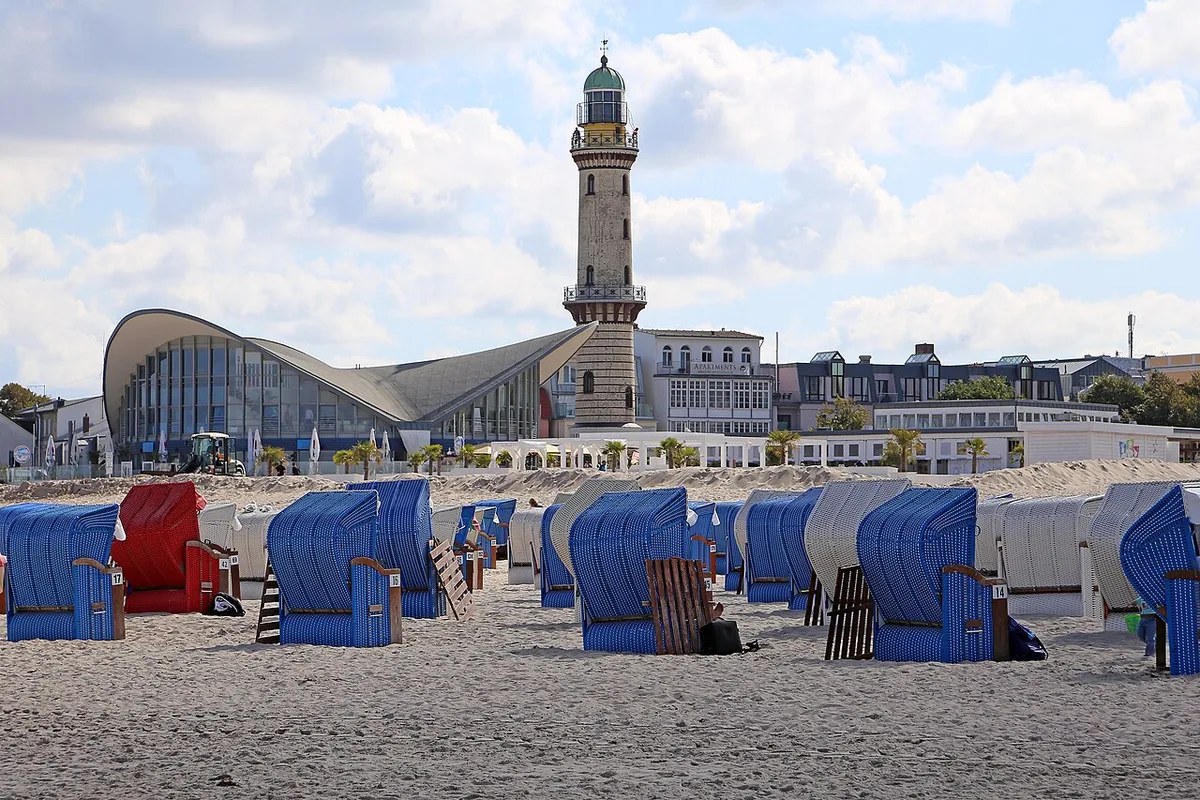
The city pairs brick Gothic streets and gabled houses with cutters, cruise ships, a pier and fine sand, all within one municipal area. The Hanseatic tourist pages describe Warnemünde as combining the finest beaches with a healthy sea climate and a maritime scene of lighthouse, pier and sailing yachts. For children this means you can alternate between walking, water and open space instead of committing to one activity.
The climate is maritime, with mild winters, refreshing summers, steady sea wind and rapid weather changes, according to the city's visitor information. That is a planning gift rather than a problem: build a flexible shape that swaps indoor and outdoor stops depending on what the sky does. It also means packing layers even in high summer, since the wind off the Baltic can change how long children last on an exposed beach.
Beyond the coast, the wider region offers coastal forests, heathland and flat inland landscapes, so a family day does not have to be all urban. If you want green space close to the old town rather than a full coastal trip, the Rostock Botanical Garden visitor guide covers a quieter alternative that children can cross on foot.
The 12-Kilometre Question: Old Town and Warnemünde Are Two Stops
Rostock city sources place the Baltic roughly 12 kilometres north of the centre, connected to the town by the Warnow river. Warnemünde is the coastal resort belonging to the city rather than a separate day trip with its own logic. Families who assume the beach is around the corner end up rushing both halves. For wider planning, see Rostock landmark visitor guides.
A workable rule is to pick one anchor for the morning and one for the afternoon, then let the transfer act as the natural break. With younger children, an old-town morning followed by beach time tends to work because the walking happens before energy dips. With older children who want the water first, reverse it and finish with the promenade and an early dinner.
Where you sleep changes the arithmetic. Staying in Warnemünde makes early and late beach time easy but pushes the old town further away, while a city-centre base favours museums, shopping streets and the university square. Neither is wrong, so decide based on whether your family values water at odd hours or city streets within walking distance.
Getting from the Centre to the Coast Without a Car
The whole area is knit together by S-Bahn, trams, buses and ferries, which means a car is optional rather than necessary. Rostock city guidance names the S-Bahn as the fastest connection between the centre and the beach station, with buses and passenger boats as alternatives. For families, the train usually wins because you avoid parking near the promenade.
Passenger boats are slower but turn the transfer into an experience, which can be exactly right for children who need novelty rather than speed. Fares, timetables and seasonal operation are not published in the sources here, so check current sailings with the operator or the tourist information before building a day around one. Treat the boat as a bonus, not the backbone of the plan.
If you are arriving by train, Rostock central station is the natural gateway, and the Hanseatic pages also list the ferry port, Rostock-Laage airport and the A19 and A20 motorways as regional access points. Once in the city, the practical choice is simply whether you buy a transport ticket or use a card that already covers it.
Old Town Time with Kids: Universitätsplatz and Kröpeliner Straße
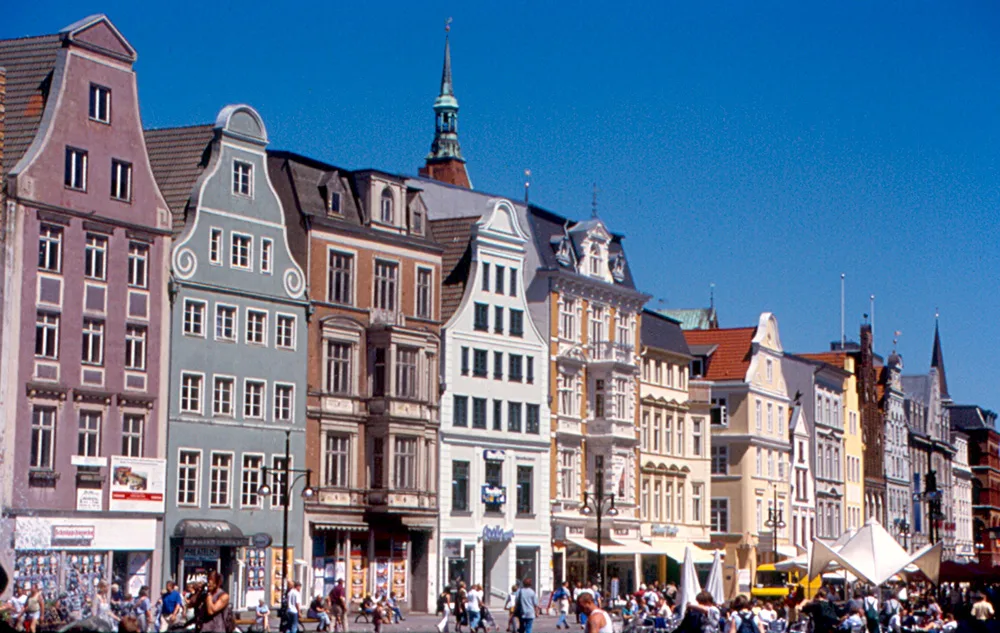
Universitätsplatz sits along Kröpeliner Straße and takes its name from the university main building, established since 1419. The square gathers the five-gable building, the baroque hall, the former Grand Ducal Palace and the fountain of joie de vivre, created in 1980 with 20 figures and 18 large and small water jets. For children, the fountain is the obvious focal point and a natural place to pause.

Kröpeliner Straße itself is a pedestrian axis, which removes traffic worries and makes the stroll manageable with a stroller or a tired walker. Plan the old-town block as a loop with the square near the middle rather than an end point, so you always have a short retreat if moods shift. Shops and cafes line the route, giving easy resets.
If your family prefers a structured half day, the one day in Rostock itinerary shows how a compact route through the centre fits together. It pairs well with an afternoon transfer to the coast, or with a slower indoor option if the weather turns.
Comparing the Two Tower Viewpoints: St. Mary's Church and the Lighthouse
These are two different experiences and should not be treated as one item on a list. St. Mary's Church in the city is described as Rostock's most important church, a cross-shaped basilica with a compact Gothic profile, an astronomical clock with apostle rotation from 1472 and a bronze baptismal font from 1290. That makes it a short, dense cultural stop rather than an active outing.
The Warnemünde lighthouse is a coastal landmark built in 1897 as a navigation aid, and the Hanseatic pages describe a view from 30 metres up inside it. Whether the tower is climbable on your dates, and under what conditions children may go up, is not confirmed in the available material. Check directly with the tourist information in Warnemünde before promising a climb.
The sensible family approach is to choose one height-related stop and keep the other as a walk-past photo moment. Church interiors and lighthouse access are separately controlled, so no single ticket should be assumed to cover a complex or a pair of sites. If a climb is the highlight of someone's day, verify access and any restrictions first rather than arriving hopeful.
Harbour Pacing: City Harbour and the Alter Strom
The city harbour on the Warnow is a promenade with restaurants, shops and large warehouses, and it doubles as a museum and sailing harbour. Goods handling was concentrated here until the seaport opened in 1960. Two quick historic stops, the wooden pedal crane from the 18th century and the bridge crane from the 1950s, show the handling technology of the past.
Harbour time works best when it is not the main event. Children tend to enjoy it in short bursts: watch boats, spot cranes, cross to the next stretch, then move on. A full Rostock harbor walk can be trimmed to whatever length your group tolerates, which makes it a good filler between bigger stops.
In Warnemünde, the Alter Strom adds the fishing-boat and cutter atmosphere that the Hanseatic description highlights alongside lighthouse, pier and fresh fish. Keep expectations modest: promenades are free to walk, while any boat trip, museum or interior is a separate, individually ticketed decision. Split your time accordingly instead of assuming one purchase unlocks the waterfront.
Beach Strategy: Family Sections, Sea Wind and Fast Weather
The Baltic beaches here are described as very wide, fine-sand and stone-free, with water quality at official bathing spots regularly rated excellent. The coast is also divided into clearly marked sections, including designated family areas alongside nudist and dog beaches. Choosing the right section deliberately matters more than simply heading for the nearest sand.
Many stretches have boardwalks reaching close to the water, accessible sanitary facilities and rentals of beach-appropriate wheelchairs. Because conditions and equipment availability vary by season, confirm specifics on arrival rather than assuming any single section suits your family's needs. The Rostock beaches guide helps you compare which stretch fits before you commit to a long walk.
Plan beach time around wind and weather rather than around a fixed hour. The maritime climate brings steady sea wind and quick changes, so a morning that looks grey can shift, and a bright afternoon can cool fast. Pack a windproof layer, keep a sheltered backup within reach and treat beach hours as movable.
The GästeCard Decision: Which Version Includes Transport
The GästeCard Rostock is issued as proof that the Kurabgabe, the local visitor tax, has been paid, and it carries discounts for guests in the city and in Warnemünde. The key distinction is the version. Overnight guests receive their card from their accommodation and it includes free use of the entire public transport network, which materially changes a family's daily costs.
Day guests and long-stay guests receive a day or annual spa card instead. That version grants the same discounts and access to tourist infrastructure but does not include free public transport. Families who booked a hotel or holiday flat should therefore confirm which card they will actually be handed before budgeting separate transport tickets.
The practical move is to match the card to how you booked, not to how many sights you plan to see. If transport is covered, the city-to-coast transfer becomes a low-stakes decision you can repeat; if it is not, cluster your stops to limit trips. Ask your accommodation which version applies and what the current Kurabgabe amounts to, since those rates are set locally.
Rainy-Day Backups and Indoor Options
The region has a broad set of covered alternatives: maritime exhibitions, historic museums, adventure pools and maritime research centres. That range means a wet day does not have to be a wasted one, and it gives families a reason to stay flexible rather than cancelling plans. Match the backup to your location, since some options sit in the city and others are tied to the coast.
Treat indoor stops as separately ticketed attractions rather than assuming a single pass covers several. Opening days, seasonal closures and family ticket structures are not published consistently in the sources, so check each venue directly before relying on it as the day's anchor. A quick call to the tourist information can confirm what is actually open during your visit.
If your family already enjoys city museums, the approach used in Berlin with kids or Dresden with kids translates well: pick one indoor anchor, keep the rest of the day short, and leave room to go back outside if the sky clears.
Sample Half-Day and Full-Day Shapes
For a half day with younger children, stay in one area: the old town around Universitätsplatz and Kröpeliner Straße, with the fountain as the reward and a cafe stop in the middle. This keeps walking short, avoids the transfer and still delivers a genuine sense of the city. Add the Botanical Garden only if energy remains.
For a full day, take the S-Bahn to the coast in the morning, spend the middle hours on a designated family beach section and the Alter Strom, then return to the old town for an early evening stroll. This ordering puts the most weather-dependent activity first, when you still have time to adjust. Keep the harbour walk as a flexible bridge between the two.
For older children who want more mileage, reverse the shape: old town and church in the morning, then a longer coastal afternoon with a lighthouse viewpoint and promenade time. A suggested duration for either shape is best decided by your own transfer buffer, since the sources do not publish journey times. Build in one unscheduled hour and the day rarely feels rushed.
What to Leave Flexible: Kurabgabe, Events and Short-Notice Checks
The biggest cultural event in the calendar is the Hanse Sail, held on the second weekend in August, when more than 100 traditional sailing ships and museum ships gather and invite visitors onto the Baltic. The 2026 edition has passed, so plan around the next announced dates if a sailing weekend is the goal. Outside that window, the city is markedly calmer.
The Kurabgabe applies to visitors, and the card you receive depends on whether you are an overnight or day guest. Rates and collection arrangements are set locally and change, so confirm the current amount with your accommodation rather than budgeting from memory. The same applies to any attraction fees, which are best checked at the point of booking.
Leave the final decisions open: which beach section, whether the boat runs, whether the weather holds. A short list of verified options, checked the day before, beats a rigid schedule. The tourist information offices in the city centre and in Warnemünde are the right places to confirm details on the ground.
Plan Your Visit
Rostock rewards families who accept its two-part geography instead of fighting it. Choose whether the old town or the coast gets your prime hours, then let the S-Bahn handle the rest. The city is compact enough to cover on foot within each half, and the water is close enough to reach in a single transfer.
Before you go, confirm the three things the sources deliberately leave open: the current GästeCard version and its transport coverage, the Kurabgabe rate for your stay, and whether the lighthouse and any indoor venue are open on your dates. Everything else, from the fountain to the promenade to the sand, is simply a matter of pacing and a windproof layer.
Frequently Asked Questions
Is Rostock a good place to visit with kids?
Yes, mainly because it offers two kinds of day in one city. The old town is walkable and centred on the pedestrian Kröpeliner Straße and Universitätsplatz, where the fountain of joie de vivre gives children a natural stopping point. Warnemünde adds wide, fine-sand beaches with designated family sections, a promenade and a lighthouse. The trade-off is distance: the coast sits roughly 12 kilometres from the centre, so you should plan on a transfer rather than expecting to wander between both halves.
Should we stay in Rostock's old town or in Warnemünde with children?
It depends on when your family wants to be outside. A Warnemünde base makes early mornings and late afternoons on the beach easy, which suits children who need water time in short bursts. An old-town base puts museums, shopping streets and the university square within walking distance and makes rainy-day pivots simpler. Because the S-Bahn links the two, neither choice locks you out of the other half; you are only choosing which one is closer to your door.
What is the easiest way from Rostock city centre to Warnemünde with children?
The city's own visitor information names the S-Bahn as the fastest connection between the centre and the beach station, with buses and passenger boats as alternatives. Journey times are not published in the material available here, so treat the transfer as a planned block of your day and check current timetables before you travel. Passenger boats take longer but can be more fun for children, so they work well as an occasional treat rather than a daily routine.
Is the Warnemünde lighthouse worth it for young children?
It is a genuine landmark, built in 1897 as a navigation aid, and the Hanseatic description mentions a view from 30 metres up inside it. Whether the tower is climbable on your dates, and whether there are age or supervision conditions for children, is not confirmed in the available sources. Check with the tourist information in Warnemünde before promising a climb, and keep the lighthouse as a photo stop if access turns out to be restricted.
What can families do in Rostock when it rains?
The region offers a range of covered options, including maritime exhibitions, historic museums, adventure pools and maritime research centres. Treat each as an individually ticketed venue rather than assuming one pass covers a complex, and verify opening days directly because those details are not consistently published. A useful pattern is one indoor anchor plus a short outdoor walk, so you can move back outside as soon as the weather shifts.
Does the GästeCard include public transport for families?
It depends on which card you receive. The version issued to overnight guests, obtained from your accommodation, includes free use of the entire public transport network, which effectively removes transfer costs between the city and the coast. The day and annual versions granted to day and long-stay guests carry the same discounts and tourist infrastructure access but no free transport entitlement. Confirm with your accommodation which card applies to your booking before budgeting separate tickets.


