

Rostock's coastline is split between a long-established seaside resort and a calmer, dune-backed alternative just across the water. Understanding that split before you leave the city centre saves you from a day that looks right in photos but feels wrong on the ground. The Baltic itself lies roughly twelve kilometres north of the city centre and connects to the city through the Warnow river, so a beach trip here is a genuine excursion rather than a stroll. That distance is also the reason a short city break can still fit a proper half-day at the sea.
This guide compares the two main options by atmosphere, access and facilities rather than ranking them. Warnemünde suits travellers who want an easy, serviced resort day; Hohe Düne suits those who prefer space, dunes and a packed snack to a promenade. A few facts below come from the city's own tourism pages, while others come from visitor reviews and should be treated as impressions rather than guarantees. Where a detail is volatile, we say where to confirm it instead of guessing.
How Rostock, Warnemünde and Hohe Düne Fit Together
Rostock is the historic Hanseatic city inland, while Warnemünde is the seaside resort that belongs to it directly on the coast. The city tourism site makes this relationship explicit, describing Warnemünde as the affiliated Baltic resort and the wider region as a mix of coastal towns and surrounding landscapes. Hohe Düne sits on the opposite bank near the mouth of the Warnow, which is why locals treat it as a separate beach personality rather than a second stretch of the same promenade.
That geography matters when you plan. A beach visit from the centre costs you travel time in both directions, so squeezing one into a two-hour gap rarely works well. If time is short, one focused coastal stop beats trying to sample both banks. If you have a full day, the two areas can even be combined, though the ferry link between them is the detail to check locally rather than assume.
For orientation once you are in town, the city tourism site explains that the Baltic is connected to Rostock through the Warnow, which is why harbour scenery and beach scenery blur into one another here. Planning the wider city day around that water axis is worthwhile.
Warnemünde: The Classic Seaside Resort
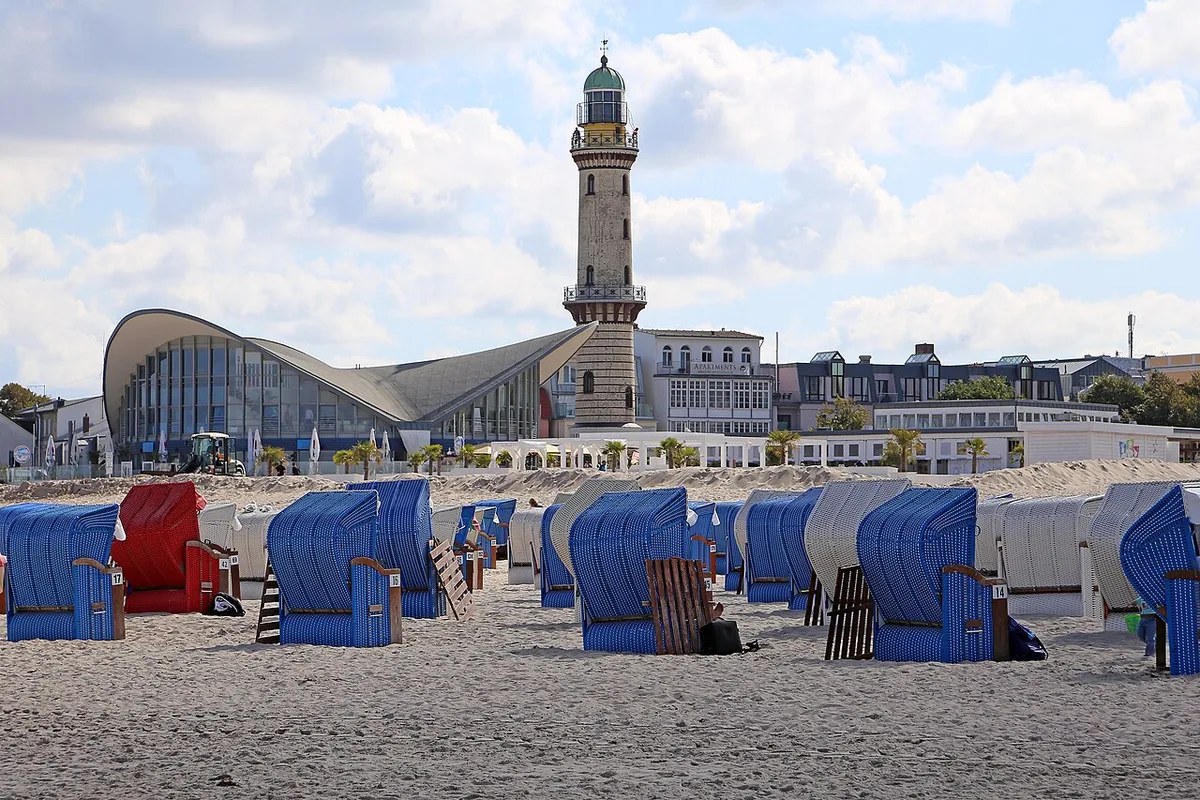
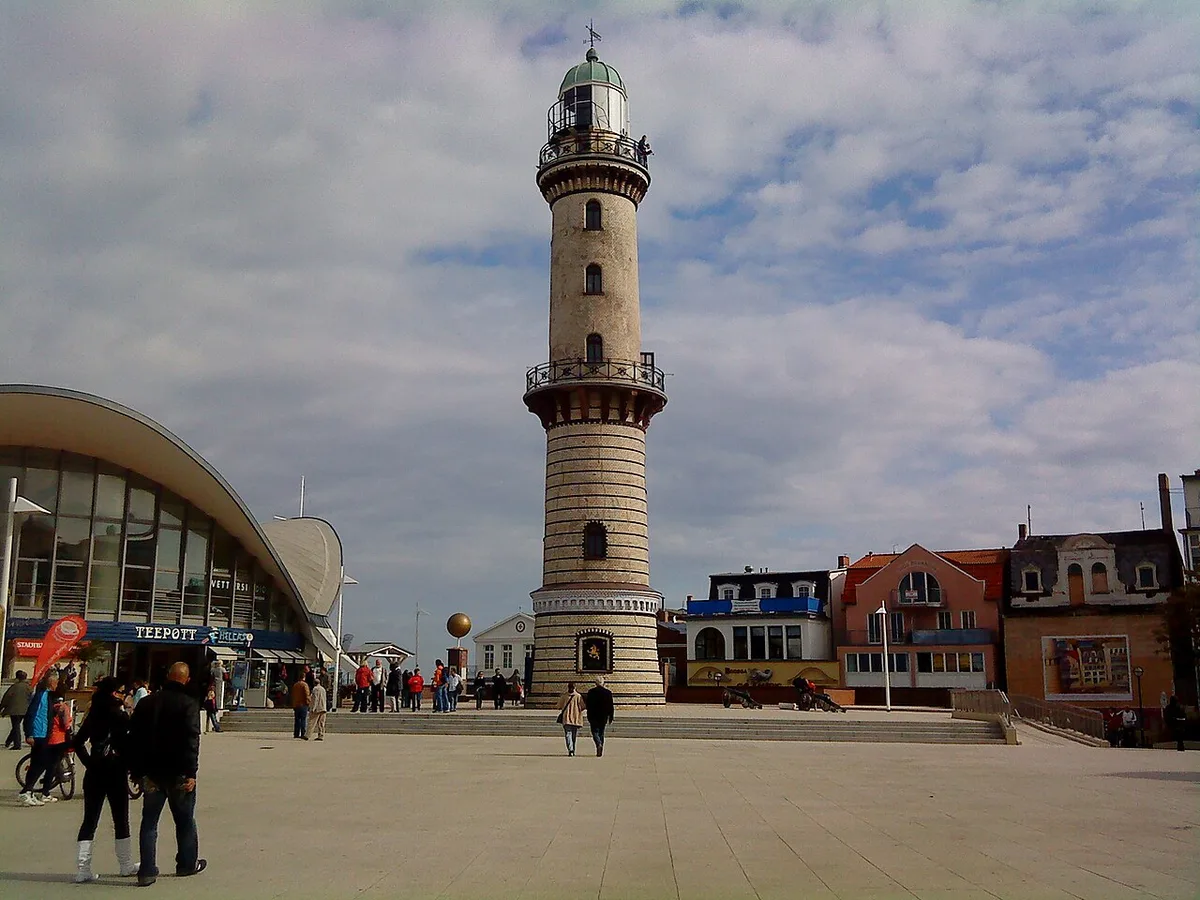
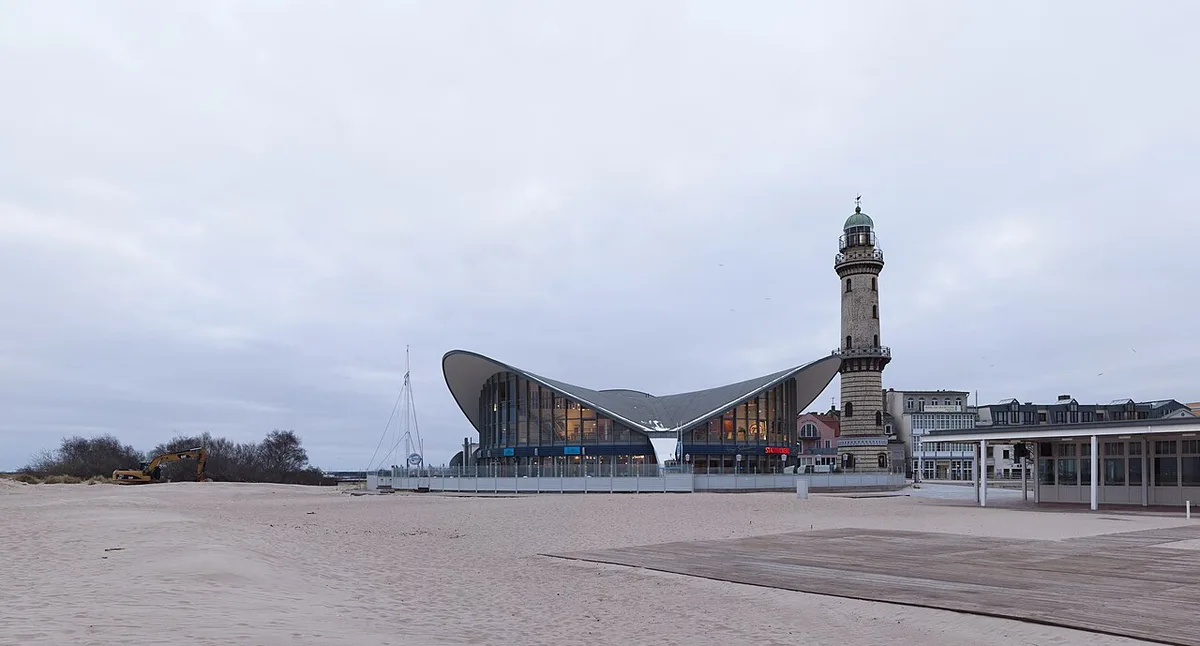
Warnemünde is the version of the Baltic that most visitors picture: a broad beach, a working harbour, and a resort centre built around visitors. The city tourism pages describe the beaches of this region as very wide, fine-sand and stone-free, with designated stretches for families, nudist bathers and dogs. Read that as the character of the coastline rather than a promise about any single metre of sand, because sections are marked on site and can shift between seasons.
The resort profile means everything is geared toward spending a full day without planning hard. Food, drink and services sit close to the water, which is exactly what makes Warnemünde the easier choice for first-time visitors or anyone arriving with children. The trade-off is that this convenience draws people, so the beach feels busier than its counterpart across the water. If your priority is solitude, this is the wrong end of the scale.
Warnemünde also works well as a base for a broader day because the resort, harbour and beach sit together. A guided structure for that trip helps if you want to see more than sand.
Hohe Düne: The Quieter Counterpart
Hohe Düne sits just across from Warnemünde and has a maritime history reaching back to the Middle Ages, yet its beach reads as the calmer option today. Visitor listings describe soft white sand, clear water and a setting framed by dunes and forest, with reviewers consistently calling it quieter than other tourist beaches. These are visitor impressions rather than official measurements, so treat the sand and water descriptions as a general expectation, not a quality grade.
The practical catch is food. Reviewers on the same listing note that this is not the best place to find an inexpensive snack or a fish roll, which changes how you pack for the day. Bringing your own supplies turns a slightly awkward lunch into a picnic with a view. If you would rather buy lunch on the spot, Warnemünde remains the safer bet.
Reviewers also mention that the beach is close to the train and reachable via the shopping street and ferry, though the exact routing and current service pattern are things to confirm locally. A separate review describes a walk along the beach of roughly four kilometres to reach the village of Markgrafenheide, a figure worth treating as an approximation from one visitor rather than a surveyed distance. Families and couples looking for calm rather than entertainment tend to be the audience this stretch suits best.
Access: Reaching the Coast Without a Car
The region is stitched together by a dense network of suburban rail, trams, buses and ferries, and the city tourism site states that all coastal places and the centre are easily reachable through it. The fastest route from the centre to the coast is the suburban rail line that links the middle of the city with the beach station, with buses and passenger ferries as alternatives. Line numbers, frequencies and journey times are not fixed facts to quote from a guide, so check the current timetable before you set out.
Rostock Hauptbahnhof is the main rail gateway into the city and the natural starting point if you arrive by train, as a visitor post on the city notes. From there, the coastal transfer is short but not instant, which is why a beach visit fits best when you are not racing a return train. If you are planning around family logistics, it helps to map the day in advance.
If you would rather not juggle transport at all, a structured day removes that friction entirely.
Facilities and Beach Sections
The coastline is divided into clearly different sections, and the city tourism site names family areas, nudist stretches and dedicated dog beaches as broad categories. It also describes infrastructure aimed at barrier-free access, including boardwalks that run close to the water, accessible sanitary facilities and rental stations for beach-friendly wheelchairs. Those descriptions are indicators of what the resort area provides rather than a live inventory, and the precise location of any single section is marked on site and can change.
If accessible facilities are decisive for your trip, confirm before travelling. Contact the tourist information or your accommodation about current boardwalk access, accessible sanitary provision and whether beach wheelchairs are being lent, since availability is exactly the kind of detail that shifts without fanfare. Treating this as a research step rather than an assumption is the difference between a smooth day and a wasted journey.
Free access to the sand is the normal expectation on this coast, but paid services, parking and any local visitor fee are separate questions. Check what applies during your stay rather than relying on a general rule.
The GästeCard and Local Transport
The region issues a guest card that doubles as proof of the local visitor levy, and the city tourism site draws an important distinction between its versions. The overnight-guest card, handed out by your accommodation, includes free use of the entire local public transport network alongside discounts. The day-and-long-stay card carries the same discounts and access to tourist infrastructure but does not include free transport.
That difference decides whether beach hopping is effortless or needs a ticket each time you move. If you are staying overnight, the transport inclusion effectively removes the cost of bouncing between the centre and the coast. If you are visiting for the day, budget for local fares separately and plan fewer, longer stops instead of many short ones.
The city card also shapes a wider harbour-and-city day, which pairs naturally with a coastal afternoon.
Beyond the Sand: Forest, Dunes and Walking
The coastal forest is what turns a swim stop into a longer active day. The city tourism site describes the surrounding landscape as wide coastal woods, heathland and flat inland terrain, and the forest rustle features in its own account of the region's appeal. Walking under that canopy before or after time on the sand gives the day a second dimension, especially when the sea wind picks up.
The walk toward Markgrafenheide is the clearest example, described by a reviewer as roughly four kilometres along the beach. Treat that as one visitor's estimate and check your own route before committing, particularly if you have children or are carrying beach gear. On Hohe Düne, the dune-and-forest framing also rewards a slow wander rather than a fixed spot on the sand.
If your wider interest is the region rather than one beach, the surrounding towns make a sensible second day.
When to Go and What to Expect
The Baltic climate here is maritime, with mild winters, refreshing summers and a steady sea wind that brings fast changes in weather, as the city tourism site notes. Summer is the classic beach season, while spring and autumn suit active travel and nature watching. Because conditions turn quickly, a forecast check on the morning of your visit is worth more than any plan made a week earlier.
Major maritime festivals and events cluster in the summer months of July and August according to the same source, which is worth knowing if you prefer quiet or if you actively want atmosphere. That timing is a seasonal pattern rather than a calendar, so confirm specific dates through official channels. Avoid quoting weather figures from travel aggregators as if they were forecasts; check a live service instead.
Swimming is a normal summer activity on these beaches, but water temperature, lifeguard presence and local signage are things to read on the day. Designated bathing areas are marked, and swimming outside them is a personal judgement call rather than a recommended default.
Sample Half-Day and Full-Day Plans
For a suggested half day, pick a single beach and resist combining both. Leave the centre in the morning, spend the middle of the day on the sand and keep the return flexible rather than fixed. If time is genuinely tight, a beach-and-harbour combination in Warnemünde delivers more variety in fewer hours than a cross-water detour.
For a full day, start on one bank and use the forest or the dune paths to extend the morning. Break for lunch where you have confirmed food is available, then either stay put or cross to the other beach for a change of mood. This is a suggested shape for the day, not an official itinerary, and the ferry and rail details need checking locally.
Whatever plan you choose, the deciding factor is usually food and transport rather than sand. Solve those two and the rest of the day tends to look after itself.
Choosing Your Rostock Beach
Warnemünde is the choice when you want services, food and a resort feel within easy reach of the sand. Hohe Düne is the choice when calm, dunes and a quieter shoreline matter more than convenience, and you are willing to carry your own lunch. Neither is objectively better; the right answer depends on whether your priority is ease or space.
Before you travel, confirm the current transport connection, whether your accommodation issues a guest card with transport included, and what facilities are actually open on your dates. Check the beach access and designated sections on arrival rather than from a screen, since markings are physical and can change.
Frequently Asked Questions
Can you swim at Rostock's Baltic beaches?
Swimming is a normal summer activity along this coast, and the city tourism site treats the warmer months as the classic beach season. Designated bathing areas are marked on site, and conditions such as water temperature or lifeguard cover should be judged on the day rather than assumed. If you are unsure, ask locally or swim where others are swimming within a marked area.
Is Warnemünde or Hohe Düne better for a quiet beach day?
Hohe Düne is the calmer option. Visitor reviews consistently describe it as quieter than comparable tourist beaches, set among dunes and forest, and it is often recommended for travellers seeking tranquillity. Warnemünde is busier because it combines a resort centre, harbour and services in one place, which suits anyone who prefers convenience over solitude.
How do you reach Rostock's beaches without a car?
The city tourism site says the whole area is linked by a dense network of suburban rail, trams, buses and ferries, with the centre connected to the coast. From Rostock Hauptbahnhof you can continue onward by public transport rather than driving. Because line numbers, frequencies and journey times change, check the current timetable on the day you travel instead of relying on a static guide.
Do you need to pay to use the beach?
Access to the sand itself is generally free, but parking, paid services and any local visitor levy are separate matters that depend on where you stay and how you arrive. The GästeCard is issued as proof of the visitor levy, and the overnight version includes local public transport while the day version does not. Confirm what applies to your trip locally.
Are there accessible beach facilities?
The city tourism site describes barrier-free beach infrastructure, including boardwalks that extend close to the water, accessible sanitary facilities and rental points for beach-friendly wheelchairs. Those descriptions are broad indicators of what the resort area offers rather than a live inventory. If accessible facilities are essential to your plans, contact the tourist information or your accommodation before travelling to confirm what is currently available.


