

Warnemünde is part of Rostock, not a separate town, and the city's own tourism pages place the Baltic roughly 12 kilometres north of the inland centre along the Warnow. That single fact explains the whole trip: you are deciding how much of the day goes to sand and harbour, and how much stays inland with the Old Town. Both halves are worth a visit, so pick one anchor sight before you check any timetable.
The official city site describes the region as a dense mesh of S-Bahn trains, trams, buses and ferries, with the S-Bahn named as the fastest link between the centre and the beach station, and buses and passenger boats offered as alternatives. It does not publish a journey time or fare for that hop, so treat any specific number you see elsewhere as unverified and check current connections through the local transport operator. Your choice between rail speed and a slower boat crossing is really a choice about how much time you want on the water.
St Mary's Church publishes its own visitor information and splits the year into a longer May-to-October schedule and a shorter November-to-April one; the interior carries an adult admission fee, with reduced rates for some visitors and free entry for under-18s. Season and clock therefore decide your sequence more than any list of sights. For an overview of the city's landmark options, keep the Rostock: Landmark Visitor Guides page open while you plan.
How to Get from Rostock to Warnemünde
The official Rostock visitor pages name the S-Bahn as the quickest way from the city centre to the beach station, with buses and passenger boats as alternatives; they do not publish a journey time or a fare for the hop, so verify both with the local transport operator on the day. If you are staying inland near Holbeinplatz, the S-Bahn and tram lines converge there, which makes it a practical start or end point for a coast-and-city combination. Build in buffer time rather than trusting a single remembered figure.
A cruise-port guide written by a traveller who called at Warnemünde states that the S-Bahn ride between Warnemünde and Rostock takes under 30 minutes and that the train station sits immediately outside the cruise terminal. That same account notes that Warnemünde itself is a walk-off port where you step off the ship straight into the Alter Strom area, while Rostock is close but not walkable. This asymmetry is the single most important planning fact for cruise passengers.
Travellers comparing the two on the Rick Steves forum have described Rostock as a short train ride from Warnemünde. Because public transport fares and timetables change, do not plan around any quoted figure; check the operator's own journey planner for the day you travel. If you want a slower, more scenic crossing, the passenger boats mentioned by the city site are the alternative, but their schedules and availability are not published on that page.
Warnemünde on Foot: Alter Strom and the Harbour
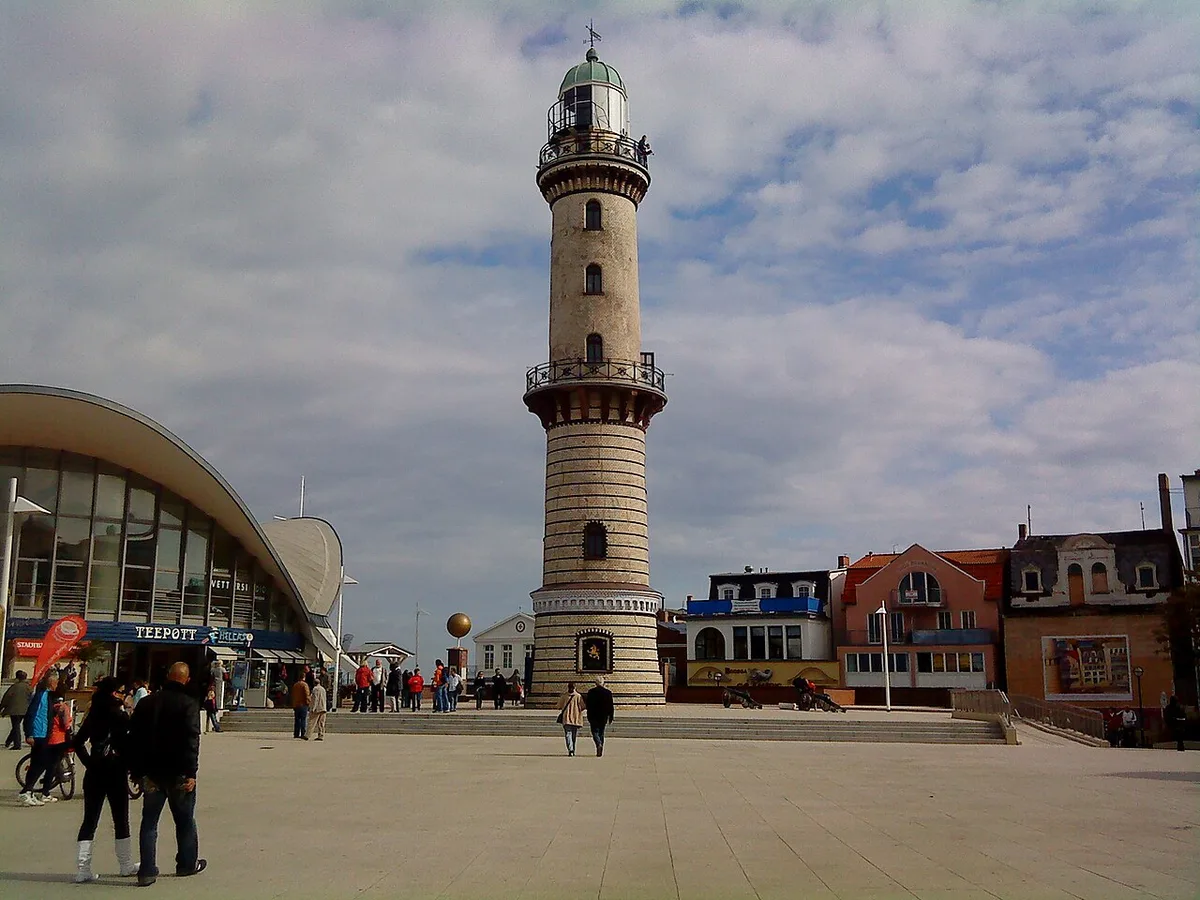
Alter Strom means "Old Channel", and it is the canal-side spine of Warnemünde, lined with small cafés, shops and historic fishing boats and crossed by several bridges that let you walk both banks. A travel account of the area describes stepping off a cruise pier directly into that scene, with the train station a short walk away past a small fairground-style strip. Plan the promenade as an unhurried hour rather than a checklist.
Behind the harbour, Kirchplatz is the quieter historic core, where the small Heimatmuseum occupies an old fisherman's cottage and the local church anchors a square of traditional houses. A cruise-port guide describes the church square as notably tranquil and recommends the museum as a quick, small-scale introduction to the area's maritime history. Confirm current opening arrangements before you build your day around either one, because small volunteer-run sites vary.
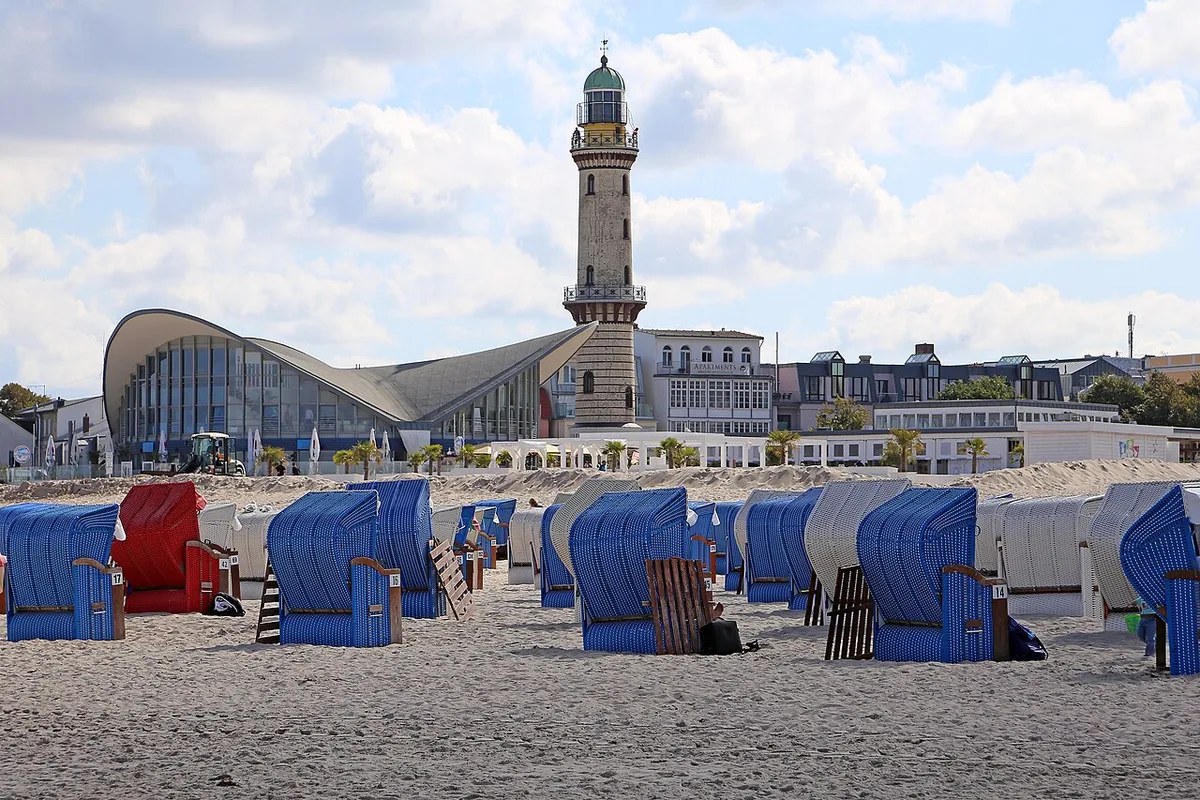
The Warnemünde Lighthouse and the curved Teepott building form the modern landmark pair near the beach, and the lighthouse is described on a travel-attraction page as a longstanding beacon that still defines the landscape. Whether you climb it or simply photograph it from the promenade, the pair works well as the pivot between the canal and the sand. Specific admission and climbing arrangements are not something we can verify here, so check with the operator before promising anyone a tower view.
The Beach, Piers and Weather Reality
Warnemünde's beach is a wide, fine-sand Baltic strand backed by the Teepott and lighthouse, with two stone piers extending into the sea; the city's own pages describe the regional beaches as broad, fine-grained and stone-free, with water quality at official bathing spots regularly rated excellent. The piers are both a viewpoint and a working part of the harbour entrance. Allow time to walk at least one of them, because the view back to the resort is the best free sight in town.
A cruise-port guide warns plainly that Baltic summer weather is often too chilly or windy for a proper beach day, and advises against letting the sand be your only plan. The city's own climate summary notes a maritime pattern with mild winters, fresh summers and frequent, fast weather changes driven by sea wind. That combination argues for pairing the beach with a museum or church interior so a cold front does not waste the trip.
If you do commit to sand, the city site notes that different stretches serve families, naturist bathers and dog owners, and that many access points have boardwalks, accessible sanitary facilities and beach wheelchairs for loan. Availability of that equipment is seasonal and not guaranteed, so ask locally on arrival rather than assuming. A beach plan with a wet-weather backup is the realistic version.
Inland Rostock: Old Town Highlights
Rostock's Old Town clusters around Neuer Markt, where the brick-Gothic town hall stands among ornate merchant houses, and one overview notes that most of the main sights sit within walking distance of that square. From there, Kröpeliner Straße runs as a shopping and café spine toward University Square and the Kröpeliner Tor city gate. It is a compact, walkable core, which is why an inland half-day is realistic alongside a coastal one.

Beyond the shopping street, the same overview flags the University of Rostock as one of Europe's oldest, founded in 1419, with University Square and its church as a natural pause before or after the Kröpeliner Tor gate. St Peter's Church is covered on its own association site, which publishes its current events and tower information separately from the church's opening schedule. Treat any church interior as a bonus, not a guarantee, especially outside summer.
If you want an unhurried harbour-side hour inland instead of a landmark circuit, the Rostock harbor walk route along the Stadthafen pairs well with the Old Town before you head north. Keep the Rostock: Itineraries and City Travel Guides hub handy for mapping a longer city stay around this single day. Day trips from Rostock, such as Bad Doberan, are a separate decision rather than an add-on to a Warnemünde day.
Opening Hours, Tickets and Free Entry
St Mary's Church in Rostock is the clearest example of why this day needs sequencing. Its own visitor information page splits the year into a longer May-to-October schedule and a shorter November-to-April one, charges an adult admission fee with reduced rates for some visitors and free entry for under-18s, and notes that tours normally run only in summer, in German, with a surcharge on top of the entrance fee. Guided visits are therefore not a year-round certainty, and the page itself points readers to a separate notice for occasional closures.
Free entry is genuinely available elsewhere in the city, but only where the operator says so. The Kulturhistorisches Museum Rostock states on its own site that admission is free and that it is open Tuesday to Sunday; the exhibition programme changes, so check what is on rather than assuming a specific display. Do not carry the assumption across the whole city: a ticketed church interior and a free municipal museum can sit a few minutes apart.
The Botanical Garden of the University of Rostock publishes its own visiting details, including an entrance across from the Holbeinplatz transit stop, separate outdoor and greenhouse hours, and a clear statement that admission is free. Its site also stresses that visits are at the visitor's own risk, that some plants are poisonous and labelled, and that dogs and bicycles are not allowed inside. That combination makes it a strong low-cost inland stop, but it is not a substitute for a paid attraction you actually want to see.
Suggested Day Plan by Duration (a Suggestion, Not a Timetable)
For a half day, keep everything in Warnemünde: walk the Alter Strom banks, cut through Kirchplatz, and finish at the beach and piers. That version needs no ticket and no timetable beyond the S-Bahn, which is why it suits a cruise call or a late-morning start. It is a suggestion about shape, not an official schedule, so adjust the order to the weather.
For a full day, start inland while St Mary's is open according to its published seasonal hours, pair it with the free Kulturhistorisches Museum, then ride north to Warnemünde and finish on the Alter Strom or the beach. Save the Botanical Garden for the start or end because it sits near Holbeinplatz on the S-Bahn and its greenhouses keep shorter hours than the outdoor grounds. Grouping free stops together keeps the day flexible when opening times shift.
If you are deciding whether to leave the region entirely, a cruise-port guide estimates Berlin at two and a half to three hours each way from Warnemünde, which is a large slice of any day. That figure comes from one traveller account rather than an official transport source, so verify connections if you genuinely intend to go. For most visitors the Warnemünde beach option, described in the Rostock beaches guide, is the better use of the same hours.
Plan Your Visit
Build the day around one anchor: a beach morning with the Alter Strom as the fallback, or an Old Town morning with St Mary's as the fixed point. Then let transport, weather and the published opening seasons decide the rest, checking the operator pages for anything time-sensitive on the day. That approach protects you from the two most common failures, a cold beach day with no backup and a church visit that arrives outside its seasonal hours.
If your trip is part of a longer German itinerary, use the Rostock hub for city planning and treat day trips from Rostock as separate outings rather than squeezing them into the same afternoon. A coast-and-city day is already full. Adding a third destination usually means trading away the thing you came for.
Frequently Asked Questions
Is Warnemünde worth visiting?
Yes, if you value an easy, walkable seaside day over a list of ticketed sights. The Alter Strom canal promenade, the quieter Kirchplatz square, and the wide beach with its two stone piers are all free to enjoy on foot, and a cruise-port guide reports that travellers who skip the long Berlin transfer for Warnemünde tend not to regret it. The main caveat is weather: Baltic summer days can be cold and windy, so keep an indoor fallback such as a museum or church interior in reserve in case the beach turns uncomfortable.
Is Warnemünde walkable from the cruise port?
Generally yes. A cruise-port account describes stepping off the ship and being essentially in the Alter Strom area, with the village centre and the train station reachable on foot past the pier area. That makes Warnemünde an unusually convenient walk-off port, unlike Rostock, which sits inland and needs a train, bus, boat or car. If mobility is a concern, check the specific pier and terminal arrangements for your ship, because distances and surfaces vary by berth.
What is there to do in Rostock on the same day?
Inland Rostock offers Neuer Markt with its brick-Gothic town hall, the Kröpeliner Straße shopping spine, University Square, and the Kröpeliner Tor gate, all within walking distance of one another. St Mary's Church is the headline interior, with seasonal opening hours and a ticketed visit, while the Kulturhistorisches Museum Rostock publishes free admission and the university's Botanical Garden also states that entry is free. Combine one paid interior with one free stop rather than trying to see everything, and check each site's own page for current hours before you go.
Are the S-Bahn, bus and boat all viable between Rostock and Warnemünde?
The city's own visitor pages describe the region as connected by S-Bahn, tram, bus and ferry, and they single out the S-Bahn as the fastest link from the centre to the beach station, with buses and passenger boats as alternatives. No journey time or fare for the hop is published there, so check the local transport operator's planner for the day you travel. The boat is the slower, more scenic option, but its schedule and availability are not something the city page confirms.
Sources
- Exploring Rostock and Warnemünde: What to Do and Beyond! UPDATED 2026
- Willkommen in Rostock
- Warnemunde or area for 1 day - Rick Steves Travel Forum
- Petrikirche Rostock – der Förderverein der Petrikirche Rostock e.V.
- Warnemunde Lighthouse Tours - Book Now | Expedia
- Warnemünde Cruise Port Guide: Beach, Rostock & Top Tips
- Visitor Information for St. Mary’s Church – Marienkirche Rostock
- Your Visit - Botanischer Garten - University of Rostock
- Kulturhistorisches Museum Rostock


