

A Warnemünde excursion works best on foot. The cruise-port guide states that you walk straight off the ship and are essentially in Alter Strom with no transport needed; it places the Warnemünde Lighthouse about a 15-minute walk from the cruise terminal. Treat the district as a compact loop rather than a series of separate trips.
The visitor logic here is simple: the canal area, promenade, beach, and piers are free to walk, while climbing the lighthouse involves a small fee. Exact prices and seasonal opening times should be checked locally rather than assumed. A self-guided loop around the village is usually a better use of a short port call than bolting on a long-distance day trip.
Warnemünde Layout: Canal, Lighthouse, Kirchplatz, and Beach Zones
Warnemünde is not built around one central square. Its sights are distributed across zones: the harbour and Alter Strom canal, the lighthouse and promenade at the seaward edge, the quieter Kirchplatz quarter inland, and the beach with its stone piers. The cruise-port guide describes Alter Strom as the central area you reach first from the pier, and Kirchplatz as a separate, tranquil square inland. Understanding this prevents the common mistake of expecting a dense old town with everything on one street; the clusters sit within minutes of each other on foot.
The official Rostock tourism portal states that the Baltic Sea lies roughly 12 kilometres north of the city centre and is connected to the city via the Warnow River, and that the whole region is linked by a network of S-Bahn trains, trams, buses, and ferries. That matters mainly if you plan to combine the coast with Rostock itself; within Warnemünde, walking does the job.
Arriving: from the Cruise Pier to the Alter Strom
Cruise passengers have the easiest arrival of all. The cruise-port guide notes that you walk straight off the ship and are essentially in Alter Strom, with no transport needed to enjoy the village, and that the Warnemünde train station sits immediately outside the cruise terminal. That makes the layout conveniently compact whether you arrive by sea or by rail.
From the harbour-side area, you pass the carnival-style concessions near the pier, continue past the station, cross a bridge, and reach the canal section that most visitors picture when they think of Warnemünde. The station sitting directly outside the terminal also makes it straightforward to swap between village time and city time if you decide mid-day to head inland.
Alter Strom: Fishing Boats, Shops, and Restaurants
Alter Strom means "Old Channel" and refers to the central canal area of Warnemünde rather than to a formal town centre, which is Kirchplatz. The cruise-port guide describes the canal as a scenic waterway connected to the larger Warnow River, lined with shops, restaurants, and historic fishing boats. Walking the area and stopping for a meal is itself a draw, and it costs nothing to enter the district.
Because this is a working harbour alongside a tourist zone, you will see a mix of traditional boats and modern vessels. The area near the pier is livelier, with concessions and street performers in season, while the canal further along is calmer and more scenic. Individual restaurants and shops set their own hours and prices, so check locally if a particular venue matters to your plan. If the weather turns, the Rostock rainy day guide is the place to look for backup ideas.
Climbing the Warnemünde Lighthouse: What to Expect
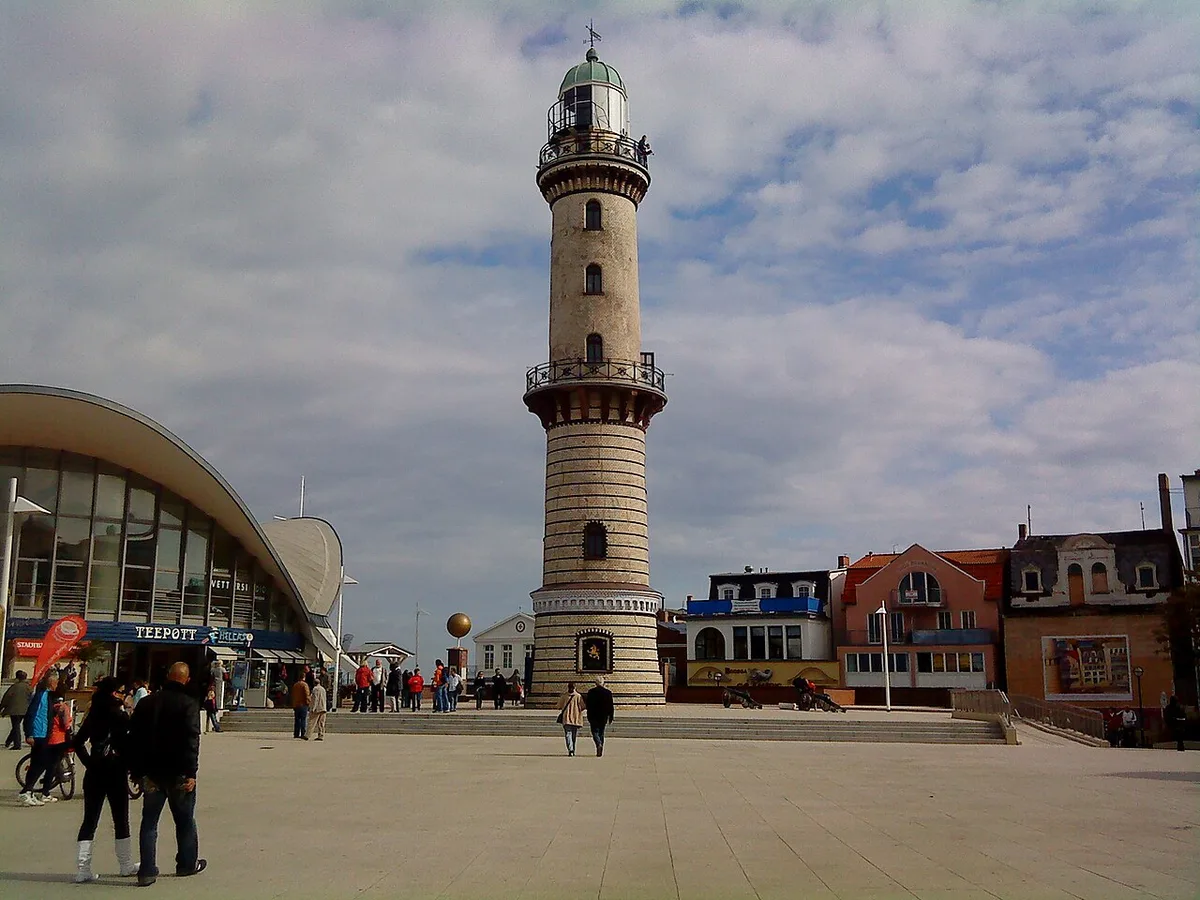
The Warnemünde Lighthouse is a climbable landmark offering panoramic views over the Baltic Sea and the coast. The cruise-port guide states that visitors can climb to the top for a small fee and describes the lighthouse as standing at 121 feet. The exact current price and seasonal opening times should not be assumed from older pages, so confirm them at the site or through local tourist information on the day.
Treat the climb as an optional extra rather than the centrepiece of your day unless you specifically want the view. A suggested twenty to thirty minutes for the climb and the viewpoint is an editorial estimate, not an official duration. If a queue forms on a busy summer afternoon, the promenade and beach beside the lighthouse remain open and free to enjoy in the meantime.
Teepott and the Lighthouse Forecourt: Free to Walk
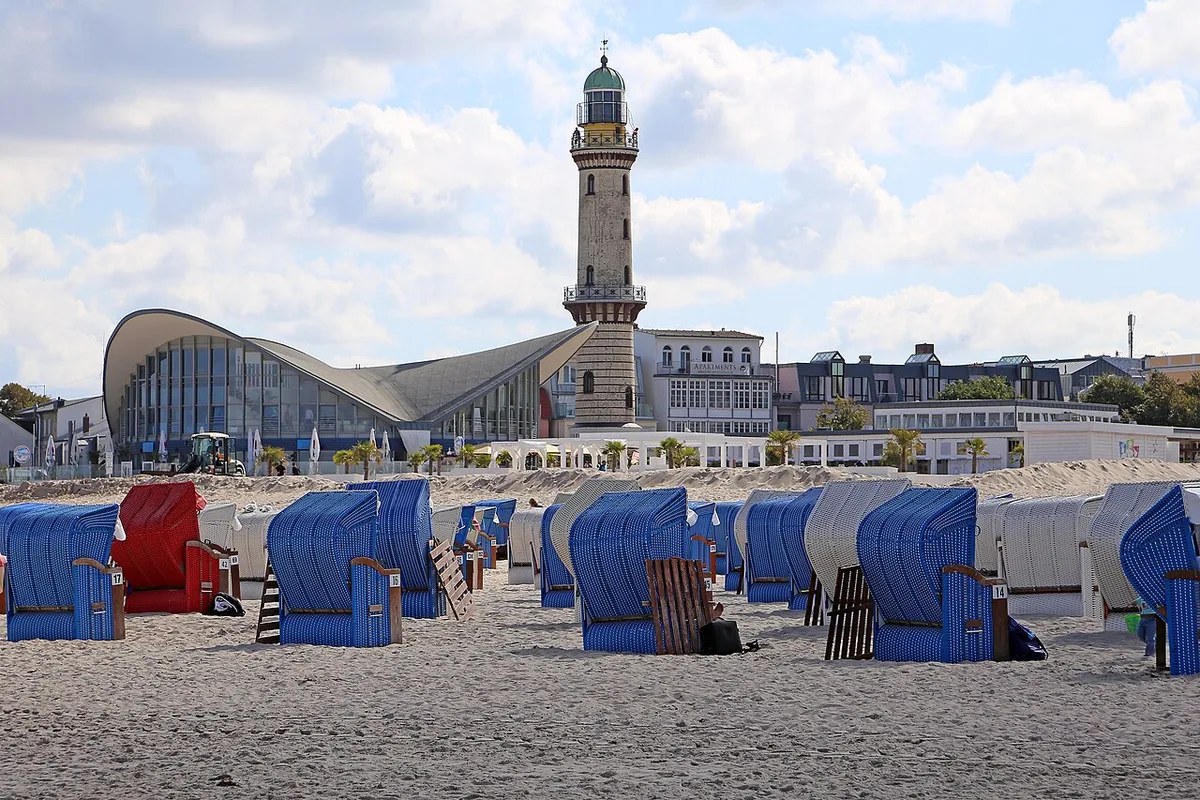
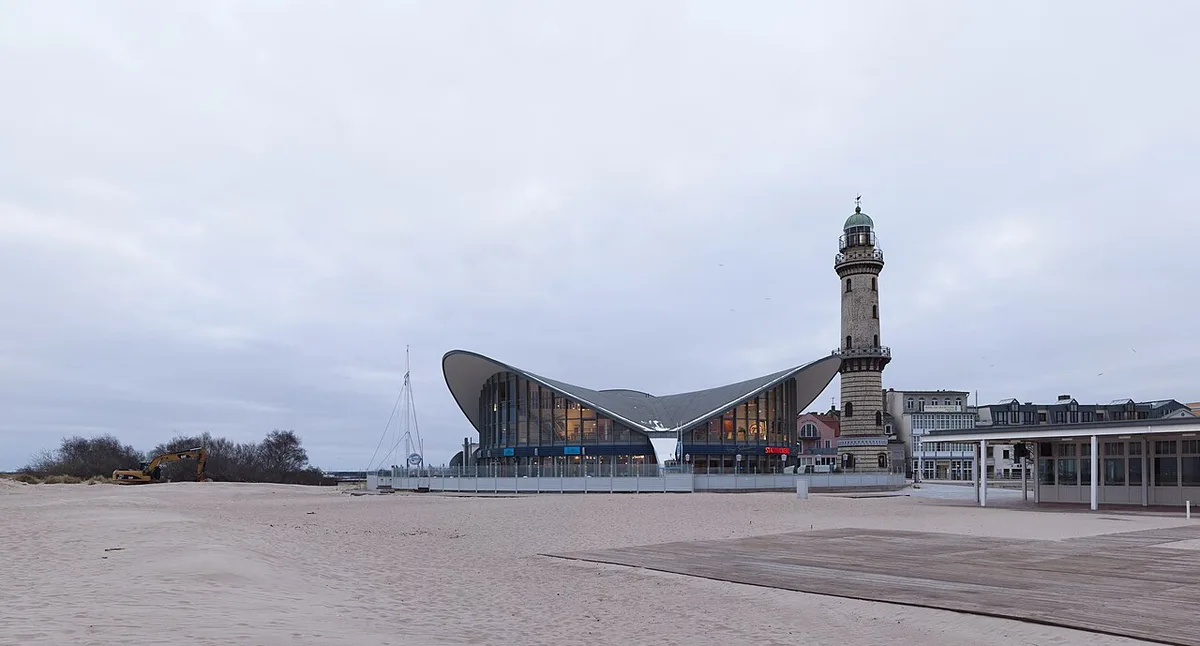
Beside the lighthouse stands the Teepott, a building with a distinctive curved roof that serves as a local symbol. The cruise-port guide describes it as housing restaurants, cafes, and shops with waterfront views. The forecourt around the lighthouse and Teepott is open to walk without a ticket, so the architecture and sea views are accessible even if you skip the climb.
Because the Teepott contains commercial venues, opening hours and prices vary by business and season, and you should check on site rather than expecting a fixed schedule. The building and its surroundings are free to approach and photograph at any time. This area works well as a low-effort stop when the weather turns or when you simply want a shorter, gentler stretch of the visit.
Kirchplatz, the Church, and the Small Local History Museum
Inland from the canal, Kirchplatz is the old heart of the village, centred on the Warnemünde church and lined with traditional houses. The cruise-port guide describes Kirchplatz as a picturesque square known for its historic church, traditional houses, and tranquil atmosphere, and notes the church interior with its woodwork is worth a look. Wandering the square and stepping into the church costs nothing.
The Heimatmuseum Warnemünde sits in this quarter and is housed in an 18th-century fisherman's cottage, according to the cruise-port guide, which also says there is no need to pre-book and that tickets are bought on site. That same guide reports a visit of about 30 minutes, which should be treated as one visitor's experience rather than an official duration. Current admission prices and opening times should be confirmed locally.
Beach and Piers: Free Sand, Wind, and a Footpath
Strand Warnemünde is the main beach, a wide sandy shoreline overlooked by the lighthouse and Teepott. The cruise-port guide describes the Molen, or stone piers, as extending into the Baltic from the beach and serving as popular spots for fishing and walking, while also stabilising the shoreline and protecting the harbour entrance. Beach and promenade access is free, with no ticket required.
The Baltic climate here is maritime, with mild winters and fresh, changeable summers, and a steady sea breeze can make a warm day feel cool. The cruise-port guide warns that the weather is often too chilly or windy to count on a full beach day, so keep the sand as a flexible option rather than the fixed plan. Pack a windproof layer even in summer and let conditions decide how long you linger.
If you want to compare the region's sand before committing, the Rostock beaches guide sets out how the coastal sections differ.
Adding Rostock: the S-Bahn Link and the Decision
Rostock is adjacent to Warnemünde but not walkable from it. The cruise-port guide states that frequently departing S-Bahn trains run between Warnemünde and Rostock and that the ride takes less than 30 minutes, with the station immediately outside the cruise terminal. Rostock's draws include the Old Town, St. Mary's Church, and the Neuer Markt area, as described in the same source.
The choice comes down to how you want to spend your time. Adding Rostock means committing to a train ride each way plus walking in the city, which suits a longer port call or an early start. Staying in Warnemünde keeps the day compact and relaxed, with the lighthouse, canal, and beach as the anchors. The Rostock city guide compares the two in more detail.
The "Warnemünde/Berlin" Label and Transit Reality
Some itineraries market this port as Warnemünde/Berlin, which can be misleading. The cruise-port guide states that Berlin lies 2.5 to 3 hours away in each direction, meaning five to six hours of a port day could go to transit. That source recommends a ship-organised excursion if you attempt Berlin, citing the guarantee that the vessel waits for official tours.
For most visitors, using the day for Warnemünde and optional Rostock is the more comfortable and lower-risk choice. If Berlin genuinely matters to you, verify excursion details and departure points with your cruise line rather than assuming availability or timing.
Money, Language, and Timing Notes
The local currency is the euro, and the cruise-port guide notes that US dollars are not accepted. The same source reports that cards and contactless payment are widely used, while some smaller vendors may still prefer cash. German is the primary language, though English is common in tourist-facing businesses.
Warnemünde operates on Central European Time, changing to Central European Summer Time in the warmer months, per the cruise-port guide. Cruise lines sometimes keep "ship time," which can differ from local time, so check which clock applies before heading back to the pier.
Plan Your Visit
A Warnemünde day is best treated as a village-scale outing. Start at the Alter Strom canal, walk the promenade to the lighthouse and Teepott, climb if you want the view, and finish at the beach or piers when the weather cooperates. Keep the lighthouse fee and hours as a check-on-arrival detail rather than planning around a published figure.
If time and energy remain, the S-Bahn to Rostock adds a historic old town to the coastal stop. If not, the canal, promenade, church, and Kirchplatz at an unhurried pace make a complete visit on their own. Dress for wind, stay flexible, and let the Baltic weather set the rhythm of the day.
Frequently Asked Questions
Can you climb the Warnemünde Lighthouse and does it cost anything?
Yes, visitors can climb the lighthouse for a small fee, according to the cruise-port guide. The exact current price and opening times are volatile and not reliably published, so confirm them at the site or through local tourist information on the day. The surrounding forecourt, promenade, and beach remain free to walk whether or not you go up.
How close is the lighthouse to the Warnemünde cruise terminal?
The cruise-port guide gives the walk from the cruise pier to the lighthouse and promenade area as about 15 minutes, passing through the Alter Strom canal zone. Treat this as a rough estimate that depends on your berth and walking pace. The route is entirely on foot and needs no transport.
What is Alter Strom and do you need a ticket to visit?
Alter Strom, meaning "Old Channel," is the central canal area of Warnemünde, lined with shops, restaurants, and historic fishing boats. Walking the canal area is free, and for cruise passengers it is effectively the arrival zone, since the pier leads directly into it. You only pay if you choose to eat, drink, or shop.
Is Warnemünde walkable without a car or tour?
Yes. The lighthouse, Alter Strom, promenade, beach, Kirchplatz, and the local history museum are all within a compact area you can cover on foot. The cruise-port guide notes that you do not need a tour to enjoy the village itself. Rostock is a separate matter, since it is not walkable from Warnemünde.
How do you get from Warnemünde to Rostock?
The usual route is the S-Bahn from Warnemünde Station, which sits just outside the cruise terminal. The cruise-port guide states the ride takes under 30 minutes and that trains are frequent. Check the current timetable on the day, and plan Rostock as a half-day addition rather than a quick detour.


