

Rostock is a Hanseatic port city on the Warnow River, and its old town is compact enough to cross on foot in a single morning. The Baltic Sea lies about 12 kilometers north of the center, connected by the Warnow, with the coastal district of Warnemünde at the river mouth. That geography shapes every one-day plan here: you can see the historic core properly, then decide whether the beach is worth the trip out.
The realistic math is roughly four to five hours for the Rostock old-town sights including a lunch break, plus about two hours for a Warnemünde wander. That estimate comes from a published third-party itinerary rather than any official tourism timing, so treat it as a planning baseline and adjust for your own pace. Start early if you want both halves of the day to breathe.
What One Day in Rostock Realistically Covers
The old town delivers a dense sequence of free exterior sights: medieval gates, gabled merchant houses, two market squares, and church facades that survived wartime bombing in varying degrees. Paid interiors and tower climbs are separate decisions layered on top, and they are not sold as one combined ticket across the churches or museums. Budget your time around the free walking spine first, then add interiors only where they genuinely interest you.
If you are arriving on a Baltic cruise, your port is Warnemünde rather than Rostock proper, which flips the logistics. You would walk into Warnemünde first, then take a short train ride inland to reach the old town. Either direction works, but the port version costs you the relaxed morning start that makes the walking order comfortable. The city tourism site notes that the region is connected by a dense network of S-Bahn, tram, bus, and ferry lines, so car-free travel is straightforward.
Morning Stop One: Neuer Markt and the Pink Town Hall
Begin at Neuer Markt, the central square framed by pastel gabled houses rebuilt after World War II damage, some restored to earlier designs and others simplified. Look for the Seagull Fountain with its surrounding water-god sculptures, and note the Rats Apotheke building, a pharmacy founded in the 13th century. The square once held a pillory, which is worth knowing as you photograph the pretty facades.
Across the square stands the Town Hall, originally Brick Gothic from the 13th century and later given the bright pink Baroque facade that dominates photographs today. Only the turrets on the roof hint at the medieval structure beneath. At the entrance, look for the bronze serpent between the northernmost pillars; local tradition says rubbing its head brings luck.
Market timing changes the character of this first stop. A Saturday morning brings a full farmers' market with produce, crafts, and prepared food, while weekday markets are smaller, according to a published itinerary. If you want the square quiet for photographs, come early on a weekday and let the market build around you.
Morning Stop Two: Steintor, Kuhtor, and Nikolaikirche
From Neuer Markt, walk toward Steintor, the Stone Gate, rebuilt in Dutch Renaissance style on the foundations of an earlier Gothic gate. The inward-facing facade carries coats of arms and a Latin inscription wishing harmony and prosperity within the walls, while the outward face is deliberately plain. Examining both sides takes only minutes and explains how these gates were meant to be read.
Close to Steintor sits the Kuhtor, described as the oldest surviving medieval gate in northern Germany, a 13th-century structure that served as a southern exit for driving cattle to pasture. It is a quieter alternative if Steintor is crowded with tour groups. Both gates are free to view from the street.
Nikolaikirche, the Church of St. Nicholas, was built in the 13th century with a tower reportedly over 400 feet tall before it collapsed, likely in a storm, late in the 17th century. The building was heavily damaged in World War II. Today the lower portion functions as a concert hall, with offices and apartments above, so do not expect a conventional church interior.
The Tower Decision: Petrikirche by Lift or by 196 Steps
Petrikirche is where your day either gains a panoramic moment or loses half an hour in a stairwell. Construction on this Brick Gothic church began in the mid-14th century and finished in the early 15th, with the tall spire added decades later. The interior is light and airy, with boat models hanging from the ceiling and stained glass windows that reward a few minutes.
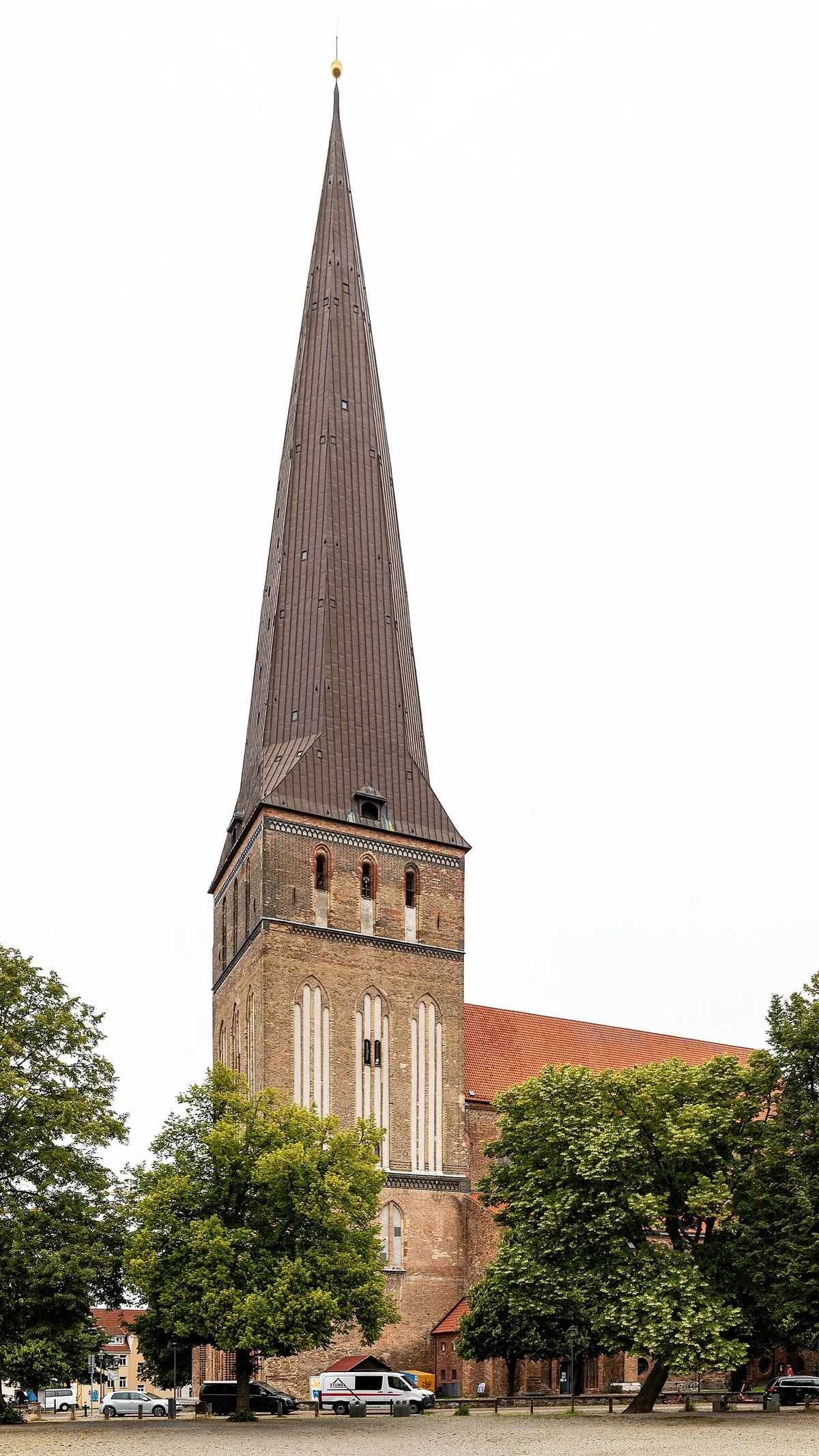
For the tower, a published account reports two options: climbing 196 steps or paying a small fee for a lift to an observation gallery at roughly 150 feet. The same account notes that the views were partly obscured by meshing, so the payoff is real but imperfect. Treat the step count, the lift, and the gallery height as a blogger's reported experience rather than confirmed operator details, and check current access before you plan around it.
The honest trade-off is this: if clear rooftop photography matters more than the climb, the meshing may frustrate you, and the Kröpeliner Tor tower has been described as having similarly obstructed views. If you simply want the experience of looking down on the old town, the lift gets you there faster. Either way, the church interior itself costs you nothing but time.
Midday: Marienkirche and the Astronomical Clock
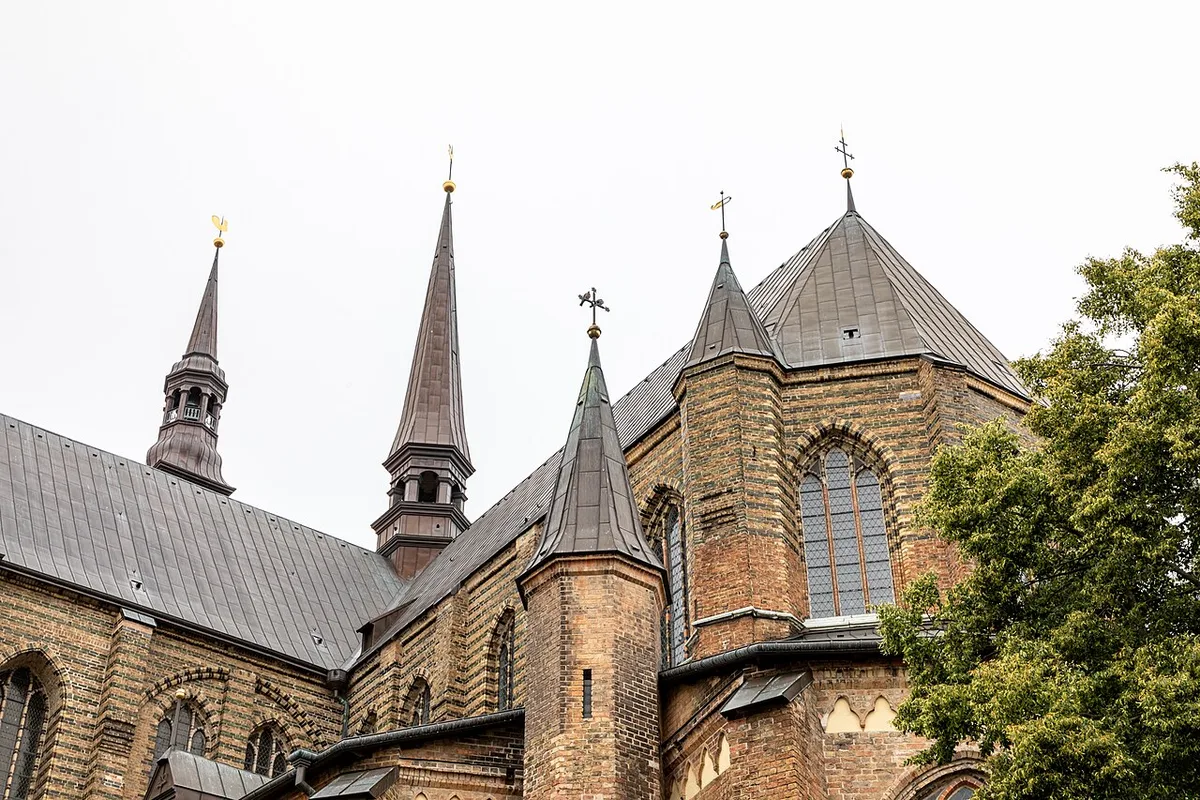
Marienkirche, just off Neuer Markt, is Rostock's main church and the spiritual anchor of the old town. Originally built in the 13th century and expanded into the mid-15th, it survived wartime bombs largely intact after the sexton acted quickly to extinguish fires. That preservation is why medieval treasures remain inside, including a bronze baptismal font from 1290 and a Renaissance pulpit.
The centerpiece is the astronomical clock built in 1472, still running with original parts and positioned behind the altar. Its top section shows figures of the twelve apostles, the middle displays time, zodiac, and moon phases, and the base carries a calendar. Arriving precisely at noon lets you watch the apostles circle the figure of Christ, which is the single best-timed moment in a Rostock day.
Interior access and any entrance fee need a current check rather than reliance on older trip reports. Church hours can shift with services, concerts, and seasons, so confirm on the day or through the city's tourism information before building your schedule around a specific opening window.
Lunch Strategy Around Universitätsplatz
Break your walk around Universitätsplatz or back near Neuer Markt rather than pushing straight through to the far end of Kröpeliner Straße. The university square has fountains and surrounding buildings that make a natural resting point, and it sits roughly midway along the main shopping artery. Eating here keeps you positioned for the afternoon stretch without backtracking.
Restaurant options mentioned in older trip write-ups, such as Zur Kogge in a red gabled building or L'Osteria near Neuer Markt, should be treated as leads rather than confirmed open establishments. Check current hours, seasonal closures, and whether reservations are needed before you commit. The wider Kröpeliner Straße corridor offers enough cafes and shops that you will not go hungry while deciding.
Afternoon: Universitätsplatz and Kröpeliner Straße
The University of Rostock was founded in 1419, and the main building's facade carries that date alongside 1867, when its foundation stone was laid. Statues of Mecklenburg dukes sit lower on the facade, and the square around it is one of the more photogenic spots in the city. This is a good place to slow down before the shopping street.
Kröpeliner Straße, known locally as the Kropi, runs from the university area toward Kröpeliner Tor, lined with restored gabled houses, boutiques, and cafes. The gate at the far end is a Brick Gothic tower of roughly 180 feet across six stories, likely built in the 13th century. Climbing it involves a fee and reportedly yields views partly obscured by meshing, so many visitors simply admire it from the street.
Indoor Swaps for Cold or Rainy Hours
If weather turns, two indoor options sit outside the immediate walking spine. The Shipbuilding and Maritime Museum is housed in a former cargo ship and covers regional shipbuilding and maritime history. The Stasi Pre-Trial Prison addresses Rostock's GDR and Cold War past. Both require checking current opening hours and admission before you travel to them, since neither is a drop-in guarantee.
A culture history museum housed in a 13th-century monastery is another wet-weather candidate, with collections spanning coins, toys, art, and archaeological objects from Rostock and Mecklenburg, as described by a published city guide. None of these share a ticket with the churches or with each other, so treat each as its own decision and its own cost.
The Warnemünde Extension: Harbor, Lighthouse, and Beach
Warnemünde is Rostock's coastal district, not a separate city, and it sits where the Warnow meets the Baltic. The fastest way from the center is the S-Bahn to the beach station, with buses and passenger ferries as alternatives, according to the city's tourism site. You do not need a car for any of it.
Once there, the Alter Strom is the anchor: a canal-side walkway lined with former fishermen's houses now used as cafes and shops, with colorful boats providing the backdrop. Continue to the white-brick lighthouse from the late 19th century and the distinctive Teepott building nearby. The wide, fine-sand beach beyond is the reward if the weather cooperates.
Be honest about the return trip. If your day started late, if rain is closing in, or if you have a cruise all-aboard time to respect, skipping Warnemünde and lingering in the old town is the better call. The coastal district deserves its own half-day, and cramming it into a tired afternoon rarely produces the relaxed waterfront stroll that makes it worth going. A dedicated Warnemünde day trip guide can help you plan a separate visit properly.
Getting Around Without a Car
Rostock's old town is walkable, and the Hauptbahnhof connects to the center by tram. For the coast, the S-Bahn runs directly to the beach station; the city describes this as the quickest route from the center, with buses and ferries as slower alternatives. Public transport tickets are available at stations and kiosks.
The GästeCard issued to overnight guests includes free public transport, but the day and annual spa card versions do not carry that entitlement, according to the city's tourism site. That distinction matters if you are visiting on a day trip rather than staying overnight, because the card you can buy differs from the one your hotel provides. Confirm the current terms before relying on any transport benefit.
Plan Your Visit
The most reliable one-day Rostock plan is a morning old-town walk from Neuer Markt through the gates and churches, a lunch break around Universitätsplatz, and an afternoon decision: continue along Kröpeliner Straße or head to the coast. Church interiors, tower access, and museum hours all need same-day verification, since published trip accounts age quickly and operator schedules change.
Build flexibility into the day rather than a rigid minute-by-minute script. The astronomical clock at noon is the one fixed appointment worth planning around; everything else can shift with weather, crowds, and your own pace. If Warnemünde is on your list, give it a proper window instead of treating it as a checkbox.
Frequently Asked Questions
Is one day in Rostock enough to see the main sights?
Yes, for the old town. The compact core lets you walk from Neuer Markt through Steintor, Nikolaikirche, Petrikirche, Marienkirche, Universitätsplatz, and Kröpeliner Straße in roughly four to five hours including a lunch break, based on a published third-party estimate rather than an official figure. Adding Warnemünde requires about two more hours plus travel, so start early if you want both. Church interiors and tower climbs are separate decisions that can stretch the day further.
Should I climb the Petrikirche tower or take the lift?
A published account reports that you can climb 196 steps or pay a small fee for a lift to an observation gallery at roughly 150 feet, and that the views were partly obscured by meshing. Those specifics come from a traveler's report, not the operator, so verify current access and any fee on arrival. If you want the view without the exertion, the lift is the faster path; if the meshing would bother you, consider whether the climb is worth it at all.
What can I see at Marienkirche and when is the astronomical clock best?
Marienkirche is Rostock's main church, originally built in the 13th century and expanded into the mid-15th, with medieval treasures including a bronze baptismal font from 1290. The astronomical clock, built in 1472 and still running with original parts, sits behind the altar with apostle figures on top, time and moon phases in the middle, and a calendar below. Arriving at noon lets you watch the apostles circle the figure of Christ. Check current opening hours and any entrance fee before you go, since published hours may not be operator-confirmed.
Is Warnemünde worth adding to a one-day Rostock itinerary?
It is worth adding if you have the time and reasonable weather. Warnemünde is Rostock's coastal district, about 12 kilometers north of the center, with the Alter Strom promenade, a late-19th-century lighthouse, the Teepott building, and a wide sandy beach. The stroll is relaxed rather than sight-heavy, so it suits travelers who want a waterfront finish. If your day starts late, rain is coming, or you have a cruise schedule to meet, staying in the old town is the better trade.
How do I get from Rostock to Warnemünde without a car?
The S-Bahn is the quickest option from the center to the beach station, according to the city's tourism site, which also lists buses and passenger ferries as alternatives for moving around the region. You do not need a car for any of it. Check current connections and ticketing on the day, and note that the free public transport benefit tied to the accommodation-issued GästeCard differs from the day and annual spa card versions.
What is the best walking order for Rostock old town?
A workable sequence starts at Neuer Markt with the Town Hall, continues to Steintor and Kuhtor, passes Nikolaikirche, climbs or lifts to Petrikirche's tower, visits Marienkirche for the astronomical clock, then follows Kröpeliner Straße through Universitätsplatz to Kröpeliner Tor. This order keeps you moving roughly in one direction and puts the noon clock moment at a sensible midpoint. Restaurants and cafes along the route let you break the walk without backtracking.


