

Bamberg rewards travellers who are content to walk and look. The UNESCO World Heritage listing is not one site but three connected districts: the Bergstadt hill with its cathedral and residence, the Inselstadt island quarter around the Regnitz, and the Gärtnerstadt garden town. You can move between all three on foot, and the streets themselves are the attraction. For wider planning, see Bamberg Cathedral Visitor Guide.
The practical distinction is straightforward: exteriors, courtyards, church naves, riverside paths and public squares cost nothing, while museums, state apartments and guided interior tours are ticketed. Knowing this before you arrive lets you decide where one or two paid entries are worth it rather than discovering the split at the ticket desk.
What's Free vs. What's Ticketed at a Glance
On the free side you can count the old-town lanes and squares, the Altes Rathaus facade and its archway, the Bamberg Cathedral nave as an active church, the Alte Hofhaltung courtyard, the Rosengarten terrace at the New Residence, the Michaelsberg abbey grounds and gardens, the Klein Venedig riverside stretch, and both the Grüner Markt and Maximiliansplatz. None of these requires a ticket to walk through or look at. For wider planning, see Bamberg city travel guides.
On the paid side the pattern is consistent: the porcelain collection housed inside the Altes Rathaus, the state rooms and art gallery inside the New Residence, and the Museum of History within the Alte Hofhaltung complex are all ticketed, and each has its own ticket scope rather than one combined pass for the whole building. Altenburg Castle outside the centre also charges for guided tours and its tower access.
One caution worth repeating: reading a building's description in a guidebook rarely tells you whether a specific room is free. Museum ticket scopes and interior access rules are published by the operator and change over time, so check the individual site or the Bamberg Tourismus pages before you set expectations for a particular room. For wider planning, see Bamberg landmark visitor guides.
Self-Guided Old-Town Walk: Obere Brücke to the Cathedral Hill
Start at the Obere Brücke and the Altes Rathaus, the town hall built on an artificial island in the Regnitz in the 15th century after the bishop refused to give up land for it. The elaborately frescoed facade and the archway connecting the bridge to the old town are free to admire and photograph, and the surrounding footbridges give you several angles on the building.
From there, head uphill through the pedestrian lanes toward Domplatz. The climb is short but steady, and the cobblestones are uneven in places, so flat shoes matter more than you might expect on a walking day. If you want orientation on the ground, the Tourist Information office on its own small island in the city centre stocks maps and can point you toward the main routes.
Treat the whole walk as the activity rather than a transit between sights. The lanes between the river and the hill contain carved fountains, statues, information plaques and half-timbered facades that cost nothing to stop and read. A self-guided route is entirely feasible without paying for a tour, though a guided old-town walk exists if you would rather have commentary.
Bamberg Cathedral: Visiting an Active Church
The cathedral on the hill is the third building on the site, in Romanesque and Gothic style from the 13th century, and it remains an active place of worship rather than a museum. Visitors are asked to be quiet and respectful inside. The nave itself is the main free experience here, and the interior holds two things most people come for: the tomb of Emperor Heinrich II and the Bamberg Horseman, a life-sized sandstone carving of a rider.
Because the cathedral is a working church, do not assume that every part of the interior is open at any given moment, and do not treat guided tours or entry conditions as fixed facts. The cathedral's own pages publish current visiting information, and Bamberg Tourismus lists what is open. Check those before you plan your day around a particular access time.
New Residence and the Rosengarten
The Neue Residenz sits beside the cathedral on Domplatz, a four-winged complex built in stages between 1602 and 1703, with Baroque sections facing the cathedral and Renaissance portions behind. The state rooms, the Prince-Bishop's apartments and the art gallery with German and Baroque paintings are shown on guided interior tours and are ticketed.
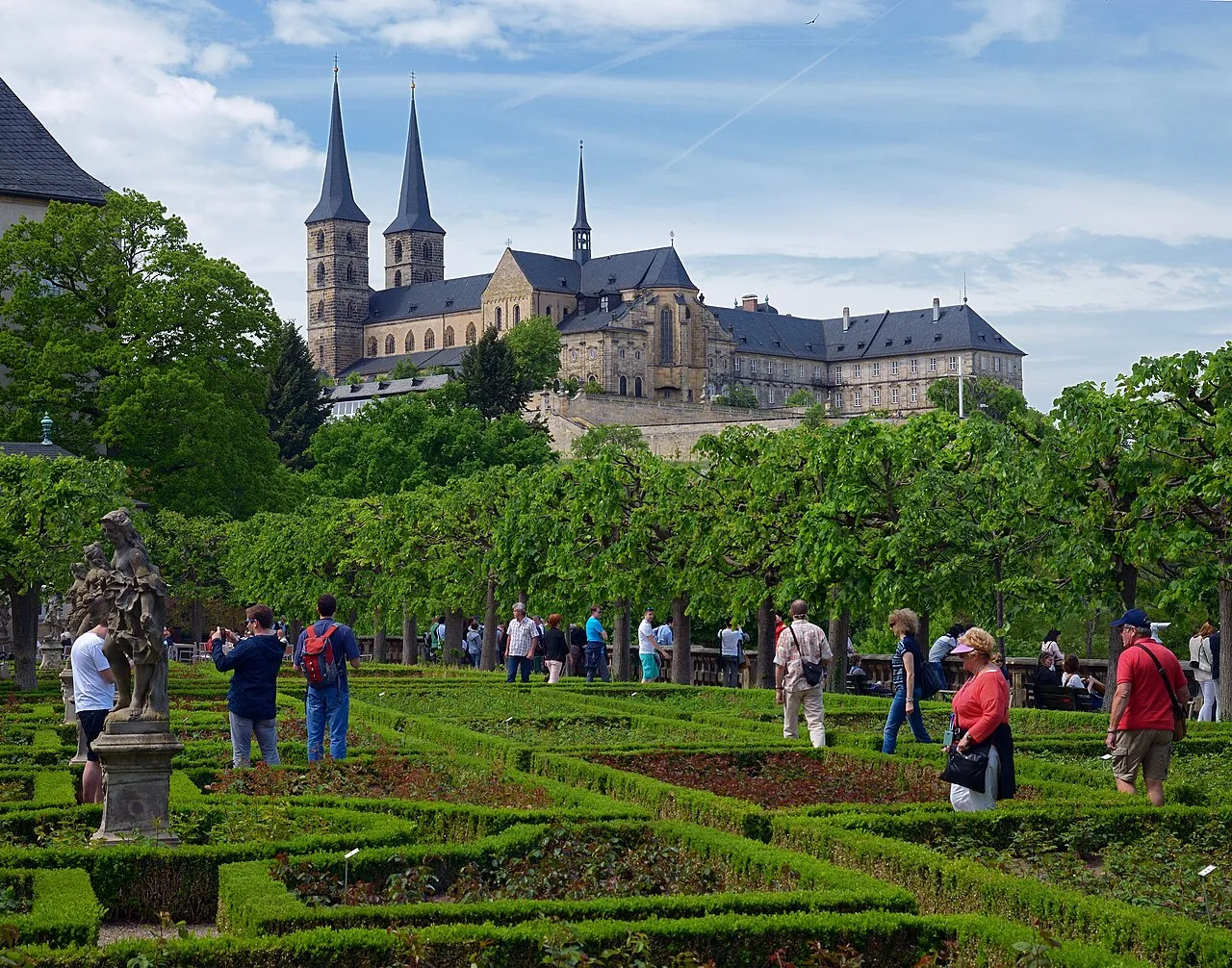
The Rosengarten, the terraced garden in the courtyard, is the free part, and it is the reason to come even if you skip the interiors. The symmetrical layout has dozens of beds that fill with roses in the warmer months, and the walls above the town give wide views across the roofs toward the river. There is also a cafe in the garden if you want to sit rather than just look.
Do not assume a residence complex shares a single ticket. The garden, the state rooms and any separate exhibition are managed as different offers, so if your interest is only the view, you can take it without buying anything. Confirm current access and opening times on the residence's official page before climbing the hill.
Alte Hofhaltung Courtyard and the Beautiful Gateway
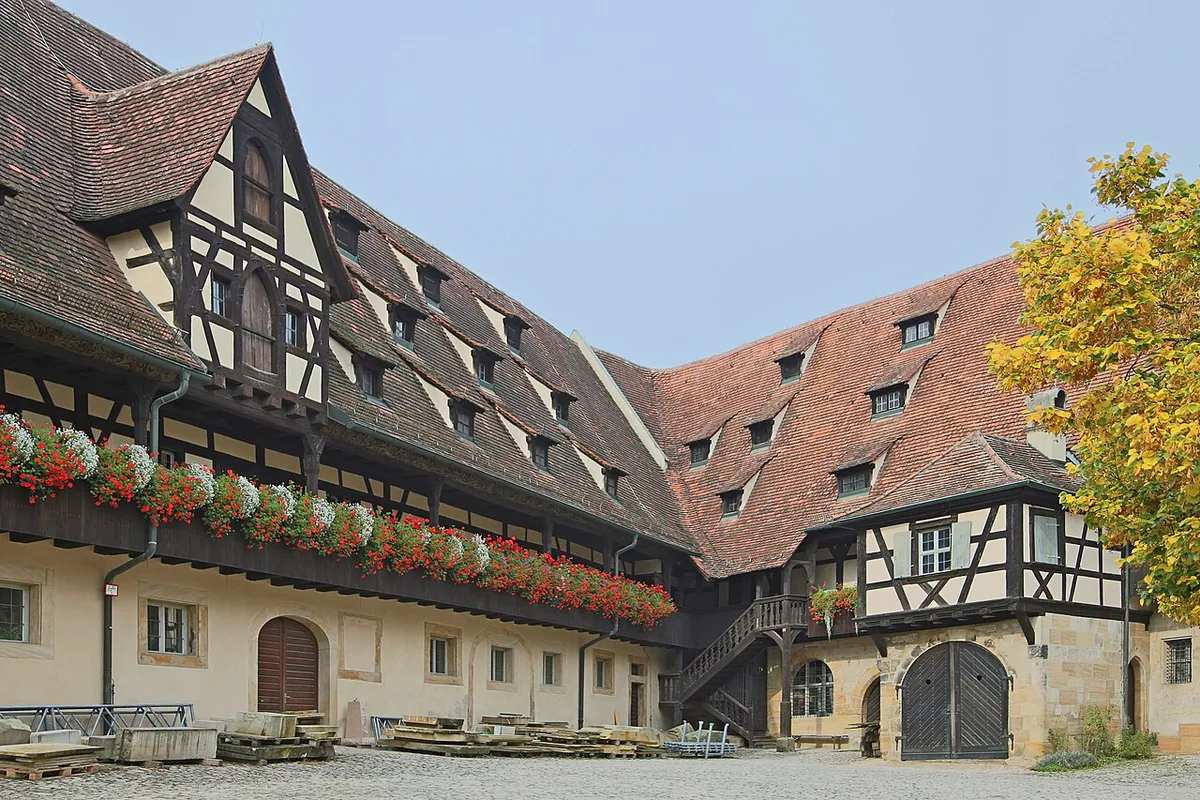
The Alte Hofhaltung, or Old Court, served as the bishops' residence until roughly the 17th century, when the New Residence took over that role. You enter through the Schöne Pforte, or Beautiful Gateway, carved by Pankras Wagner and crowded with figures and detail that reward a slow look. The half-timbered Renaissance courtyard inside is a free passage and a fine place to pause.
The Museum of History occupies part of the complex, and smaller rooms and chapels there are visited separately for a fee. The courtyard and the gateway are the free elements; the collections behind the doors are not. That distinction is worth holding onto when you move between the buildings on Domplatz.
Michaelsberg Abbey Grounds and Gardens
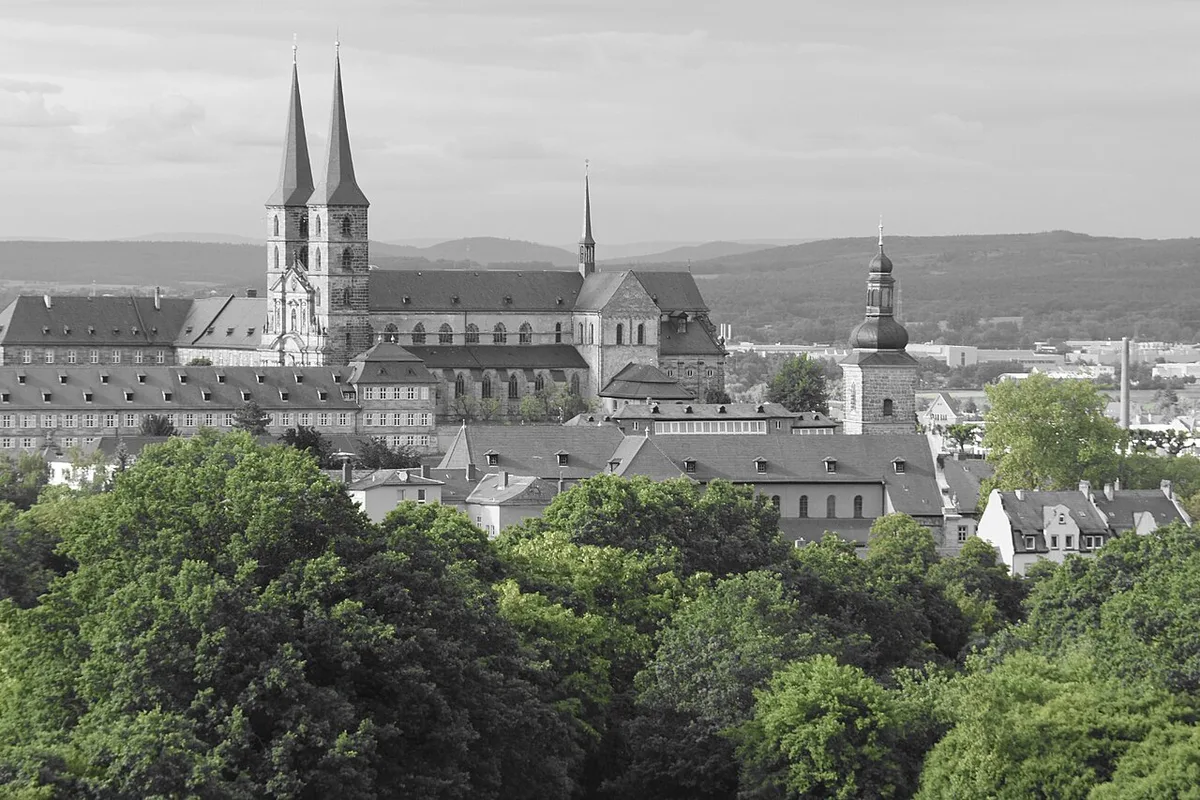
Kloster Michaelsberg sits on the hill across the river, founded in 1015 with the current Baroque buildings dating from the 18th century. The walk up is free, and so are the grounds, with gardens, fountains, pavilions and long views back over the city. It is one of the better free vantage points in Bamberg and pairs naturally with a riverside route.
Interior access at Michaelsberg has been affected by restoration work in the past, and there is no basis for assuming that older completion dates still describe conditions today. Treat the church interior as subject to change and verify the current situation before making the climb specifically to go inside. The exterior and grounds remain the reliable part of the visit.
Little Venice and the Riverside Paths
Klein Venedig is the old fishermen's district along the Regnitz, a row of small timber-framed houses that grew up in the Middle Ages and now faces the water from the island edge. The path along the bank is free and short, with the houses on one side and the river on the other; the Fischerei address is the easiest marker to navigate toward.
Boat cruises on the Regnitz are a separate paid option, and whether they are running depends on season and operator schedules. Do not build a free day around them. The walking route along the water delivers most of the scenery at no cost, and you can decide on the spot whether a cruise adds enough to justify the spend.
Markets and Squares: Browsing Without Buying
The Grüner Markt is a pedestrian zone north of the Altes Rathaus with shops, cafes, fountains and market stalls selling fruit, vegetables, flowers and honey. Buying is optional; walking the length of it and taking in the architecture costs nothing. The large Maximiliansplatz nearby holds the Maximiliansbrunnen fountain and the city government building, and it is a quiet, handsome square to cross on foot.
Stall days and hours vary, so if a market visit is the point of your morning, check the city's market listings rather than assuming a daily presence. The squares themselves are public space at any time, which means you can still enjoy the setting even if the stalls are packed up.
Kettenbrücke and the Love Locks
The Kettenbrücke is not an ornate bridge, but it carries a growing collection of love locks along its railings and it earns its place as a free two-minute stop. More usefully, it is a functional crossing that links the central station side of town with the market area, so you will likely use it anyway on the way between the station and the Grüner Markt.
Suggested Half-Day Free Walking Plan
A suggested half-day version, and this is a suggestion rather than an official itinerary, runs from the Obere Brücke and Altes Rathaus through the old-town lanes up to Domplatz, across the cathedral and the Rosengarten terrace, down through the Alte Hofhaltung courtyard, and then over to the Klein Venedig river path. Add the Grüner Markt and Maximiliansplatz on the way back if your legs hold out.
Budget the time around the terrain, not the distance. Cobblestones make for slower going than the map suggests, and both Domplatz and Michaelsberg sit above the river, so the day involves repeated short climbs. Splitting the hilltop sights from the riverside walk across two half-days is often more comfortable than forcing them into one.
If you have more time than a single day, a dedicated one day in Bamberg itinerary covers the same core at a gentler pace, and a 2 days in Bamberg itinerary spreads the hills and the river across separate mornings.
Staying Free Beyond the Obvious
Window-shopping the pedestrian zone, reading the memorial and information plaques set into facades, and studying church architecture from the outside all cost nothing and fill time easily. The old town is compact enough that simply wandering without a destination is a legitimate way to spend an afternoon, and the density of detail in the lanes rewards it.
The Gärtnerstadt, the historic gardeners' quarter, is the third element of the World Heritage listing and is often skipped because it sits away from the cathedral hill. It is a residential and market-gardening district rather than a monument, and walking it is free. It suits travellers who have already seen the headline sights and want the part of Bamberg that visitors miss.
What Not to Assume, and Where to Verify
Do not plan around remembered admission prices, opening hours, tour times, boat schedules or brewery hours. None of these are stable, and older blog posts in particular record conditions that may no longer apply. The pattern that holds is the free-versus-ticketed split described here; the specifics around it change.
For current details, go to the source that runs each place. Bamberg Tourismus publishes city-wide visitor information including the heritage districts and the map and app tools, while the city administration publishes official notices and civic information. Individual sights such as the cathedral and the residence publish their own visiting conditions.
If a specific piece of information is not published, ask the Tourist Information office directly rather than filling the gap with an assumption. That is more reliable than any guidebook, including this one, for anything time-sensitive.
Plan Your Visit
Bamberg's best free experiences are not hidden or second-best: the Altes Rathaus facade, the cathedral nave, the Rosengarten terrace, the Alte Hofhaltung courtyard, the Michaelsberg grounds, the Klein Venedig path and the market squares are the same sights people travel here for. What costs money is the layer inside them, and that layer is optional.
Decide in advance whether you want one paid interior, then spend the rest of your time on foot. Check opening and access conditions on the operator pages the week you travel, wear shoes that handle cobblestones, and accept that the hills will slow you down. The rest of the day takes care of itself.
Frequently Asked Questions
Is Bamberg Cathedral free to enter?
The cathedral is an active church rather than a museum, and entering to see the nave, the tomb of Emperor Heinrich II and the Bamberg Horseman is the standard visitor experience rather than a ticketed attraction. Access conditions can change because it is a working place of worship, so check the cathedral's own published visiting information and the Bamberg Tourismus site before you go rather than relying on a guidebook.
Can you visit the Rosengarten for free?
The Rosengarten, the terraced garden in the courtyard of the New Residence, is the freely accessible part of the complex, and it offers the wide views over the old town roofs that people come for. The state rooms, the Prince-Bishop's apartments and the art gallery are shown on guided interior tours and are ticketed separately. Because the garden and the interiors are managed as different offers, you can visit the garden without paying for anything.
Is Michaelsberg Abbey free to walk around?
The walk up to Kloster Michaelsberg and the abbey grounds, gardens, fountains and pavilions are free, and the view back over the city is one of the best vantage points in Bamberg. Interior access has been affected by restoration work in the past, and there is no reliable basis for assuming that older completion dates still describe current conditions. Verify the present situation on the abbey's or the city's own pages before climbing specifically to go inside.
Do you need tickets for the Altes Rathaus?
No ticket is needed to see the Altes Rathaus from the outside. The frescoed facade, the archway between the Obere Brücke and the old town, and the surrounding footbridges are all free to look at and photograph. The porcelain collection housed inside the building is ticketed separately, so treat the exterior and the interior as two different decisions.
Can you do a self-guided walking tour of Bamberg without paying?
Yes. The old town is compact, the route from the Obere Brücke through the lanes to Domplatz and on to the Klein Venedig river path is walkable on your own, and maps are available from the Tourist Information office on the island in the city centre. The main practical constraints are uneven cobblestones and repeated short climbs between the river level and the hills, so pace yourself rather than measuring progress in distance.


