

Klein Venedig is not an attraction with a gate, a ticket desk, or a route through it. It is a compact stretch of former fishermen's houses on the Regnitz in Bamberg's island district, and it is viewed from the opposite bank rather than entered. That single fact shapes everything about a visit: where you stand, how long you stay, and what you should not expect to do.
The houses date from the 19th century and stand as a preserved row that photographers and guidebooks treat as one of the city's signature images, close to the Old Town Hall island. The nickname borrows Venice's look, not its scale, so set expectations accordingly. A straightforward walk along the water covers the whole scene comfortably in about 45 to 90 minutes, an editorial estimate rather than an official figure.
What Klein Venedig Actually Is
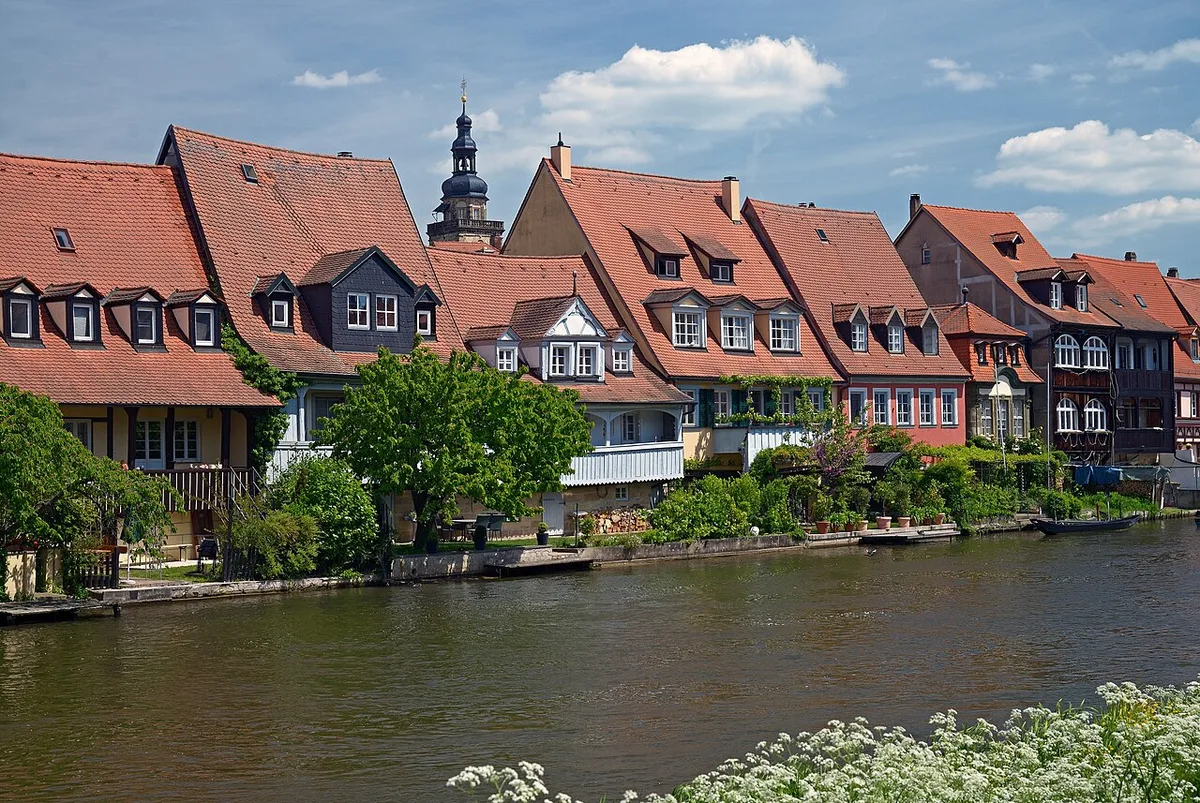
The name covers a specific row of former fishermen's houses from the 19th century, not a district of canals or a reconstructed village. Stock photography of the spot consistently labels the buildings as fishermen's houses in Klein-Venedig, one caption recording the view taken from Am Leinritt across the Regnitz. The waterfront setting, the timber facades and the reflections in the water do most of the work.
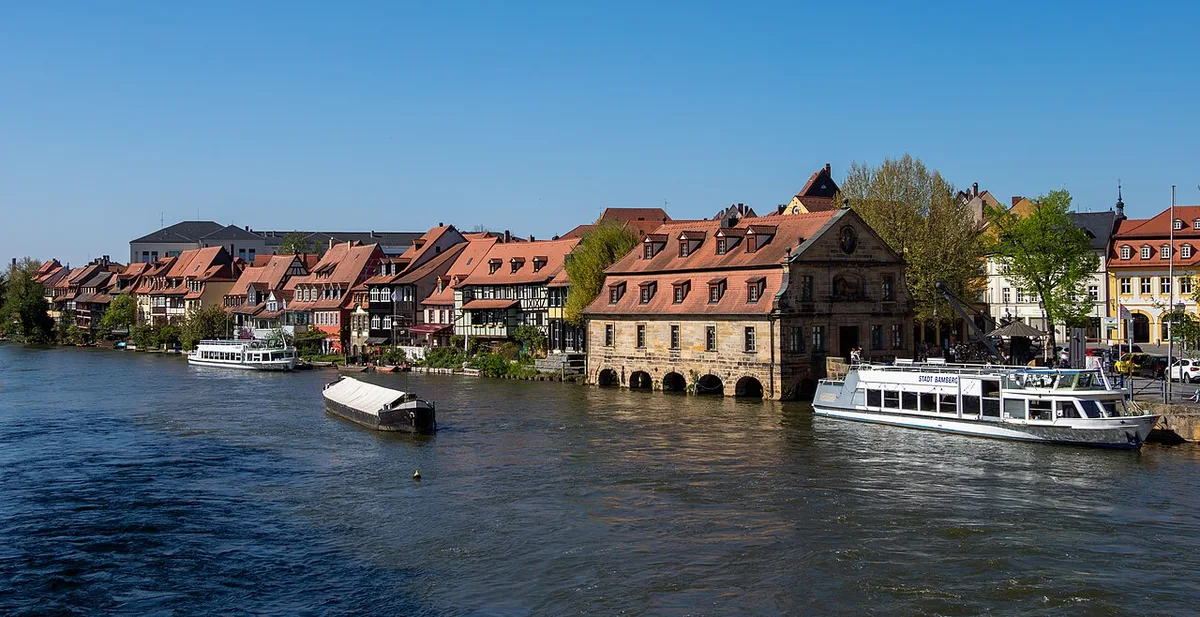
A second set of images from a different year describes the same scene as a picturesque row of medieval half-timbered fishermen's houses along the Regnitz, linked in the same breath with the UNESCO-listed old town. The age descriptions vary between sources, so treat "medieval" as a loose label for the old-town fabric rather than a precise construction date for every house. What is consistent is the location on the river and the residential character.
Bamberg's own tourism organisation places Klein Venedig inside the Inselstadt, the island district, alongside the pedestrian zone and the Old Town Hall. That is the most useful mental map you can carry: the settlement is part of the old town you are already walking, not a separate excursion on the edge of the city. Read the wider Bamberg: Itineraries and City Travel Guides if you want to slot the walk into a longer day.
Where It Sits in the Inselstadt
The Regnitz splits around the old town here, and the fishermen's houses occupy the eastern bank, roughly between the Kettenbrücke and the Markusbrücke crossings. Because everything sits within a few minutes of the other, the walk rarely needs public transport at all once you are in the old town. Bamberg Tourismus maps the quarter under its Inselstadt pages if you want the official orientation.
The old town hall sits just upstream on its artificial island, which is why so many visitors see the two together in an hour. Walking between them means crossing the Obere Brücke and following the water rather than following a signposted route. If you are planning the whole river corridor rather than one spot, the Bamberg riverside walk Regnitz route page sets out a longer line along the water.
Reading the Architecture From Across the Water
The facades reward slow looking rather than quick snapping. Timber framing, small windows, projecting upper storeys and private jetties show how the buildings once worked with the river instead of merely facing it. Because the row is short, the useful comparison is between the houses themselves, not between this waterfront and any canal city.
Light matters more than angle here. Morning puts the eastern bank in softer, flatter light, while late afternoon can catch the timber facades and throw reflections into the water. Overcast days are not a loss: they even out the contrast that makes midday summer shots harsh.
The Public Viewing Axis: Am Leinritt and the Bridges
Am Leinritt, the path along the opposite bank, gives the classic view straight across the Regnitz at the row of houses. Stock photography taken from this exact path in different years shows the same composition, which tells you the vantage point is stable and publicly walkable. Stand back from the railing, keep the path clear, and you have the shot without needing to get closer to the homes.
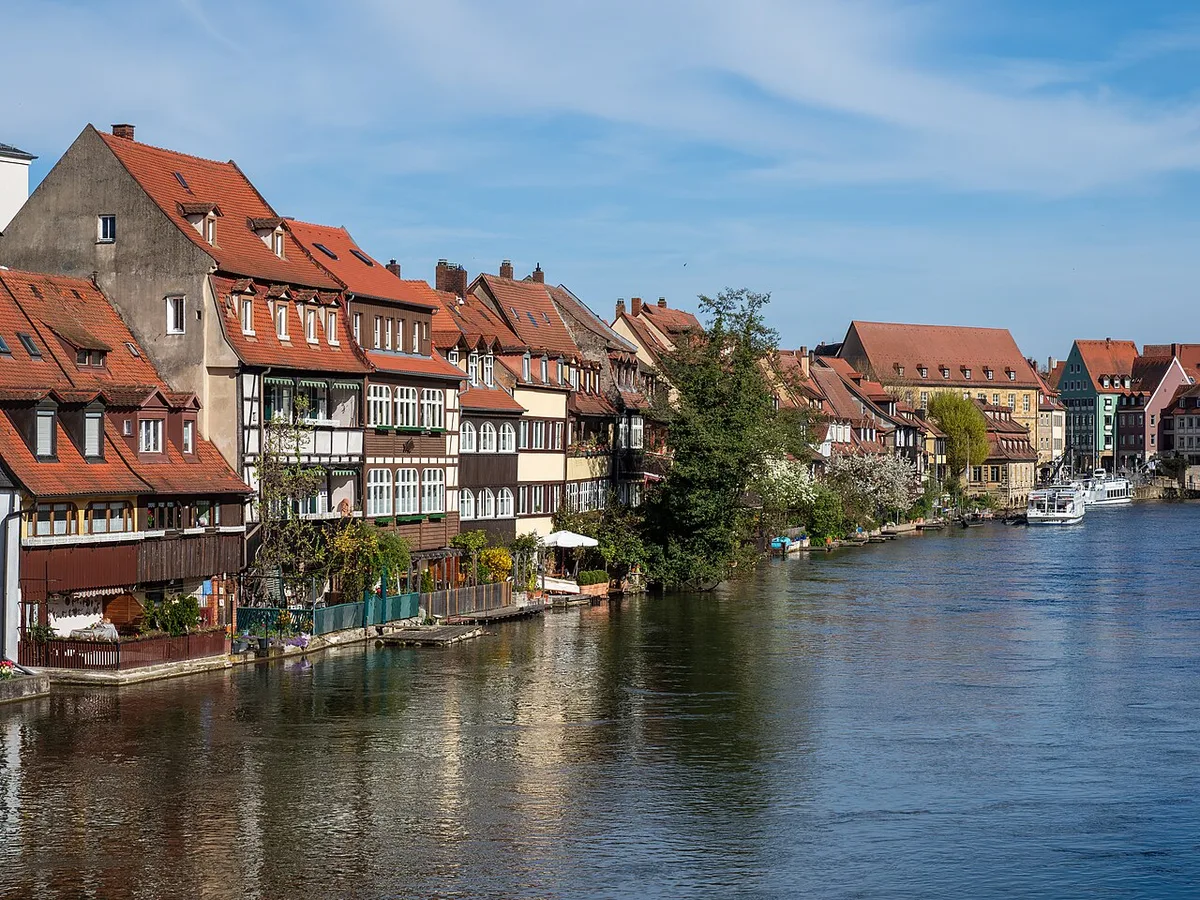
Bridges add the second axis. From the crossings near the old town hall you look lengthwise along the water, picking up the row in context with the river and the island buildings. Neither the path nor the bridges carry an entrance requirement, and no fixed opening times apply, because they are ordinary public routes through a lived-in part of town.
River cruises pass the settlement and are sometimes recommended as a way to see the residential frontage from below. That is a separate, commercially operated experience with its own operator, season and pricing, so check current sailings and conditions directly with the operator rather than assuming a departure.
Residential Reality: Looking Without Intruding
These are homes, not museum rooms. The waterfront frontage belongs to the people who live there, so the visit is a view from the far bank and from the bridges, never a walk along the private side. Nothing here is ticketed, and nothing here is opened to visitors on a schedule.
Practical courtesy follows from that: keep voices low on Am Leinritt in the early morning and evening, do not lean over or through private railings, and do not photograph through windows or into gardens. If a gate or jetty is closed, treat it as closed rather than as a challenge. The photographer's position on the opposite bank exists precisely because the near bank is private.
Pairing the Walk With the Old Town Hall
The Old Town Hall stands on its own small island in the Regnitz, reached by the Obere Brücke, and is the natural next stop after the fishermen's houses. Accounts of its origin describe it as deliberately placed in the river after the bishop withheld land for a town hall, and it was later rebuilt in baroque form in the 18th century. Treat that as background colour rather than as a documented quote from any single source.
From the bridges around the hall you get the compressed view that most visitors remember: the facade above the water on one side and the river corridor toward the fishermen's houses on the other. The two sights are close enough that pairing them costs no extra travel time. The Altes Rathaus Bamberg guide covers the building itself in more detail.
Note the split between outside and inside. Walking the bridges and the shoreline is free and always available; entering the hall's interior is a separate matter governed by the museum that operates there. Do not assume the building's famous facade means an open door at any hour.
If You Want to Go Inside: Museums Near the Old Town Hall
The porcelain collection associated with the Old Town Hall is not currently shown inside that building. The city museums state that the Old Town Hall has housed the Ludwig Collection for many years but is undergoing extensive renovation, and that a small selection of pieces is displayed at the New Residence until 21 June 2026. Check the museum website for the current arrangement before you build a visit around it.
The Historical Museum sits in the Alte Hofhaltung on Domplatz and publishes its own opening times and admission charges, including reduced rates and a half-price last-minute ticket from 4 p.m. Do not read those figures as covering the Old Town Hall or any other city museum, since each venue is ticketed separately. Verify the current schedule and prices on the museum's own pages before travelling.
Villa Dessauer, the city gallery, keeps different days and different prices from the Historical Museum, so a single "museums ticket" assumption will trip you up. Farther uphill, the Alte Hofhaltung Bamberg complex and the cathedral square form their own cluster worth a separate half-day. Plan museums as individual stops, each verified on the day you intend to go.
Practical Pacing: A Suggested Walking Sequence
A sensible order is to start on the Obere Brücke for the town hall view, cross to the island side, then follow the water to the Am Leinritt path for the fishermen's houses. Allow roughly an hour for the sequence with stops, longer if you are photographing seriously. None of it requires a ticket, and none of it requires a fixed departure time.
If you have a full day in the old town, add the cathedral and the Diocesan Museum on the Domberg, which publishes its own opening days and charges and is closed on Wednesdays. That keeps the river walk as the relaxed middle of the day rather than the whole itinerary. The Bamberg Cathedral visitor guide covers that end of town when you want to extend.
Timing, Crowds and the Sandkerwa Question
Sandkerwa is Bamberg's traditional festival and it uses the fishermen's quarter as a backdrop, which makes late summer the busiest stretch along this water. The exact dates move from year to year, so check the city's event calendar rather than planning around an assumed week. Outside festival time the path is usually calm, and early mornings are the quietest.
Autumn and winter change the experience rather than ruining it: low water, bare trees and fewer people can make the row of houses easier to see and photograph. Cold-weather visits need no special access, but the path can be slick near the water. Spring brings higher water and greener banks, which is a visual trade rather than a practical one.
What Klein Venedig Is Not
It is not a canal district, there are no gondolas in regular service, and it is not a district you wander through at will. The comparison to Venice rests on the sight of houses rising straight from water, and it stops there. Anyone arriving expecting a miniature lagoon will be disappointed by a ten-minute view that is nonetheless genuinely beautiful.
It is also not a museum quarter. The houses are private, the shoreline is public, and the ticketed interiors sit elsewhere in the old town. Keeping those three categories separate is the single most useful thing to understand before you go.
Plan Your Visit
Give Klein Venedig an hour of unhurried time, stand on the Am Leinritt side for the classic view, and use the bridges for the lengthwise angles. Pair it with the Old Town Hall because they are minutes apart, and treat the whole thing as a walk through a living neighbourhood rather than a stop on a checklist.
Before you travel, confirm museum days and any admission charges on the city museums' own pages, and check the festival calendar if you are visiting in late summer. Everything else about this stretch of the Regnitz is simply open water, old timber and a very good view.
Frequently Asked Questions
Is Klein Venedig in Bamberg the same as Little Venice?
Yes. Klein Venedig translates as Little Venice, and the two names refer to the same row of former fishermen's houses on the Regnitz. The nickname describes how the buildings appear to rise from the water, not any canal network, gondola service or Venetian scale. Expect a short, picturesque waterfront rather than a district to explore.
Can you go inside the fishermen's houses in Klein Venedig?
No. The houses are private homes and are not open to visitors, and the waterfront in front of them is not a public promenade. The visit is a view from the opposite bank along Am Leinritt and from the nearby bridges. Keep to the public path, keep your distance from private railings and jetties, and avoid photographing into windows or gardens.
Where is the best public viewpoint of Klein Venedig?
The path on the opposite bank, Am Leinritt, gives the classic straight-across view of the row of houses reflected in the Regnitz. The bridges near the Old Town Hall give a second, lengthwise angle that takes in more of the river. Both are ordinary public routes with no ticket and no fixed hours, so timing is a matter of light and crowds rather than access.
How does the walk to Klein Venedig connect to the Old Town Hall?
The Old Town Hall sits on its own island in the Regnitz a short walk upstream, reached by the Obere Brücke. Most visitors see the hall and the fishermen's houses in the same stretch of walking, crossing the bridge and then following the water. Note that the hall's famous exterior and any interior visit are separate things, and the porcelain collection once kept there is currently shown elsewhere.
Sources
- BAMBERG, GERMANY - MAY 7: Fishermen's houses from the 19th century in Klein-Venedig (Little Venice) in Bamberg, Germany on Mai 7, 2016. Foto taken Stock Photo - Alamy
- Klein Venedig in Bamberg, Bavaria, Germany Editorial Image - Image of destination, site: 437266395
- BAMBERG, GERMANY - JUNE 19: Fishermen's houses from the 19th century in Klein-Venedig (Little Venice) in Bamberg, Germany on June 19, 2018 Stock Photo - Alamy
- Informationen zum Historischen Museum Bamberg | museum.bamberg - Museen der Stadt Bamberg
- Bamberg Tourismus
- 7 Awesome Things To Do in Bamberg, Germany
- Englisch - Museen der Stadt Bamberg


