

Bamberg packs a UNESCO-listed old town into a walkable cluster of hills and riverbanks, and two days lets you split it without rushing. The city's own tourism board treats the historic centre as three distinct quarters: the Bergstadt around the cathedral, the Inselstadt with the pedestrian zone and Klein Venedig, and the Gärtnerstadt market-gardening district, all a few minutes apart. That geography is the reason a two-day plan works so well: you can give the hills and the riverside separate days.
This itinerary splits the trip deliberately. Day one stays low, around the Altes Rathaus, the Regnitz and Little Venice, with an evening of Rauchbier and Franconian food. Day two climbs: the cathedral hill first, then Michaelsberg. It is a suggested plan rather than a fixed route, so swap blocks freely if weather or energy suggests it.
How to Split Two Days in Bamberg
Bamberg's compact centre makes it easy to plan a two-day itinerary, but the relief matters. The cathedral occupies one hill, Michaelsberg the hill opposite, and the old town sits in the valley between them. Grouping the Domberg on one day and the riverside quarters plus Michaelsberg on the other keeps you from climbing the same slopes twice. That split is also the most practical response to sources that describe the town as compact and walkable while noting that some parts are uphill.
A slower two-day trip also leaves room for the beer culture. Bamberg has a dense concentration of breweries, and the tourism board markets Brauereigaststätten, beer cellars and beer experiences as central to visiting. Building one proper beer stop into each day, rather than racing between them, is the more enjoyable approach on a weekend.
Day 1 Morning: Altes Rathaus and the Regnitz
Start at the Altes Rathaus, the town hall built on an island in the Regnitz. The first town hall on the site dates to 1386, while the building visible today largely belongs to the 15th century, with its painted facade added in the mid-18th century. Arriving early is the standard advice for seeing it before crowds, and it is the most efficient way to begin a two-day visit. For a wider look at the river corridor, our Bamberg riverside walk guide maps out the path along both banks.
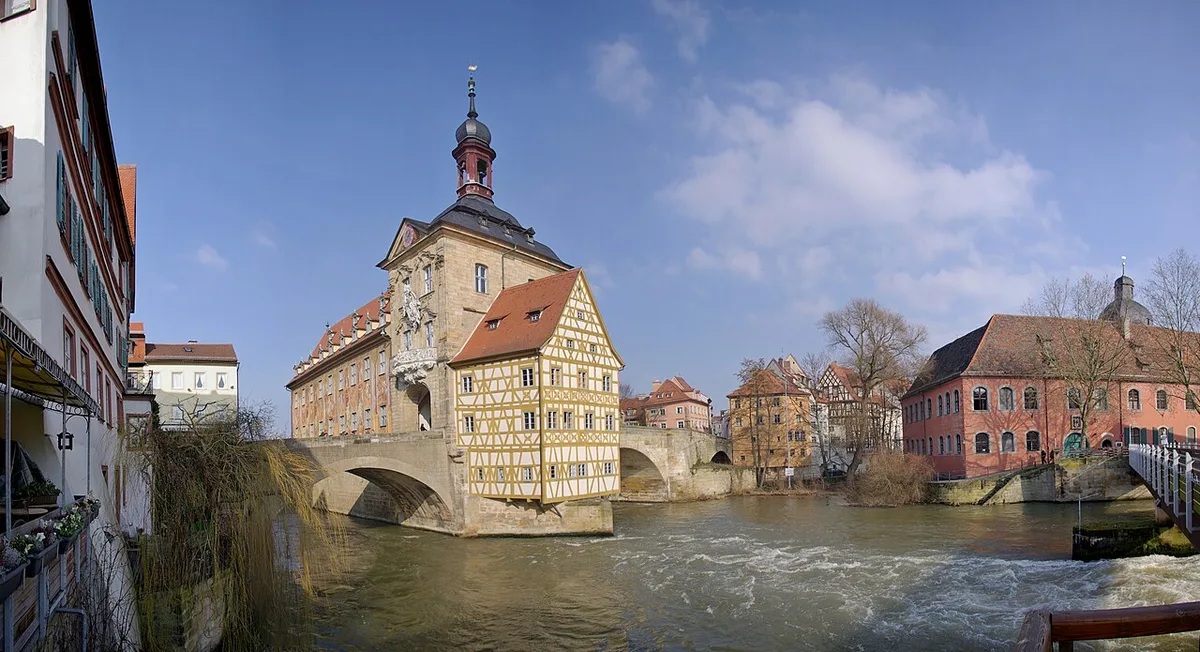
Explore both sides of the bridge. The Oberer side lets you walk through the archway beneath the building, while the Unterer side opens onto views towards Little Venice. The Geyerswörthsteg footbridge, a short detour, gives the classic view of the town hall from across the water; this outdoor viewpoint involves no ticket and no set opening time.
The Altes Rathaus interior is a separate decision: the building houses a small museum with the Ludwig Collection and a Rococo hall. Treat that as an optional add-on, because the exterior and the bridge views carry most of the visit. If you only have time for one interior during the weekend, choose it carefully rather than assuming attractions share one ticket.
Day 1 Afternoon: Little Venice and the Inselstadt
Follow the Regnitz from the Rathaus to Little Venice, the row of former fishermen's houses that is one of Bamberg's best-known photo subjects. Most of these houses are private homes, so the pleasure is in viewing them from across the river rather than touring them; the southern bank offers the clearest angles. It is a short, level stretch that fits neatly between the town hall and lunch.
Then give the afternoon to the Inselstadt, the pedestrian heart of the old town. This is where the half-timbered lanes, small squares and Baroque facades sit closest together. Many buildings show a Baroque front over an older timber-framed core, a legacy of 18th-century tax incentives that rewarded modernising facades; the same mix of medieval structure and Baroque surface is part of why the old town holds UNESCO status.
The old town is small enough that wandering rarely gets you truly lost, so this block can be as loose or as structured as you like. If you want a more defined version of the same ground, our one day in Bamberg itinerary compresses the core into a single circuit, which is useful for calibrating how much you can fit into an afternoon.
Day 1 Evening: Rauchbier and Franconian Food
Bamberg is known for Rauchbier, the smoked beer whose flavour split opinions among visitors. Traditional brewery taps such as Schlenkerla and Spezial are the classic places to try it, and both are regularly named as the standard introduction. Ordering a small glass first is a sensible way to test it without committing to a full round.
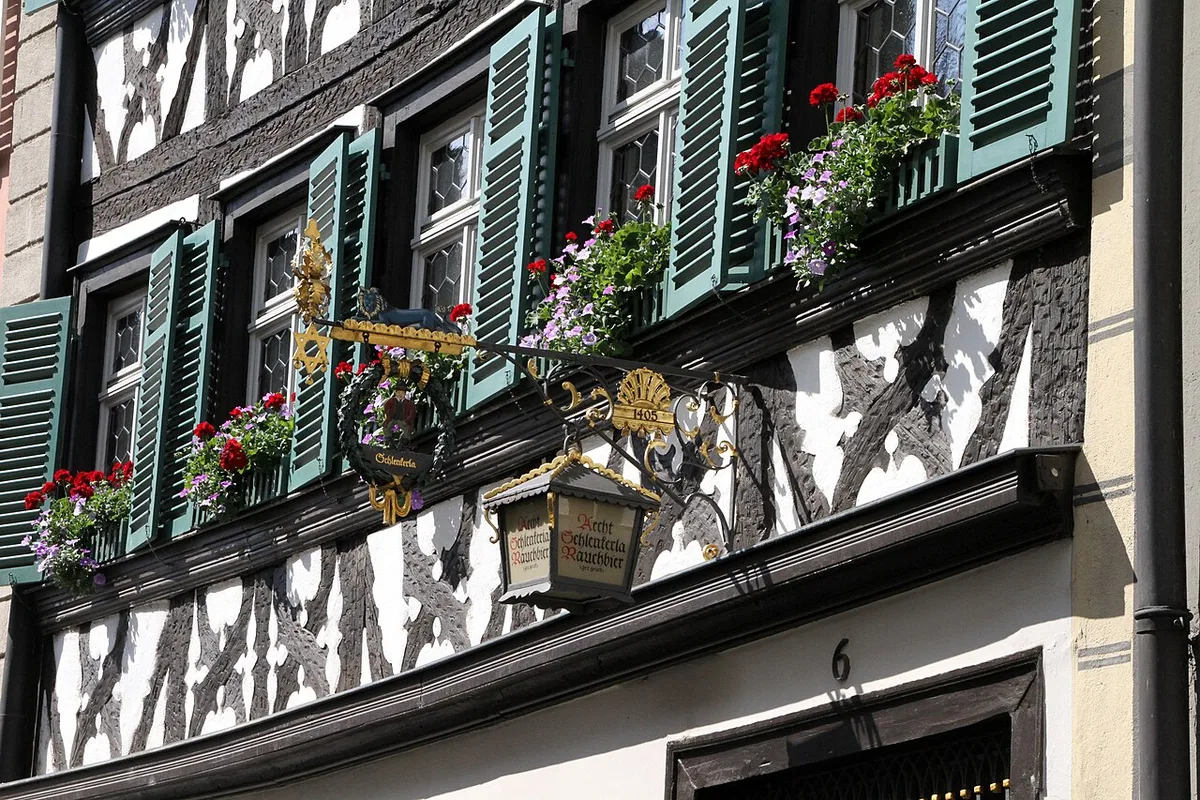
The reassuring part is that these brewery taps normally also pour Weissbier, Pilsner and Kellerbier, so nobody at the table is stuck if the smoke does not appeal. Beyond the famous names, Bamberg has a wide field of breweries in the surrounding area, and the tourism board promotes its brewery taverns and beer cellars as a core part of the visitor experience. On a mild evening, a shaded beer garden is the relaxed choice.
For dinner, Schäuferla, a roasted pork shoulder, is the signature Franconian dish in Bamberg. Portions tend to be generous, so keeping lunch light makes the evening work better. Keep the night relatively early if the next day's hills are the plan.
Day 2 Morning: Bamberg Cathedral and the New Residence
Day two belongs to the Domberg. The cathedral is the imperial and episcopal heart of the city, and the adjoining New Residence with its Rose Garden gives the raised view over the rooftops. Because cathedral and Residence sit next to each other, this is the most efficient morning of the two days; the Rose Garden itself is an outdoor space rather than a ticketed collection. For a more focused look at the cathedral, our Bamberg Cathedral visitor guide covers the highlights and helps you decide how long to stay inside.
Opening times and entry terms for the cathedral and the New Residence change with the season and with religious use, so check current details from the operator on the day rather than relying on an old listing. Build in a fallback, such as the Old Court beside the cathedral or the surrounding square, in case a building is closed for a service. The cathedral treasury is a separate collection with its own terms, so do not assume one ticket covers both.
If you have time and interest, the Staatsbibliothek, the historic library, sits within the same hilltop cluster and is often grouped with the cathedral and Residence in city guides. Treat each interior as its own decision and its own ticket, and prioritise the one that matches your interests rather than trying to see everything.
Day 2 Afternoon: Michaelsberg Abbey and Museums
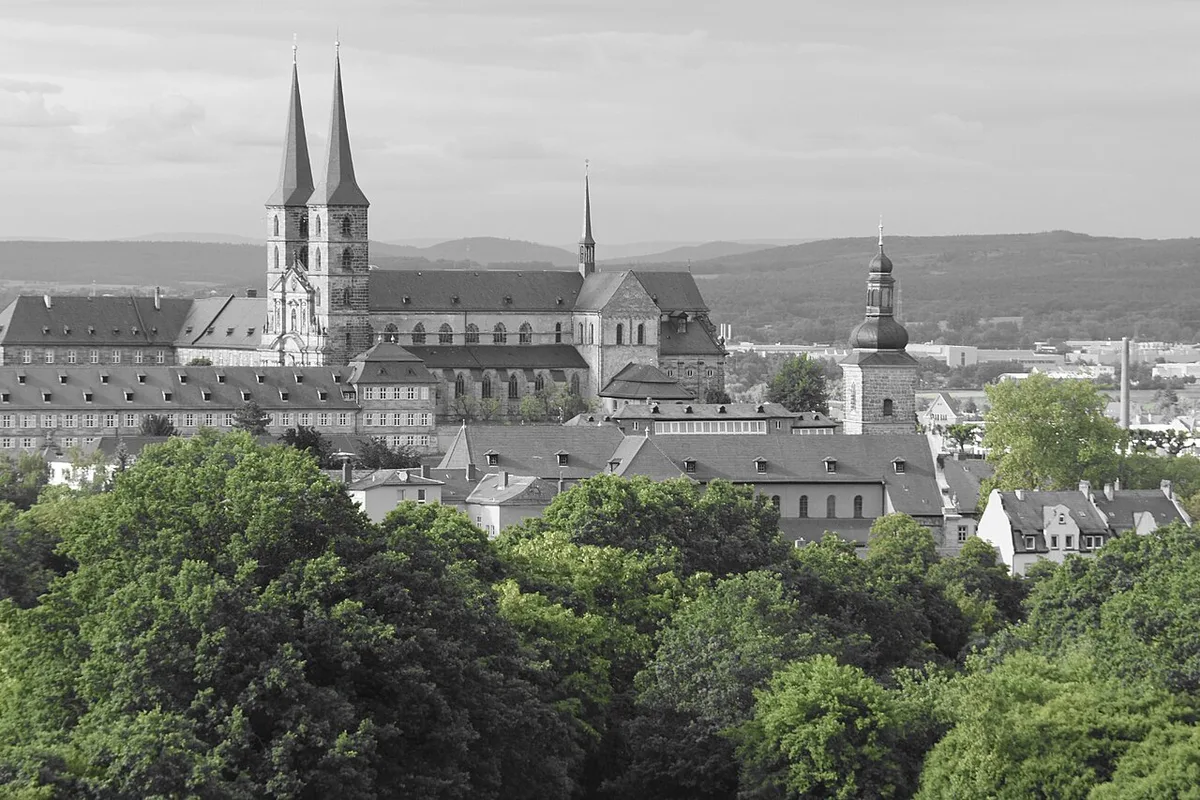
After the cathedral, cross to Michaelsberg, the monastery complex on the hill facing the Domberg. The tourism board lists Michaelsberg among the city's headline sights, alongside the cathedral and the Altes Rathaus. The climb is part of the experience, and the view back over the town is the reward; the complex has its own access arrangements that change with use, so check before you set out. Our guide to Michaelsberg Abbey covers visiting detail separately.
Bamberg's museums are individual decisions rather than one complex on a single ticket. You will find several small collections, each with its own entry terms, including the museum inside the Altes Rathaus and others grouped around the old town. The low-risk approach is to pick one interior that genuinely interests you and treat the rest as exterior sightseeing.
Free outdoor sightseeing carries a lot of a Bamberg weekend: the bridges, riverbanks, cathedral square and Rose Garden all reward time without a ticket. If you have a third day, our 3 days in Bamberg itinerary adds excursions into the surrounding Franconian countryside, which is a natural extension if two days leave you wanting more of the region.
Day 2 Evening: A Final Beer Stop
For the final evening, pick a brewery tavern or beer cellar you have not tried yet. Bamberg's beer culture extends well beyond the famous smoked-beer names, with smaller places across the city serving local specialties. Menus and serving times vary by venue, so check the place you want on the day rather than relying on a fixed plan.
Booking is not universally required, but a popular brewery tavern can fill on a weekend evening, so arriving early or asking your accommodation to check is sensible. If you would rather graze than sit down, the city's beer cellars and gardens offer a more casual alternative. Keep the last night close to where you are staying; two days in Bamberg work best when the second evening is a slow meal rather than another cross-town march.
Planning Your Two Days in Bamberg
Two days in Bamberg let you cover the UNESCO-listed old town at a comfortable pace. Day one handles the river, the Altes Rathaus, Little Venice and the Inselstadt, with an evening of Rauchbier and Franconian food. Day two climbs to the cathedral, the New Residence and its Rose Garden, then crosses to Michaelsberg. The split keeps the walking manageable and leaves room for beer.
Before you travel, confirm current opening times, ticket terms and any visitor card details with the city's official tourism pages, since these can change. Keeping the plan flexible means weather or an unexpected closure will not derail the weekend. With two days, Bamberg's highlights fit without rushing, and there is still time to simply enjoy the city.
Frequently Asked Questions
How many days do you need in Bamberg?
One full day covers the headline sights: the Altes Rathaus, the cathedral and Little Venice. The city's own tourism board argues that a single day does not do Bamberg justice, and independent guides describe a two-day stay as the better fit for slow travel. Two days lets you add museum interiors, the Michaelsberg climb and an unhurried beer evening.
Is two days in Bamberg too much or just right?
For most visitors it is comfortable rather than excessive. The riverside sights are quick stops, so the extra time goes into interiors, food and the hills. If you prefer very fast travel, one well-planned day will still cover the essentials.
Should you climb to Michaelsberg on a two-day trip?
Yes, if you want the defining view back over the town. The monastery is one of Bamberg's headline sights according to the tourism board, and the walk is uphill but not extreme. If the weather turns, swap the block for old-town museums instead.


