

Bamberg is one of the few German cities whose historic core survived the Second World War largely intact, which is why its medieval street pattern still reads as a coherent whole rather than a reconstruction. Bamberg Tourismus describes the World Heritage site as three distinct parts: the Bergstadt on the hills, the Inselstadt on the river island, and the Gärtnerstadt market-gardening quarter. Structuring three days around those three components keeps each day geographically tight and prevents the same squares from being crossed twice.
The city's own tourism site notes that a single day is not enough, and the practical evidence supports that: the cathedral hill, the museum interiors and the riverside quarter each reward half a day at minimum. If you are weighing this against a shorter visit, a one day in Bamberg itinerary covers the headline sights but leaves no room for the Gärtnerstadt or a proper sit-down in a brewery tavern. Three days also lets you absorb a day trip into Upper Franconia without cutting the old town short.
How to Pace Three Days in Bamberg
The simplest structure is one day for the Inselstadt and the river, one for the Bergstadt and its museums, and one for either the Gärtnerstadt or an excursion beyond the city. Everything in the old town sits within a walkable radius, so you rarely need public transport during the day. The trade-off is elevation: Bamberg is built on hills, and the climb to the cathedral square and up to Michaelsberg is steady rather than steep.
Suggested durations in this itinerary are editorial recommendations, not official opening times or tour schedules. Attractions in Bamberg change their hours seasonally and some interiors are only accessible with a guide, so confirm the day's arrangements with Bamberg Tourismus before you set out. The tourist information centre in the old town sells tickets, provides maps and can advise on what is currently open.
Day 1: The Inselstadt, the Altes Rathaus and Klein Venedig
Start on the Obere Brücke, where the Altes Rathaus straddles the Regnitz on an artificial island. The building was first completed in 1370, rebuilt after a fire in the following century, and its facade carries frescoes painted in the eighteenth century. Inside is the Ludwig Collection of porcelain and faience, described as one of the oldest collections of its kind in Europe, so budget real time here rather than treating the town hall as a photo stop.
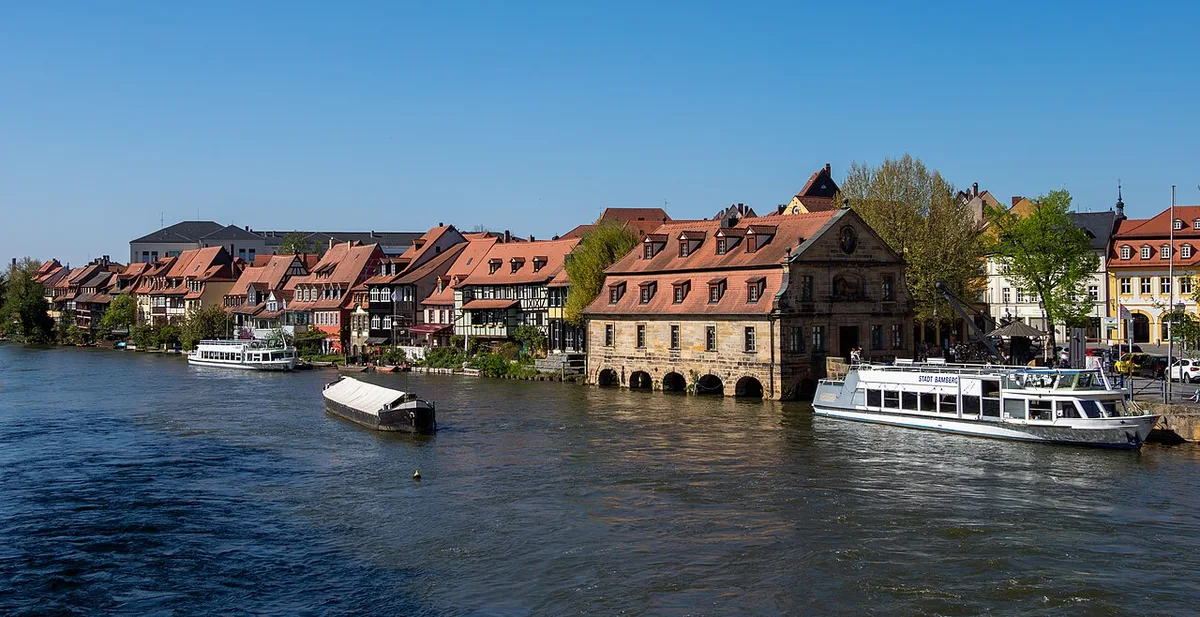
From the bridge, walk east along the Regnitz to Klein Venedig, the former fishermen's quarter of half-timbered houses built in the Middle Ages with small gardens running down to the water. The best view is from the opposite bank, which means crossing over and looking back rather than walking through the row itself. This is also the natural point to stop for a first Rauchbier, the smoked beer brewed with malt dried over an open beechwood fire.
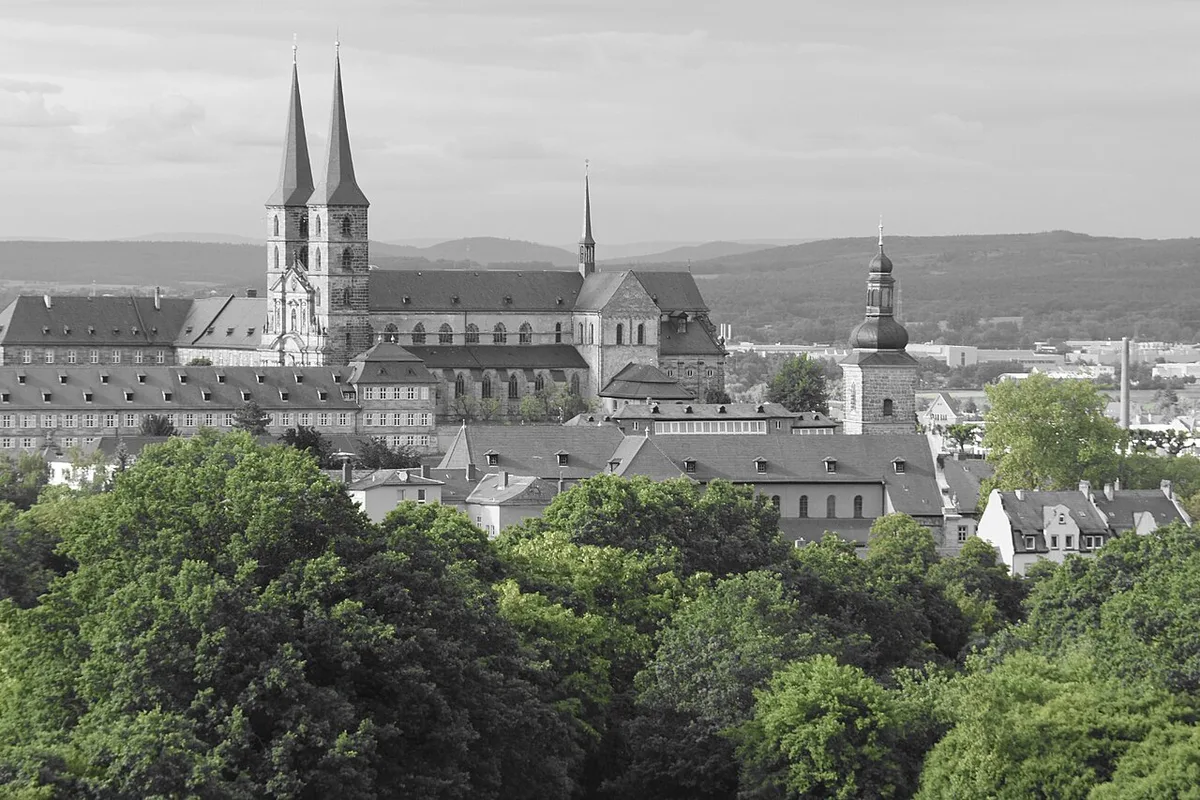
Spend the late afternoon in the pedestrian zone between the bridge and the Grüner Markt, which mixes independent shops with everyday city retail. If you have energy left, climb towards Michaelsberg for the view back over the roofs, though note this monastery hill sits outside the compact World Heritage core described by the tourism site. Keep the evening short so that day two's cathedral hill does not feel like a chore.
Day 2: The Bergstadt, the Cathedral and the Neue Residenz
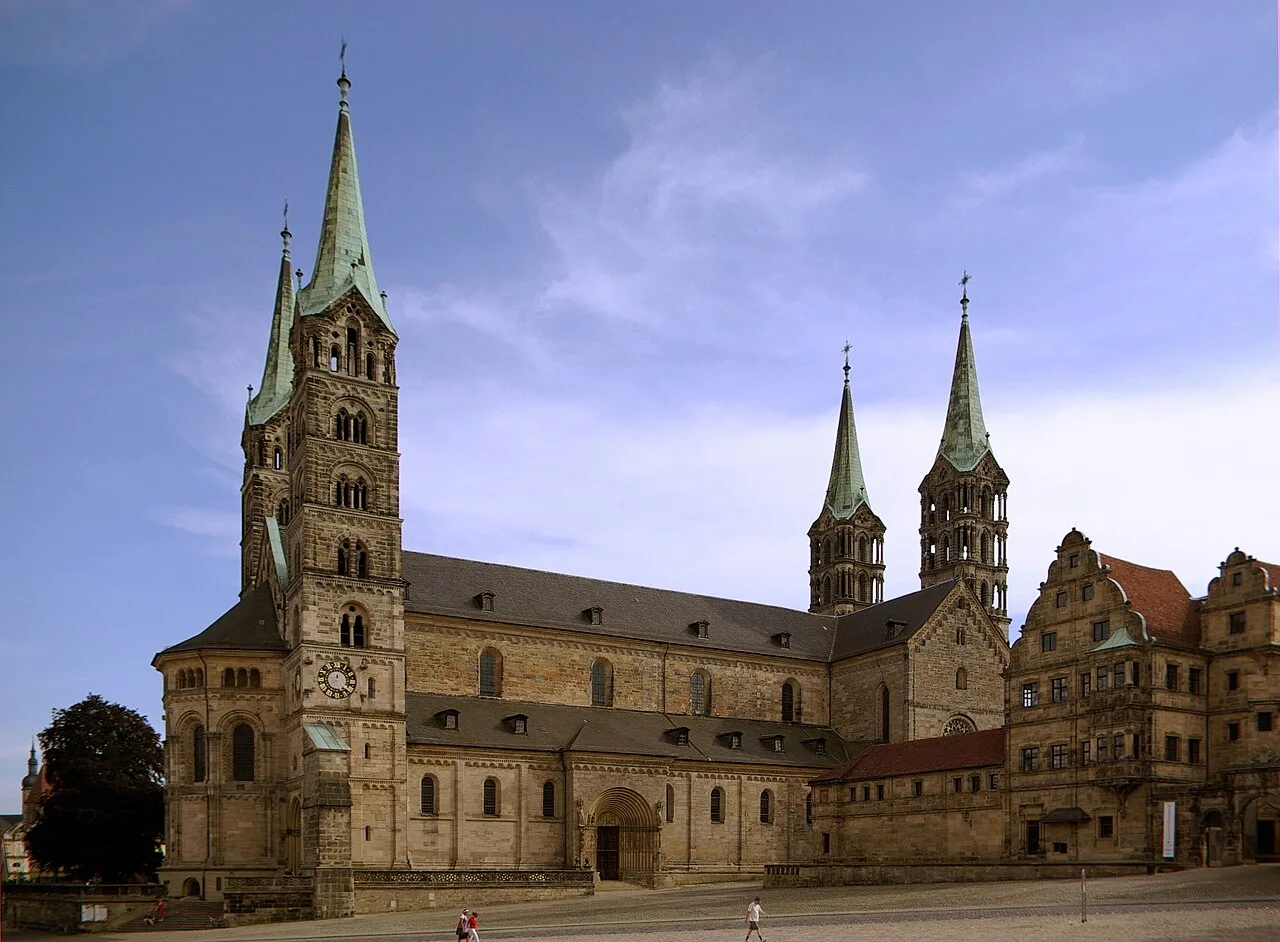
Day two belongs to the hilltop Bergstadt. The Bamberger Dom was completed in the eleventh century, burned twice, and rebuilt in the thirteenth in a late Romanesque style with Gothic additions; its four towers are visible from most of the city. Inside, look for the marble tomb of Emperor Henry II and Empress Kunigunde, and the Bamberger Reiter, a horseman statue whose identity has been debated for centuries without resolution.
Across the square, the Neue Residenz was the seat of Bamberg's prince-bishops until 1802 and now houses the State Gallery with old German and Baroque paintings, including works by Cranach and Baldung Grien. More than forty staterooms with stucco ceilings, furniture and rugs are shown. Importantly, the bishop's private apartments can only be seen on a guided tour, so the staterooms and the apartments are not the same visit.
Behind the Residenz lies the Rosengarten, a Baroque garden of roughly 4,500 roses across about 3,500 square metres, with a central fountain and a pavilion. Entry to the garden is free, which makes it a useful contrast to the ticketed interiors of the Residenz itself; the tourism site's own overview of the complex is the place to check what is included in which ticket. Next door, the Staatsbibliothek Bamberg, founded in 1803, holds medieval manuscripts including items on the UNESCO Memory of the World register, and admission is free.
Close the day with beer, but pick one venue rather than three. Bamberg's brewery culture is spread across taverns in the old town and cellars on the outskirts, and ordering a sampler flight somewhere central is enough for a first visit. The local smoked beer is a divisive style; try a small glass before committing to a full one.
Day 3: A Day Trip into Upper Franconia, or the Gärtnerstadt
The third day is where a three-day trip separates itself from a rushed weekend. Bamberg sits within easy reach of other Franconian towns and palaces, and the tourism site's section on the Bamberger Land lists excursions and rural attractions across the surrounding region. Because train times, opening days and seasonal closures all vary, check connections and current opening hours directly rather than assuming a fixed schedule.
If you would rather stay put, give the Gärtnerstadt the day. This is the historic market-gardening quarter on the north-eastern edge of the centre, named by the city as the third component of the World Heritage site alongside the Bergstadt and Inselstadt. It is residential and working rather than monumental, which is exactly why many short breaks skip it. Walk slowly, look at the courtyard layouts behind the street frontages, and treat it as a neighbourhood rather than a sight.
A half-and-half option also works well: a morning excursion and an afternoon back in Bamberg for whatever the first two days pushed aside. Because the old town is compact, returning in the afternoon still leaves several usable hours of daylight. Whichever you choose, one full day away does not leave the city unfinished.
If your wider German trip includes other cities, the same three-day rhythm works elsewhere: compare this against a 3 days in Berlin itinerary or a 3 Days in Dresden itinerary, both of which pair a dense historic core with a day out of town.
Getting Up the Hills, Altenburg and the Bamberger Bahn
Altenburg castle sits on the highest of Bamberg's seven hills and offers the best wide view of the city, but reaching it is the one genuinely awkward part of a visit. It is uphill and outside the centre, and there is no straightforward public transport to the gate. Options are limited to walking, taking a taxi, or joining a scheduled sightseeing bus; the practical details of each change over time, so ask at the tourist information centre before committing.
The Bamberger Bahn is a nostalgic bus styled after the city's historic streetcars, and one travel account notes that it runs to the castle and makes one stop of roughly fifteen minutes there. Operators adjust routes, departure counts and prices between seasons, so treat any figure you find online as potentially out of date and confirm directly with the operator or Bamberg Tourismus. If the castle is a priority rather than a bonus, build in a buffer.
Where to Stay in Bamberg
Staying inside the Altstadt puts the cathedral, the river and the brewery taverns within a short walk, including uphill sections, and means you can be out early before day-trippers arrive. Staying near the railway station is cheaper on average and simpler with luggage, but adds a repeated walk into the centre each time you go out. For a three-day trip, the old town usually wins unless you are arriving late or leaving very early.
One traveller's account describes a restored mill building inside the Altstadt converted into a guesthouse, with a historic millstone and a baroque handrail still on display in the corridors. That level of individual detail is worth reading as an example of what conversions in the old town look like rather than as a recommendation. Confirm current facilities, breakfast arrangements and payment methods directly, since hotel policies in Germany can be cash-based or card-based without much warning.
Rauchbier and Bamberg's Brewery Culture
Bamberg's beer identity is unusually deep: the city has a long history of small breweries, and one source points to a brewery site established in 1533, while Schlenkerla, the best-known smoked-beer house, traces its mention to the early fifteenth century. Rauchbier gets its aroma from malt dried over an open beechwood fire rather than in a kiln, which produces a distinctly smoky, almost meaty flavour. First-timers often find one glass enough and a second better than the first.
Fit beer into the itinerary rather than building days around it. A brewery tavern in the centre works well after the cathedral hill, and a Bierkeller on the outskirts suits an afternoon when the weather is good, since cellars are typically seasonal and outdoor. The tourism site lists brewery taverns and cellars, which is the most reliable starting point for what is currently pouring. Note that many traditional Franconian places in this region operate with limited hours or a rest day.
Practical Bamberg Tips
Bamberg's old town is best done on foot, and the main obstacle is gradient rather than distance: the climb from the river up to the cathedral square is short but steady, and the walk out to Michaelsberg adds more. Wear shoes you can walk in for several hours on cobbles. If you are arriving by train, luggage storage and tourist information are not at the station, so plan your first move into town before you arrive.
Payment habits matter more than most visitors expect. Traditional taverns, smaller shops and some hotels in the region have historically been cash-oriented, so carry some euros even if you plan to pay by card, and treat any specific shop's policy as something to check on the day. Older guides quote exact cash-only rules for named restaurants, but those rules change, so verify directly rather than relying on a dated review.
Finally, use Bamberg Tourismus for anything time-sensitive: current opening hours, which interiors require a guided tour, seasonal garden access and event programming. The site publishes a visitor information service, a city map and a current-events section, which is more dependable than a blog post written several years ago. If a museum interior is the reason for your trip, confirm it is open before you build the day around it.
Plan Your Visit
Three days in Bamberg works because the city has three distinct historic quarters and a countryside that is easy to reach, not because the old town is large. Assign one day to the river and the Inselstadt, one to the cathedral hill and its museums, and one to a day trip or the Gärtnerstadt, and nothing feels repeated or rushed. Keep the pace deliberately slow and let one afternoon go unplanned.
Before you travel, confirm the details that change: opening hours, which interiors need a guide, whether the Rosengarten is in season, and how you will get up to Altenburg. Bamberg Tourismus is the authority for all of these, and the city's landmark guide pages are useful for deciding which single attraction deserves the most time. Carry cash as a backup, wear shoes for cobbles, and accept that the hills are part of the experience.
Frequently Asked Questions
Is three days too long for Bamberg?
No, but only if you use the third day well. The compact old town can be walked in a day, so the extra time is best spent on the Gärtnerstadt market-gardening quarter, on museum interiors that deserve more than a quick look, or on an excursion into the surrounding Upper Franconian countryside. If you plan to see only the cathedral, the Altes Rathaus and Klein Venedig, two days is enough.
What should I not miss in Bamberg in three days?
The Altes Rathaus on the Obere Brücke and its porcelain collection, the Bamberger Dom with the Bamberger Reiter, the Neue Residenz with the Rosengarten behind it, Klein Venedig along the Regnitz, and at least one Rauchbier in a traditional tavern. If you have a third day, add the Gärtnerstadt, which the city names as one of the three World Heritage components but which most short visits skip entirely.
Is the Rosengarten in Bamberg free to visit?
The Rosengarten behind the Neue Residenz is free to enter, which distinguishes it from the ticketed interiors of the Residenz itself. It is a garden rather than a museum, so the usual advice applies: check whether it is in season before you plan a visit around it, since it is a planted space and its appeal is tied to the growing months.
Do I need a guided tour to see the Neue Residenz apartments?
Yes. The prince-bishop's private apartments at the Neue Residenz are only accessible on a guided tour, whereas the staterooms and the State Gallery can be visited separately. The two are not the same ticket, so decide in advance whether the apartments matter to you and confirm current tour arrangements with Bamberg Tourismus before your visit.
Is Bamberg worth a day trip from Nuremberg, or should I stay overnight?
Staying overnight changes the trip considerably. A day trip covers the headline sights but leaves no room for the Gärtnerstadt, for slow museum time, or for an evening in a brewery tavern once the day visitors have gone. With three days available, base yourself in Bamberg rather than commuting, and use one of those days for an excursion instead.
What is Rauchbier and where do I try it in Bamberg?
Rauchbier is a smoked beer made with malt dried over an open beechwood fire instead of in a kiln, which gives it a pronounced smoky aroma. It is a local speciality rather than a nationwide style, and Bamberg's brewery taverns and beer cellars are where to try it. Start with a small glass, since the smoke is intense, and confirm current opening days and cellar seasonality locally.


