
Last updated September 2026, this guide focuses on hidden gems in Bath rather than the sights already crowding every top-10 list. Crowds line up for the Pump Room and Royal Crescent, while the Herschel Museum and Alexandra Park often sit nearly empty even at midday. A companion guide covers free things to do in Bath for anyone building a slower, lower-budget itinerary.
17 Hidden Gems in Bath Worth Seeking Out
These 17 spots move past the Pump Room and Royal Crescent into quieter museums, gardens, and streets. Each entry below notes what makes it worth the detour, plus any current cost or access details. A companion guide expands on Bath's quieter parks and gardens. Another covers Bath's smaller museums in more depth. For a full neighborhood walk, see the Walcot Street guide. Cyclists and walkers can also follow the Two Tunnels Greenway south of the city center.
- Alexandra Park
- Alexandra Park is an 11-acre green space opened in 1902 to mark Edward VII's coronation, set on top of Beechen Cliff.
- Reaching it from the city center means a genuinely steep climb, so plan for extra time and sturdy shoes.
- Once at the top, the panorama covers Bath's rooftops, the Abbey, and the surrounding hills, with far fewer visitors than the Royal Crescent lawn.
- Sham Castle
- Sham Castle is an 18th-century folly, built purely to improve the view from wealthy Ralph Allen's townhouse rather than to defend anything.
- A short, steep walk from the base leads up to the site, with wide views over the city and the countryside beyond.
- Early evening works best here, when the light softens and the surrounding grass gives a quiet place to rest after the climb.
- Camden Road
- Camden Road sits on a hillside roughly 15 to 20 minutes on foot from central Bath, or a short bus ride away.
- Honey-colored Georgian terraces line the street, with the whole city framed below at sunset.
- Locals treat this as the lower-key alternative to the busier Royal Crescent viewpoint, especially on clear evenings.
- Bath Abbey Tower Tour
- Bath Abbey's Tower Tour climbs 212 steps above the church for a rooftop view across the city center.
- Guides typically cover the bells and stonework on the way up, adding context most visitors skip entirely.
- Recent listings put ticket prices anywhere from £6 to £18 per person, so confirm the current rate directly with Bath Abbey before booking.
- Herschel Museum of Astronomy
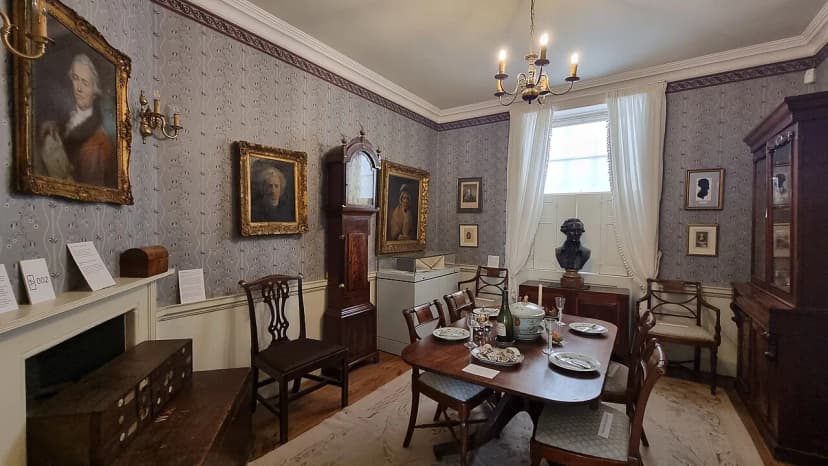
- William Herschel's former home now houses a museum built around his discovery of Uranus in 1781.
- Exhibits include handcrafted telescopes and instruments tied to 18th-century astronomy, set inside a modest Georgian townhouse.
- A small back garden marks the spot where Herschel carried out much of his stargazing, and it rarely sees a queue.
- Mary Shelley's House of Frankenstein
- This site combines a museum and escape rooms built around Mary Shelley, who wrote Frankenstein while living in Bath in 1816.
- Displays cover artefacts, sound, and scent design across rooms themed to the novel and its early film history.
- It sits at odds with Bath's regal image, which is exactly why repeat visitors and literary fans seek it out.
- Holburne Museum's Great Dell
- Holburne Museum was the city's first public art gallery, set at the end of Great Pulteney Street.
- Its bookshop and café spill out toward Sydney Gardens, but the Great Dell behind the museum draws far fewer visitors.
- It also appears on screen as Lady Danbury's townhouse in Bridgerton, though the giant redwoods in the Dell are the real reason to linger.
- American Museum in Britain
- The American Museum in Britain occupies a Grade I listed Georgian estate on the edge of the city.
- Its grounds include a prairie-style garden, an arboretum, and sweeping parkland designed around the house.
- According to the American Museum's official site, the collection holds more than 12,000 objects, including quilts, folk art, and maps.
- Prior Park Landscape Garden
- Prior Park is an 18th-century National Trust garden about a 15-minute drive or bus ride from central Bath.
- Its Palladian Bridge is one of only four bridges of this design left in the world, built with input from Capability Brown and Alexander Pope.
- According to Visit Bath, the estate's historic dams were recently restored, with the lakes refilled and original paths reinstated.
- Sydney Gardens
- Sydney Gardens is Bath's oldest park, laid out in 1795 not far from where Jane Austen once lived.
- A stretch of the Kennet and Avon Canal cuts through the grounds, adding a working waterway to the Georgian layout.
- Tree-lined paths and benches make it a practical picnic stop between the Holburne Museum and Great Pulteney Street.
- Beazer Garden Maze
- Beazer Garden Maze is a small labyrinth near Pulteney Bridge, laid out in a circular pattern that nods to Roman mosaic design.
- A bronze plaque with a cryptic inscription sits at its center, and working out the wording is part of the appeal.
- Riverside benches nearby make it an easy five-minute detour from the main bridge crowds.
- Bath City Farm
- Bath City Farm covers 37 acres on the hillside above Twerton, with goats, chickens, and pigs on site.
- Entry is free, and the farm runs seasonal events worth checking before a visit.
- Elevated views over the city come as a bonus alongside the animals and an on-site café.
- Walcot Street
- Walcot Street functions as Bath's artisan quarter, lined with independent shops and workshops rather than chain stores.
- A Saturday flea market draws more locals than tourists, especially outside peak summer weekends.
- It sits north of the main tourist core, which keeps foot traffic lighter through most of the week.
- Guildhall Market
- Guildhall Market has operated since the 19th century next to Pulteney Bridge, with around 20 stallholders under one roof.
- A secondhand bookstore sits among the traditional stalls, alongside food counters for a quick lunch stop.
- Shoppers here skew more local than at the gift shops nearer the Roman Baths.
- Cross Bath
- Cross Bath is a smaller, open-air thermal pool set apart from the main Thermae Bath Spa complex.
- Visitor numbers stay far lower here, for a more intimate version of the same natural warm-water tradition.
- Local legend ties the site to pre-Roman use of Bath's springs, predating the Romans.
- No. 22 Royal Crescent
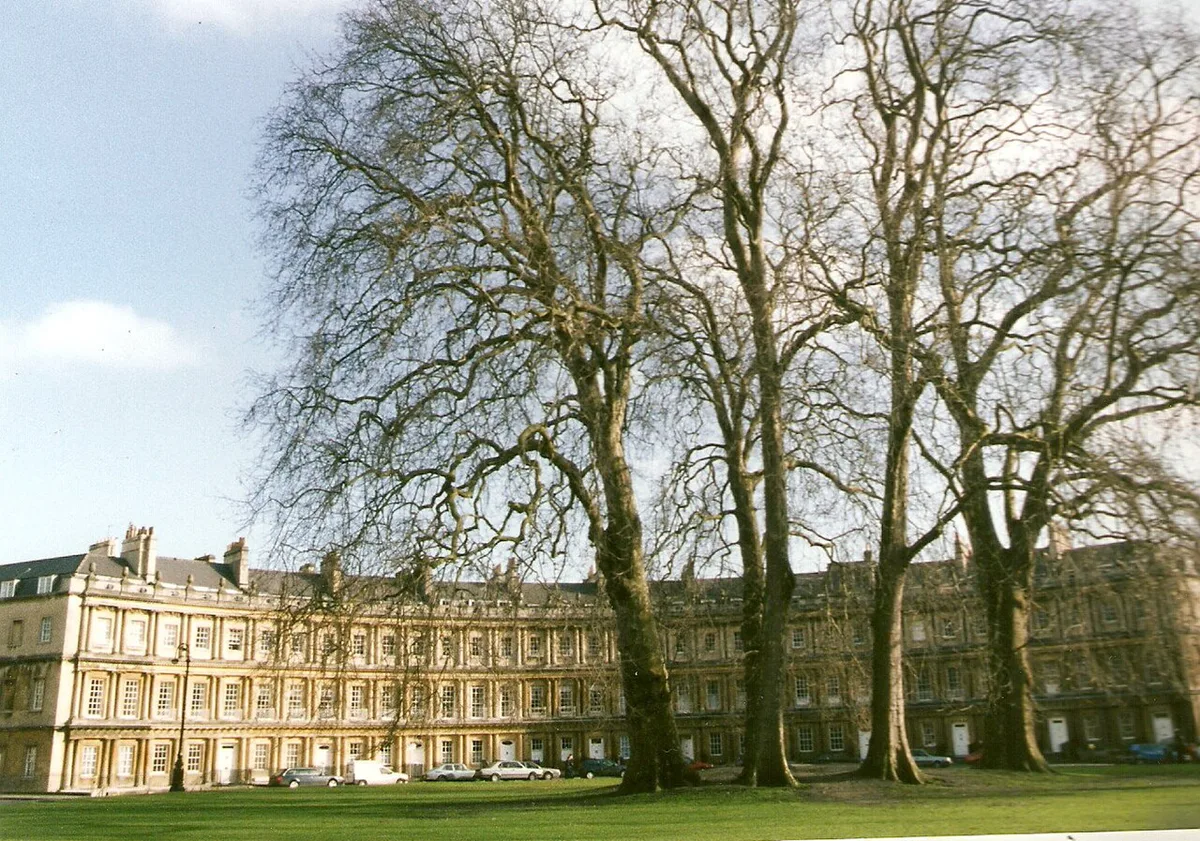
- No. 22 stands out on the Royal Crescent's row of 30 Georgian townhouses because of its front door and trim.
- An owner repainted the exterior a different color in the 1970s, breaking from the terrace's uniform stone facade.
- It's a small detail most people miss while photographing the sweep of the crescent from the lawn.
- Pulteney Bridge's Tiny Windows
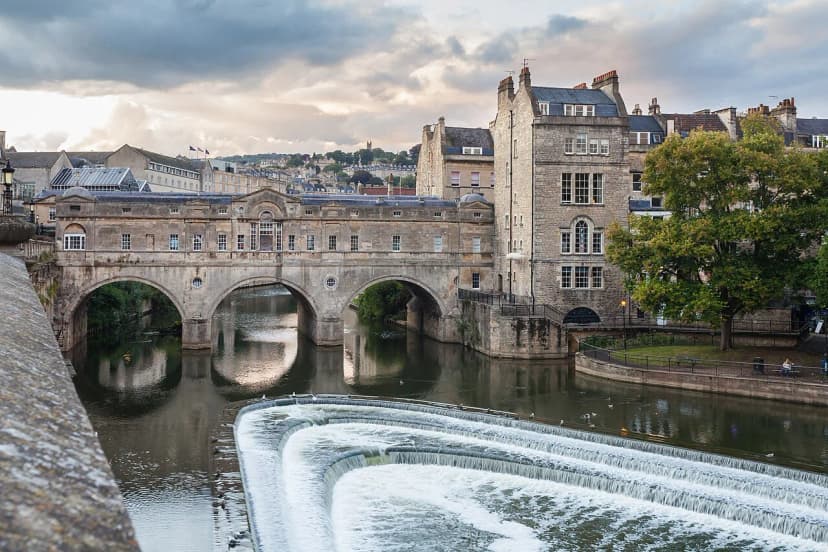
- Pulteney Bridge carries small windows above its shopfronts, part of cramped flats where shopkeepers once lived.
- Built in 1774, the bridge is one of only four in the world lined with shops on both sides.
- Most visitors photograph the weir below and never look up to notice this detail.
Bath from Above: Comparing the Best Secret Viewpoints
Four spots give a genuine overview of Bath, each with different effort and cost attached. Steepness varies more than most competing guides admit, so the table below lines up climb, cost, and timing side by side. Of the four, Camden Road takes the least physical effort for a comparable payoff.
Camden Road's 15 to 20 minute walk delivers comparable city views to Bath Abbey Tower's £6-18 paid climb, at no cost.
| Viewpoint | Climb or Effort | Cost | Best Time to Visit |
|---|---|---|---|
| Alexandra Park | Steep, unpaved paths from the city center | Free | Late afternoon, for soft light over the rooftops |
| Bath Abbey Tower Tour | 212 steps, guided | Roughly £6 to £18, depending on current listing | Late morning, to avoid the busiest tour slots |
| Camden Road | 15 to 20 minute walk uphill | Free | Sunset, over the honey-colored terraces |
| Sham Castle | Short, steep climb from the base | Free | Early evening, for quieter paths |
How to Visit Bath's Secret Spots Like a Local
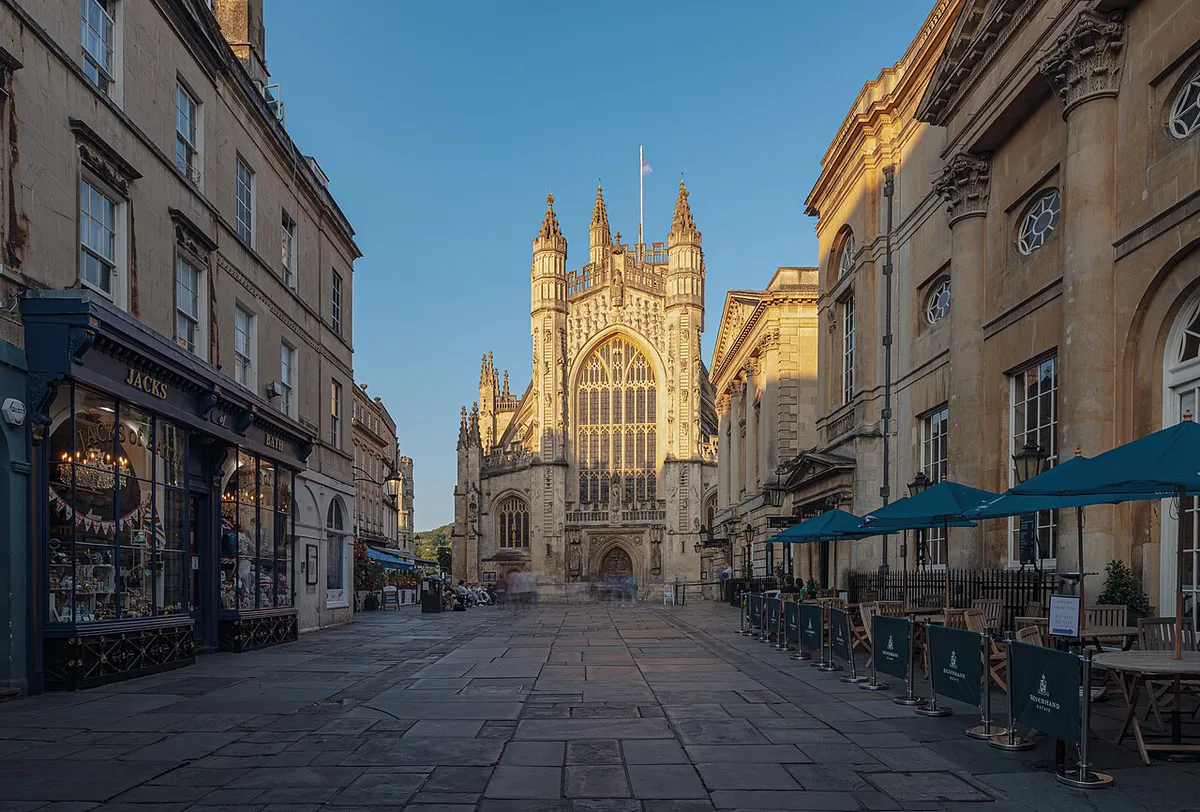
Off-the-beaten-path spots often reward timing more than site selection. Many central attractions thin out by mid-afternoon, and 4pm works as a quieter window near the Pump Room and the Abbey. Bath is compact and walkable, but the hills add real effort. Alexandra Park, Sham Castle, and Prior Park all involve a climb, so the hop-on hop-off bus is worth considering for those specific routes. Several of the sites above need advance booking, especially through summer.
- Bath Abbey Tower Tour
- Book ahead in peak season; the climb covers 212 steps with limited group sizes per slot.
- Bizarre Bath comedy walk
- This walking tour runs nightly from 8pm and fills up on weekends, so reserve a spot the same day or earlier.
- Prior Park Landscape Garden
- National Trust members should bring ID; non-members should check current entry pricing before making the 15-minute trip out.
Mistakes to Avoid When Chasing Bath's Secret Spots
A few habits waste time or money without adding much payoff.
Pulteney Bridge's 1774 shop-lined historic design rewards viewing at dawn or dusk, when foot traffic avoids the midday crowds.
- Expecting to swim in the Roman Baths
- Roman Baths function as a museum today, not a working pool; swimming happens at Thermae Bath Spa instead.
- Visiting Pulteney Bridge at midday
- Foot traffic peaks between late morning and mid-afternoon; dawn or dusk gives a clearer view of the weir and shopfronts.
- Underestimating Bath's hills
- Alexandra Park and Prior Park both involve a genuine climb; wear proper shoes and budget extra time on the way up.
- Assuming every gem is free
- Bath Abbey's Tower Tour and Prior Park both charge admission, while Bath City Farm and Alexandra Park do not.
Explore hidden gems in other cities
- Bucharest's hidden gems
- Stockholm's hidden gems
- Cambridge's hidden gems
- Belfast's hidden gems
- Ljubljana's hidden gems
- Oslo's hidden gems
- Bristol's hidden gems
- Cardiff's hidden gems
- Brighton's hidden gems
- Birmingham's hidden gems
- Glasgow's hidden gems
- Oxford's hidden gems
- Edinburgh's hidden gems
- London's hidden gems
- Manchester's hidden gems
- Liverpool's hidden gems
Frequently Asked Questions
What is the difference between a must-see landmark and a secret spot in Bath?
These spots usually sit a short walk from the main tourist route but draw far fewer visitors. Herschel Museum and Beazer Garden Maze fit that pattern, while the Roman Baths and Royal Crescent do not. Both categories are worth seeing; the distinction is about crowd levels, not quality.
How much does the Bath Abbey Tower Tour cost in 2026?
Recent listings put the 212-step Tower Tour anywhere from £6 to £18 per person. Confirm the current rate on Bath Abbey's own booking page before visiting, since prices have shifted across recent seasons.
Can visitors still taste the mineral spa water at the Pump Room?
Yes, as of 2026 the Pump Room still serves its mineral-rich spa water to visitors on site. Most guides describe the taste as strongly mineral, sometimes called eggy, so a small sample is usually enough.
How many days do you need to see Bath's quieter sites?
Two full days cover the main list comfortably. Spend one day on central museums and gardens, and a second on Prior Park, Bath City Farm, and Walcot Street. Add a third day if the Bizarre Bath walk or an afternoon tea booking is part of the plan.
Do any of these spots require advance booking?
Bath Abbey's Tower Tour, Prior Park, and the Bizarre Bath comedy walk all benefit from booking ahead, especially in summer. Most gardens, parks, and neighborhoods on this list need no reservation at all.
Is Bath walkable, or do these spots need a car?
Central Bath is compact enough to cover on foot. Walcot Street, Guildhall Market, and the Beazer Garden Maze all sit within a short walk of Pulteney Bridge. Prior Park and the American Museum sit further out, so budget around 15 minutes by bus or car for either.
Explore More Hidden Gems in Bath
Go deeper into Bath's quieter corners, from Georgian gardens and specialist museums to bohemian markets, free viewpoints, and an old railway turned greenway.
Green Spaces & Views
- Hidden Gem Parks and Gardens in Bath
- Free Hidden Gems in Bath: A 2026 Budget Guide to the City's Quiet Side