
Last updated September 2026. Bath's hidden gem parks and gardens include a walled Georgian courtyard behind No. 4 The Circus and Prior Park's Palladian Bridge above Widcombe. This guide sorts the quieter alternatives by vibe, distance from the center, and entry cost, from free city pockets to paid National Trust estates worth the climb.
Bath's Hidden Gem Parks and Gardens by Vibe
Match the destination to the plan before setting out. Royal Victoria Park's lawn alone spans 57 acres, according to the University of Bath's ResLife guide, so it absorbs most first-time visitors before they reach the quieter spots covered here. Some of these alternatives sit inside the city walls and cost nothing to enter; others require a bus, a National Trust membership, or a genuine uphill walk. For overlooked spots beyond parks and gardens, see the city's guide to quiet corners.
- Best for views: Alexandra Park and Sham Castle, both reached via a climb from the center.
- Best for history: Georgian Garden behind No. 4 The Circus and Sydney Gardens, laid out in 1795.
- Best for families: Alice Park and the Beazer Garden Maze near Pulteney Bridge.
- Best for seclusion: the Great Dell inside the Botanical Gardens, planted with mature redwoods.
Secret Enclaves in Bath's City Center
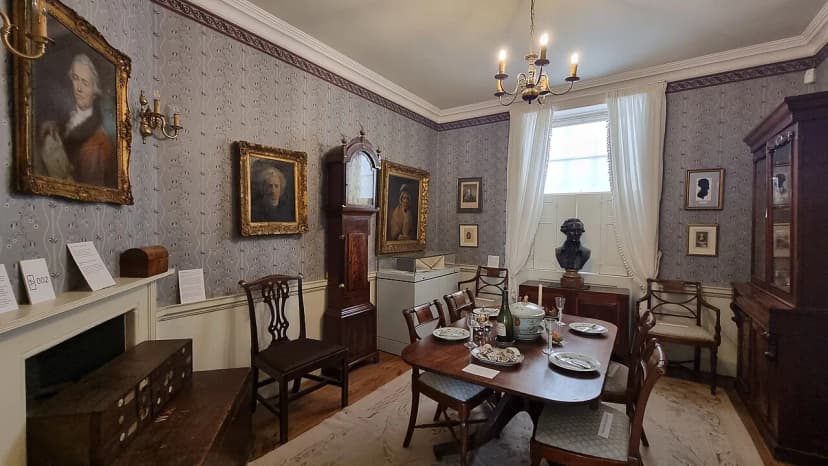
Behind No. 4 The Circus, the Georgian Garden recreates a private 1760s townhouse garden using period archaeology. Archaeologists based the reconstruction on excavated wall footings and period planting records found on the site. Free to enter, it draws few visitors even in peak season, and the reconstructed gravel paths show what a well-off Georgian household kept private from the street. Georgian Garden hours can be limited outside the main season, so confirm current times before building it into a tight itinerary.
Near Pulteney Bridge, the Beazer Garden Maze traces a circular, Roman-inspired path to a central bronze plaque with a cryptic inscription. Solving the maze usually takes a few minutes, making it a quick stop rather than a destination in itself. A small riverside garden around it has benches facing the Avon and costs nothing to visit. It's one of the stops in Bath's free attractions guide.
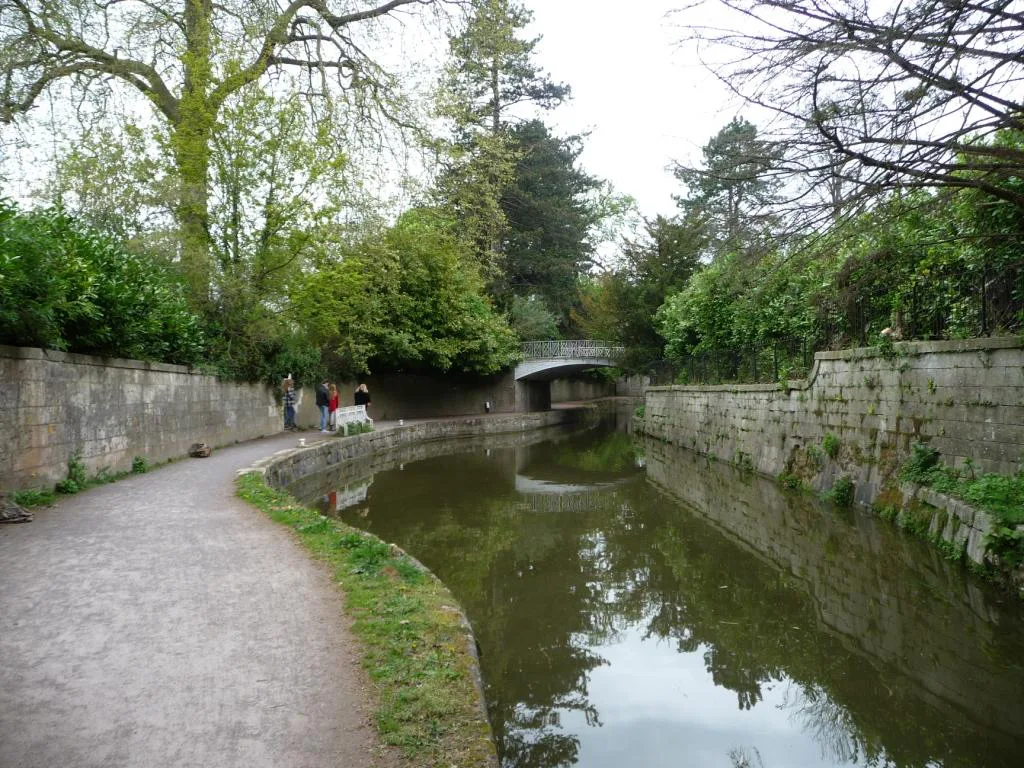
Sydney Gardens dates to 1795, making it Bath's oldest park, and Jane Austen lived nearby and walked its paths regularly. A working railway line and the Kennet and Avon Canal both cut through the grounds, an unusual layout for a Georgian pleasure garden. Holburne Museum sits at the park's entrance, housing Bath's fine art and porcelain collections. A small children's play area and scattered benches make it easy to combine with a picnic on a clear afternoon.
Botanical Gardens opened in 1887 inside a nine-acre section of Royal Victoria Park and stay free to enter. Most visitors stop at the rock garden and aerial walkway near the entrance, but the Great Dell sits further in, planted with mature redwoods and rarely crowded, quieter than the main paths nearby. Henrietta Park is another of Visit Bath's free public parks, and it pairs naturally with a coffee stop afterward on Walcot Street.
Panoramic Hilltop Escapes: The Climb vs the View
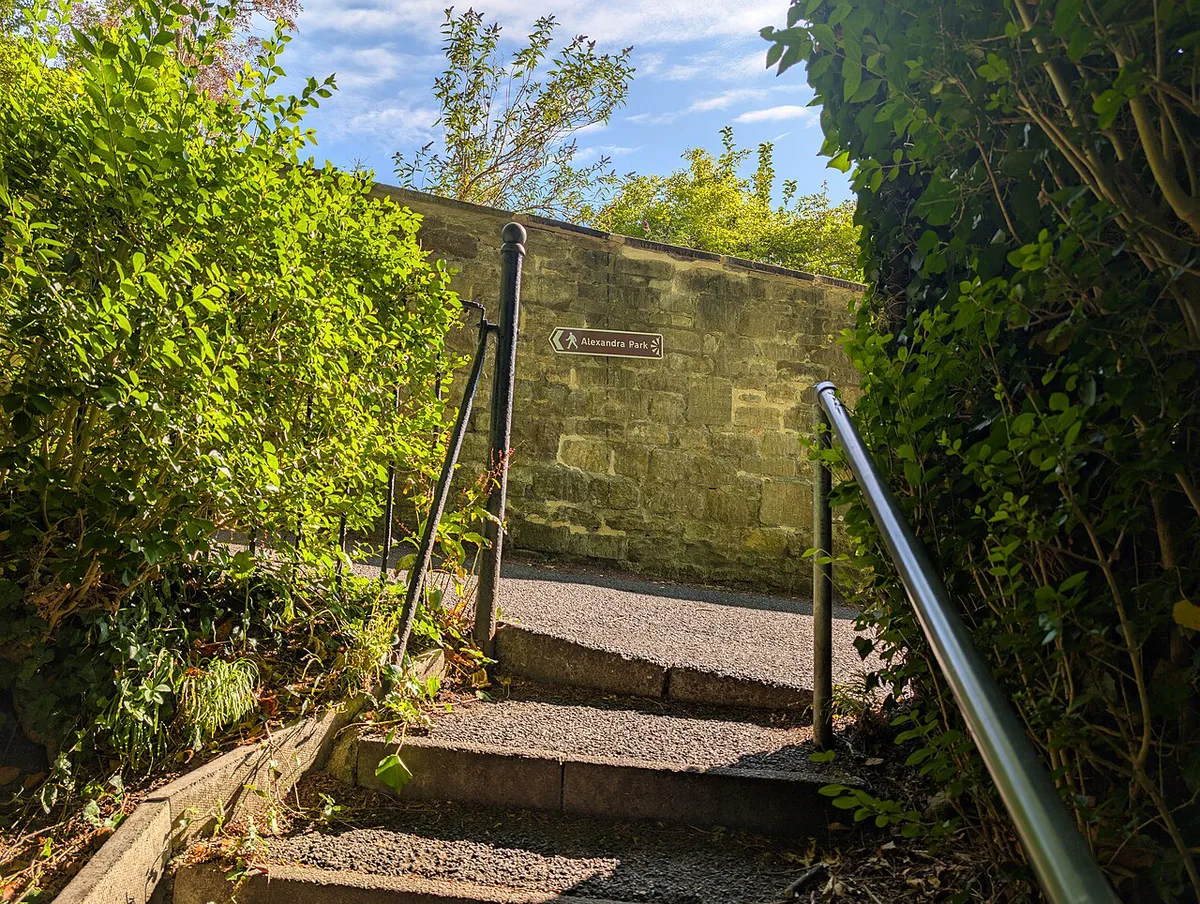
Alexandra Park sits south of the center up a steep climb from Shakespeare Avenue, with a bus or taxi as the fallback for anyone skipping the hill. From the top, the panorama takes in Bath Abbey and the Royal Crescent across the valley. Photographers favor the late-afternoon light for skyline shots, since the view faces back toward the Abbey and the Crescent. According to the University of Bath's ResLife guide, Bath has been named the Best Green City for green space and nature, and this park is a big reason why.
Sham Castle is a folly, not a real fortress: an 18th-century facade built to improve the view from Ralph Allen's townhouse. Reach it via a signed footpath from North Road, then continue past a municipal golf course to the viewpoint. Sunset draws the biggest local crowd, though it stays far quieter than the Royal Crescent lawn any time before early evening.
Bathwick Fields forms part of the Skyline Walk, a six-mile circular route through woodland and meadow above the city. On its own, it's roughly 25 minutes on foot from the University of Bath campus, per the ResLife guide, making it a realistic sunset-picnic stop without committing to the full loop. It connects directly to other green spaces along the ridge, so it works well as a starting or finishing point for a longer walk.
Historic Estates and Landscape Gardens Near Bath
Not every option here is free. Prior Park, American Museum & Gardens, and Iford Manor all charge admission, while National Trust membership waives the fee at Prior Park. Free city-center pockets covered above cost nothing but offer far less space to roam.
Iford Manor sits about 15 minutes from Bath with gentle valley paths, while Alexandra Park requires climbing or taking a bus to avoid the steep hill.
Prior Park Landscape Garden, run by the National Trust, is an 18th-century landscape above Widcombe built for Ralph Allen with advice from Capability Brown and the poet Alexander Pope. Its Palladian Bridge is one of only four built to this design worldwide, and the garden stays busiest around midday. Walking up from the city center takes roughly 45 minutes, according to the University of Bath's ResLife guide. There's no on-site parking, so most visitors walk, cycle, or take a local bus rather than drive. Cyclists can also reach several outlying gardens via the Two Tunnels Greenway, a traffic-free alternative to the uphill road walk. Visitors often spot squirrels and birds among the garden's terraces, with deer occasionally seen on quiet mornings.
American Museum & Gardens sits on a hilltop above the Limpley Stoke Valley, with views over the River Avon from the grounds. Its gardens include a replica of George Washington's Mount Vernon garden and a Lewis and Clark trail through the parkland. A Garden Café serves seasonal food on-site, and a Children's Garden playground gives younger visitors somewhere to run. Its official site describes it as the only Americana museum outside the US. Fuller coverage of its collection sits in Bath's lesser-known museums guide.
Iford Manor Gardens sit about 15 minutes from Bath in the Frome river valley, designed by Edwardian landscape architect Harold Peto. Grade I listed, the gardens mix Italian, Byzantine, and Roman-style terraces around a cloistered courtyard, quieter at midday than Prior Park nearby. Its restaurant sources much of its food from the estate's own farm, while an adjoining cafe serves fresh pastries, breakfast baps, and made-to-order sandwiches daily. Dogs are welcome in the garden, restaurant, and cafe alike.
Day-Trip Gardens Beyond Bath
Bowood House and Gardens, in the Wiltshire countryside, combines Capability Brown parkland with a walled garden and an Italian-style terrace. For six weeks from mid-May, its separate Woodland Gardens open for bluebells, azaleas, and rhododendrons, a seasonal add-on beyond the main grounds. An Adventure Playground and a walled garden round out the grounds for families visiting outside the bluebell season.
Corsham Court pairs a Capability Brown-and-Repton landscape with 25 acres of gardens, including an arboretum, an 18th-century Bath House, and a lily pond. Visit Bath's official guide lists the oriental plane tree on the north lawn as the largest spreading tree in Britain. Peacocks roam the grounds freely, a detail that surprises most first-time visitors.
Dyrham Park, another National Trust property, preserves 270 acres of ancient parkland along with a 17th-century baroque house. Self-guided trails cross zig-zagging woodland terraces, chart the estate's history, and lead through formal borders, ponds, and an orchard. Views open toward Wales from parts of the grounds. Dyrham's parkland is described as an ancient deer park, giving it an older, quieter feel than the city's Georgian gardens.
Planning Your Visit: Logistics, Costs, and Timing
Prior Park has no on-site parking, so anyone arriving by car should plan for a walk in from a nearby street or use the local bus network instead. Parade Gardens sits in the city center and has historically charged a small entry fee for non-residents outside free periods. Check the gate signage or the council's current listing before assuming free entry, especially in summer. Weekday mornings avoid the coach-tour groups that cluster around Prior Park and Royal Victoria Park by midday. They also avoid University of Bath term-time student traffic on routes like Bathwick Fields and the Skyline Walk. Early spring and early autumn shoulder weeks tend to be the quietest stretch across all of these sites. Travelers extending the trip to the capital can apply the same crowd-avoidance approach using the equivalent London guide.
Prior Park takes roughly 45 minutes to walk from the city center; Bathwick Fields offers a quicker 25-minute alternative for sunset visits on a tighter schedule.
| Site | Entry Fee | Distance / Access | Terrain |
|---|---|---|---|
| Georgian Garden | Free | Central, behind The Circus | Flat |
| Beazer Garden Maze | Free | Central, near Pulteney Bridge | Flat |
| Sydney Gardens | Free | Central | Flat |
| Botanical Gardens (Great Dell) | Free | Inside Royal Victoria Park | Flat |
| Alexandra Park | Free | Climb from Shakespeare Avenue, or bus/taxi | Steep |
| Prior Park Landscape Garden | Paid; National Trust members free | About 45 min walk from center, or local bus | Steep uphill |
| American Museum & Gardens | Paid museum admission | Hilltop; bus recommended | Moderate |
| Iford Manor Gardens | Paid garden admission | About 15 min from Bath | Gentle valley paths |
- Don't try to drive to Prior Park: there is no on-site parking, and street parking nearby is limited.
- Don't assume Parade Gardens is free year-round; non-residents have historically paid a small fee outside free periods.
- Don't skip checking Georgian Garden's current opening hours before visiting, since they can be limited outside the main season.
Parade Gardens: A Formal Riverside Stop Near Bath Abbey
Parade Gardens offers a compact, formal contrast to Bath’s larger parks. It sits beside the River Avon, a short walk from Bath Abbey and Pulteney Bridge. Flower beds, clipped lawns, mature trees, and riverside benches make it useful for a quiet pause between central sights.
The garden is especially convenient for visitors who want greenery without a hill climb or a long detour. Its elevated riverside position gives clear views toward Pulteney Bridge. The bandstand and seasonal planting also make it a stronger photography stop than its small size suggests.
Unlike most central green spaces in this guide, entry is not always free for non-residents. Check the gate notice before visiting, as seasonal charging and opening arrangements can change. Visit early in the day for the calmest atmosphere, before the nearby Abbey and bridge area become busy.
Frequently Asked Questions
What is the quietest park in central Bath?
Georgian Garden, behind No. 4 The Circus, and the Great Dell inside the Botanical Gardens both stay uncrowded even in peak season. Both are free, and neither appears on most first-time visitor itineraries.
Is Prior Park Landscape Garden free to visit?
No, Prior Park Landscape Garden is a National Trust property, so non-members pay an admission fee while National Trust members enter free. Check the National Trust's website for the current price. There's no on-site parking, so most visitors arrive on foot, by bike, or by local bus.
When should you visit to avoid crowds at Alexandra Park and the Skyline Walk?
Weekday mornings avoid both coach-tour groups and University of Bath term-time student traffic. Early spring and early autumn shoulder weeks tend to be quieter across the hilltop routes than summer weekends.
Can you combine several of these gardens without a car?
Yes. Sydney Gardens and Georgian Garden sit within walking distance of the center. Botanical Gardens and the Beazer Garden Maze are also an easy walk. For the outlying estates like Prior Park and American Museum, a local bus or a greenway bike route covers the distance without a car.
Does Parade Gardens charge an entry fee?
Parade Gardens has historically charged non-residents a small entry fee outside free periods, though policies can change. Check the gate signage or the council's current listing before assuming free entry, especially in summer.
When do Bowood's Woodland Gardens open for bluebells?
Bowood's separate Woodland Gardens open for six weeks from mid-May, showing bluebells, azaleas, and rhododendrons. Capability Brown parkland and the rest of the main grounds follow their usual seasonal opening hours year-round.