

Ulm sits on the Danube in Baden-Württemberg, and its twin city Neu-Ulm lies directly across the river in Bavaria, so a family day out can cross a state border on foot. The old town is compact and largely pedestrianised, which makes it easy to pair one museum with a park or riverside break without long transfers. For the city's headline landmark, see Visiting Ulm Minster.
One rule shapes the whole plan: the children's museum at the Edwin Scharff Museum in Neu-Ulm asks visitors to book a time slot on Wednesdays, weekends, bank holidays and during school holidays, and a visit ends after two hours. That single detail decides whether you build the day around Neu-Ulm first and Ulm afterwards, or the reverse.
The second thing to know is that Museum Ulm has been undergoing renovation since April 2023 and is temporarily closed, so it is not a reliable indoor fallback. Its hybrid-creatures exhibition, including the Lion-man, was shown on the first floor of the kunsthalle weishaupt until 4 October 2026, when that display ended ahead of the figure's move to redesigned space.
Why Ulm and Neu-Ulm Work for Families
The twin-city layout is the main practical advantage with children. Most of Ulm's old town, including Marktplatz and the Minster, sits on the north bank, while the children's museum, the Donaubad water park and the Glacis park area are on the Neu-Ulm side, so you can group stops by bank instead of zig-zagging across the river. For wider planning, see Ulm: Itineraries and City Travel Guides.
Distances inside the old town are short enough that a stroller works well, because the historic core is pedestrianised and the area around the Rathaus is closed to through traffic apart from deliveries. Families who want animals, art, bread history and open space can realistically cover two or three of those in one day without a car.
If you want a wider view of what the region offers beyond the city, the tourism board groups its family listings by venue rather than by itinerary, which makes it easy to pick one indoor and one outdoor stop per day. Pairing a ticketed interior with a free riverside or park slot keeps the day from becoming a queue of admission desks; the Ulm: Landmark Visitor Guides index is a useful companion for that.
Decide This First: Age and Hands-On Tolerance
Before booking anything, sort your venues by how much touching is allowed. The children's museum in Neu-Ulm is explicitly hands-on, with experimental exhibits meant to be worked, built and played with, while the kunsthalle weishaupt is a private collection of abstract and concrete art where looking, not touching, is the point.
Age is the second filter. The gallery's interactive children's tour is recommended from age five, so a family with toddlers and a family with nine-year-olds will get very different value from the same building. The children's museum, by contrast, is designed for young and old together and even notes that many adults enjoy it.
A useful trade-off to accept early: a two-hour cap at the children's museum is a ceiling, not a target. If your child is absorbed, you can return another day; if they burn out in forty minutes, you have time left for the zoo or a playground instead of forcing the whole itinerary through.
Edwin Scharff Museum Children's Museum in Neu-Ulm
The children's museum belongs to the Edwin Scharff Museum at Petrusplatz in Neu-Ulm, a building that also holds Neu-Ulm's historical collections and works by the sculptor Edwin Scharff, so the art and the family offering share an address. The children's exhibitions change every year and have covered subjects such as family, the body and globalisation.
The booking rule is the detail that most often catches visitors out. On Tuesdays, Thursdays and Fridays outside school holidays no time slot is required, but on Wednesdays, weekends, bank holidays and during school holidays you must reserve one; the museum publishes specific slot windows for those days on its own page.
Three house rules matter for planning. Shoes come off inside, so bring socks or slippers; a maximum of three children per adult is allowed into the exhibitions; and your visit ends after two hours so the next slot can start. If you arrive more than fifteen minutes after your slot begins, the museum says it may release the reservation, so treat the time as a hard start.
Supervision is on the accompanying adult, and although over-14s may visit unaccompanied, under-18s are not permitted to supervise younger children. The museum also reserves the right to limit admission on crowded days, and it asks for at least two weeks' notice when booking workshops, Sunday stories or birthday programmes.
Ulm Zoo and the Friedrichsau Park Next Door
Tiergarten Ulm sits in the Friedrichsau, the city's large riverside park, so animals and playground time come as one outing rather than two separate trips. The zoo is listed by the tourism board among the region's family sights, and the surrounding Friedrichsau provides the ponds, lawns and open space that make a post-zoo afternoon easy to fill.
This is the most flexible half-day on the list, because a zoo visit scales with your child's stamina instead of with a fixed slot. If you want a different animal stop, the tourism board also lists a reptile zoo in Neu-Ulm, but it is a separate venue with its own operator page and should not be assumed to share ticketing with the main zoo.
Admission prices and seasonal opening times for the zoo are not fixed here; check the zoo's own pages before you travel, since family rates, winter reductions and last-entry times change. The same applies to the Donaubad water park in Neu-Ulm, which the tourism listings include as a family option for wet afternoons.
Museum Brot und Kunst and What Happened to Museum Ulm
Museum Brot und Kunst, the Museum of Bread and Art in Ulm's Salzstadelgasse, covers the history of grain, milling and baking alongside a wider food-security theme, and it is a reasonable indoor stop for school-age children who like a concrete subject. Its displays are not the same as the city's art collections, and it is not part of a shared ticket with any other museum.
Museum Ulm on Marktplatz has been undergoing renovation since 17 April 2023 and is temporarily closed, not gone. Its hybrid-creatures exhibition, including the Lion-man and its surrounding wallpaper, was located on the first floor of the kunsthalle weishaupt, and that display ran until 4 October 2026 before the figure moves to its new home in redesigned space later in the year.
The practical consequence for families is that you should not promise a child a specific Lion-man room at a specific museum. Check the current display location before you go, because a renovation schedule can shift, and plan the Ulm side of your day around the Minster, Marktplatz and riverside rather than around a museum interior that may be unavailable.
kunsthalle weishaupt with Children
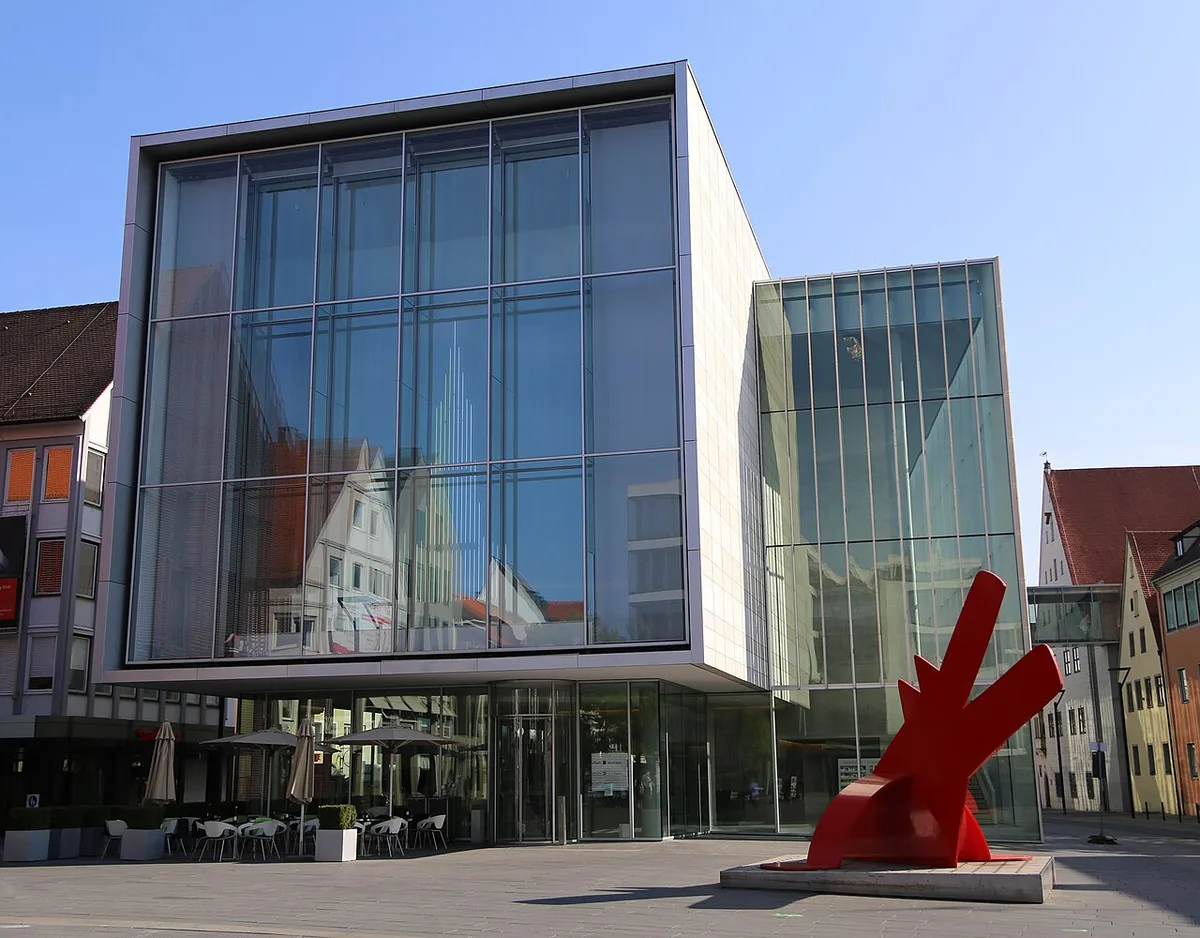
The kunsthalle weishaupt is a private museum at Hans-und-Sophie-Scholl-Platz showing the Weishaupt collection of modern and contemporary art, with strong holdings in pop art, colour-field painting and concrete art. It opened to the public in its own building in 2007, so it is a modern venue rather than a historic one, and its programme mixes collection displays with temporary shows.
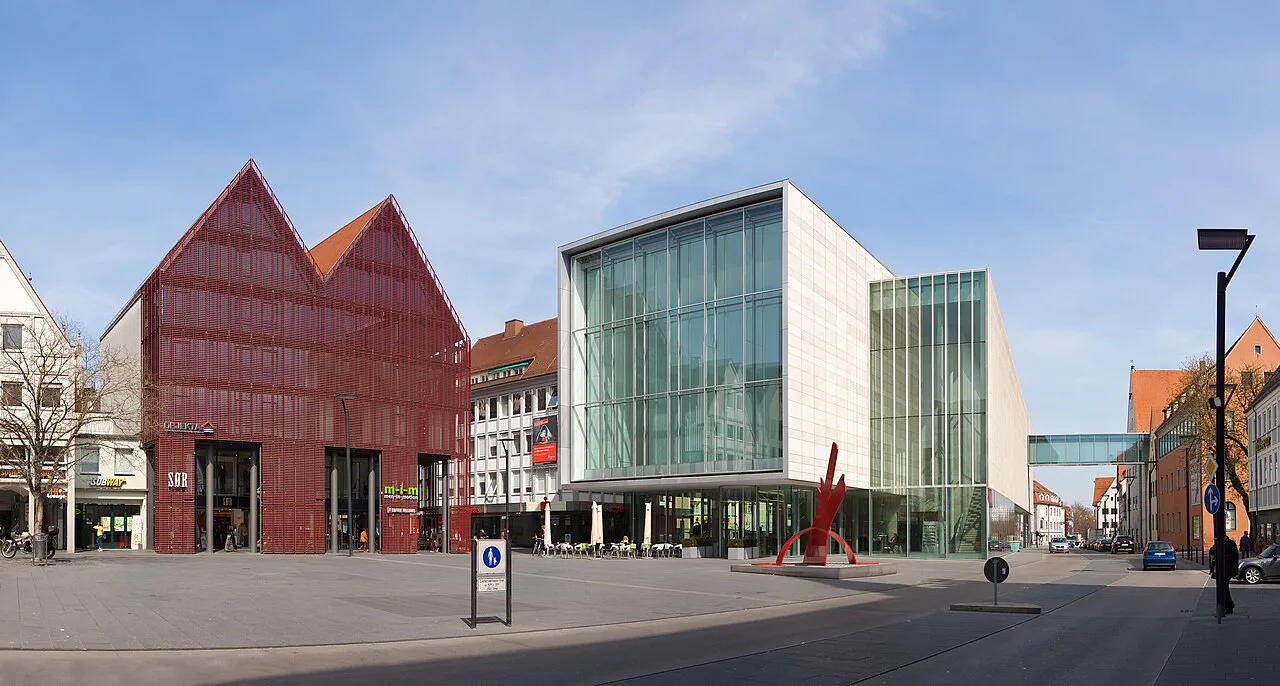
For families, the relevant offering is the interactive children's tour, which the gallery recommends from age five and runs on the first and third Sunday of the month at 3 p.m. Participation is listed as free entry with a small charge per child and no registration, and the current exhibition runs until 8 November 2026, so the date you visit matters.
Set expectations honestly: this is an art gallery, not a children's museum, and its collection is abstract and geometric rather than narrative. A child who wants to press buttons and build things will do better at the Edwin Scharff Museum; a child who likes patterns, colour tricks and optical effects has a genuine reason to be here, especially given the gallery's own tours aimed at younger visitors.
Free Ulm with Kids: Marktplatz, Fischerviertel and the Riverside
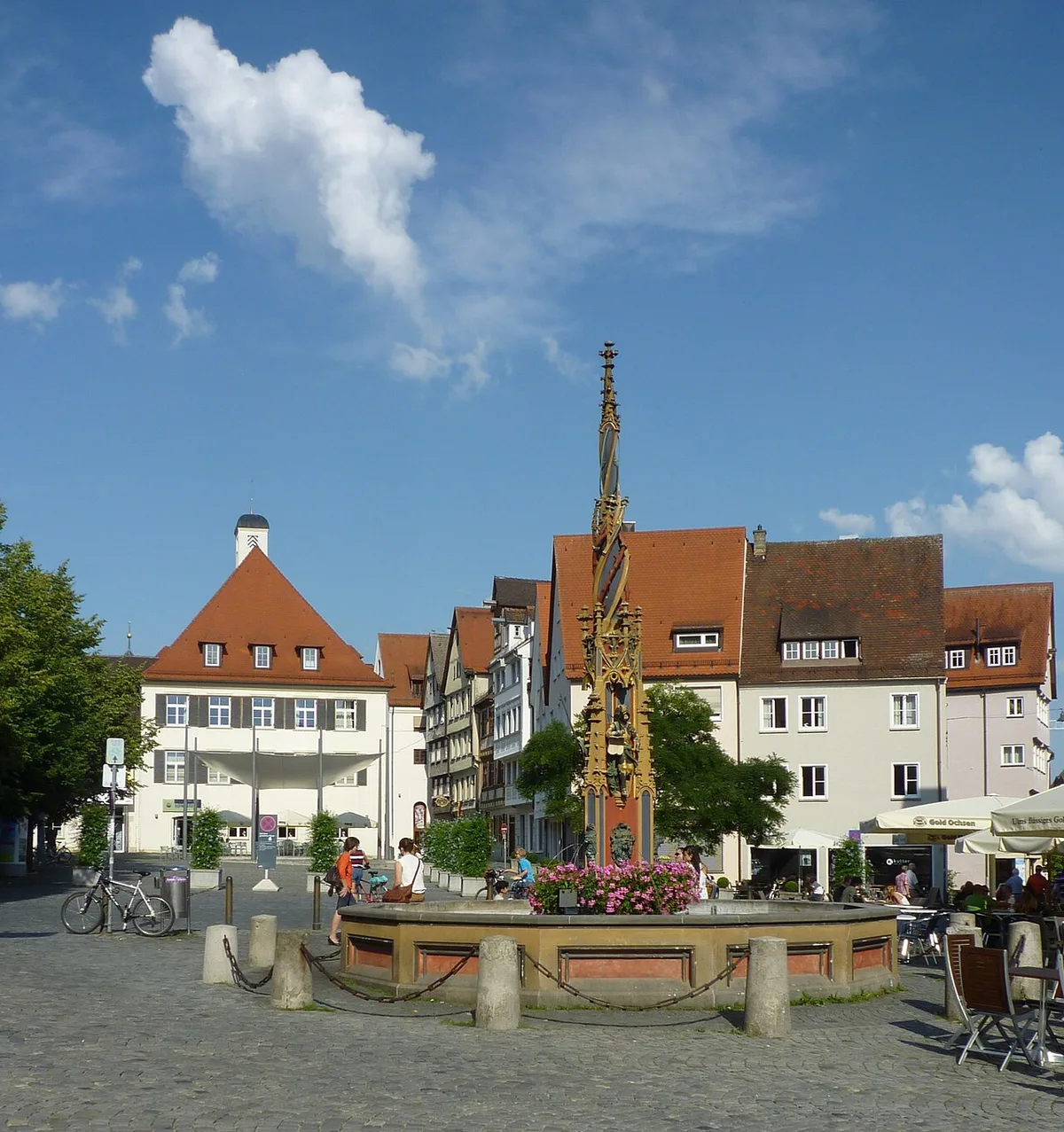
The cheapest family morning in Ulm is also the most photogenic. The Ulmer Rathaus on Marktplatz, built in the fourteenth century, is known for its painted facade and astronomical clock, and because it stands on a public square you can look at the outside at any time; it is still a working town hall, so interior access is limited to the entrance hall and courtyard during administrative opening hours.
From there, the old city wall along the Danube and the lanes of the Fischerviertel give you a car-free loop that costs nothing and rewards wandering. Glacis Park across in Neu-Ulm adds playgrounds and a small cafe, and the Friedrichsau does the same on the Ulm side.
The Minster is the obvious anchor of any first walk, and it is worth deciding in advance whether you are visiting the interior or climbing the tower, since a tower climb with small children is a different commitment from looking up at it. Our suggestion is to treat the free outdoor circuit as the spine of a family day and add one ticketed interior rather than several.
Small Trade-Offs That Decide the Day
Which side of the river you sleep on changes the shape of your day more than any ranking. Staying in Neu-Ulm puts you close to the children's museum and the Donaubad; staying in Ulm puts the Minster, Marktplatz and the free riverside walk on your doorstep, with Neu-Ulm a short crossing away. Our Ulm on a rainy day guide covers the indoor fallbacks in more depth.
Indoor backup matters because Ulm's strength is largely outdoors. The children's museum, the bread museum, the kunsthalle and the Donaubad are your wet-weather options; the Minster interior and the Rathaus entrance hall are shorter, more atmospheric alternatives. Because one major museum is closed and another runs on slots, an indoor plan should always have a second choice attached.
Finally, decide how many stops you actually want. Two venues plus a park is a comfortable family day in a pair of cities this size, and adding a third usually means rushing the first two. If you have more time, the region rewards a slower rhythm, and our notes on day trips from Ulm are a better fit for a longer stay than squeezing more into a single afternoon.
Family Logistics Without Guessing
Pack socks. The shoes-off rule at the children's museum is not optional, and you may want slippers if your child dislikes socks on unfamiliar floors. Snacks and drinks are worth carrying for park and riverside breaks, and it is reasonable to ask about food rules at a venue before turning up with a full picnic.
Confirm volatile details on the operator's own page before you travel, not on aggregator listings. Opening hours, ticket prices, holiday closures and whether time slots are required are exactly the things that change between seasons; the tourism board's family page is a good starting index, but the individual venue decides its own rules.
If you are combining Ulm with another German city on the same trip, family logistics work the same way everywhere: check for a slot-based booking system, check whether the headline museum is open, and keep one outdoor option in reserve. Our Berlin With Kids: 2026 Family Travel Guide and our Dresden with Kids: Museums, Rides and Open Spaces notes are useful comparisons before you lock an itinerary.
Plan Your Visit
Ulm with kids works best as a two-bank day: book or skip the children's museum slot based on the day of the week, put the zoo and Friedrichsau together, and keep the Marktplatz, Fischerviertel and riverside as your free, flexible spine. The pair of cities is small, and that is the advantage, not the number of attractions.
Our suggestion is one full day for the museum-and-zoo combination and a relaxed half day for the free walking loop, with a second day added if you want the bread museum, the gallery and a swim. Check slot requirements and the Museum Ulm renovation status shortly before you travel, because both affect what you can actually book.
Frequently Asked Questions
Is there a children's museum in Ulm or Neu-Ulm?
The children's museum is part of the Edwin Scharff Museum at Petrusplatz in Neu-Ulm, on the Bavarian side of the river. It is explicitly hands-on, with experimental exhibits designed to be used, and its exhibitions change each year. The museum asks visitors to reserve a time slot on Wednesdays, weekends, bank holidays and during school holidays, and a visit ends after two hours. Shoes come off inside, and a maximum of three children per adult may enter the exhibitions.
What can we do in Ulm with kids when it rains?
Your strongest indoor options are the Edwin Scharff children's museum in Neu-Ulm, Museum Brot und Kunst in Ulm, the kunsthalle weishaupt and the Donaubad water park in Neu-Ulm. Note that Museum Ulm has been closed for renovation since 2023, so it is not currently a wet-weather fallback, and its Lion-man display was accommodated at the kunsthalle weishaupt on a temporary basis until that display ended. Check each venue's own page for current hours before you commit.
How long do you need in Ulm with children?
Our suggestion is one full day for a museum plus the zoo or Friedrichsau, and a half day for the free old-town and riverside walk. Adding a second full day lets you include the bread museum, the gallery and a swim without rushing. Keep in mind that two family venues run on fixed slots or specific days, so build the plan around those first and fill the gaps with the free outdoor loop.
What is free to do in Ulm with kids?
The Marktplatz with the painted Rathaus facade and its astronomical clock, the Fischerviertel lanes, the old city wall along the Danube and the Glacis and Friedrichsau parks cost nothing to walk through. The Rathaus is still a working town hall, so interior access is limited to the entrance hall and courtyard during office hours, but the facade and square are viewable at any time.
Is the children's museum worth booking a time slot for?
Yes, if your child likes doing rather than looking, because the museum is built around hands-on exhibits rather than displays to be admired from a distance. The trade-off is the two-hour limit and, on Wednesdays, weekends, bank holidays and school holidays, the requirement to reserve a slot in advance. If you arrive more than fifteen minutes late, the museum may release the reservation, so plan your travel around the start time.


