

A wet day in Ulm is mostly a scheduling problem, because the historic core is compact enough to cross on foot between showers. The kunsthalle weishaupt opens Tuesday to Sunday from 11 am to 5 pm and closes on Mondays, and it runs public guided tours on Saturday and Sunday afternoons, which makes it the most dependable single indoor anchor for a rainy afternoon. A suggested plan is to give the gallery roughly one to two hours, then decide how much of the day you want to spend outdoors.
The wider planning material in Ulm: Itineraries and City Travel Guides is useful if you want to build a longer stay around this one wet day rather than improvising hour by hour.
Why Ulm Works When It Rains
Ulm's old town sits on the Danube and its headline sights cluster tightly enough that a route between two indoor stops rarely means more than a few minutes under an umbrella. Germany Travel notes that the Münsterplatz square brings historical backdrop and modern architecture together, which is the quality you want when the pavements are wet: one square gives you both the Minster and the city's contemporary buildings.
The same source records that the former Free Imperial City holds a run of historical attractions beyond the Minster, including the Town Hall with its painted exterior, the Trading House and the Romanesque Chapel of St Nicholas. That gives a rainy day a natural shape: pick one indoor block for the middle of the day, keep the facade-and-square stops for the gaps, and leave the riverside quarters for a drier moment.
One caution about planning around wind and showers: conditions change quickly and none of the venues publishes a weather-dependent policy you can rely on. Check the operator's own pages on the morning of your visit rather than assuming a fixed plan will hold. If you want suggested shapes for a whole day on foot, the 1 day in Ulm itinerary gives you a workable sequence you can compress around the wettest hours.
Kunsthalle Weishaupt: Hours, Tours and Charges
The kunsthalle weishaupt is a private museum built for the collection of Siegfried and Jutta Weishaupt and open to the public since November 2007. That much is confirmed by both the operator's own site and the Landesstelle für Museen Baden-Württemberg, which adds that the building stands in Ulm's "Neuer Mitte" and was designed by the Munich architect Wolfram Wöhr.
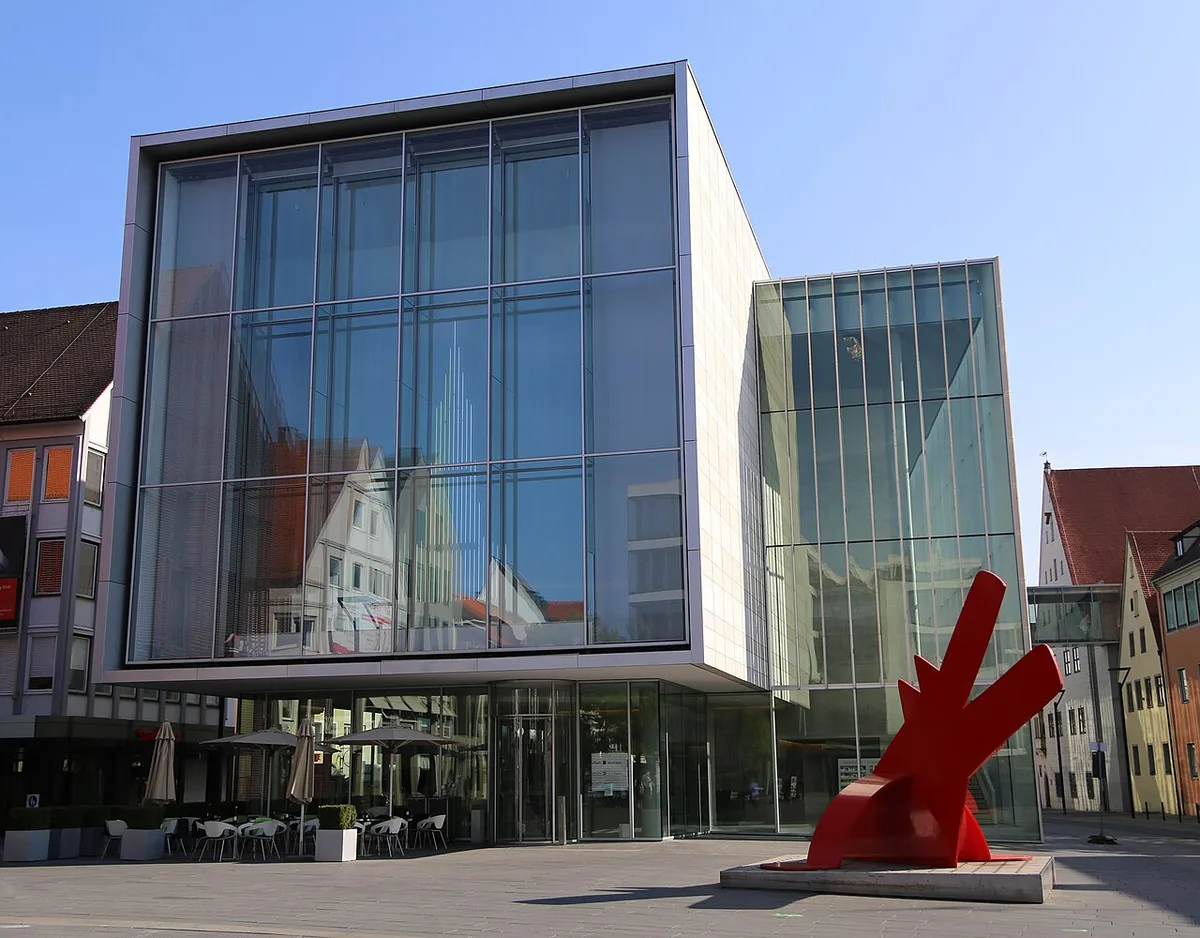
The Landesstelle describes the collection as covering classic positions in European and American art from the second half of the twentieth century, with a focus on the 1950s and 1960s, including Pop Art figures Roy Lichtenstein and Andy Warhol, colour field painting by Mark Rothko, Ad Reinhardt and Frank Stella, plus ZERO and Arte Povera works. That breadth is why the gallery rewards more than a quick look, even though the building itself is small.
Because it is privately run, it behaves differently from a city museum: admission is sold separately and the exhibition programme rotates rather than staying fixed. The gallery has published a 2026 schedule with an exhibition on colour and form running until 8 November 2026, followed by a Mavignier exhibition from 21 November 2026 to 20 June 2027. If a specific show is your reason for going, confirm what is on before you travel.
Guided Tours and Family Formats at the Gallery
Guided tours are part of the regular programme rather than a special arrangement. The gallery lists public tours on Saturdays and Sundays at 2 pm, excluding the first Sunday of the month, with a participation fee on top of the admission price and no registration required. That makes them easy to join if the rain has settled in and you want structure rather than a self-guided wander.
Family and creative formats carry their own charges and are worth checking if you are travelling with children. Interactive children's tours run on the first and third Sunday of the month at 3 pm, recommended from age five, with a small per-child fee for the tour and no advance booking. The October 2026 dates given by the operator were the 4th and the 18th, so the pattern is roughly fortnightly rather than weekly.
Writing workshops held in the kunsthalle under the name STIFT & KUNST have a separate participation fee that includes museum admission and is paid in cash on site, and registration runs through the workshop leader rather than the museum. Because these figures come from the operator's own programme page, treat them as indicative and verify before you go. Our Kunsthalle Weishaupt visitor guide covers the visit itself in more detail; the Museum Ulm visitor guide explains the separate museum situation covered next.
Museum Ulm Is Closed: Where the Lion-Man Is Now
Anyone planning a wet day around the city's main archaeological and art collections needs to know that Museum Ulm has been closed for renovation since 17 April 2023, as Tourism Ulm/Neu-Ulm confirms. The building at Marktplatz 9 is not currently receiving visitors, so a plan built around its permanent displays will not work as written in older guidebooks.
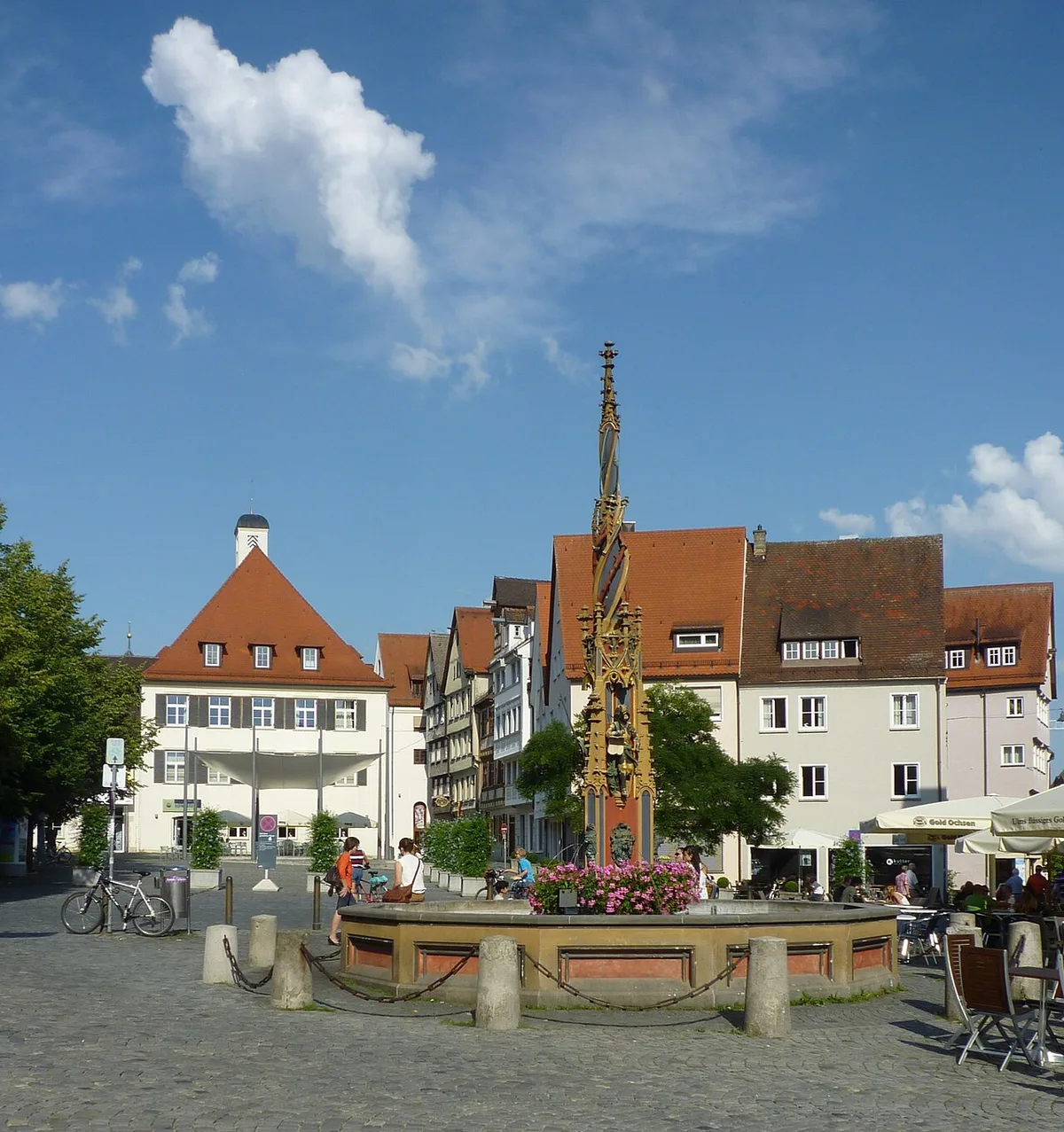
The collection has not disappeared. The tourism office states that since 13 December 2025 a Museum Ulm exhibition has been hosted on the first floor of the kunsthalle weishaupt, and that the Lion-Man remains on display there until 4 October 2026, after which the figure is due to move to its new home in the redesigned space at the end of 2026. Note that these are two separate shows in the same building rather than one combined ticket for everything the museum owns.
This relocation has a practical effect on how you plan. Instead of walking between two separate museum buildings, you can see the Weishaupt collection and the relocated Museum Ulm display under one roof and stay dry throughout. Whether the Lion-Man is still in the kunsthalle when you read this depends on the renovation timetable, so verify with the tourism office rather than assuming.
The Rathaus: Painted Facade and the Limits of Indoor Access
The Ulmer Rathaus is the best rainy-day sight in Ulm that does not require you to go inside anything. The Stadtführung guide records that the oldest south-eastern main building dates to 1370, that the name Rathaus was first used in 1419, and that the astronomical clock was installed around 1520. Because it faces a public square, you can study it under an umbrella or from a café window as the weather dictates.
Access inside is deliberately limited. The same guide states plainly that the historic town hall is still a seat of administration and that visitors are admitted only to the entrance hall and the Lichtof courtyard, where the visit ends; opening times follow the administration's office hours rather than museum hours. The Alpen-Guide entry similarly gives opening times as the usual office hours of the administration. Do not plan your day around touring the upper floors or the council chamber.
The facade repays a slower look than most people give it. Alpen-Guide describes the mural scheme as showing instructive depictions of virtues, commandments and vices, and notes that the paintings visible today date from 1900, when weather-damaged originals were restored or recreated in the spirit of the documented parts. The Stadtführung guide adds that the clock has fourteen functions and five moving elements, far more than a casual glance suggests. Spending twenty wet minutes decoding it in front of the building is a genuinely good use of time.
Ulm Minster and the Museum of Bread Culture
Ulm Minster is the reason many people come to the city, and in rain it still works, provided you understand that two different things are on offer. Germany Travel records that the Minster has the tallest church tower in Germany and is the city's most prominent landmark. Entry to the church interior and the tower climb are separate arrangements, with the tower a paid ascent, so decide before you queue which one you actually want.
The tower ascent is not a rainy-day substitute for a walk. It is a long climb up a narrow spiral, tiring and warm work, and awkward with wet clothing. The tower also tends to close earlier than the church itself, so leaving it until late afternoon in bad weather is a poor bet, and in poor visibility the payoff at the top is limited regardless of effort. The nave, by contrast, is a straightforward indoor stop for a wet hour at a scale that rewards slow walking.
If you want a third indoor option in the old town, the Museum of Bread Culture is a privately run institution in the Salzstadel quarter that a Wanderlog listing describes as spanning three floors on the art, history and craft of bread making, baking and milling, with audio guides available in English, French or German and separate guides for children. It is an unorthodox choice, but it suits a mixed group better than a second art gallery. Compare the other ticketed sights on the Ulm: Landmark Visitor Guides hub before settling on one.
A Short Indoor-First Walk That Keeps You Mostly Dry
Start at Hans-und-Sophie-Scholl-Platz and give the kunsthalle weishaupt the middle of the morning or the early afternoon. Because the relocated Museum Ulm display shares the building, you can extend the stop well past an hour without stepping outside. Leave when the rain eases rather than when you have finished, so the walking portion of the day happens in a dry window.
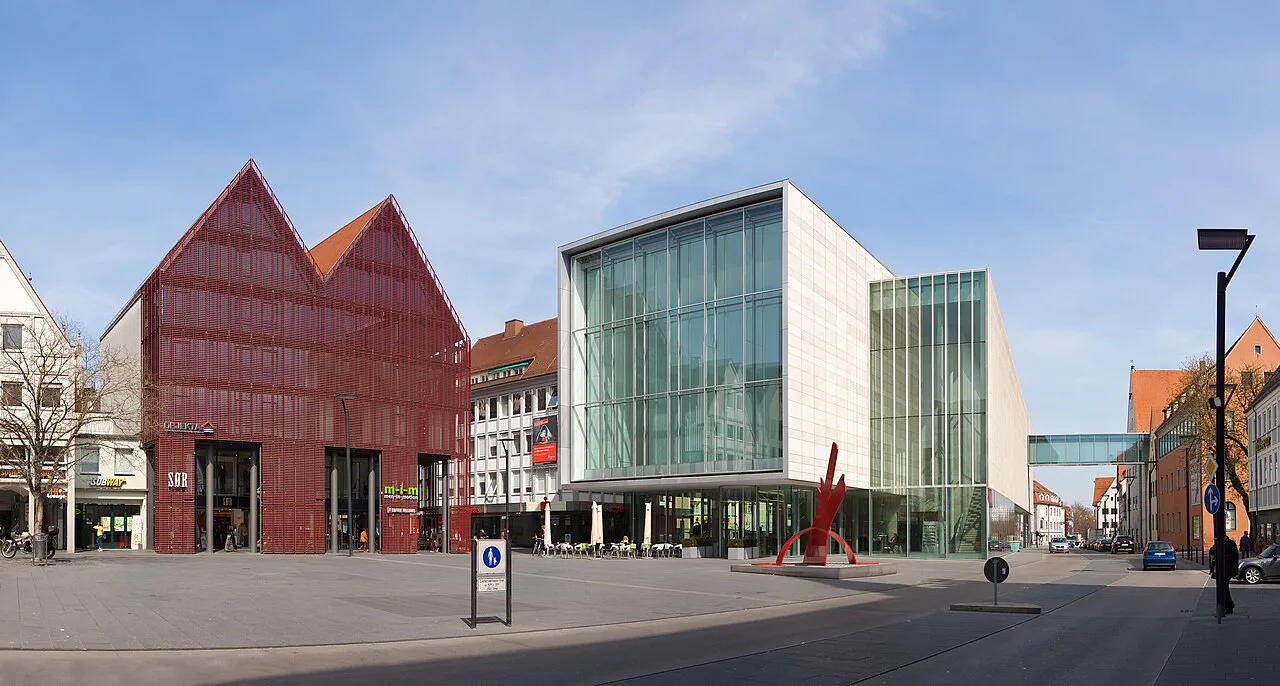
From there, walk towards Marktplatz and spend time in front of the Rathaus, using the arcades and shopfronts around the square as shelter. Read the mural cycle and the astronomical clock properly, then decide whether you want the Minster next or a coffee break. The whole transfer is short enough that even a heavy shower will not soak you through, and the Rathaus facade costs nothing to look at.
Finish at Ulm Minster, using the nave as the last indoor stop, and save the tower for a clearer day. If you still have energy and a dry spell, the Fischerviertel quarter along the canals is a short walk away and makes a good closing stroll, though it is an outdoor area with no shelter of its own. For a version of this route stretched across more time, see the 2 days in Ulm itinerary.
Plan Your Visit
A rainy day in Ulm is manageable because the useful indoor stops sit close together and the most photogenic sight, the painted Rathaus, can be enjoyed from outside. Build the day around the kunsthalle weishaupt, fold in whatever Museum Ulm is showing there, and treat the Minster nave as your shelter rather than the tower as your goal. Leave the tower climb and the riverside quarters for weather that rewards them.
Two habits keep the plan honest: check opening times directly with each operator on the morning of your visit, and confirm the state of Museum Ulm's relocated displays if that is your reason for going. Neither the gallery nor the tourism office can guarantee conditions in advance, and the Museum Ulm renovation timetable is subject to change. The same approach works well for Berlin on a Rainy day and Dresden on a rainy Day.
Frequently Asked Questions
What can you do in Ulm when it rains?
The most reliable indoor options are the kunsthalle weishaupt, the Museum Ulm display currently hosted inside it, the nave of Ulm Minster and the Museum of Bread Culture. The painted Rathaus facade and its astronomical clock can be studied from the Marktplatz in any weather, so you can pair a short outdoor look with a longer indoor stop nearby.
Is the kunsthalle weishaupt open on Mondays?
No. The operator lists opening hours of Tuesday to Sunday, 11 am to 5 pm, with Mondays closed, and the Landesstelle für Museen Baden-Württemberg gives the same schedule. Because this is a privately run museum, check its website on the day in case the hours have been adjusted around an exhibition change.
Is Museum Ulm open right now?
Museum Ulm has been closed for renovation since 17 April 2023, so the building at Marktplatz 9 is not currently receiving visitors. Tourism Ulm/Neu-Ulm states that a Museum Ulm exhibition, including the Lion-Man, has been hosted on the first floor of the kunsthalle weishaupt, with the Lion-Man scheduled to remain there until 4 October 2026. Confirm current status with the tourism office before relying on either location.
Do you need a ticket to climb the Ulm Minster tower?
Yes. Entry to the church nave and the tower climb are handled separately, and the tower is a paid ascent. The climb is long, narrow and tiring, and the tower tends to close earlier than the church itself, so on a wet day the nave is often the better use of your time.
Can you go inside Ulm Town Hall?
Only to a limited extent. The Stadtführung guide states that the Rathaus is still a seat of administration and that visitors are admitted just to the entrance hall and the Lichtof courtyard, where the visit ends, during the administration's office hours. Treat the painted facade and the astronomical clock as the main attractions, since they can be seen from the public square at no cost.
Was the Lion-Man on display in Ulm?
According to Tourism Ulm/Neu-Ulm, the Lion-Man was displayed at the kunsthalle weishaupt as part of a relocated Museum Ulm exhibition and was due to remain there until 4 October 2026, before moving into redesigned museum space at the end of 2026. Because the renovation timetable can shift, confirm the current location with the tourism office before planning a visit around it.


