

Augsburg's old town is compact and walkable, and its arcades and covered passages give you somewhere to stand when a shower passes over Maximilianstrasse. The problem on a wet day is not distance but decision-making: which indoor option actually fits your group, your interests and the hours you have. Wet weather also empties the streets, so a rainy visit can feel quieter than a summer weekend.
Three options cover most rainy-day plans. The Kunstsammlungen museum cluster pulls together separate historic collections across several buildings, the H2 Centre of Contemporary Art occupies the converted Glaspalast, and the Augsburger Puppenkiste combines marionette performances with an attached puppet museum. Each suits a different traveller, and none of them substitutes neatly for the others.
A useful rule for wet days is to pace by building rather than by distance. Pick one main indoor stop and one short secondary one, then walk between them only when the rain eases. Rain jackets, layers and shoes that cope with wet cobblestones matter more here than in a museum-only city.
Why Augsburg Works as a Rainy-Day City
Augsburg has more than 77 kilometres of water canals and about 500 bridges, and its historic centre packs guild houses, churches and Renaissance architecture into a relatively small area. In poor weather that density works in your favour, because a single wrong guess about a museum costs you only a short walk rather than a cross-city journey. The same compactness means you rarely need public transport to move between the main indoor sights.
Travellers who have written about visiting in cold, showery spring weather describe how quiet the centre becomes when it rains, with arcades used as shelter between sights. That quiet is a genuine advantage if you dislike crowds, but it also means some smaller places can feel deserted. Check the weather forecast before you commit to a plan that depends on walking, and keep one indoor backup in reserve.
The city also rewards people who accept that a wet day runs shorter than a dry one. Aim for two substantial indoor stops, and treat anything beyond that as a bonus rather than a target. If you want a broader overview of how the city's sights fit together before choosing, the Augsburg landmark visitor guides set out what each major site actually contains.
Option 1: The Kunstsammlungen Cluster
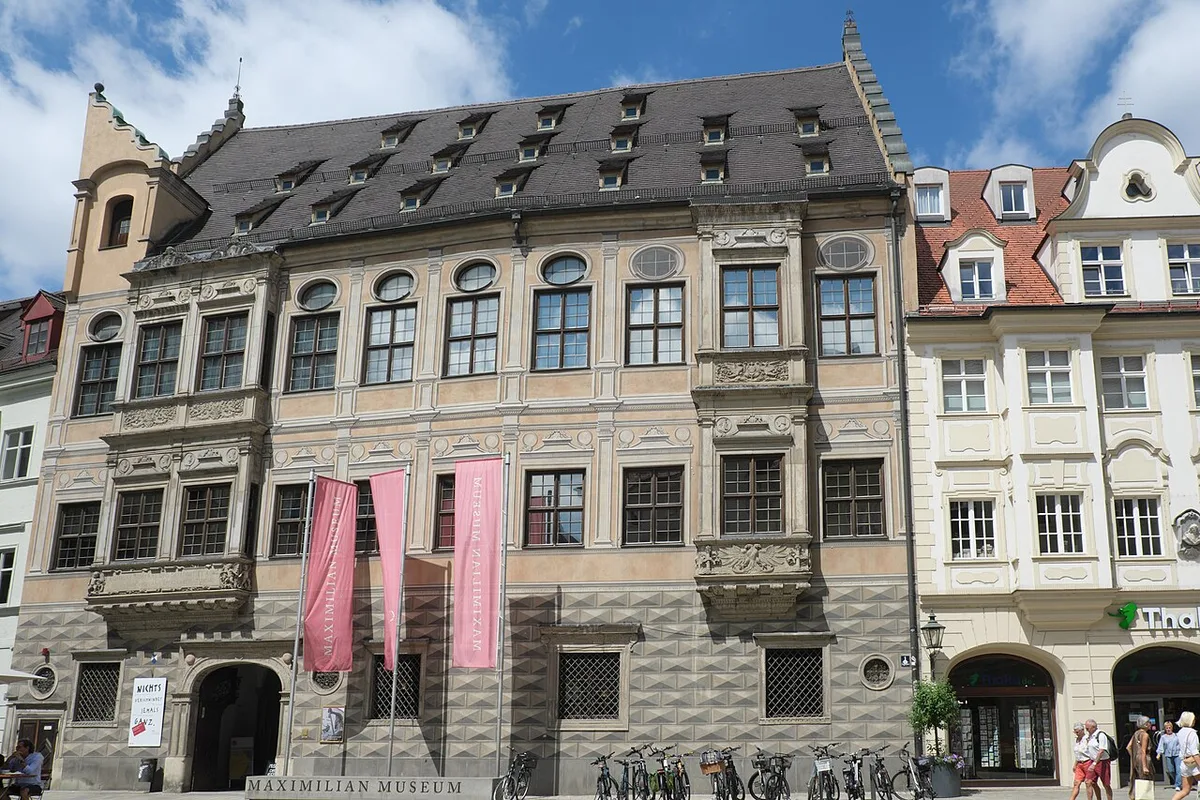
The Kunstsammlungen & Museen Augsburg is best understood as an umbrella over several institutions rather than one museum. A digital hub app was built to connect four major cultural institutions: the Maximilianmuseum, the H2 Centre of Contemporary Art, the Römerlager im Zeughaus and the Schaezlerpalais. That grouping is a guide to what belongs together administratively, not a single admission covering all four.
The Schaezlerpalais is a Baroque palace on Maximilianstrasse with a celebrated Rococo ballroom, and one account notes that English-language labelling is limited in its painting galleries. That detail matters if you rely on wall text rather than prior knowledge. Decide in advance whether the ballroom's decoration justifies the visit for you, since the appeal is architectural as much as curatorial.
The Römerlager im Zeughaus presents Roman Augsburg in a temporary home, and the city's own listing gives opening hours of 10:00 to 17:00 from Tuesday to Sunday, with Monday closed, while adding that hours can differ. Some displays lack English information, so a visit works best if you already know the outline of Roman Augusta Vindelicorum. Treat those times as a pattern and re-check them on the day of your visit.
Because these are separate institutions with separate admissions, an all-in assumption can wreck a rainy-day plan. Check each site's own page for current entry terms rather than expecting one ticket, and budget your time per building instead of treating the cluster as a single stop. For a full comparison of the city's collections, including which ones suit short visits, the guide to the best museums in Augsburg worth visiting is a sensible next read.
Option 2: H2 in the Glaspalast
The H2 Centre of Contemporary Art sits inside the Glaspalast, an architectural monument with roughly 1,500 square metres of exhibition space. It opened in 2006 and is described as the most recent addition to the Augsburg museum scene, mixing temporary exhibitions with a growing collection. If you have already seen historic interiors in Bavaria, this is the option that feels genuinely current.
Beyond exhibitions, the H2 hosts artist talks, performances, concerts and conferences, and it shows work by artists from Augsburg and the surrounding region alongside nationally and internationally relevant positions. That mix means the programme changes often, so what you see depends heavily on timing. Check the Glaspalast's own site before travelling if a specific exhibition is the reason for your visit.
The same source lists opening hours of 10:00 to 17:00 every day except Monday for the gallery in the Glaspalast. Confirm current hours and any admission details directly with the venue, since exhibition changeovers can affect access. Monday is the weak point in rainy-day planning across the city, because both the H2 and the Römerlager close that day.
Option 3: The Augsburger Puppenkiste
The Augsburger Puppenkiste is a marionette theatre with a long-standing reputation, staging fairy tales such as Rapunzel and adaptations of German children's books, with an attached puppet museum for anyone curious about the craft. It is the pick when children are in the group, or when a fixed curtain time shapes the whole day. Because performances run to a schedule rather than to your arrival, book around the show rather than the other way round.
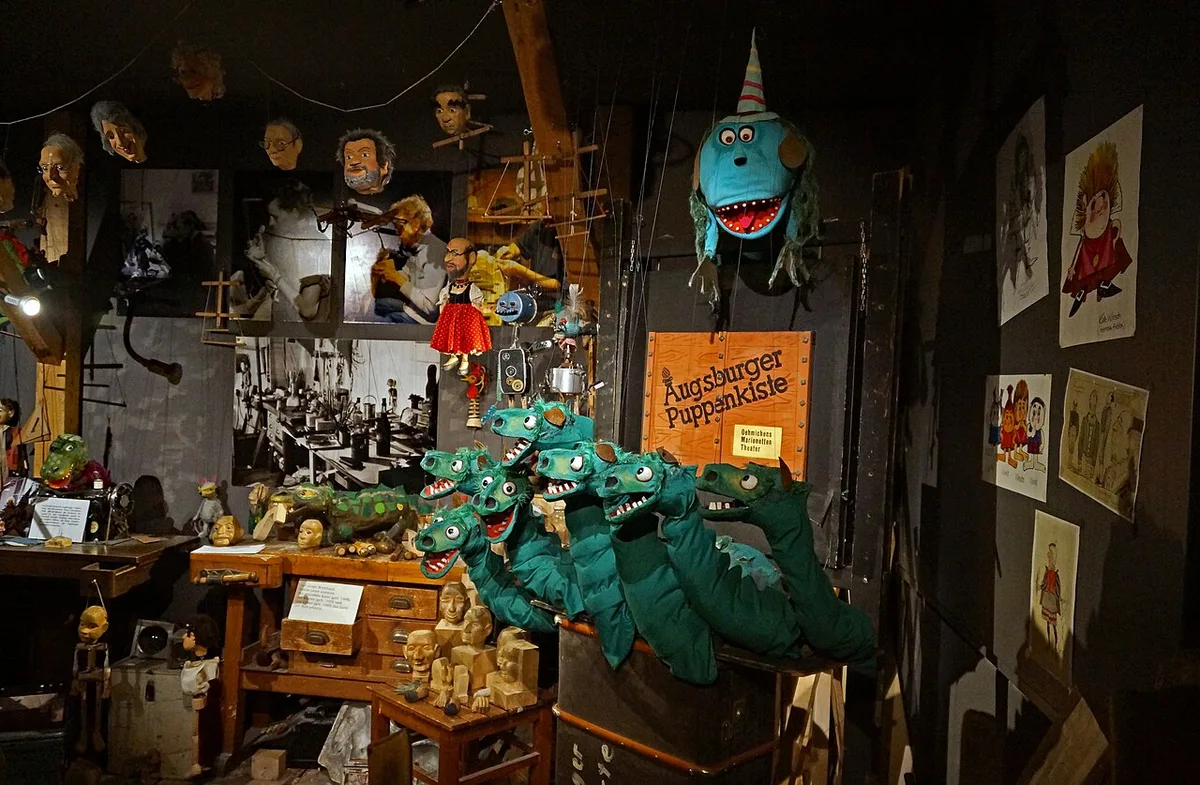
Treat the theatre's own programme as the only reliable source for performance times, language and ticket availability, since these change by production and season. The puppet museum's opening hours should be checked the same way rather than assumed from the theatre's schedule. If a show is the anchor of your day, plan the rest of your indoor stops around it instead of squeezing them in afterwards.
Adults without children are not out of place here; marionette theatre is a serious craft tradition rather than pure children's entertainment, and the museum side appeals to anyone interested in stage design. Families combining the theatre with other sights should look at the wider ideas for Augsburg with kids before fixing the day's order. That way the showtime becomes a fixed point and everything else flexes around the weather.
Back-Up Plan: The Fuggerei Museums
The Fuggerei is the world's oldest existing social housing settlement, founded by Jakob Fugger in 1521, with 67 houses, 142 apartments and its own church, and around 150 residents still living there. Four museums on the site, including a reconstructed historic flat and an exhibition in the former World War II bunker, can be visited daily for a fee. Because people live inside the walls, keep noise down and treat doorways and courtyards as private space.
The official Fugger site confirms an annual cold rent of 0.88 euros and the requirement of three daily prayers, a reminder that this is an active foundation rather than a museum set. Entry prices, opening times and any guided tour arrangements belong to the operator and should be checked there before you go. An editorial suggestion for a Fuggerei visit is roughly one and a half to two and a half hours, which is enough for the museums and a slow walk through the lanes.
The complex is in the Jakobervorstadt district, and the main entrance on Jakoberstrasse is a short walk from the town hall area, which makes it a reasonable second stop on a wet afternoon. There is an entrance fee, but the operator publishes current terms rather than fixed values, so confirm before relying on it. If you want context on the wider quarter, the Fuggerei visitor overview describes the museums and the bunker exhibition in more detail.
Practical Rain-Day Logistics
Monday is the day to plan around rather than improvise, because several key indoor sites close. The city's listing for the Römerlager im Zeughaus shows Tuesday to Sunday opening from 10:00 to 17:00 and Monday closed, and the Glaspalast's gallery is also described as closed on Mondays. If your trip includes a Monday, save it for churches, the town hall interior or the Fuggerei instead of a museum day.
Separate free outdoor space from paid interiors so a rainy day does not become an accidental spending spree. Walking the old town, the canal network and the squares costs nothing, while palaces, museum collections and the Fuggerei museums charge separately. Once indoor rest points run short, plan deliberate cafe stops rather than assuming you will find a public bench under cover.
The 70-metre Perlachturm, long a viewpoint over the old town, is closed for renovation according to its visitor listing, so do not build a wet-day plan around the climb. For alternatives above street level, and for what to do when the tower reopens, the guide to the best viewpoints in Augsburg covers the options. Note the closure without expecting a reopening date, since none has been published.
Dress for wet cobblestones and for interiors that are often cool. Layers, a light rain jacket and shoes with grip do more for a rainy day than any single item, and churches ask for covered shoulders and knees. A compact daypack holds the extra layer you shed indoors and the one you need again outside.
Indoor Alternatives When Museums Are Closed
Augsburg Cathedral is a Romanesque building founded in the 11th century with Gothic additions from the 14th, and it contains medieval stained glass and a crypt. Entry to a working church is generally free, but it is a place of worship rather than a sight, so keep visits quiet and check that no service is under way. A short stop here pairs well with the nearby Hofgarten if the rain eases.
The Rathaus is a Renaissance building completed in 1624, and its Golden Hall is the interior worth paying for, with a separate small admission rather than free access. If you are choosing between the town hall interior and a museum on a wet day, decide whether you want one impressive room or a longer collection visit. Opening arrangements for the hall should be confirmed with the city before you go.
Augsburg Zoo, which opened in 1937 and now houses around 1,200 animals from over 240 species in the parkland at the northern edge of the Siebentischwald, is primarily an outdoor day. It is not a serious wet-weather substitute, though a short visit between showers is possible if you keep expectations low. The zoo publishes its own hours and terms, so check those directly if the weather forecast is uncertain.
If the rain is relentless, it is worth comparing how other German cities handle wet days, since the same logic of one anchor stop plus one short secondary stop applies elsewhere. Berlin on a rainy day and Dresden on a rainy day both lean on major museum complexes in the same way. Use them for ideas about pacing rather than for specific advice that might not transfer to Augsburg.
Plan Your Visit
A wet day in Augsburg works best when you choose one anchor and let the weather decide the rest. Pick the Kunstsammlungen cluster if you want historic collections, the H2 if you want contemporary art in a converted monument, the Puppenkiste if a showtime or the children shape your day, and the Fuggerei if you want a lived-in quarter with museums inside its walls. Pacing by building rather than by distance keeps the day manageable.
Check opening days, admission terms and any performance schedule the day before you travel, because Monday closures and exhibition changeovers are the two easiest ways to lose an afternoon. The tower is closed for renovation, so treat any climb as a bonus rather than a plan. Everything else about a rainy Augsburg day is a question of order, not of missing out.
Frequently Asked Questions
What can you do in Augsburg when it rains?
Choose one substantial indoor stop and one short secondary one. The Kunstsammlungen cluster offers historic collections across several buildings, the H2 in the Glaspalast covers contemporary art, the Augsburger Puppenkiste pairs marionette performances with a puppet museum, and the Fuggerei combines a lived-in historic quarter with four small museums. Churches, the town hall interior and arcades fill the gaps between showers, and the old town is compact enough to walk between them without long exposed stretches.
Are Augsburg's museums open on Mondays?
Monday is the day to check carefully, because at least two major indoor options close. The city listing for the Römerlager im Zeughaus shows Tuesday to Sunday hours with Monday closed, and the gallery in the Glaspalast is also described as closed on Monday. Other institutions follow their own schedules, so confirm each venue's current opening days on its own page before you set out, and keep Monday for churches, the town hall or the Fuggerei.
Is the Augsburger Puppenkiste worth visiting without children?
Yes, if you are interested in marionette craft or stage design. It is a long-established marionette theatre with an attached puppet museum, and the appeal is the technique and tradition rather than only the story. What matters is the schedule, since performances run at set times and change by production. Check the theatre's own programme for current shows, times and ticket availability, and build the rest of your day around whichever performance fits.
How much time should you allow for the Fuggerei in bad weather?
An editorial suggestion is roughly one and a half to two and a half hours, which covers the four museums, a look at the reconstructed historic flat, the bunker exhibition and a slow walk through the lanes. A quick circuit takes considerably less. The Fuggerei is an active residential quarter with around 150 residents, so expect to move quietly and treat courtyards and doorways as private space. Check the operator's site for current opening times and entry terms.
Do you need one ticket for all of Augsburg's art collections?
No. The Kunstsammlungen & Museen Augsburg links several institutions, including the Maximilianmuseum, the H2, the Römerlager im Zeughaus and the Schaezlerpalais, but they are separate venues with their own admissions. A hub app connecting them does not mean a single combined ticket. Check each site's own page for current entry terms, and plan your day around two buildings rather than trying to cover the whole group.
Which Augsburg museum is best for contemporary art?
The H2 Centre of Contemporary Art in the Glaspalast is the obvious choice, with about 1,500 square metres of exhibition space in a converted architectural monument. It opened in 2006 and mixes temporary exhibitions with a growing collection, showing regional and international work. Its gallery is described as open every day except Monday, from 10:00 to 17:00, but exhibition changeovers can affect access, so confirm details with the venue before you travel.
Sources
- Perlachturm (Augsburg)
- Plan your visit to the H2 Centre of Contemporary Art in Augsburg! - Germany Travel
- Lion, tiger and co. at Augsburg Zoo - DB Regio Bayern
- Rathaus | Augsburg, Germany | Attractions - Lonely Planet
- Fuggerei - Offizielle Website der Fugger
- Fuggerei in Augsburg: The Oldest Social Housing in the World


