

Most visitors arrive at Spitalgasse 15 expecting a single attraction and find two. The Augsburger Puppenkiste is a working marionette theatre with its own curtain times, while Die Kiste is a puppet museum on the floor above it, with a separate schedule and its own admission arrangement. A quick orientation: the museum opens Wednesday to Sunday from 12:00 to 18:00, with selected 2026 public holidays also added to the calendar.
That split decision shapes the whole trip. A performance ties you to a fixed curtain time, while the museum runs on a restricted afternoon pattern that has to fit around the rest of your day in Augsburg. For a suggested planning figure, allow roughly two hours on site if you combine the museum with the café or shop, and longer if you also attend a performance; treat that as editorial advice, not an official duration.
The figures are the draw either way. Jim Knopf, Urmel, Kater Mikesch and Räuber Hotzenplotz are household names in Germany, and original hand-carved marionettes and painted backdrops are what you actually stand in front of, whether on stage or behind glass.
What the Augsburger Puppenkiste Actually Is
The theatre premiered in February 1948 and has performed in the rooms of the former Heilig-Geist-Spital ever since. The museum opened on the theatre's upper floor in 2001, so both offerings sit in the same listed building without being the same thing.
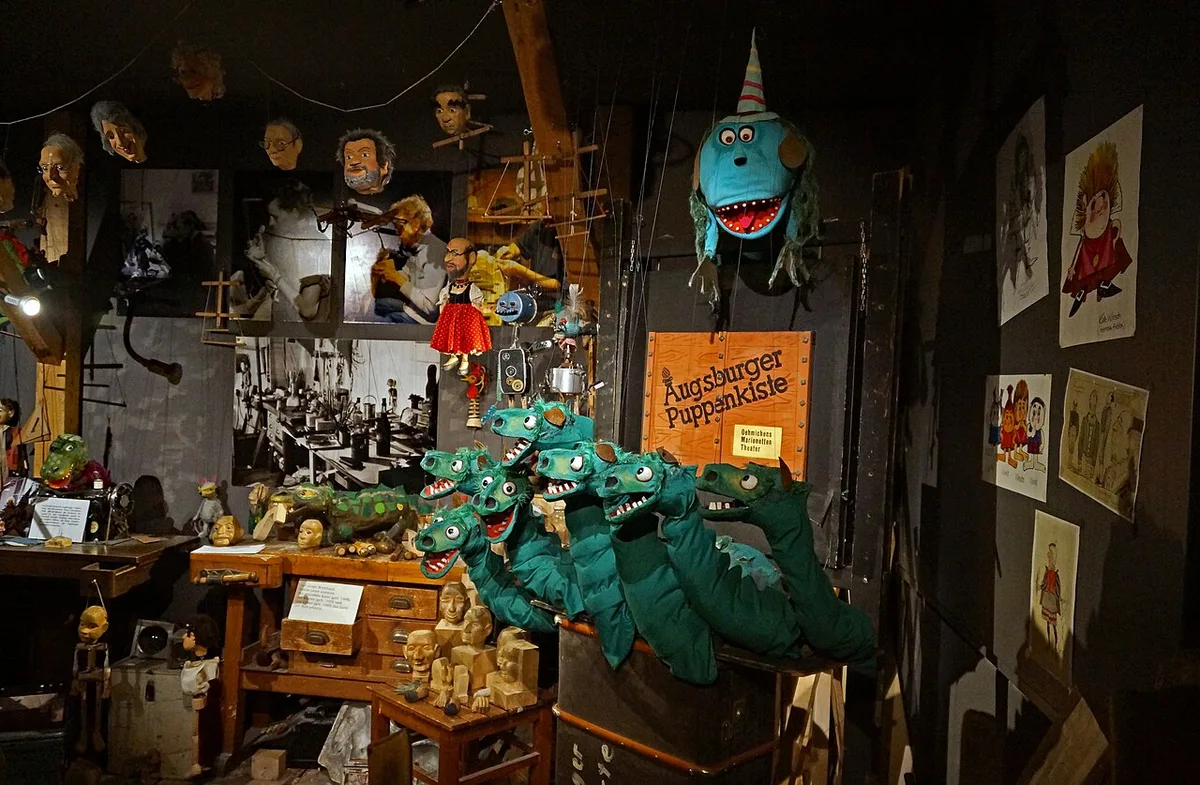
The scale is bigger than most first-time visitors expect. The company gives around 400 to 420 performances each year and adds roughly 100 to 120 appearances on tour, while a new production needs a lead time of at least a year.
Walter Oehmichen founded the theatre with his wife Rose and it is now run by the third generation of the same family. Assume separate scheduling and separate entry arrangements rather than one combined ticket for everything on site.
Spitalgasse 15 and the Heilig-Geist-Spital Setting
The address is Spitalgasse 15 in central Augsburg, inside the Heilig-Geist-Spital, a listed building ensemble rather than a purpose-built theatre block. Performances take place under the arched roof of the former chapel, so the architecture is part of the atmosphere.
Because the venue is small and historic, treat it as one stop inside a walkable old town rather than a standalone destination. It pairs naturally with the wider Augsburg: Landmark Visitor Guides cluster of churches, canals and merchant houses within a few minutes on foot.
Budget your time by the two fixed points: a curtain time for the theatre and an afternoon window for the museum. Everything else in the neighbourhood, from coffee to a second museum, can be shuffled around those two anchors.
Theatre Performances: Family Afternoons and Adult Evenings
The programme is deliberately split by audience. Afternoon shows stage fairy tales and children's stories such as Rumpelstiltskin or The Little Prince, while the evening slot carries a cabaret programme for adults that changes annually.
The shows end with a signature gesture rather than a normal curtain call: the lid of the puppet chest closes over the stage. It is the company's trademark, and it is the moment children in the audience are waiting for.
Because demand is high, the operator's own advice is to book well ahead rather than turn up hoping for returns. Check the official site for current dates and the programme, but do not rely on a fixed annual calendar, since productions rotate across the year.
Die Kiste: The Puppet Museum Upstairs
Die Kiste occupies the floor above the theatre and holds a permanent exhibition of original hand-carved marionettes alongside their painted backdrops. The named figures include Jim Knopf, Urmel and Mama Wutz, Sams and Mr Taschenbier, Kater Mikesch and Räuber Hotzenplotz.
Alongside the permanent displays, the museum programmes changing special exhibitions, often with an accompanying events programme tied to the theme. If a particular exhibition is your reason for visiting, confirm what is currently on before you travel.
The museum is worth judging on its own terms: it is a collection of stage originals and design work, not a hands-on play space. Visitors who want to handle or try things should look at what children's activities are running instead.
Why the Museum and Theatre Are Separate Visits
The theatre and the museum share a building, a history and a cast of characters, but they are distinct offerings with distinct arrangements. Do not plan on one admission covering both, and do not assume a performance ticket gives you museum access or vice versa.
The museum listing is published separately from the theatre's programme, with its own opening times, contact details and shop. That separate listing is the practical proof that they are run as two products rather than one attraction.
The cleanest approach is to decide which one is the priority, then check the current terms for the other before committing. Admission prices and booking conditions are published by the operator rather than fixed in guidebooks.
Museum Opening Pattern and the Practical Consequences
Die Kiste opens Wednesday to Sunday from 12:00 to 18:00, and closed on the remaining weekdays. That afternoon-only, five-day pattern is the single biggest constraint on a day plan, because a Monday or Tuesday visit removes the museum option entirely.
Selected 2026 public holidays are added to the calendar, including Good Friday, Easter Sunday and Monday, Ascension Day, Pentecost Monday, All Saints' Day, the Day of Prayer and Repentance and Boxing Day, all from 12:00 to 18:00. Corpus Christi on 4 June 2026 is listed with a longer window ending at 19:30, and all other holidays remain closed.
Treat these times as the published pattern rather than a permanent guarantee, since museum hours can change. Confirm the day before you go, especially on holiday weekends.
The listing states that no accessibility information is available, so visitors with specific access needs should contact the museum directly instead of relying on published detail. General enquiries are handled by telephone and email.
Who Each Option Suits
Families with younger children are the natural fit for an afternoon performance, where the stories are familiar and the puppet-chest ending lands with the audience. If you are planning a broader family day, Augsburg with kids covers other attractions that pair well with a short show.
Adults travelling without children tend to prefer the evening cabaret programme, which is written for a grown-up audience and changes each year.
Puppet and theatre-history enthusiasts get the most from Die Kiste, because the permanent collection shows the actual carved figures and set pieces rather than reproductions. For a mixed-age group, the workable compromise is a museum visit in the early afternoon followed by a show, subject to whatever times are published for your date.
Café, Shop and Private Events
The café and restaurant Die Kiste sits directly on site, along with a museum shop, and the dishes are named after characters from the theatre. Both the café and the shop are listed as separate features rather than as part of the museum collection.
The rooms of the former Heilig-Geist-Spital are also used for private occasions, from children's birthday parties to weddings and company events. Birthday celebrations are described as including a themed guided tour, so they are arranged rather than simply bought at the door.
Because event formats, packages and availability are commercial arrangements that change, ask the organiser directly rather than planning around a price you saw quoted somewhere. The same applies to any café opening pattern, which follows the venue rather than the museum timetable.
Getting There from Augsburg Hauptbahnhof
The theatre is a walkable distance from the main station. Leave Augsburg Hauptbahnhof by the east exit, follow Viktoriastraße briefly to the right, then continue onto Halderstraße and across Hermanstraße, with the route continuing via Schießgrabenstraße, Beethovenstraße, Konrad-Adenauer-Allee, Weite Gasse and Milchberg before you turn right into Spitalgasse.
Allow roughly 20 minutes on foot; the operator publishes that approximate figure, so treat it as a reasonable planning number rather than a precise time. Number 15 is on the left-hand side once you are on Spitalgasse.
On the way, watch for the Kasperle traffic lights at Spitalgasse 6, where the pedestrian signals use puppet figures. They exist only in Augsburg and were installed in honour of the theatre, which makes them a small free stop on the route.
A Suggested Half Day Around the Puppenkiste
This is an editorial suggestion, not an official schedule. Start with a late-morning walk from the station so you arrive in the old town before the museum's midday opening, and use the time beforehand for the surrounding streets.
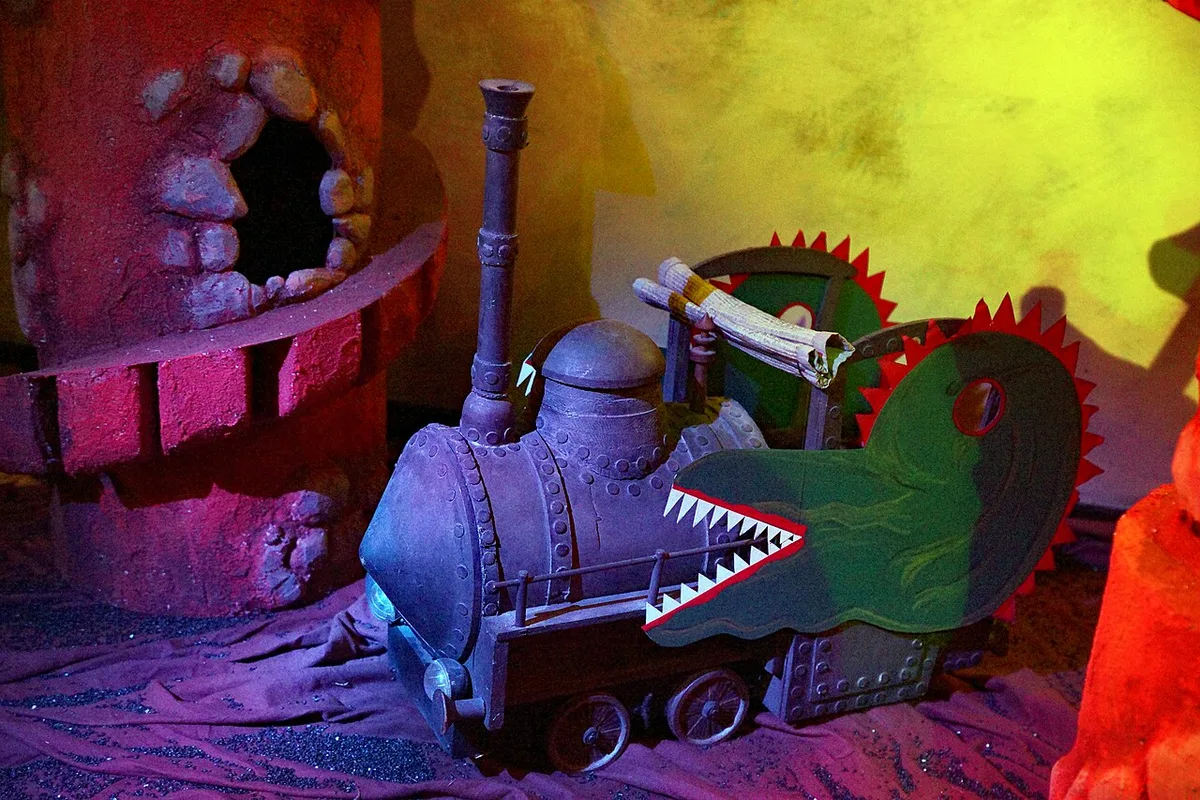
Take the museum in the early afternoon, then stay in the quarter for coffee before a performance if one is running that day. If the weather turns, Augsburg on a rainy day lists indoor alternatives that can absorb an extra hour without a long detour.
If your date falls on a Monday or Tuesday, when the museum is closed, swap the museum for another old-town attraction and keep the theatre as your Puppenkiste element. The Maximilianmuseum is one of several central options, and the wider Augsburger Wassersystem UNESCO visitor guide covers the city's canal and water heritage on foot.
Frequently Asked Questions
These answers cover the decisions visitors ask about most often, and each one points back to the organiser for current details.
The Honest Trade-Off
The real tension is between two fixed constraints: the museum's short Wednesday-to-Sunday afternoon window and the theatre's curtain time. You can rarely bend either one, so build the rest of your Augsburg day around whichever you commit to first.
If you only have one slot, choose the theatre for atmosphere and the museum for the collection. If you have an afternoon, the museum plus the café and shop is the lower-commitment option that still puts you in the building.
Before travelling, check the organiser's own pages for current performance dates, admission terms and any changes to opening hours, since prices and booking conditions are published there rather than fixed in advance.
Frequently Asked Questions
Is the Augsburger Puppenkiste suitable for visitors who do not speak German?
The afternoon fairy-tale performances rely on well-known stories, visual staging and marionette movement, so a non-German-speaking visitor can follow the action even without the dialogue. The evening cabaret programme is more language-dependent, since it plays on wordplay and adult humour. If understanding every line matters to you, ask the organiser which current production is most visual before booking.
Do I need to book theatre tickets in advance and does the museum need a separate booking?
The organiser advises booking theatre tickets in advance because performances are in high demand, and the theatre has a limited number of seats. The theatre and the puppet museum are separate offerings with their own arrangements, so a performance ticket should not be treated as museum admission. Check the official Puppenkiste site for performance terms and the museum listing for museum hours and contact details.
Is the Die Kiste puppet museum worth visiting without attending a performance?
Yes, if you are interested in puppetry, stage design or the television history behind Jim Knopf, Urmel and Kater Mikesch. The permanent exhibition displays original hand-carved figures and painted backdrops on the floor above the theatre, and changing special exhibitions add new material. Visitors looking for an interactive, hands-on experience should check what children's activities are running, since the museum is primarily a display collection.
How long does a visit to the puppet museum take?
The museum is a compact single-floor exhibition, so most visitors need less than a full afternoon for the permanent displays. Opening hours run from midday to early evening, which gives you flexibility on timing but leaves Monday and Tuesday unavailable. Allow extra time if a special exhibition or the café is part of your plan.
Can you visit the museum and see a performance on the same day?
Often yes, provided the museum's Wednesday-to-Sunday afternoon hours and the day's curtain time line up. Because the museum and theatre are separate offerings, you plan and pay for them individually rather than as one combined visit. Check both schedules before committing, especially on public holidays when the museum follows a special pattern.
How far is the Augsburger Puppenkiste from Augsburg Hauptbahnhof?
The operator describes the route on foot from the main station as taking around 20 minutes, leaving by the east exit and following a sequence of streets into Spitalgasse. Treat that as an approximate walking time and allow more if you are navigating the old town for the first time. Public transport connections are best checked with the local transport operator on the day.
Is the Augsburger Puppenkiste good for young children?
Afternoon performances are designed for families and use familiar fairy tales and stories, which suits younger children well. The abbreviated run time and the closing of the puppet chest give the show a clear, child-friendly shape. The museum, by contrast, is a display collection, so very young visitors may prefer the on-site café or a themed event instead.


