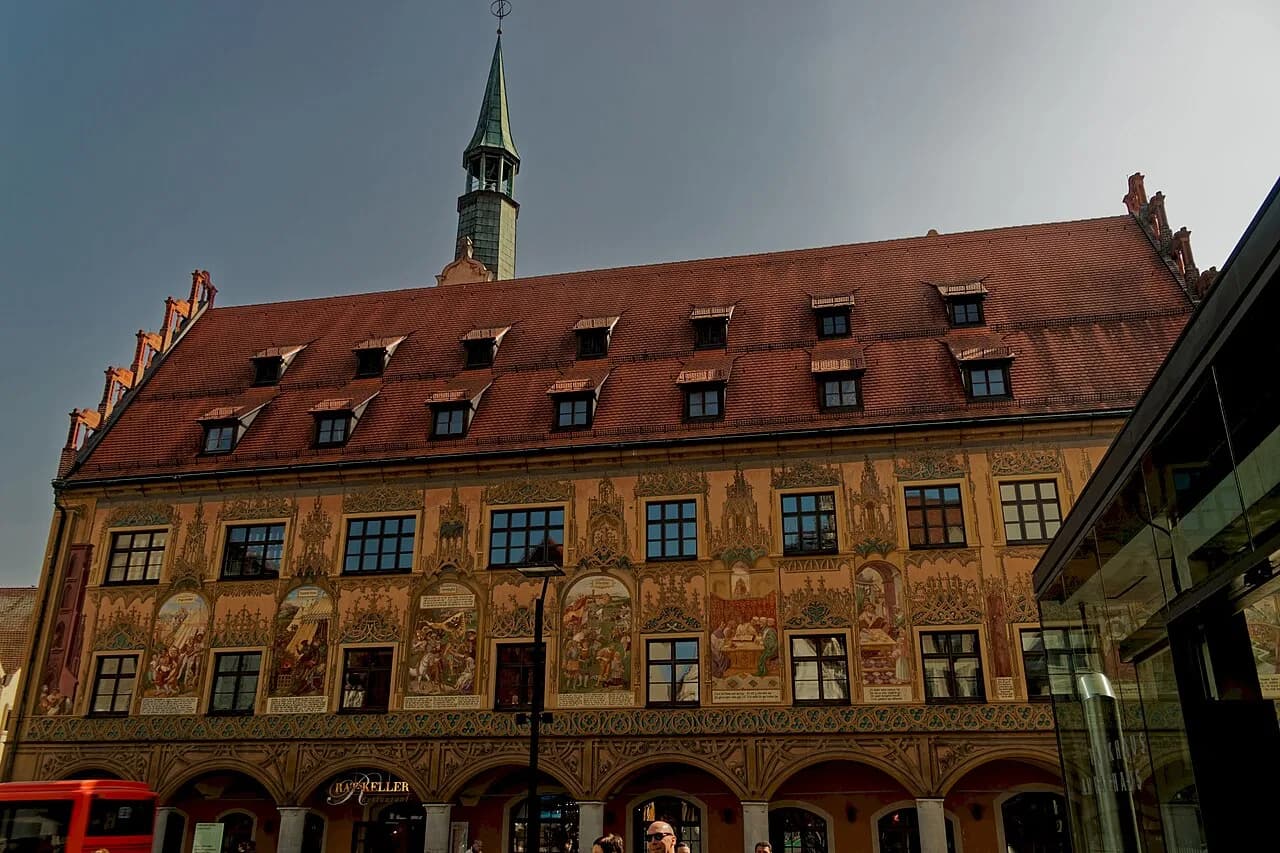
The Ulmer Rathaus stops people mid-step on the Marktplatz, and the reason is usually the same: a facade covered in painted scenes, with an astronomical clock mounted on the wall. Because it is still the seat of the city administration, access for visitors is limited to the entrance hall and the light court, where the interior viewing ends. Knowing that before you arrive saves you from planning a museum visit that does not exist. For the broader set of Ulm sights, see Ulm: Landmark Visitor Guides.
This guide separates what you can see freely on the square from the narrow parts of the building that are publicly accessible. It is at Marktplatz 1, and the surrounding area is a car-free zone open only to delivery vehicles, which makes it easy to slot into a walk through the old town.
What the Ulmer Rathaus Actually Is
The building is a composite rather than a single construction phase. An Ulmer Rathaus overview notes that construction began in the fourteenth century and that the original building dates to 1357, initially serving as a Kauf- und Warenhaus, a trading house rather than an administrative seat.
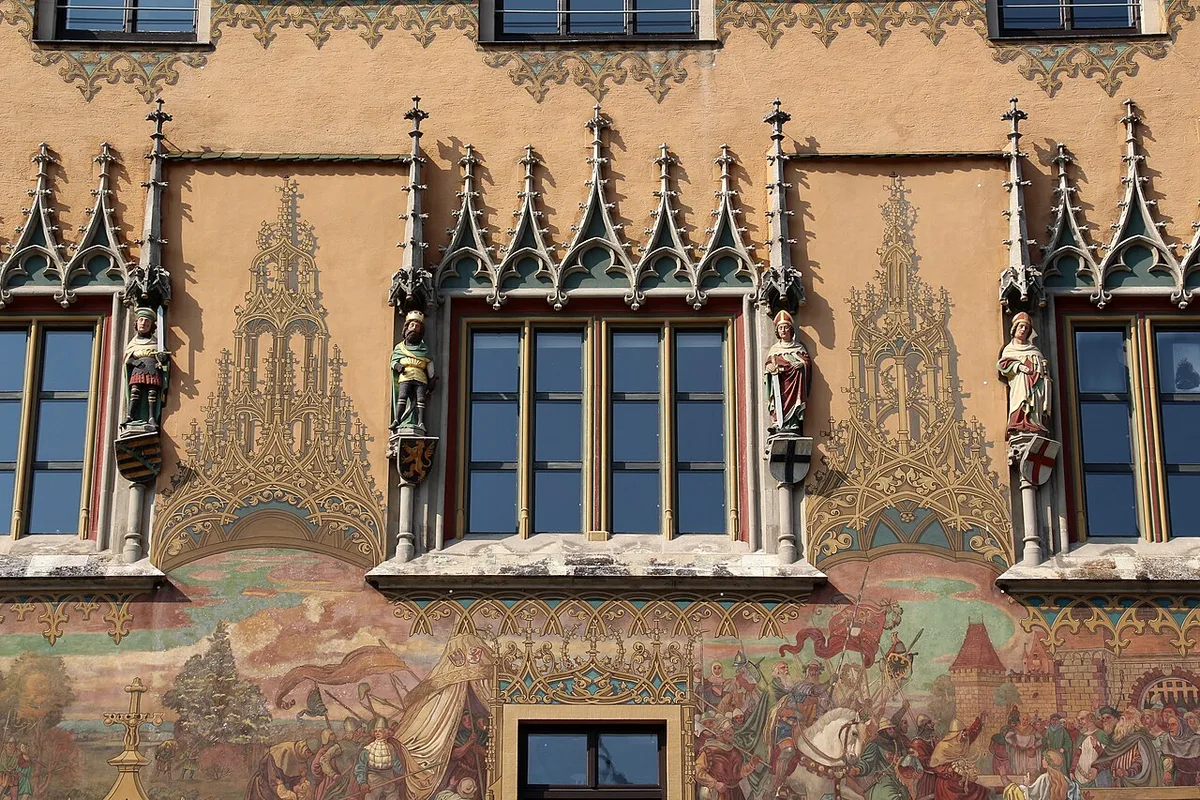
That same source records that the south-eastern main block of today's building followed in 1370, built as the new Kaufhaus or Gewandhaus, and that the name Rathaus is documented only in 1419. It also notes that during the fifteenth century the council chamber gained framed windows on the east and south sides, decorated with figures of the six electors that can still be seen there. The overall style now reads as a mix of late Gothic and early Renaissance elements.
The Painted Facade and What It Shows
The murals cover the facade so thoroughly that it helps to pick out themes instead of trying to absorb every panel. The north side deals mainly with biblical material such as vices, virtues and commandments, alongside figures from Greek and Roman legend, while other walls carry subjects like Justice, Divine Wisdom and Self-Knowledge. Some panels show the Ulmer Schachtel, the boats used for the city's river trade, together with coats of arms of trading partners and a scene of defence against the siege by Emperor Charles IV.
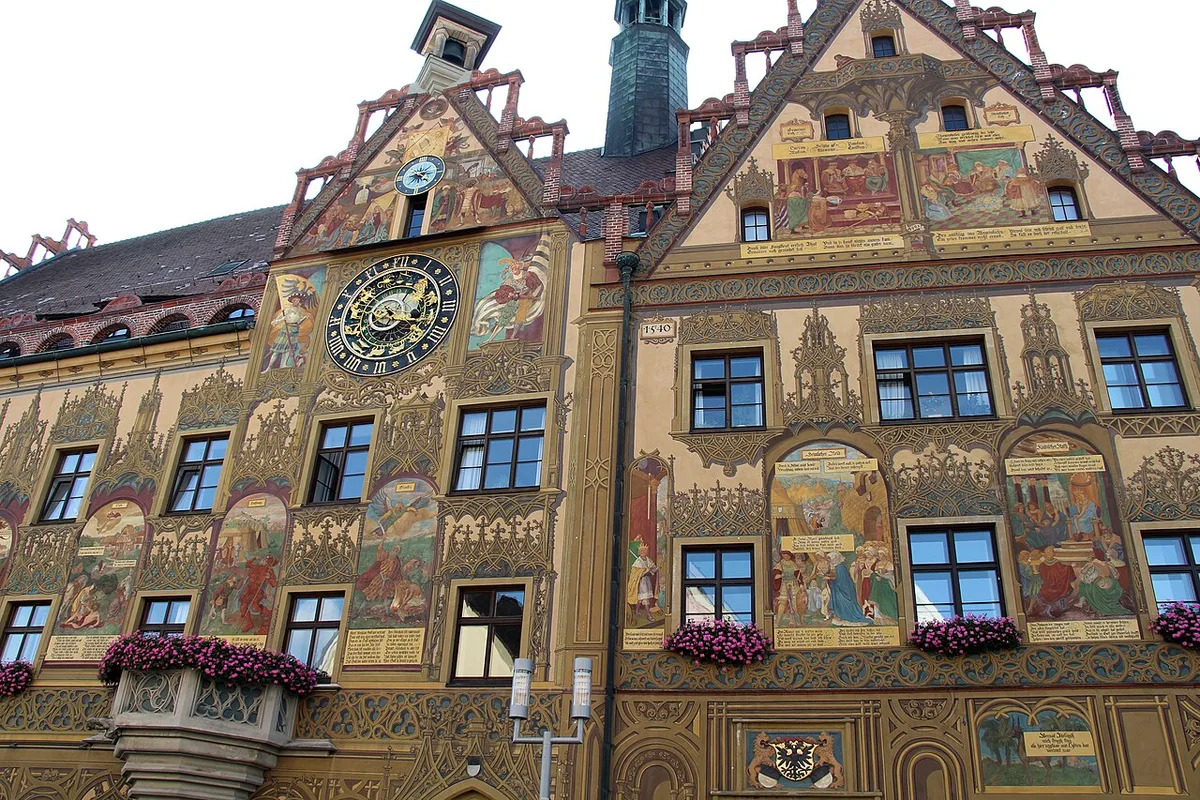
One detail is easy to get wrong: the paint you see is not medieval. Weather damage destroyed most of the original murals, and a travel-guide entry on the Rathaus Ulm states that the painting visible today dates from 1900, when it was restored or recreated in the spirit of the documented parts. Reading the murals as a nineteenth-century reconstruction of a Renaissance programme is more accurate than calling them original.
The Astronomical Clock
The astronomical clock was mounted on the facade around 1520, making it one of the older surviving examples of its type. The Ulmer Rathaus overview adds that it was substantially renewed between 1579 and 1581 by the clockmaker Isaak Habrecht, and that it counts among the oldest surviving astronomical clocks of its kind. Both dates matter because they explain the clock's layered appearance.
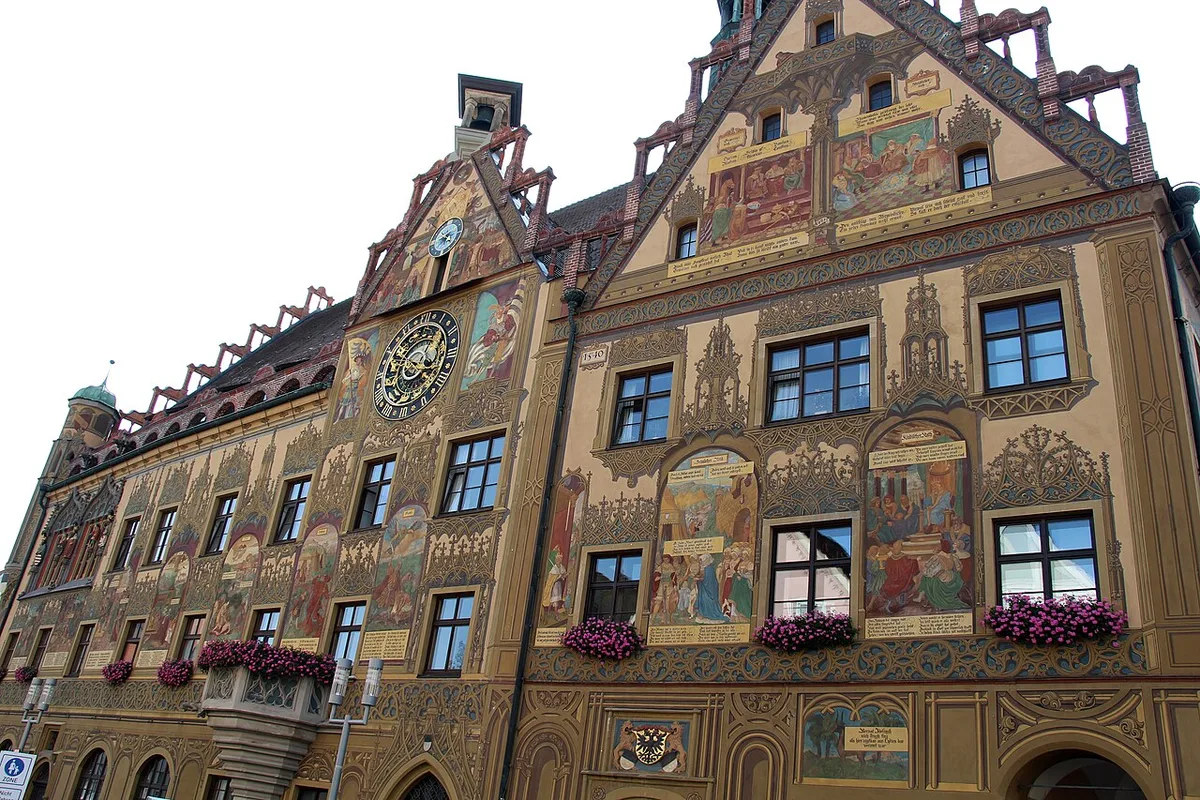
Most visitors cannot read it at a glance, and that is normal rather than a failure on your part. The dial carries zodiac signs and a mix of large Roman and small Arabic numerals, while the hands and moving elements refer to the sun, the moon and other figures. If you want to understand it in depth, treat it as something to study rather than something to glance at, and note that descriptions of its exact number of functions vary between sources and are best not treated as fixed. For wider planning, see Ulm: Itineraries and City Travel Guides.
Inside and Outside: What Access Actually Covers
The crucial distinction is between the square and the building. Because the Rathaus stands on publicly accessible ground, anyone can view the exterior and the murals without paying an entrance fee, at any time of day. What you cannot do is wander through the building: as an active Behördensitz, public access is limited to the entrance hall and the courtyard, and the sightseeing ends there.
Do not expect a museum inside, and do not plan around a paid interior ticket, because no such ticket is established. If you specifically want to step into the lobby and courtyard, check the current access rules before you travel, since administrative buildings can change them. The Ulm tourist information office and the city's own pages are the right places to confirm what is open on the day of your visit.
Guided tours of the interior are a common assumption that is worth treating carefully. The Ulmer Rathaus overview states plainly that no guided tours of the Rathaus itself are offered on site, while tours that include the Rathaus as one stop among several are a different thing entirely. Rather than assuming either way, ask the tourist information office directly whether any interior tour is running during your stay. For the surrounding square and its neighbours, the Münsterplatz and the Rathaus in Ulm page covers the ensemble.
How Much Time to Allow
There is no official visiting duration, so the following is an editorial suggestion rather than a published figure. A facade stop of ten to twenty minutes is realistic if you want to photograph the murals, look at the clock and read a panel or two. That is enough for most visitors, because the building itself cannot be explored beyond the entrance area.
If you want the Rathaus to be part of a proper Marktplatz block, allow an hour or more and combine it with the surrounding square, the Münster and a short walk toward the river quarter. Budgeting half a day exclusively for the Rathaus would leave you with more time than the accessible space can absorb. Pairing it with the old town walk instead keeps the pace sensible.
Where It Sits on the Marktplatz
The Rathaus occupies a central position on the Marktplatz, bounded by the Vestgasse and Kronengasse, and the surrounding zone is car-free apart from delivery vehicles. That makes the approach on foot straightforward and removes the need to watch for traffic while you look up at the facade. Cafés, restaurants and shops sit directly around the square, so a stop here fits naturally into a lunch break.
The immediate contrast is architectural. The Stadtbibliothek, with its glass pyramid form, stands close by and sets up a deliberate dialogue with the painted historic building, while the newer glass facades of the Neue Mitte continue that contrast a short distance away. Seeing the Rathaus against these neighbours is part of what makes the Marktplatz stop worthwhile rather than a quick photo.
What to Combine Nearby
A short walk from the Rathaus brings you to the Museum Ulm and the Kunsthalle Weishaupt, which holds a private collection built around modern art and has a sculpture by Keith Haring standing in front of it. Both are useful counterweights to the historic facades, and each has its own admission arrangements, so check them separately rather than assuming one ticket covers both.
Toward the river, narrow lanes lead into the Fischer- und Gerberviertel with its old timber-framed houses, and on the way you pass the Grabenhäuschen, the small colourful houses built on the town wall from 1610 and along the Henkersgraben from 1634, originally quarters for soldiers defending the city. Around thirty-five of them still stand in a row. The Metzgerturm and the surviving city wall complete a route that turns a single facade stop into a half-day walk.
Mistakes and Trade-Offs
The most common planning error is treating the Rathaus as an all-weather indoor sight. It is not: the experience is essentially an outdoor one, and rain sends you to the surrounding cafés or to a museum instead. Build the visit around a dry window in the day if the facade is your priority.
A second error is assuming the clock will be instantly legible or that a guided interior tour is waiting on site. Neither is a safe assumption, and neither is a reason to skip the building. Come for the murals and the square, keep the interior expectations low, and the visit will match what the building can actually offer.
Plan Your Visit
Treat the Ulmer Rathaus as a facade-first sight: arrive on foot via the car-free zone, look closely at the painted panels, and give the astronomical clock a few minutes rather than a glance. The exterior costs nothing and is available whenever you pass the Marktplatz, while the interior is a working administration and should not be the centre of your plan.
Before travelling, confirm the current access rules for the entrance hall and courtyard through the Ulm tourist information or the city's own pages, since opening arrangements for an administrative building can change. Then build the rest of the day around the Marktplatz, the Münster and the lanes toward the river.
Frequently Asked Questions
Is the Ulmer Rathaus free to visit?
The exterior is free. The building stands on publicly accessible ground, so you can view the painted facade and the astronomical clock without paying anything, at any time. No paid interior ticket is established, and the publicly accessible interior is limited to the entrance hall and courtyard because the building remains the seat of the city administration. For current arrangements, check the city's own pages or the tourist information office before you go.
Can you go inside the Ulmer Rathaus?
Public access is limited to the entrance hall and the courtyard, and the visit ends there. The rest of the building houses the city administration and is not open to general sightseeing. There is also no reliable evidence that on-site guided tours of the interior are offered, so ask the tourist information office directly if an interior tour is important to your trip.
When was the astronomical clock on the Ulmer Rathaus made?
The clock was placed on the facade around 1520, and it was substantially renewed between 1579 and 1581 by the clockmaker Isaak Habrecht. That layered history is one reason the dial is hard to read at a glance, with zodiac signs and a mix of numeral styles. Treat widely repeated counts of its functions with caution, as sources do not agree on the details.