
Ulm's Old Town is compact and largely pedestrianised, with the Minster and Marktplatz as anchors, so a self-guided walk needs no transport and no ticket. The kunsthalle weishaupt, near the Marktplatz, opens Tuesday to Sunday from 11am to 5pm and is closed on Mondays. A suggested half-day covers the core route at a relaxed pace; this is an editorial recommendation, not an official duration.
Ulm sits on the Danube's left bank; Neu-Ulm across the water lies in Bavaria, so the river doubles as a state border. This route stays in the historic core and treats the bridge crossing as an optional extension rather than a required leg.
Why Ulm's Old Town Suits a Self-Guided Walk
The centre suits a do-it-yourself route because the key sites cluster tightly: Ulm Minster, the Rathaus at Marktplatz, and the canal-side quarters are all within a short, level stroll of each other. You will not cover much ground, but you will stop often, so the walk is about pacing rather than distance.
The Old Town is on the left bank of the Danube and is full of pedestrian streets, which makes navigation simple. The Minster is the obvious landmark to orient by, with the Rathaus a short walk from Münsterplatz. For a broader view of how this walk fits a longer stay, the Ulm: Itineraries and City Travel Guides page collects the city's major options.
Before You Set Off: Free Exteriors Versus Ticketed Interiors
Settle what costs nothing and what does not. The streets, the Minster's exterior, the Rathaus facade and astronomical clock, and the canal quarters are free to view. The Minster tower climb is a separate paid experience, so decide in advance whether to include it or keep the walk at ground level. To confirm current entry details, start with the Ulm: Landmark Visitor Guides hub rather than relying on old third-party posts.
Order matters, because the Rathaus interior is only reachable during weekday office hours. The official visitor information for the Ulmer Rathaus lists the weekday office hours during which that interior access is possible, so check the current times before building your day around it. If you want to step inside its entrance hall and light court, walk the route on a weekday morning; at the weekend, plan for an exterior-only stop.
Stop 1: Ulm Minster and Münsterplatz
Ulm Minster is the walk's natural opening landmark, a Gothic building whose spire reaches about 161.5 metres and is described as the tallest church steeple in the world. The exterior alone justifies the stop: carved portals, buttresses and the sheer scale of the facade reward a slow circuit of Münsterplatz, where modern buildings sit alongside the historic backdrop.
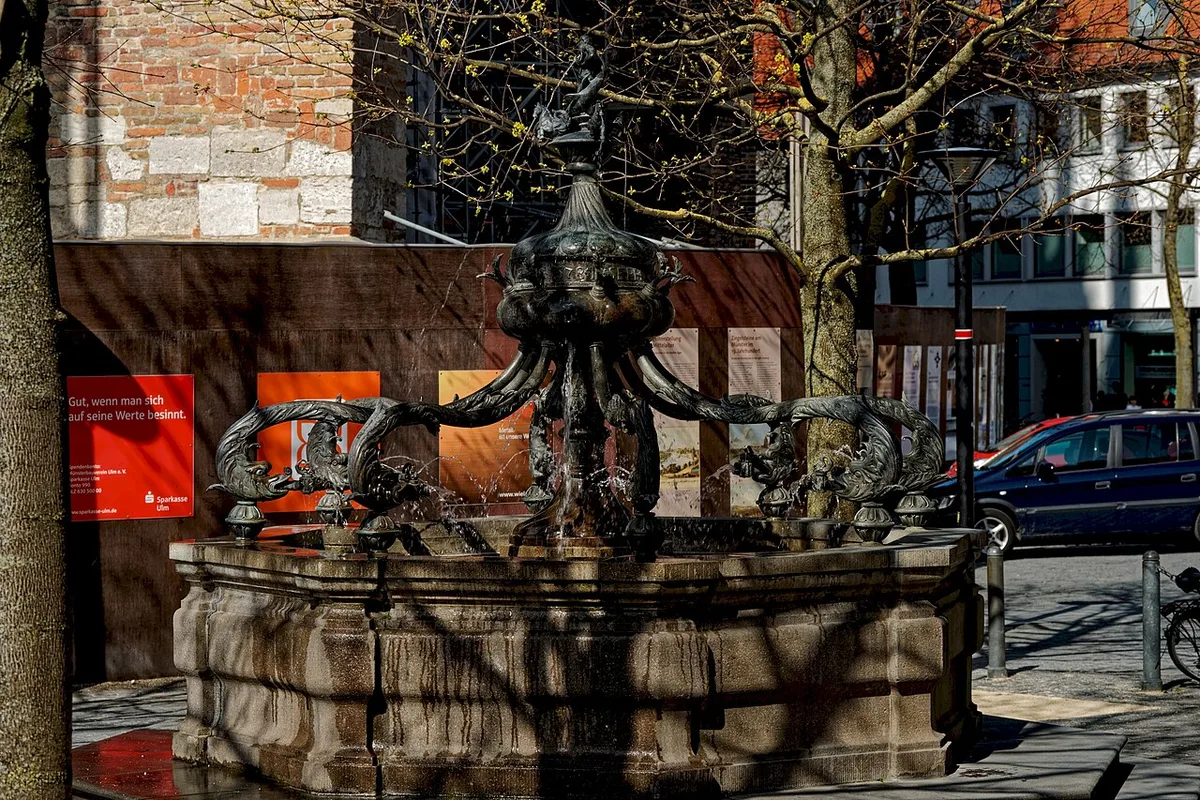
Inside, the nave is free to enter, while the tower climb is a separate paid element involving narrow, steep stairways; the tower can close earlier than the church itself. The climb is worth considering for rooftop views, but it adds significant time and effort to the day. For what a visit involves, the Ulm Minster visitor guide covers the building's history and the practical choices around it.
Stop 2: Marktplatz and the Painted Rathaus
From Münsterplatz it is a short walk to the Marktplatz, where the Rathaus presents one of the most photographed facades in the city. The building's history reaches back to the 14th century, with elaborate exterior paintings and an astronomical clock added around 1520. The murals depict virtues, commandments and vices, and the version you see today was largely restored in 1900.
What surprises many visitors is how little of the building is open to the public: it remains a working seat of administration, and visitors reach only the entrance hall and the light court before the visit ends. Outside office hours, the facade and clock are still fully visible and free to admire from the square.
Practical Constraint: Plan the Rathaus Around Weekdays
Because the Rathaus interior follows administrative office hours, its opening pattern is narrower than a museum's and does not run into the evening or across the whole weekend. Weekday mornings are the most reliable window, while Friday access ends at midday. If your only free day in Ulm is a Saturday or Sunday, treat the Rathaus as an exterior stop and put your indoor time elsewhere.
Stop 3: Museum Ulm and Kunsthalle Weishaupt
Near the Marktplatz, on Hans-und-Sophie-Scholl-Platz, the Museum Ulm and the kunsthalle weishaupt sit close together, but they are separate institutions and should not be treated as one ticket or one visit. Museum Ulm has been closed for renovation since April 2023, and parts of its collection have been shown at the kunsthalle while the work continues. The Lion-Man display is documented as running at the kunsthalle until 4 October 2026, after which it is due to move back to the refurbished museum.
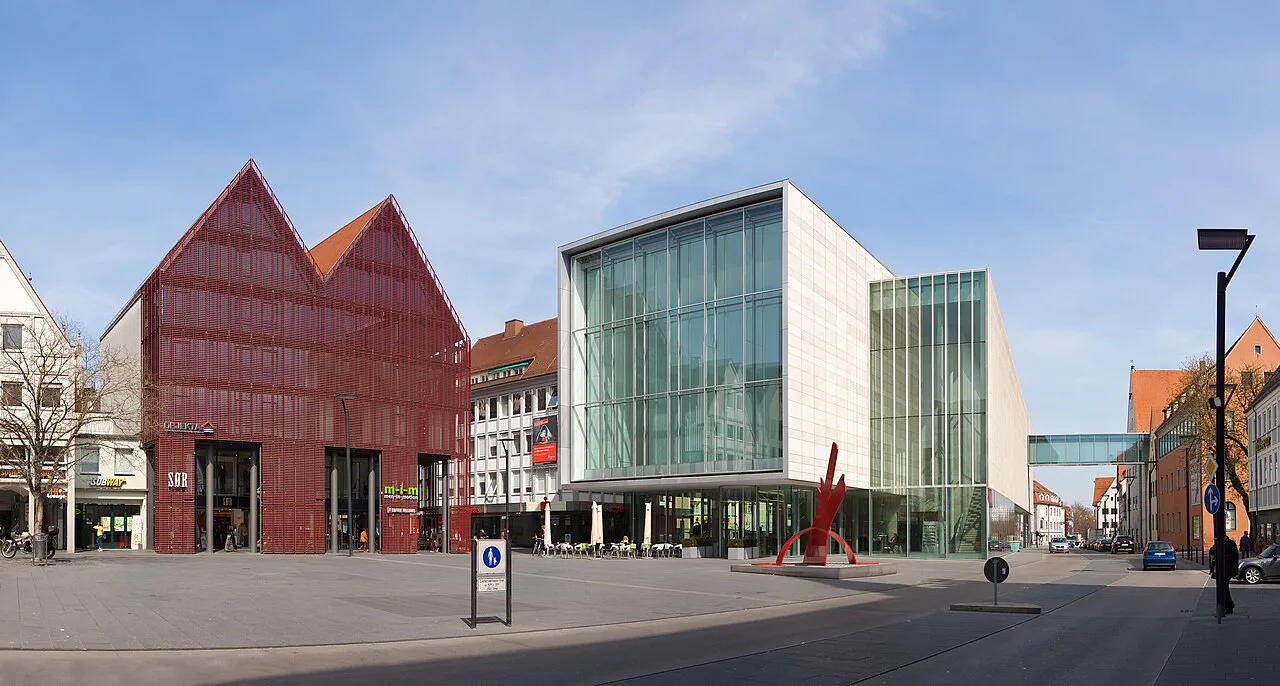
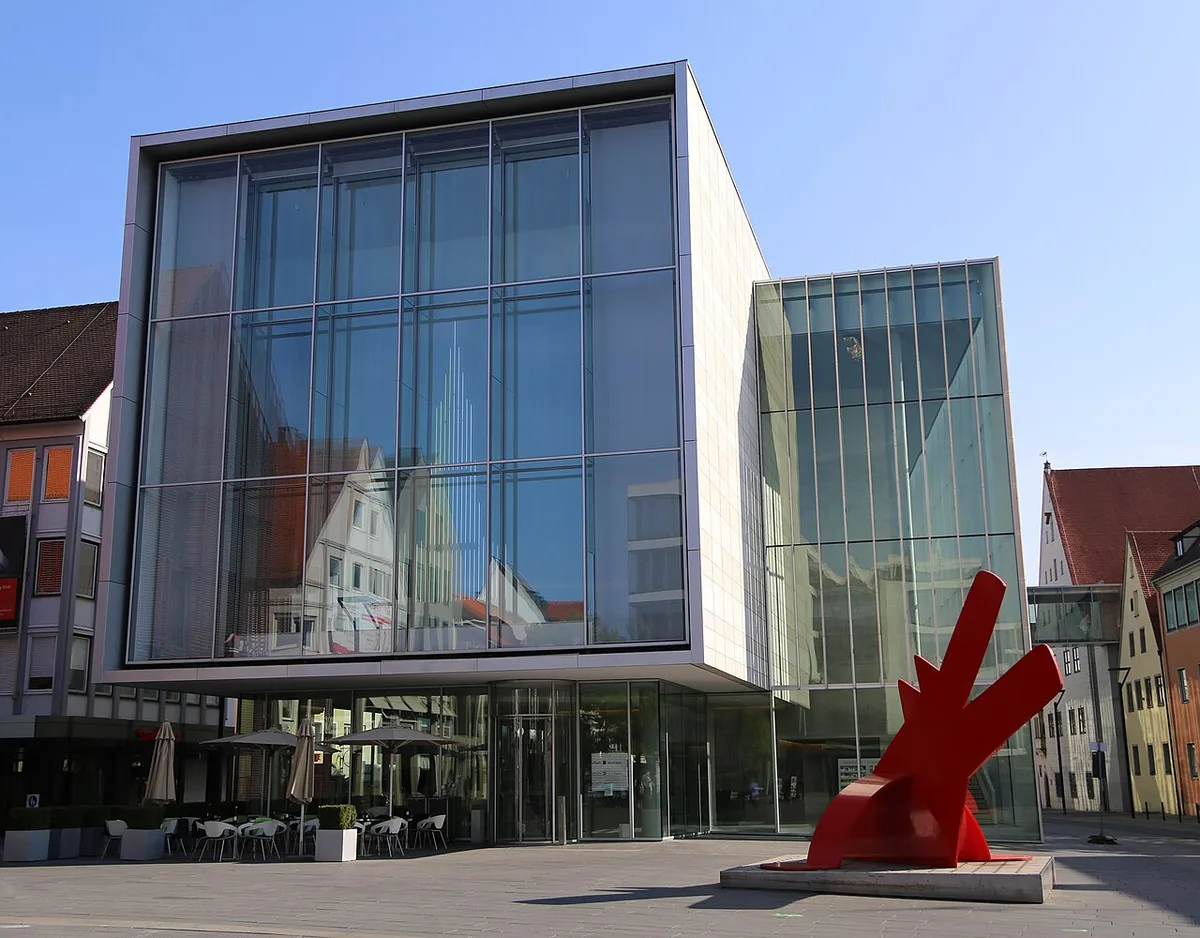
The kunsthalle weishaupt is a private museum built around the Weishaupt collection of modern and contemporary art, with works by figures such as Josef Albers, Max Bill, Mark Rothko and Andy Warhol. It opens Tuesday to Sunday from 11am to 5pm and is closed on Mondays, so a Monday walk skips it entirely. Its exhibition Wenn Farben Formen finden runs until 8 November 2026, and the following show opens on 20 November 2026, giving you two clear calendar hooks to check.
Stop 4: Fischerviertel and the Blau Canal
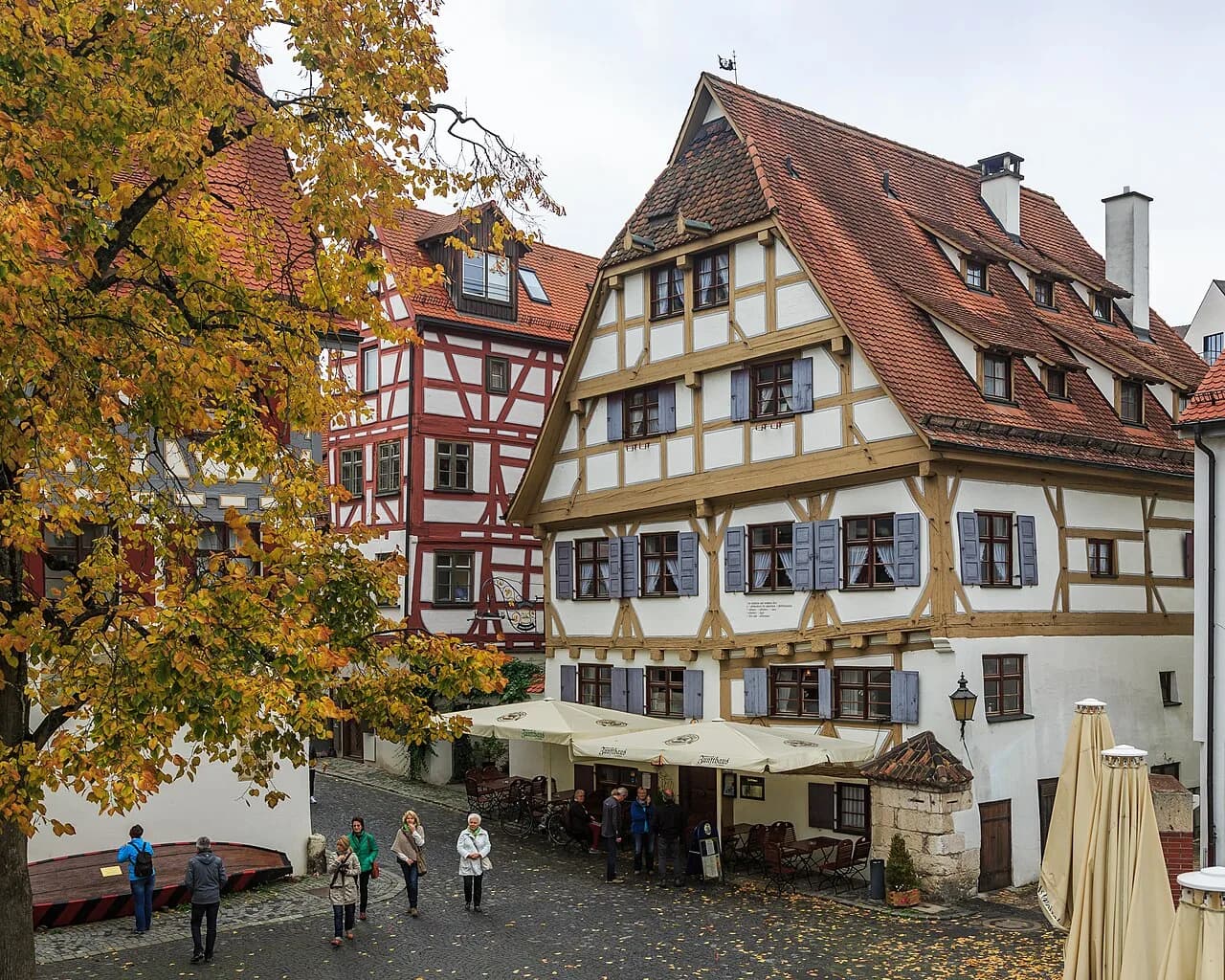
The Fischerviertel is where the walk changes character, moving from squares and facades into narrow lanes, footbridges and half-timbered houses along the Blau canal. This was historically a fishermen's and craftsmen's quarter, and its restored buildings, small bridges and waterside frontages reward unhurried wandering. The Schiefes Haus, a famously crooked building, and the medieval Metzgerturm are the two orientation points most visitors use.
Treat this quarter as the pacing hinge of the route rather than a quick photo stop. The lanes are tight and the surfaces are cobbled, so comfortable shoes matter more here than anywhere else on the walk. If you only have a short visit, the Fischerviertel is the section most worth slowing down in.
Stop 5: Gerberviertel and the Old Town Wall
The Gerberviertel connects naturally to the Fischerviertel and continues the same riverside, half-timbered atmosphere on the way toward the old town wall. The wall, erected in the 15th century, runs above the Danube and gives you a raised path with views back over the rooftops and out across the water. Landmarks like the Rosengarten and the Metzgerturm help you keep your bearings along this stretch.
This is also where you can see the small Grabenhäuschen, the colourful little houses built onto the old fortification wall during the 17th century. They are easy to miss if you are moving quickly, so keep an eye out as you follow the ramparts. The path here is straightforward, and the river stays on your side as a constant reference point.
Stop 6: The Danube Riverfront and Donauwiese
Finish the route on the Danube, where the Donauwiese and the riverside paths open up views across to Neu-Ulm on the Bavarian bank. This is the natural place to sit, rest and take stock rather than push on to another sight. The river also explains the city's history: Ulm's prosperity as a Free Imperial City depended on trade along this waterway.
If you have energy left, crossing the bridge into Neu-Ulm is a clear change of scene, since you move into Bavaria and a different street layout. It is best treated as a deliberate extension rather than part of the core walk. Otherwise, the riverfront is a satisfying end point and close enough to the centre to walk back easily.
How Long to Allow and How to Pace the Route
A suggested half-day covers the core route comfortably: Minster exterior, Marktplatz and Rathaus facade, the Fischerviertel, the wall section and the riverfront. This is a suggestion, not an official duration, and it assumes a relaxed pace with time for photos. Add roughly an hour if you climb the Minster tower, and another hour or more if you visit the kunsthalle weishaupt.
The most common pacing mistake is treating the compact centre as a checklist sprint. Cobblestones slow you down more than the map suggests, and the canal lanes in the Fischerviertel are not designed for fast movement. Starting late in the day also costs you options, because the Rathaus interior and the kunsthalle both follow daytime hours.
Who This Walk Suits and How to Break It Up
This route works well for first-time visitors, for travellers arriving by train at Ulm Hauptbahnhof, and for anyone connecting Ulm with Munich or Stuttgart on a longer trip. It also suits independent walkers who prefer to set their own pace rather than follow a group. If you want a more structured day, the 1 day in Ulm itinerary offers a comparable but differently weighted sequence of stops.
If the full loop feels long, split it in two: Minster and Marktplatz in one session, then the Fischerviertel, wall and riverfront in another. That also lets you place the Rathaus interior on a weekday morning without distorting the rest of the route. With an extra day available, a 2 days in Ulm itinerary can absorb a museum visit or a trip out of town.
Where the Walk Fits in a Longer Ulm Stay
Once the Old Town walk is done, Ulm offers several ways to extend your stay. Wiblingen Abbey, with its rococo library hall, and the Museum of Bread Culture are both established stops beyond the immediate centre. A day trip to Blaubeuren and the Blautopf spring is another common addition, and the 3 days in Ulm itinerary shows how those pieces fit together.
Plan Your Visit
The strongest version of this Ulm Old Town walk keeps the order simple: Minster first, Rathaus while it is open, then the canal quarters and the river. Check the Rathaus office hours and the kunsthalle weishaupt calendar before you set out, since those two constraints decide whether your chosen day works. For everything else, the official Ulm tourism site is the place to confirm current details.
Frequently Asked Questions
Is Ulm Old Town easy to walk around?
Yes. The historic centre is compact and largely pedestrianised, with the Minster, Marktplatz and canal quarters within a short walk of each other. The main caveats are cobbled surfaces and the need to plan around weekday-only interior access at the Rathaus.
How long does a self-guided Ulm Old Town walk take?
A suggested half-day covers the core route at a relaxed pace. Add extra time if you climb the Minster tower or visit the kunsthalle weishaupt, both of which are optional additions rather than required stops.
Is Ulm Minster free to enter?
The nave is free to enter, while the tower climb is a separate paid experience with narrow, steep stairs. Check the Minster's own published information for current access details before you go.
Can you go inside Ulm's Rathaus?
Only partially. It is still an administration building, so visitors reach just the entrance hall and the light court during weekday office hours. Outside those times, the painted facade and astronomical clock remain visible from the Marktplatz.
Is the kunsthalle weishaupt open on Mondays?
No. The kunsthalle weishaupt opens Tuesday to Sunday from 11am to 5pm and is closed on Mondays, so a Monday walk skips it. Its exhibition schedule is published on its own site.


