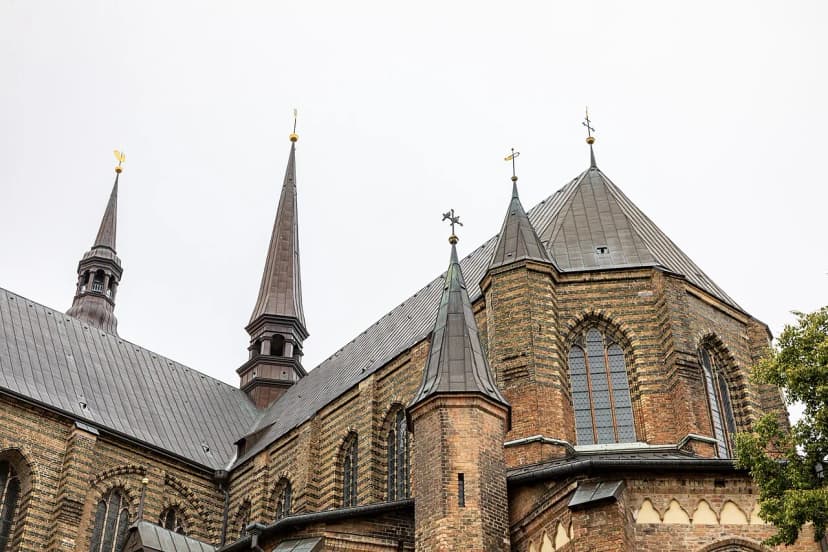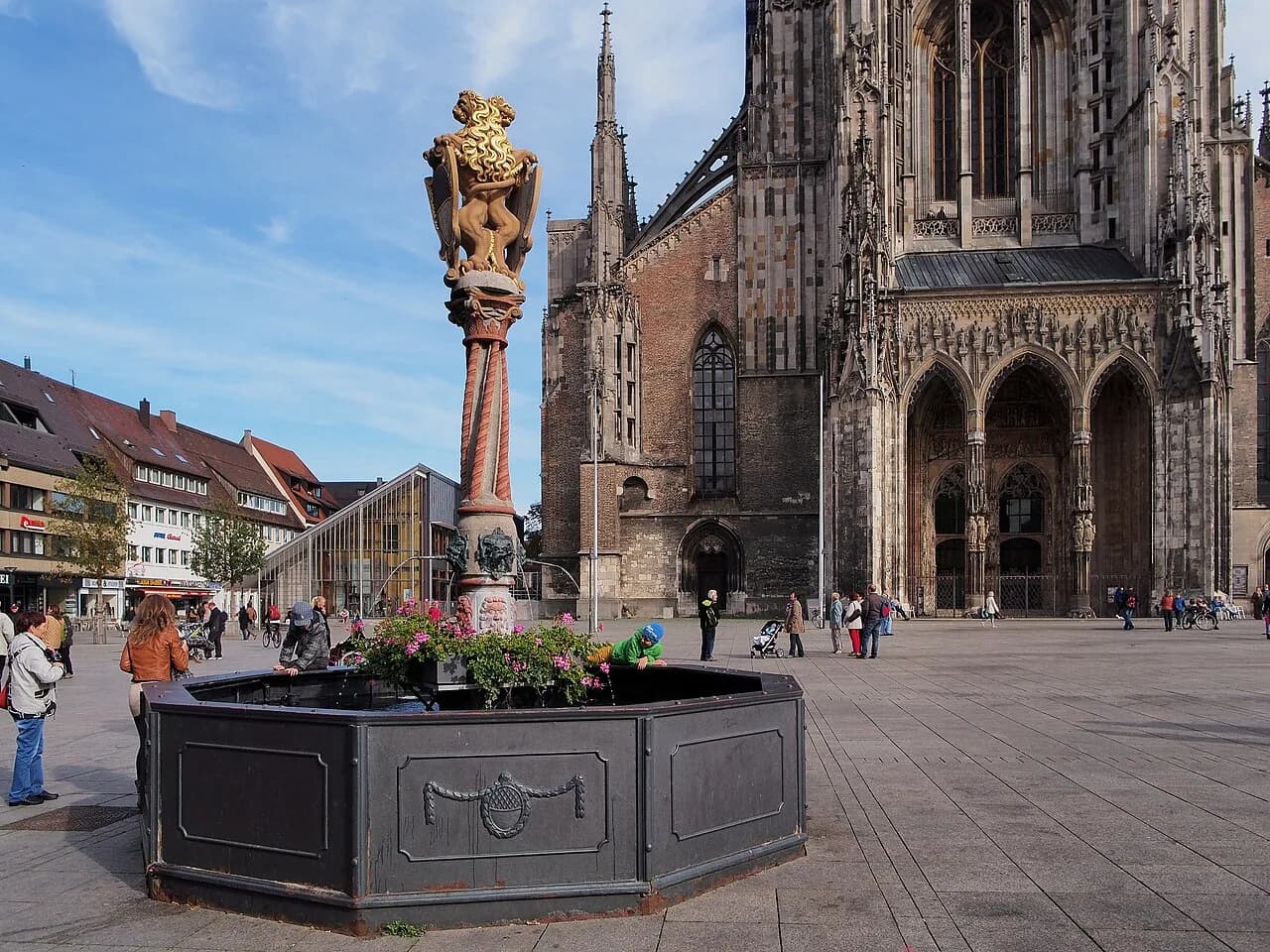
Ulm's historic centre groups its best-known sights tightly together, and the tourism board's own listing makes that concrete: the minster's address is Münsterplatz 1, while the Rathaus is listed at Marktplatz 1, a short walk away. Treat the pair as one loop around the old town rather than two separate outings. For the wider set of sights, see Ulm: Landmark Visitor Guides, and for longer stays compare Ulm: Itineraries and City Travel Guides.
The useful distinction is between surfaces you simply look at and interiors that are ticketed or restricted. Tourismus Ulm/Neu-Ulm gives the minster's address as Münsterplatz 1, 89073 Ulm, and its page separates church opening times from tower-climb times and advertises tickets through the minster's own webshop. The Rathaus is still an administrative building, so its painted facade is the main tourist draw rather than a fully open interior.
Münsterplatz: The Square That Anchors the Old Town
Münsterplatz is the open space around Ulm Minster, and the tourism board locates that minster at Münsterplatz 1, 89073 Ulm. Because the church fills one side of the square, the space reads as an approach to the building rather than a destination in itself. Arriving here first gives you a natural orientation point for the rest of the centre, and it costs nothing to walk through.
Germany's national tourist board treats Münsterplatz as a place where a historical backdrop meets modern architecture, which matches how the surrounding streets actually feel. Older buildings sit close to contemporary structures, and the Stadthaus at Münsterplatz 50 is the clearest local example of that contrast. If you want the juxtaposition in a single view, stand back from the minster and look across the square rather than straight up at the tower.
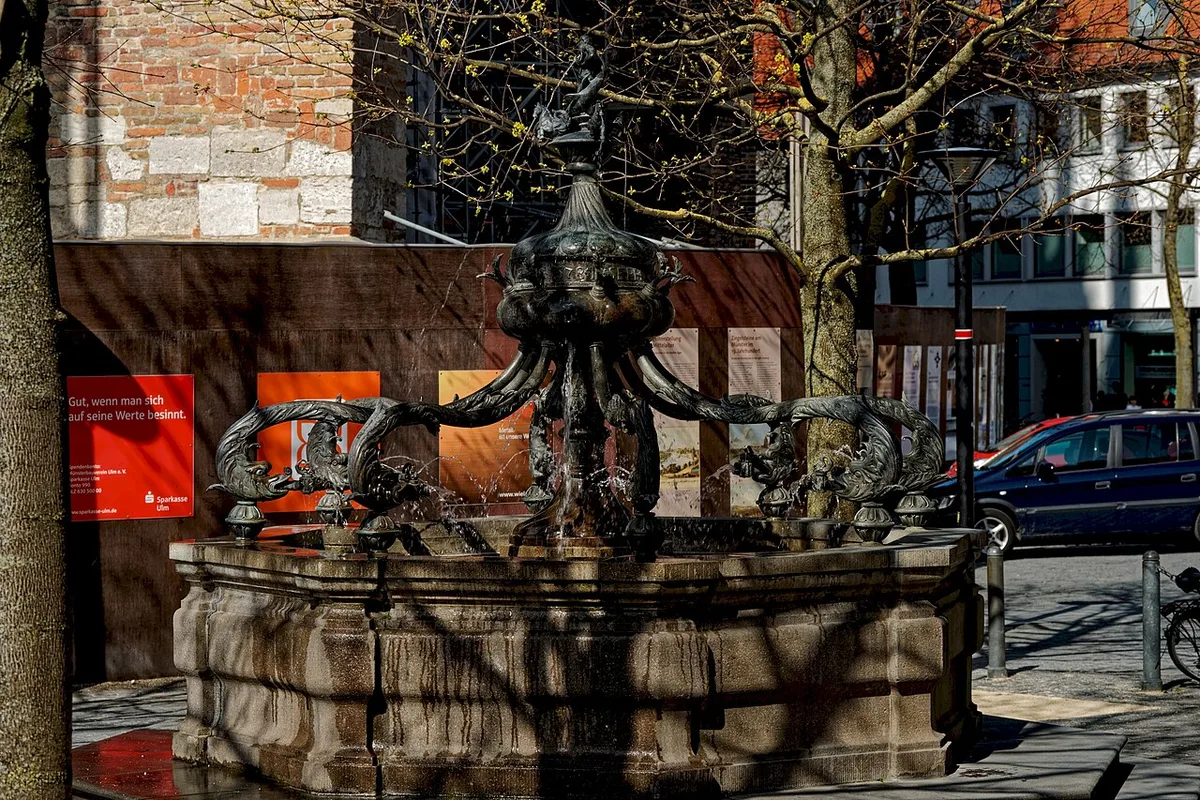
Walking the square takes minutes, so it works as a flexible slot in your day. Local route notes mention a fountain on the square that gives a lower vantage point for photographs when the facade feels overwhelming up close. Plan to pass through more than once rather than treating it as a single stop.
The Minster as the Square's Dominant Building
The minster is the reason many visitors reach Münsterplatz at all. Tourismus Ulm/Neu-Ulm states that its tower rises 161.53 metres, making it the tallest church tower in Germany, and that the foundation stone was laid on 30 June 1377. Construction was halted in 1543 for lack of money, resumed only in the mid-nineteenth century, and work on the main tower was finished in 1890.
The funding story is what makes the building unusual among great European churches. The same source notes that the minster was financed entirely by the citizens of the city rather than by church or secular rulers, which explains why it is so tightly identified with Ulm itself. Knowing that makes the sheer scale of the project easier to appreciate from underneath.
Inside, the same page points to works including fifteenth-century choir stalls, the pulpit, the choir altar, and the Besserer and Neithart chapels. The tourism board also flags that renovation work is partly closing the main nave, so a visit may coincide with scaffolding or a shortened route through the church. Check the minster's own site or the tourism board shortly before you travel if the interior is your priority.
Free Versus Paid: Church Interior and Tower Ticket
The minster is a working church, and the tourism board splits church opening times from tower-climb times, which is the clearest signal that these are two different things. Church access follows one seasonal pattern and the ascent another, so arriving during church hours does not automatically mean the stairs are open. Decide which of the two you actually want before building a schedule around it.
For the climb, the tourism board describes two stages: a first platform at 70 metres and a further ascent to a second platform at 102 metres, with tickets sold through the minster's own webshop. Prices and opening windows change between seasons and years, so treat any figure quoted on a third-party blog as unverified and confirm current ticket terms on the operator's own sales page on the day you plan to climb. Further detail on the building is gathered in the Ulm Minster visitor guide.
A useful way to think about it: the square and the minster's exterior are the free part of the visit, the church interior is normally free but subject to its own hours and any renovation closures, and the tower is a separate paid experience. Keeping those three layers apart prevents the common mistake of budgeting for one ticket and expecting it to cover everything here. If you are travelling with people who will not climb, they still have a complete visit without buying anything.
The Tower Ascent: Two Platforms and a Suggested Buffer
The climb is not a single uninterrupted staircase to the top. According to Tourismus Ulm/Neu-Ulm, the ascent reaches a first platform at 70 metres and a second at 102 metres. That wider window for the first platform means you can still get a view even if the upper stage happens to be closed when you arrive. For the full visitor context, see Visiting Ulm Minster.
As an editorial suggestion rather than an official figure, allow roughly an hour for the whole tower episode: queuing, climbing, time on the platform and coming back down. The tourism board references about 30 minutes for the ascent itself, which leaves little room for lingering, so add buffer if you want photographs from the top. Build that buffer in before you commit to a timed lunch or a museum slot.
Medieval tower stairs are typically narrow and steep, and the experience is more physical than comfortable. Anyone with mobility limitations, a fear of heights, or very young children should weigh the decision carefully rather than buying by default; asking staff at the entrance about conditions on the day is a sensible alternative to guessing.
The Rathaus Facade: Murals and the Astronomical Clock
The Rathaus sits on Marktplatz rather than Münsterplatz, and its listed address is Marktplatz 1, 89073 Ulm, which makes it a short walk from the minster rather than the same square. Its defining feature is exterior: richly painted walls and an astronomical clock that draws a crowd at street level. Further visitor details appear in Ulmer Rathaus.
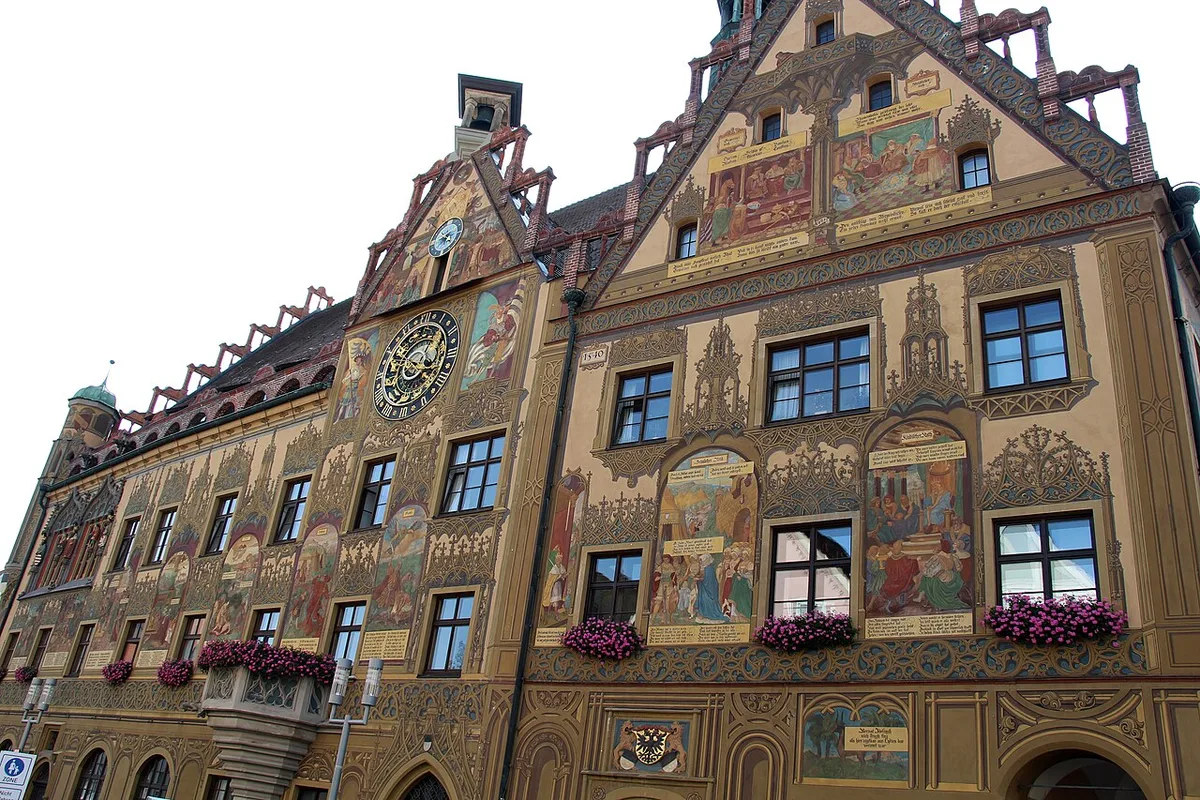
The building is not one continuous construction. Published descriptions note an oldest section dating to the fourteenth century, first use of the name Rathaus in 1419, and Renaissance-era elements, with the visible wall painting largely a restoration of around 1900 after earlier weathering damage. The astronomical clock is generally placed around 1520, with a later overhaul by the clockmaker Isaak Habrecht between 1579 and 1581.
The clock repays more than a glance, because it carries several moving elements rather than a simple dial, and it rewards a few minutes of patient watching. The exterior is free to view at any hour because the building stands on a publicly accessible square, which is also why the Rathaus and the minster are normally paired on the same walk. Give it several minutes rather than a snapshot and the facade starts to read as a programme of painted themes rather than decoration.
For a sense of how the Rathaus fits a wider route, the Ulm Old Town walk keeps the town hall, the minster and the lanes between them in one continuous loop, which is the most natural way to see both without retracing your steps. Add a second paid stop only if you have time to spare.
Inside the Rathaus: Hall and Courtyard Only
The Rathaus remains an administrative building, and that single fact shapes what a tourist can expect. Published visitor information states that tourist access is limited to the entrance hall and the courtyard, and that guided tours of the building itself are not offered on site. Approach it as a facade-first sight rather than an interior attraction.
The same source notes that a replica of Albrecht Ludwig Berblinger's flying apparatus is displayed in the stairwell area, connecting the building to one of Ulm's best-known local stories. Because the hall and courtyard are shared with everyday administrative use, access arrangements can be affected by official business; if entering the hall matters to you, check with the city or the tourist information office on the day rather than assuming a fixed routine.
Exterior viewing carries no such constraints, so you can study the murals whenever you pass. That is the practical reason the Rathaus is easy to combine with a minster visit even on a short trip, and why it makes sense to budget indoor time elsewhere and treat this one as a street-level stop.
Nearby Within a Short Walk of the Square
The Stadthaus at Münsterplatz 50 is the most immediate companion to the minster, a modern building sitting directly on the square. The kunsthalle weishaupt at Hans-und-Sophie-Scholl-Platz 1 holds a private collection of modern and contemporary art and publishes its own opening days and ticket information, with Tuesday to Sunday opening stated on both its own site and the Landesstelle listing for museums in Baden-Württemberg. These interiors are separate, ticketed institutions, so do not assume one entry covers both or that a minster ticket includes either.
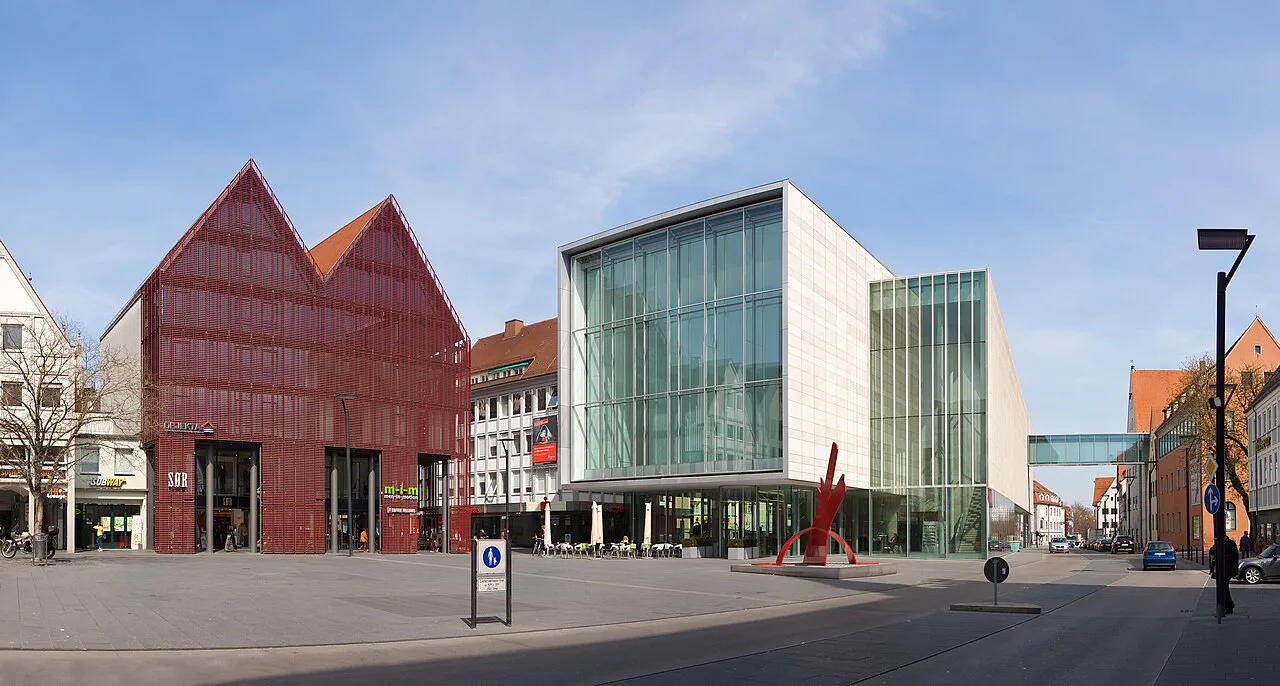
The wider old town adds the museum quarter around Marktplatz, the Metzgerturm and Gänsturm towers, and the riverside lanes toward the Fischerviertel. The tourism board lists further options including the Danube Swabian Centre, the local history museum at Weinhof 12, and Museum Ulm, which it says has been closed for renovation since April 2023 with parts of its programme relocated during that period. Each of these has its own status and ticket, so confirm current arrangements before building them into a plan. Further visitor details appear in Ulmer Münster | Tourismus Ulm/Neu-Ulm.
If you want to keep walking, the Fischerviertel with its half-timbered houses and canal-side lanes is the natural extension, and local route notes trace a mapped loop linking the Rathaus and the minster through that part of town. A route of that shape spreads foot traffic away from the busiest point on the square instead of funnelling everyone through one street.
Suggested Pacing for a Half Day
Start on Münsterplatz, look at the minster from outside, and decide about the tower while you are standing there rather than committing in advance. If you climb, take that slot early, because a narrower window for the upper platform plus a queue can eat into the rest of your morning. If you skip it, the half day becomes a relaxed walk instead of a timed exercise.
From the square, walk to Marktplatz for the Rathaus facade, allowing real time to read the wall paintings and watch the clock rather than treating it as a photo stop. Then continue into the surrounding lanes or down toward the river, depending on how much energy you have left. This order avoids retracing the same streets twice in a small centre.
An afternoon of free walking plus one paid tower ticket is a realistic half-day shape for most visitors. If you add a museum interior as well, treat it as a separate block of time and a separate ticket, and pick only one so the day does not become a checklist. The compact geography makes it easy to leave without feeling you missed something structural.
Terrain, Timing and Seasonal Differences
The centre is walkable and largely traffic-free around Marktplatz, but the surface is old and uneven and the tower involves stairs. Plan footwear accordingly and do not over-schedule if anyone in your group finds cobbles or staircases difficult; the walking itself is part of how long the visit takes.
Season matters because church hours and tower hours follow different patterns, and the upper platform stage has a narrower daily window than the lower one. The tourism board's listing shows how those windows shift between the warmer and colder halves of the year, so a spring visit and a winter visit are not interchangeable. Confirm current times close to your travel date rather than relying on a guide written in a previous year.
Because the minster has been subject to renovation work that can partly close the main nave, both seasons carry some risk of a reduced interior route. Checking the operator's page shortly before you travel is the simplest safeguard against arriving to a closed staircase or a screened-off section, since that is the kind of detail no static guide can promise for a future date.
Plan Your Visit
The efficient way to see Münsterplatz and the Rathaus is to treat the square and the painted facade as your free, flexible backbone and the tower as the one optional paid decision. That framing matches how the two sites actually work: one is a square around a working church, the other an administrative building whose exterior is the attraction.
Before you travel, confirm tower ticket terms, church and tower opening windows, and any renovation closures on the operator's own pages, since those are the details most likely to change and the ones no general guide can guarantee. Then keep the plan loose enough to swap the tower for a longer old-town walk if the timing does not suit.
Frequently Asked Questions
Is Münsterplatz free to visit?
Yes. Münsterplatz is an open square around Ulm Minster, and walking it, looking at the building from outside and passing through cost nothing. The paid element is the tower ascent, which is sold separately, and any museum interior nearby has its own ticket. Whether you spend anything therefore depends on whether you climb rather than on entering the square.
Can you go inside the Ulm Rathaus?
Only in a limited way. The Rathaus is still an administrative building, and published visitor information says tourist access is restricted to the entrance hall and the courtyard, with no guided tours of the building offered on site. Exterior viewing on Marktplatz is always possible. Because the building is in active official use, check the city's own information or ask at the tourist office before relying on entering the hall.
How long does the Münster tower climb take from Münsterplatz?
There is no official duration, but the tourism board references roughly 30 minutes for the ascent itself, which leaves little time on the platform. As an editorial suggestion, allow about an hour for queuing, climbing, viewing and coming back down. Add extra time if you want to reach the upper platform, since that stage has a narrower daily window than the first one.
What is there to see on Münsterplatz besides the minster?
The square works mainly as the setting for the minster, but the Stadthaus at Münsterplatz 50 sits directly on it and contrasts sharply with the Gothic church. The surrounding streets hold the museum quarter around Marktplatz, the old town towers and the riverside lanes toward the Fischerviertel. A fountain on the square gives a different angle for looking back at the facade.
Is the Rathaus facade on Marktplatz or Münsterplatz?
It is on Marktplatz, not on Münsterplatz, and its address is given as Marktplatz 1. That is why the two sights are usually combined as a short walk rather than treated as one location. The minster stands on Münsterplatz at number 1, a few minutes away.
How long should I allow for Münsterplatz and the Rathaus together?
Without climbing the tower, a half day is generous: the square, the minster exterior and the Rathaus facade can be covered comfortably in a couple of hours including pauses. Add roughly an hour if you climb, and more if you include a museum interior, which is a separate ticketed visit. Keeping the plan to one paid element per half day keeps the pace sensible.