
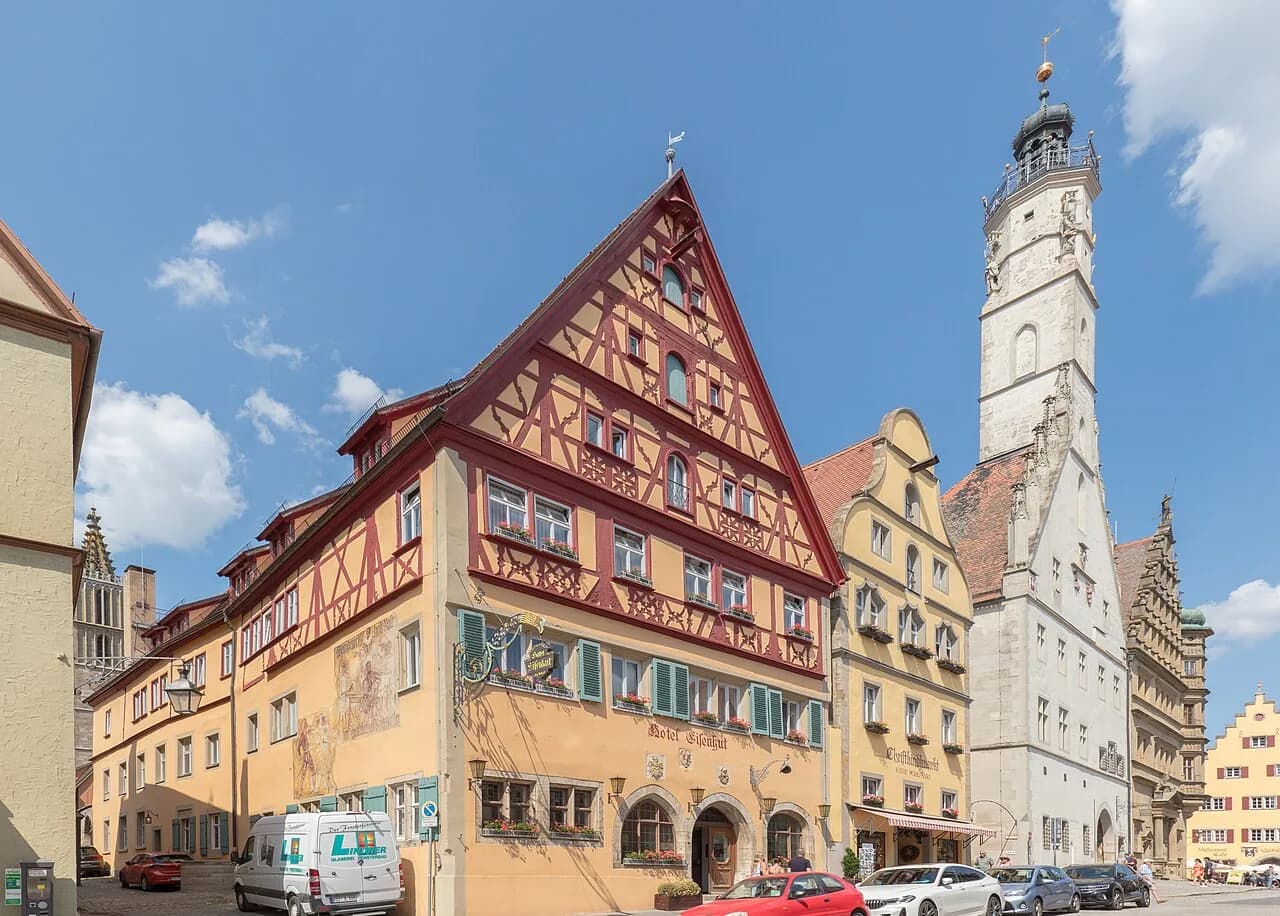
Rothenburg ob der Tauber is one of Germany's best-preserved medieval towns, and the tourism office describes it as a place for strolling, marvelling and enjoying, with the Plönlein, the walkable town wall, Marktplatz, St. Jakob's Church and Burgtor among its signature sights. The office also notes the town has 42 towers and six gates, more gate architecture than any single walk covers well. This route is a suggested order, not an official trail: it links squares and gates so you can recover your bearings even if you wander off it.
One early decision sets the tone. The official city tourism site presents Rothenburg as a town of history, culture, museums and guided tours rather than a single ticketed attraction, which means streets, squares and the wall are experienced on foot while interiors such as St. Jakob's and the Medieval Crime Museum are separate paid visits. That distinction matters if you are deciding whether to book a guided walking tour or simply walk. The tourism service lists its own opening hours and contact details, so treat any plan as adjustable.
Suggested Duration and Pacing for the Walk
Plan on a half day for the core route if you want to stop, photograph and sit down once or twice. A leisurely version with a wall passage and a break can stretch toward a full day, especially if you add a museum interior or a valley detour. Treat these figures as our own suggestion rather than official timing.
A self-guided format is not the only option; app-based audio walks cover Rothenburg at your own pace, and a traveller-oriented guide notes that the wall alone runs about four kilometres and can take roughly two and a half hours if you walk the whole length. Walking portions instead is entirely normal and keeps the day flexible. The tourism office phone and email are the reliable places to ask about current conditions before committing to a long wall stretch.
Orientation: Start at Marktplatz and Let the Wall Shape the Order
The compact layout makes squares better anchors than turn-by-turn street directions. Marktplatz sits near the middle of the old town and works as a natural start; the ring wall then defines the outer loop, with gates such as Burgtor and Galgentor marking the western and northern edges. If you lose the thread, head for the nearest square or gate and rejoin the sequence from there.
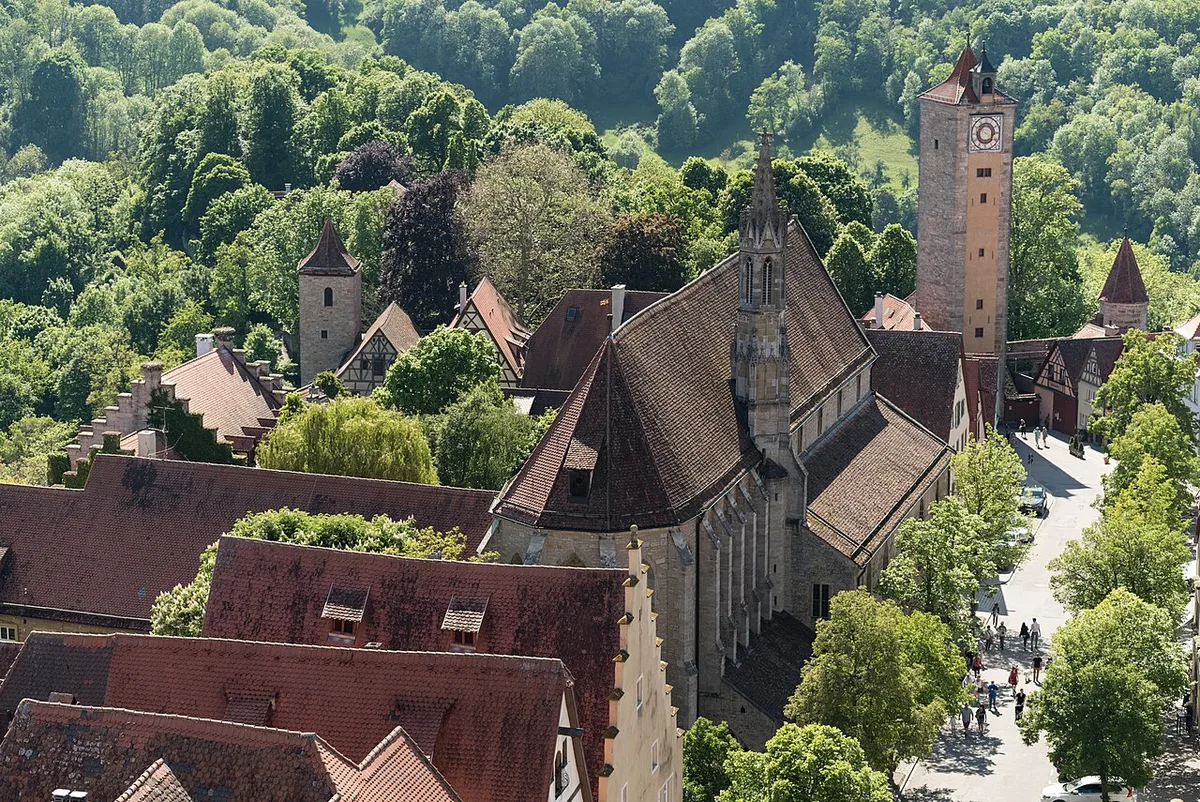
The travel guide describes the old town as effectively a giant outdoor museum with a lack of cars inside, which is why a walking route works so well here. A landmark visitors hub shows which individual sites publish their own visiting details. Check these before setting out so you are not surprised mid-walk.
Leg 1 – Marktplatz: Town Hall Arcade and the Optional Climb
Start in the market square, where the town hall arcade and the surrounding facades set the civic tone for the rest of the walk. The tourism site lists Marktplatz among the town's signature sights and uses it as the address of the Rothenburg Tourismus Service. This is a natural place for a first coffee and a look at what the town is currently promoting. If your plan is tight, keep it here rather than adding an interior.
Decide early whether you want to climb anything, because tower ascents consume more time than they look like they will. The tourism site mentions the town hall among its event venues, including the Meistertrunk performances in the Kaisersaal, so check current arrangements if you are timing a visit around a performance or civic event rather than assuming quiet access.
Leg 2 – From Marktplatz to St. Jakob's: The Church Arch
Head toward St. Jakob's Church and look for the arch over the street, which is the detail that makes this leg memorable. A traveller account describes the surprise of seeing cars pass beneath the church's massive archway, with a stained-glass window above filtering light inside. The arch is a passage, not a stop, so walk through it and let the route continue.
Whether you go inside St. Jakob's is a separate decision from walking under the arch, and the tourism office can confirm current visiting arrangements rather than you relying on an outdated plan. If the nave is part of your priorities, slot it here rather than backtracking later.
Leg 3 – Plönlein and the Gate Fork
Plönlein is the route's hinge, not just a photo stop. The tourism site highlights the square among the town's signature sights, and it genuinely splits your options: one street drops toward the valley and the Kobolzeller Steige, while the other leads under the Siebersturm toward the southern gate. Choose your branch based on whether you want the view or the gate next.
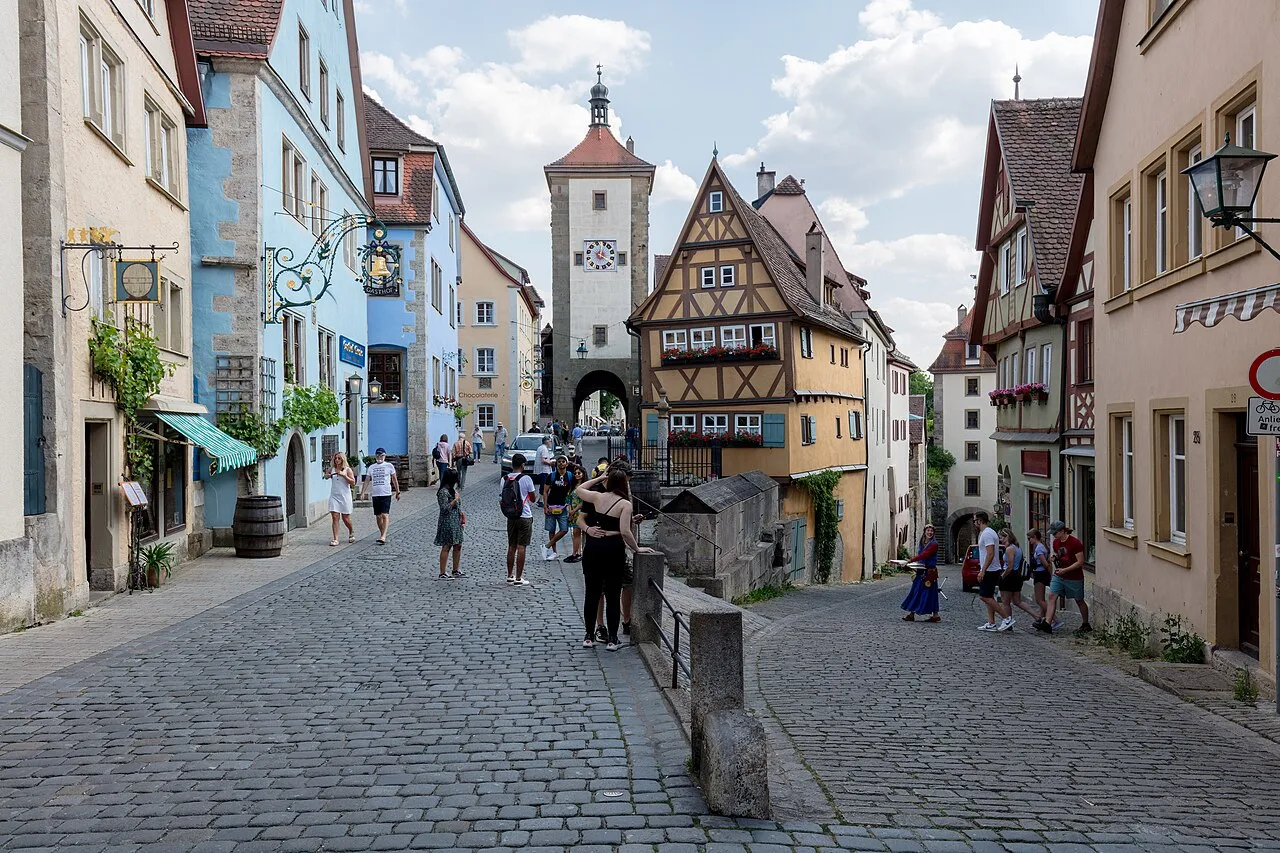
Timing matters more here than elsewhere. A traveller guide calls Plönlein the town's most famous photo motif and the reason many people come to Rothenburg, describing the yellow half-timbered house, the small fountain and two towers in the background. Arriving early or lingering after the day-trippers thin out gives you a calmer frame, and the photo-spot guide offers further angles if you want to plan around light rather than luck.
Leg 4 – Burgtor and the Castle Grounds
From Plönlein, continue west to Burgtor, the gate that anchors the castle end of town, and then out to the castle garden viewpoint. The tourism site lists Burgtor among the town's historic sights, and the garden area is a natural breather before the northern flank. This is where the walk shifts from streetscape to open sky.
If you want town views from below, the traveller guide recommends the castle garden and the Taubertal hillside, describing the modest Kobolzell church beneath and the skyline above as a quiet vantage. Adding that detour costs time but changes the perspective completely. Decide here whether your day is a compact old-town walk or a broader one.
Leg 5 – North Flank: Hangman's Tower and Powder Tower
Turn north along the wall toward the Hangman's Tower and the Powder Tower, which sit close enough together to treat as one leg. The traveller guide notes that one housed the town executioner and the other stored gunpowder, which gives the short stretch more narrative weight than its length suggests. Use the wall as a connective passage here rather than committing to a full circuit.
Walking the wall is a highlight precisely because it is a public space rather than an exhibit; the official tourism office refers to the begehbare Stadtmauer, the walkable town wall, among Rothenburg's sights. Whether you climb up or stay at street level, this is where a short break makes sense before the final push north.
Leg 6 – Gallows Gate and the Northern Exit
Finish at Gallows Gate, or Galgentor, on the northern edge, where the wall route and the town exit meet. The traveller guide describes starting near the northern edge, following the wall toward the Gallows Gate, and looking down on red rooftops, which is a good reason to walk this leg in the same direction. Finishing here leaves you close to accommodation north of the centre.
Reversing the route is equally valid and changes which gate you end at and how much uphill walking you do. The tourism site indicates there are 42 towers and six gates, so the town simply has more gate architecture than one walk can cover well. Treat the ending as a choice, not a rule.
Optional Extension: Walking the Covered Wall Sections
If you want more than a connective passage, the town walls and covered walkway deserve their own slot in the day. The dedicated walk guide goes deeper on the structure and its sections. Keep it as an extension rather than squeezing it into the same hour as the squares.
One practical point often confused: covered sections and walkable sections are not the same thing. The tourism office mentions the walkable town wall and links to tower-path information, so check current conditions there rather than assuming the whole circuit is open. A wall walk attempted late in a tiring day is rarely the best version of it.
Decisions and Trade-offs: Half-Day or Full-Day, Clockwise or Not
The clearest trade-off is time. A focused half-day covers Marktplatz, the church arch, Plönlein, Burgtor and one northern tower; a full day lets you add the wall, a museum and a valley viewpoint without rushing. If you only have one day, a dedicated one day in Rothenburg ob der Tauber itinerary sequences these same anchors around arrival and departure.
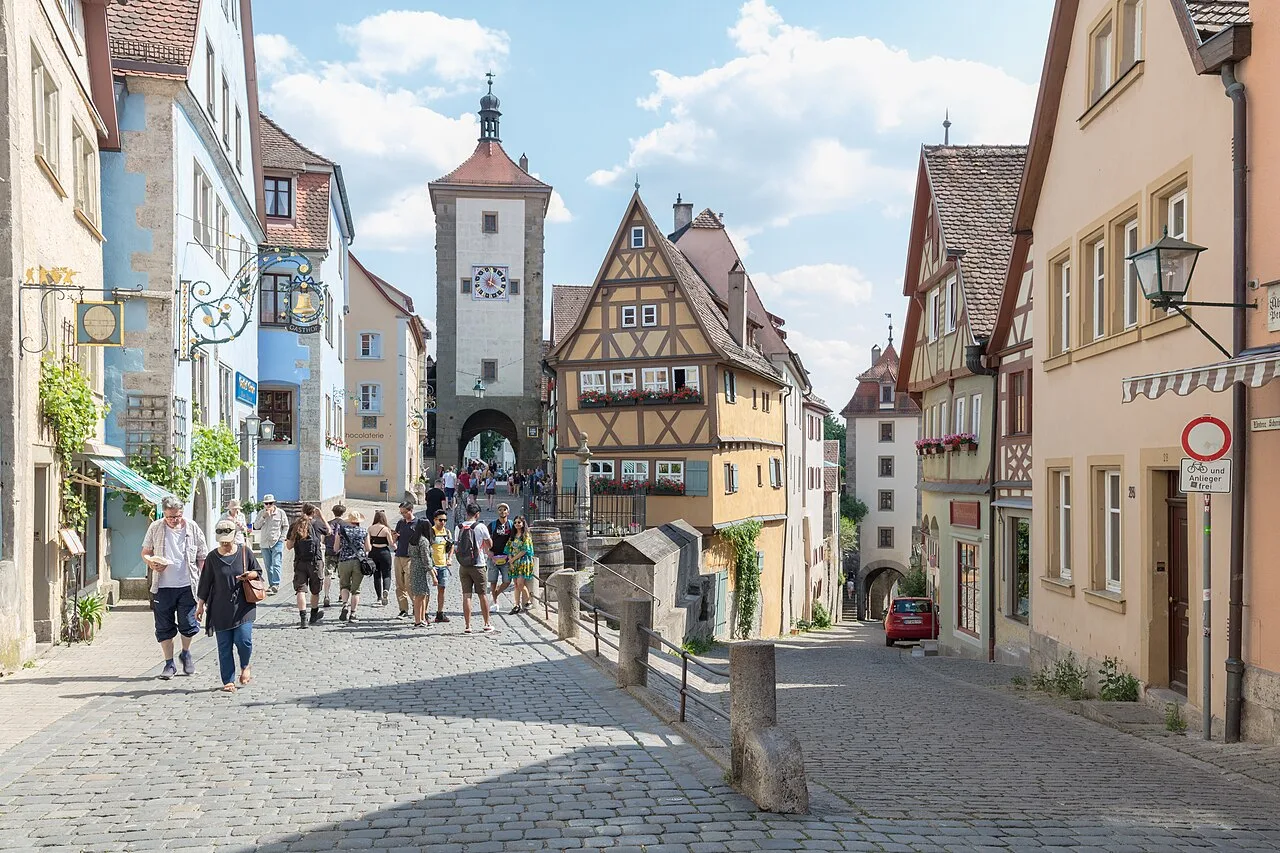
Direction is the second decision. Walking clockwise from Marktplatz puts Plönlein before Burgtor and ends north; reversing it front-loads the castle end and puts the busiest photogenic corner later. Group timing matters at Plönlein and the market square in particular, so break the route for a meal when crowds peak rather than pushing through.
Paid Interiors vs Free Streets: What to Add Mid-Route
Streets, squares and the walkable wall are public spaces you wander without a combined ticket, while interiors such as St. Jakob's and the Medieval Crime Museum are separate visits with their own arrangements. The tourism office is the place to confirm current entry details rather than working from an old plan. Do not assume a single pass covers everything.
The Medieval Crime Museum is worth planning as a deliberate stop, not an accidental one. The traveller guide describes instruments such as stretching benches, thumb screws, shame masks and an iron maiden, framed as a history of law and justice rather than pure spectacle. Slot it after the church arch or before the wall to avoid backtracking. For travellers who want more time for interiors, a 2 days in Rothenburg ob der Tauber itinerary spreads them out.
Practical Planning Notes for the Walk
Base yourself inside the walls if you can, and treat arrival by train as the practical default for a car-light old town. Once inside, the route works on foot from almost any lodging. If you plan to leave the old town by car, use the official tourism site for current parking information rather than planning around a specific lot in advance.
Weather exposure on the wall and at the castle garden is the main variable, so carry a layer even in warm months and keep the wall leg flexible. Do not build the day around exact gate or wall opening hours you have not verified; the tourism office publishes contact details and current information, and the town walls guide covers the practical side of the walkway.
Plan Your Visit Around the Squares
Rothenburg ob der Tauber works as a self-guided walk because its squares and gates do the orienting for you. Start at Marktplatz, pass under the church arch, let Plönlein choose your branch, then finish at Burgtor or Gallows Gate depending on the day you want. The order is flexible; the anchors are what keep you on track.
Before you go, confirm current opening arrangements for any interior you want to enter and check wall conditions through the tourism office rather than relying on a season-old plan. Then keep the walk loose enough to stop when something catches your eye. For related planning, see Franziskanerkirche Rothenburg: Oldest Church Visitor Guide.
Frequently Asked Questions
How long do you need to see Rothenburg's old town?
Most visitors can walk the core squares and gates in about half a day at a relaxed pace, and a full day lets you add a wall passage, a valley viewpoint and a museum interior. These are our suggestions rather than official timings, so adjust for your own pace and for how long you linger at Plönlein.
Does a self-guided walking tour work in Rothenburg?
Yes, the old town is compact and largely car-free, so a self-guided route that links Marktplatz, Plönlein, Burgtor and the northern towers works well on foot. Organised app-based audio tours and guided walks are also available, and the tourism office can tell you what is currently running.
What order should you walk Rothenburg's squares and gates in?
A sensible order runs Marktplatz, then the church arch toward St. Jakob's, then Plönlein, Burgtor and the castle garden, then north past the Hangman's Tower and Powder Tower to Gallows Gate. Reversing it is equally valid and simply changes which gate you finish at.
Can you combine Plönlein and Burgtor with the wall in one morning?
You can, but treat the wall as a connective passage rather than a complete loop. Naming the full wall walk as a separate slot in the day avoids rushing the squares, and the tourism office is the right place to check current conditions on the walkway.
Do you need a ticket to walk Rothenburg's streets or the wall?
Streets, squares and the walkable wall are public spaces you experience on foot, while interiors such as St. Jakob's and the Medieval Crime Museum are separate visits with their own entry arrangements. Confirm current details through the tourism office rather than assuming one ticket covers everything.


