
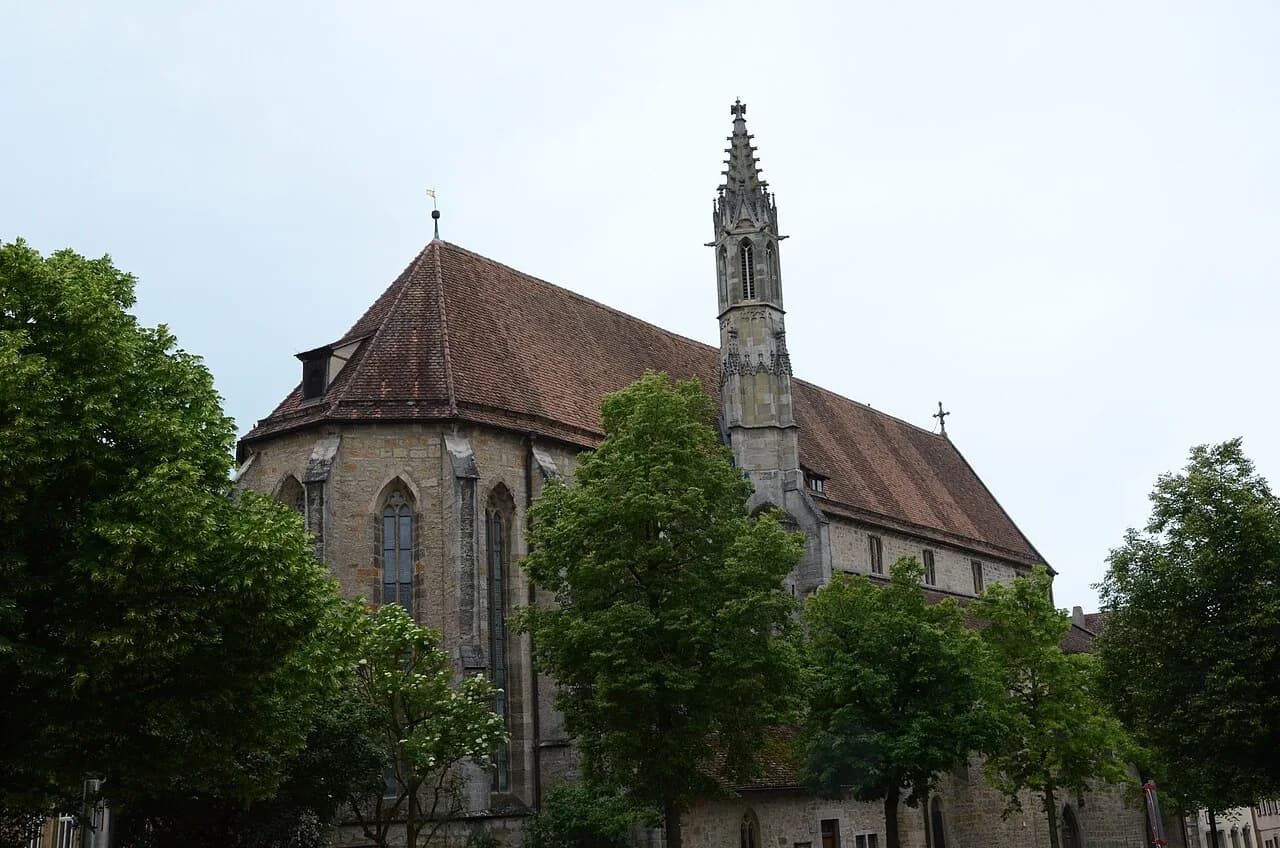
Rothenburg ob der Tauber compresses its churches into a small, walkable old town, and the Franziskanerkirche on Herrngasse is the quietest of the group. The former Franciscan monastery church was built from 1285 in early Gothic style, was consecrated in 1309, and today serves a Protestant congregation. The tourism office lists a daily opening window of 14:00 to 16:00 and a closure from January to March, changes reserved. Related guide: Rothenburg ob der Tauber: Itineraries and City Travel Guides.
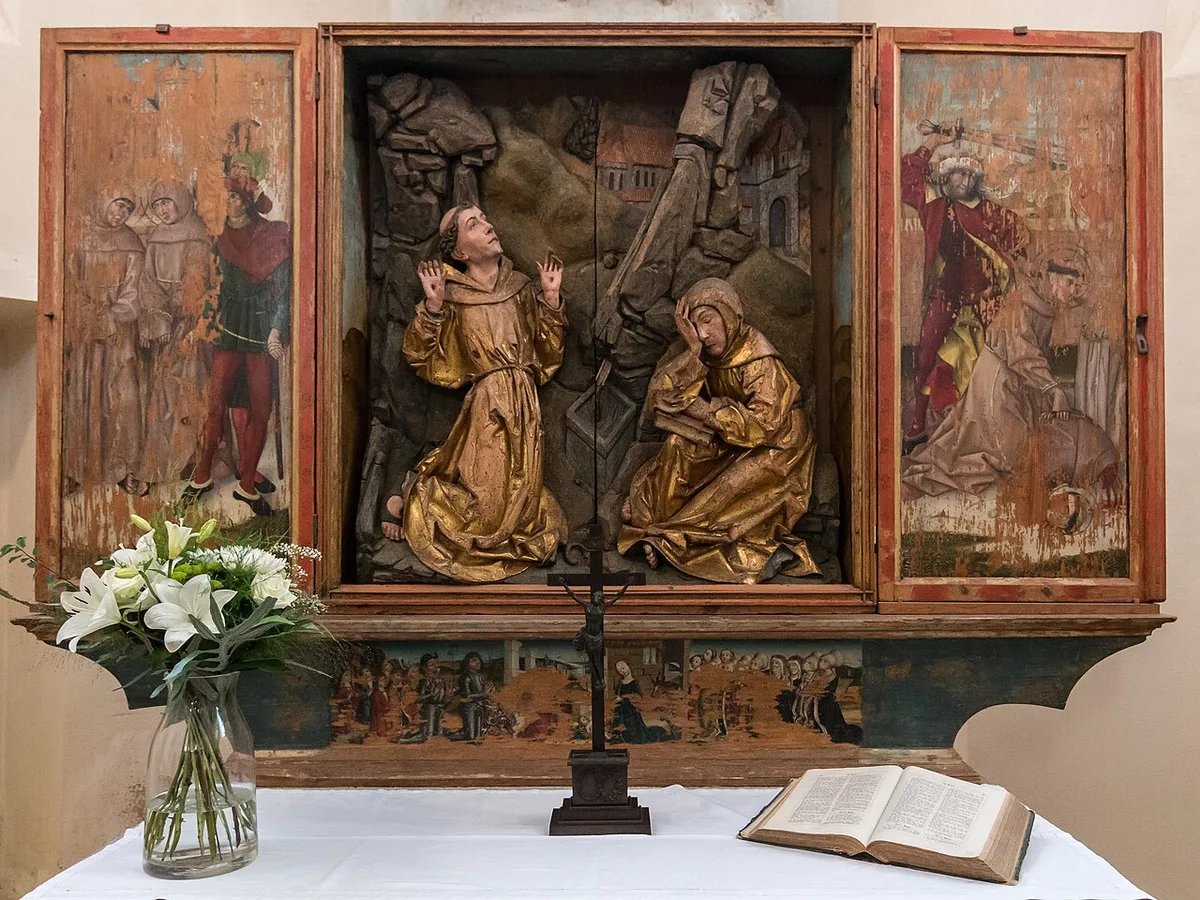
The draw here is not scale but survival. According to the Rothenburg tourism office, the church still contains an original wooden rood screen of the kind that once separated the lay congregation from the monks. It also holds the Franziskusaltar, attributed to the Würzburg sculptor Tilman Riemenschneider. A suggested visit of about twenty to thirty minutes is enough for the screen, the altar and the gravestones; that duration is an editorial suggestion, not an official figure.
Where to Find the Franziskanerkirche on Herrngasse
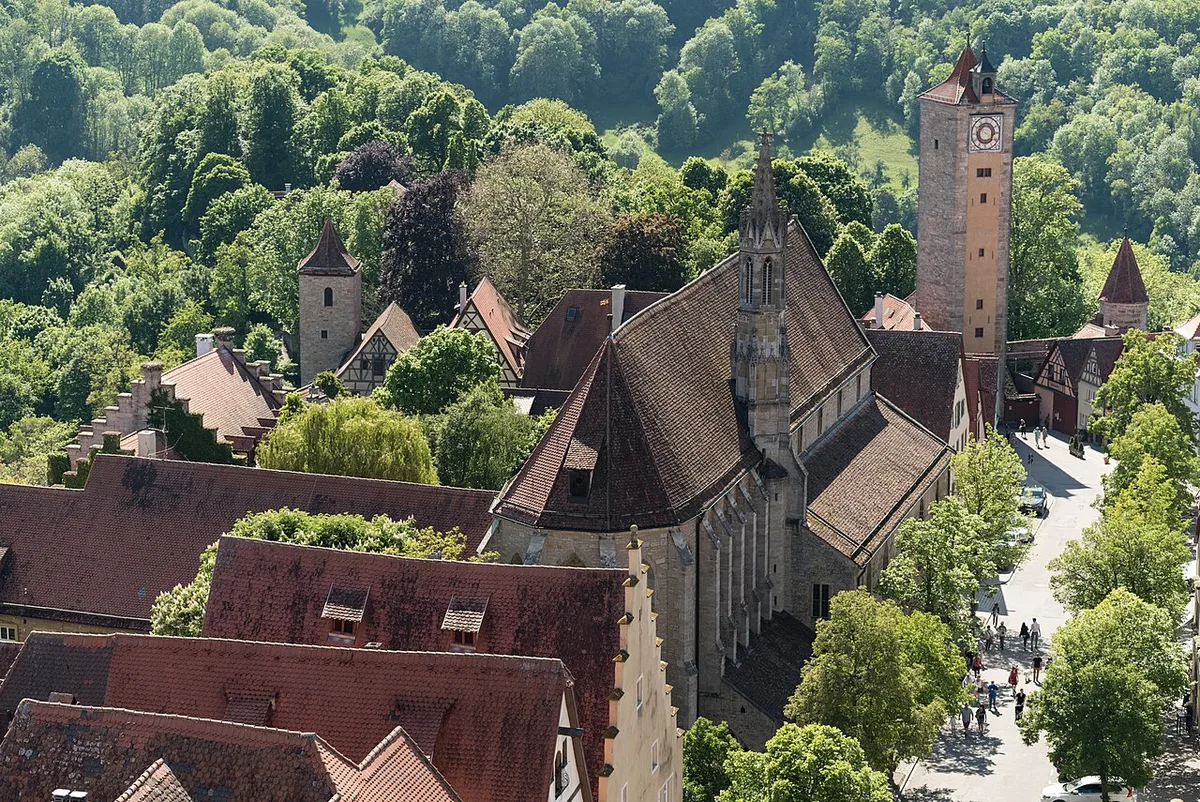
The church stands at Herrngasse 91541 Rothenburg ob der Tauber, on a street of former patrician houses rather than on a market square. It lies on the route between the Marktplatz and the Burggarten, so it folds naturally into a walk through the old town instead of demanding a separate trip. If you are following a Rothenburg old town walking tour route, the church works as a quiet pause between the market square and the castle garden.
Because this is a working parish church rather than a museum, the congregation sets its schedule. The tourism office publishes the daily 14:00 to 16:00 window and the January to March closure while explicitly reserving the right to change them. Treat that as the planning baseline and reconfirm shortly before you travel, particularly around public holidays and local services.
Origins: Built from 1285, Consecrated in 1309
The building began as the monastery church of the Franciscan mendicant order, erected from 1285 in an early Gothic style and consecrated in 1309. That date makes it the oldest church still standing in Rothenburg, predating the great St. Jakob, which the tourism office says was completed in 1485 after 173 years of construction. Mendicant churches were built plainly and centrally, so the architecture favours proportion and daylight over tower height.
After the Reformation the building passed into Protestant hands and has remained in Protestant use, which is why the interior reads as a living congregation's space rather than a preserved ruin. That also means Sunday services and local events can interrupt sightseeing. Checking the parish notice on the door is worth the minute it costs.
The Surviving Wooden Rood Screen
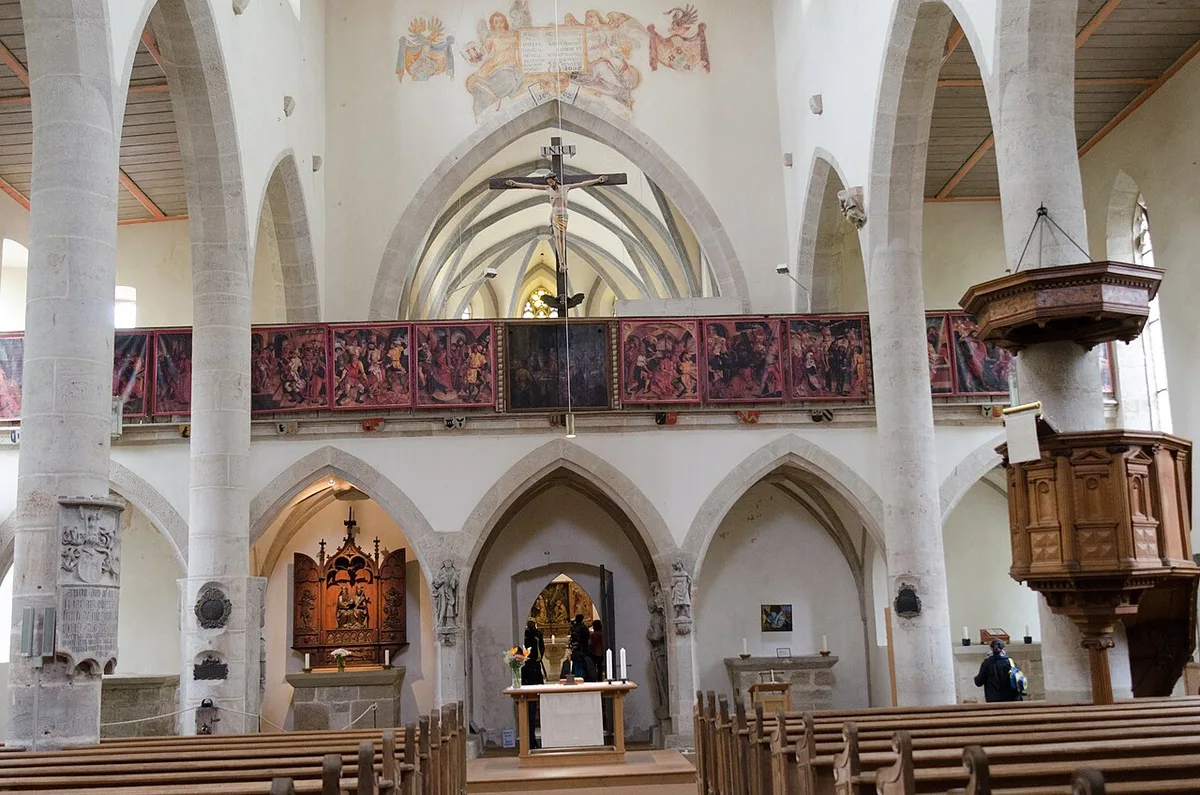
The single most important object inside is the original wooden rood screen, a rare survival of a fixture that once stood in many churches. The tourism office notes that such a screen separated the lay congregation from the monks, marking a boundary that shaped how people heard and saw the liturgy. Seeing it in place explains the room more clearly than any floor plan would.
Read the screen as a working tool rather than an ornament. It tells you who stood where, what was hidden from view, and how sound moved through the building. When you later step into a church where the screen has vanished, the missing cue is immediately obvious.
The Franziskusaltar Attributed to Tilman Riemenschneider
The church also houses the Franziskusaltar, which the Rothenburg tourism office attributes to the Würzburg sculptor Tilman Riemenschneider. Its presence is a reminder that the town's Riemenschneider holdings are spread across more than one church. Treat this altar as the work tied to the Franciscan church, and keep the other churches as separate stops with their own objects.
Do not arrive expecting St. Jakob's Holy Blood Altar or St. Peter and Paul's Holy Cross Altar in Detwang; those are different works in different buildings. If carved altarpieces are your priority, read about each church before setting out so you allot time honestly. The St. James Church Rothenburg (Jakobskirche) visitor guide covers the centrepiece in the main parish church, which is a separate visit from this one.
Patrician Gravestones and the Herrngasse Families
Inside you will find gravestones carrying the names of Rothenburg patrician families who once lived along the nearby Herrngasse. They are not decorative leftovers; they record who paid for, worshipped in, and was buried in this church. Read a few names and the street outside starts to look like a parish rather than a backdrop.
The stones work well as a short exercise in attention. Pick one name, then watch for the same family on houses or plaques as you continue along Herrngasse. That turns a brief interior stop into a thread running through the old town.
Practical Visiting: Afternoon Window and Winter Closure
The main constraint is time of day. The tourism office lists the church as open daily from 14:00 to 16:00 and closed from January to March, with changes reserved. That is a narrow slot in a town full of sights, so build it into your afternoon rather than hoping to drop in at will.
The available sources say nothing about ticket prices, guided tour schedules or accessibility provisions for this church, so do not assume any of them. The tourism office lists the Protestant parish of St. Jakob at Klostergasse 15 as the contact if you need to confirm a detail before travelling. For a broader day plan, a free things to do in Rothenburg ob der Tauber approach helps balance paid interiors against free church visits.
Next Door: the Pope Francis Board in the Montessori Garden
Beside the church, the tourism office notes an information board about Pope Francis in the Montessori garden; according to that listing, he learned German in Rothenburg in the 1980s at what was then the Goethe Institute next to the church. The board is a small, easily missed addition, so look for it rather than expecting signage to lead you there.
Don't Confuse It with St. Peter and Paul in Detwang
Detwang's St. Peter and Paul is a separate church in a separate village, reached on foot from the Burggarten in roughly twenty minutes through the countryside. The tourism office describes it as having Gothic arcades and a Holy Cross Altar attributed to Tilman Riemenschneider and his workshop. It is not the Franciscan church, and its altar is not the Franziskusaltar.
Detwang is also older ground: the village was first documented in 960, and the tourism office describes the church as over a thousand years old. If you have time for only one Riemenschneider stop beyond St. Jakob, choose by interest rather than convenience, because the walk is a genuine outing. Taken together, the churches show how far the sculptor's workshop reached.
Fitting the Church into a Wider Rothenburg Church Walk
Rothenburg's churches sit close enough to compare in one afternoon if you plan around their differing hours. St. Jakob is the main parish church and the busiest, with its own published schedule and an audio guide option, while the Franciscan church is the quiet counterpoint, open only in the early afternoon.
A simple decision rule helps when time is short. Choose the Franciscan church for medieval layout, the rood screen and a peaceful interior; choose St. Jakob for scale and its Holy Blood Altar; walk to Detwang only if you have a half-day to spare. Pair the church stop with a Rothenburg Rathaus tower climb visitor guide if you want a view over the roofs afterwards.
Plan Your Visit
The Franziskanerkirche is a short, specific stop where timing matters more than stamina. Aim for the afternoon opening window, avoid the January to March closure, and confirm current times with the parish or the tourism office before you travel. Allow roughly twenty to thirty minutes inside, longer if you want to study the rood screen and the gravestones properly; that duration is a suggestion, not an official figure.
Use the church as one thread in a wider church walk: the Franciscan church for medieval structure, St. Jakob for the major altarpieces, and Detwang if you want the countryside and the Holy Cross Altar. That sequence gives you three distinct experiences rather than three similar interiors.
Frequently Asked Questions
Is the Franziskanerkirche free to enter?
The sources used here do not state admission prices for the Franciscan church, so check with the parish or the Rothenburg tourism office before you go rather than assuming. Some Rothenburg churches charge or suggest donations while others do not, so do not assume the Franciscan church matches either pattern.
What are the opening hours of the Franciscan church in Rothenburg?
The Rothenburg tourism office lists a daily afternoon window from 14:00 to 16:00, with the church closed from January to March and changes reserved. Because this is a working Protestant parish, services and local events can also affect access. Confirm the current times shortly before your visit rather than relying on an old plan.
What should I not miss inside the Franziskanerkirche?
Prioritise the original wooden rood screen, which once separated the lay congregation from the monks, and the Franziskusaltar attributed to Tilman Riemenschneider. The patrician gravestones inside are worth a few minutes because they tie the church to the families of nearby Herrngasse. Together these three elements explain the building better than any single object.
Is the Franciscan church the same as St. Jakob?
No. St. Jakob is the large main parish church in the centre of Rothenburg and holds the Holy Blood Altar. The Franciscan church is the city's oldest church, on Herrngasse, with its own rood screen and its own Riemenschneider-attributed altar. The tourism office lists them as separate buildings with separate schedules.
How long should I allow for a visit?
A focused visit takes about twenty to thirty minutes, and allowing closer to forty-five minutes makes sense if you want to read the gravestones and study the rood screen. Because the church opens only in a narrow afternoon window, treat it as a planned stop rather than a spontaneous one.
Is the Franciscan church worth visiting on a one-day Rothenburg trip?
It is worth it if you care about medieval church layout or want a quieter stop between the main sights. If you can only manage one church, St. Jakob is the larger multi-altar experience. The Franciscan church is the better choice for the rood screen and a calm interior.


