

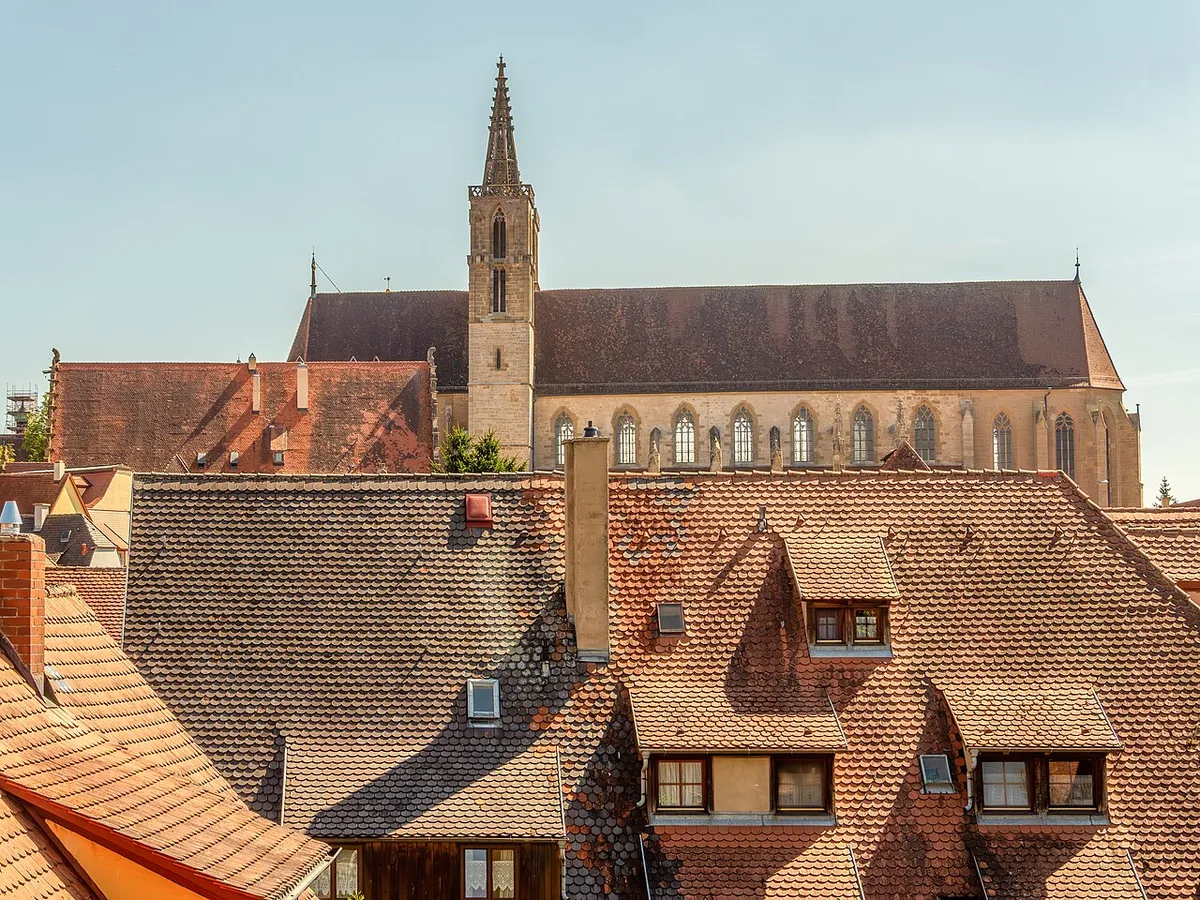
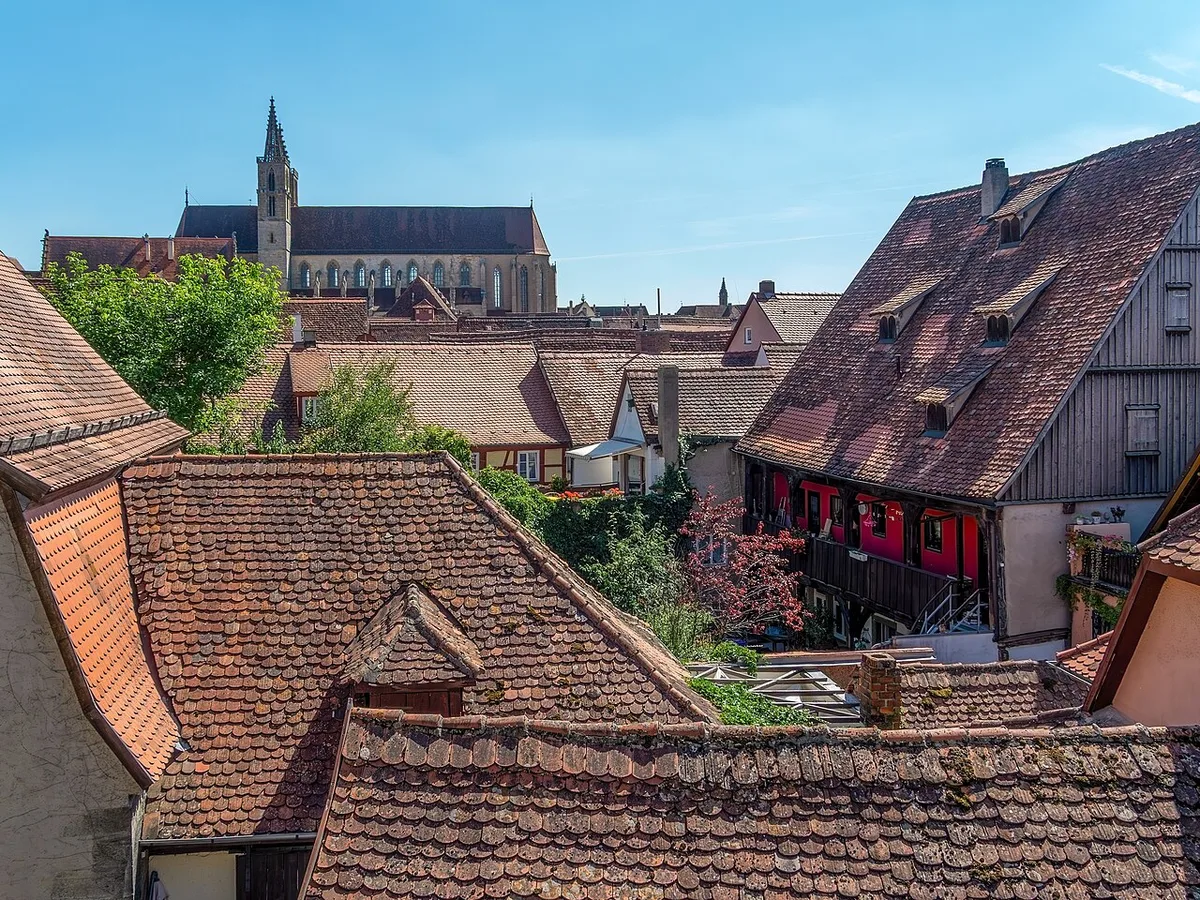
St. James Church, the Jakobskirche, stands at the northern edge of Rothenburg ob der Tauber, close to the Klingen Gate end of the town wall. The Rothenburg tourism service lists Jacob's Church among the destination's top ten sights alongside the Plönlein, the market square and the walls, which matters for planning: the church is not a detached monument but one stop inside a compact old town you can cross on foot.
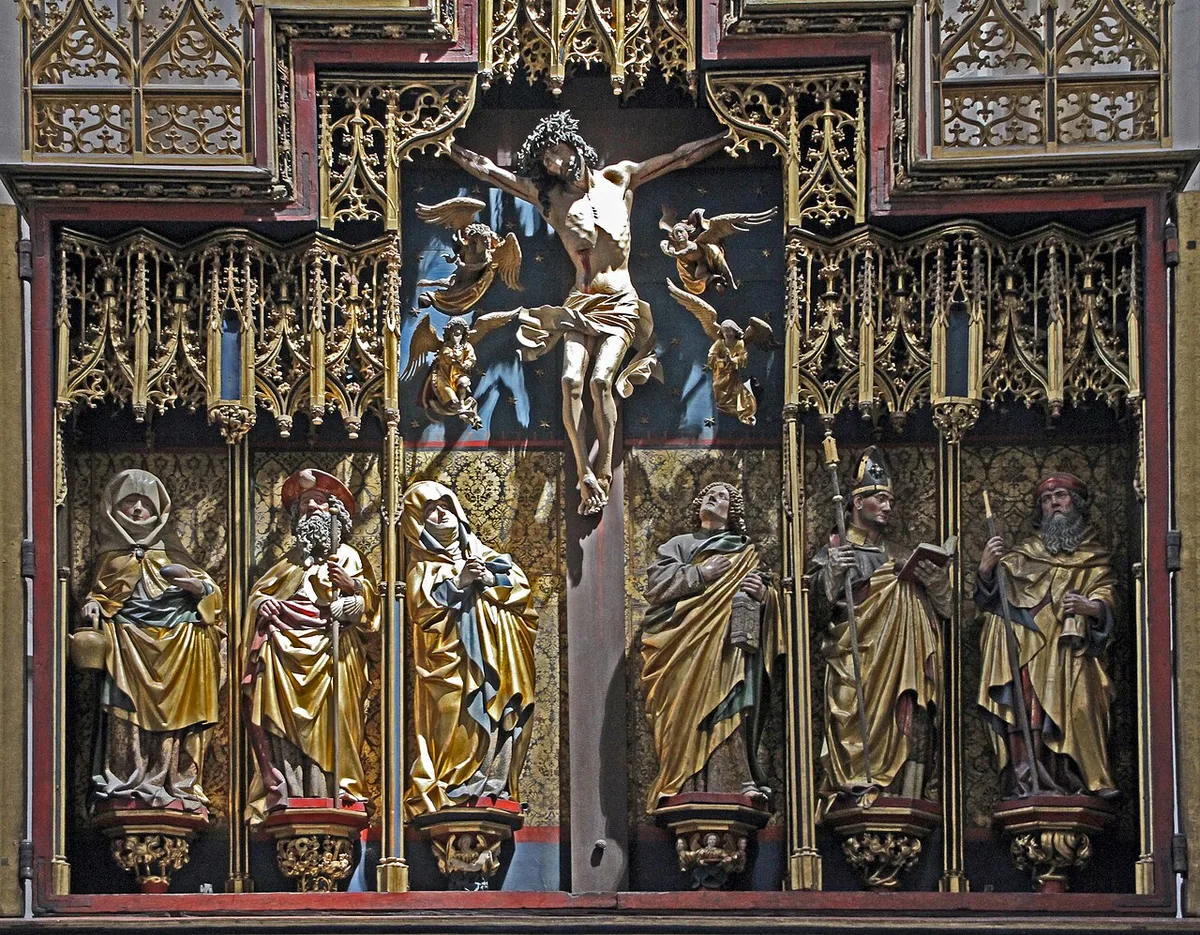
Most visitors come for one object: the winged altarpiece completed in 1466, attributed to the painter Friedrich Herlin and Hans Waidenlich, with carvings in the tradition of the Ulm sculptor Hans Multscher. You will see it called both the Altar of the Holy Blood and the Twelve Apostles Altar, which causes understandable confusion. Treat those names as referring to the same celebrated altarpiece rather than to two separate showpieces you need to hunt down.
Why the Jakobskirche Matters in Rothenburg
The church earned its dedication because Rothenburg lay on one of the medieval roads that led pilgrims toward the shrine of Saint James at Santiago de Compostela. James was the first of the apostles to be martyred, and by the eleventh century his tomb in Galicia had become an international destination that rivalled Rome and Jerusalem for Christian travellers. A town on that route had good reason to build a church for the apostle who protected pilgrims.
The building itself sits inside the walled circuit, so you can fold it into a walk rather than treating it as a separate excursion. Arriving from the north, the Klingen Gate is the natural approach; arriving from the station, you enter by the Röder Gate and cross the old town. Because Rothenburg ob der Tauber is small and largely car-free in the centre, the church is realistically a walking stop on any itinerary.
The Altar of the Holy Blood and the Twelve Apostles Altar: One Work, Two Names
The altarpiece carries a Latin inscription on its frame that dates it to 1466, and Herlin signed the work, asking Saint James to pray for him. Kahsnitz's study of late Gothic altarpieces in southern Germany describes the carvings as the work of a sculptor from the circle around Hans Multscher, whose compact three-dimensional figures draw on Multscher's earlier output from the 1450s. That combination of a named painter, a documented date and an identifiable carving tradition is why the piece is studied so closely.
If you have read about an "Altar of the Holy Blood" and a "Twelve Apostles Altar" as separate attractions, you are not alone, because the two labels circulate side by side. In practice, the church is described as home to the Altar of the Holy Blood and also houses the Twelve Apostles Altar, which is the same carved altarpiece with painted wings and predella. Knowing this saves you from wandering the nave looking for a second, different object.
Reading the Carved Crucifixion Scene
The open centre of the altarpiece, the corpus, shows the Crucifixion. Mary stands to the left of the cross and Saint John the Evangelist to the right, both below the dying Christ. Around them the carver placed saints with attributes you can decode without any label: Elizabeth on the far left holds a loaf of bread and a pitcher, Leonard, patron of prisoners of war, stands next to John, and Anthony the hermit appears on the far right with a bell.
The figure to look for first is Saint James himself, standing beside Mary. He wears a pilgrim's hat decorated with a scallop shell, carries a pilgrim's staff, and has two further shells dangling from his wrist. Those shells are the emblem of the Camino, and seeing them carved here makes the church's pilgrim identity immediate rather than abstract.
Give the carving five or ten minutes rather than a glance, because the attributes reward close looking. Late Gothic figure carving of this type is best read across the group, comparing how each saint is equipped and where the carver has placed the strongest relief. If the light is low, move along the front of the altar to catch the angles where the faces and hands read most clearly.
Why the Wings Stayed Shut After the Reformation
After Rothenburg adopted the Reformation, the altarpiece was kept permanently closed, a decision recorded in the scholarship on the work. Closing the wings hid the painted inner panels from ordinary view but shielded both the sculptures and those paintings from damage and change. It is an unusual preservation trade-off: a deliberate act of religious reform ended up protecting the very art it visually removed.
That history shapes how you experience the church today. You are not looking at an altarpiece that has been continuously displayed in its fullest state; the surviving condition reflects centuries in which the wings were shut. When you read that the carvings and inner paintings survive well, the closed state is a large part of the explanation.
The Predella: Twelve Apostles, Peter's Spectacles and the Veronica Veil
Below the main scene, Herlin's painted predella shows all twelve apostles arranged in pairs behind a late Gothic balustrade. Saint James appears again here, holding a shell and a pilgrim's staff, and to his left sits Saint Peter with his keys and a book, peering into the book through spectacles. The spectacles are the detail most visitors miss, and they are worth pointing out to anyone sharing the view.
The reverse of the predella also carries a depiction of the veil of Saint Veronica, the cloth bearing the imprint of Christ's face. Because it is on the back, you will only see it if the altar is positioned so that side is visible, and many visitors never do. Add it to your mental checklist, but accept that what you can see depends on how the altarpiece is displayed on the day.
How Long to Spend Inside
A practical allowance for the interior is around thirty to sixty minutes, which is a suggestion for planning rather than an official figure. Thirty minutes covers the altarpiece, the predella and a walk down the nave; the full hour suits anyone who reads panels, sketches, or waits for a quiet moment in front of the corpus. Photography, group size and how busy the church is on the day will shift that estimate in either direction.
If the church is a priority rather than a tick on a list, put it early or late in the day when tour groups are thinner. Rothenburg ob der Tauber fills with day visitors around the middle of the day, and a small interior feels much smaller when a coach party arrives. Building the church into a longer walk, rather than treating it as a standalone stop, also lets you give it the time it deserves without overrunning your schedule.
Tickets: What to Verify Before You Go
What the church charges, when it is open, and whether an audio guide or any guided option exists should all be checked directly on the official church site before you travel. Those details are not reliably documented in published visitor summaries, and some third-party listings recycle viewing times and tour claims that the church itself has not confirmed.
The same caution applies to any claim that the interior is free or that a particular part is separately ticketed. If a fee applies, or if a donation is invited, you will learn it at the entrance or from the church's own published information. Budget for the possibility without assuming either way, and carry some cash as a sensible precaution in a small historic church.
Note that the church is distinct from Rothenburg's museums, which set their own hours and admission separately. The RothenburgMuseum, for example, publishes its own seasonal daily opening times and closes on 24 and 31 December. Do not assume one ticket or one schedule covers the church and the museums.
Pairing the Church with the Wall Circuit
The covered wall-walk runs for roughly 2.5 km from the Spital Gate in the south past the Röder Gate to the Klingen Gate in the north, and the Klingen Gate end sits near Saint James Church. Walking the Wehrgang is free, while climbing the Röder Tower involves a small seasonal charge paid at the top. Allow about an hour at a relaxed pace for the wall-walk itself, longer if you stop for photographs.
The wall-walk is unlit in places and the roof beams are low, so bring a light after dark and watch your head if you are tall. Stairs govern access on and off the wall, which makes it unsuitable for wheelchairs or pushchairs; the ground-level path outside the walls is the alternative. Combining the church with the Klingen Gate section, then continuing south, gives you a natural half-day without retracing your steps.
Fitting the Church into a Day or Two in Rothenburg
On a single day, anchor the church to the northern wall walk and the market square rather than crossing town twice. The tourism service frames the town as a place to walk, with the walls, the squares and the churches forming a natural circuit, so the church slots into the northern end of that loop. If you are building a fuller itinerary, the city's own suggested structures for one day and two days are a useful frame to adapt.
With a second day, the church pairs well with attractions that reward a slower tempo. The German Christmas Museum on Herrngasse is a few steps from the main square, and the Rathaus tower climb offers a rooftop view back over the old town. Both are separate sites with their own arrangements, so check each one rather than assuming a shared ticket.
Route your walk through the old town so the church sits at one end rather than in the middle of a backtrack. Starting at the Marktplatz and heading north via the main lanes brings you to the church and then out onto the wall near the Klingen Gate. That ordering keeps the day efficient and leaves the wall-walk as the finish, which is where the light is usually best.
Plan Your Visit
St. James Church is best understood as two things at once: a pilgrim church on the old road to Santiago, and the setting for one remarkable 1466 altarpiece with two familiar names. Spend your time on the carved Crucifixion group and the painted predella, and you will come away with more than a photograph of an altar.
Before you go, confirm admission, opening times and any guided or audio options on the official church website, and check the Rothenburg tourism service for anything else you plan to see the same day. Then simply decide whether the church is a thirty-minute stop or an hour-long one, and build the wall-walk around it.
Frequently Asked Questions
Is the Altar of the Holy Blood the same as the Twelve Apostles Altar?
The two names are used for the same celebrated altarpiece in St. James Church, the 1466 work attributed to Friedrich Herlin and Hans Waidenlich with carvings in the Multscher tradition. Sources describe the church both as home to the Altar of the Holy Blood and as housing the Twelve Apostles Altar, so plan to look at one object rather than searching for two.
Who made the altarpiece and when?
The work is dated by an inscription on its frame to 1466. The painting is attributed to Friedrich Herlin, who signed the piece and may have come from Rothenburg, working with Hans Waidenlich, while the carving is attributed to an unidentified sculptor from the circle around Hans Multscher in Ulm.
Why has the altarpiece been kept closed?
After Rothenburg adopted the Reformation, the altar was kept permanently closed. Closing the wings concealed the painted inner panels from regular view while protecting both the carvings and those paintings from later damage, which helps explain their condition today.
How long should I spend inside St. James Church?
Allow roughly thirty to sixty minutes as a planning suggestion. Thirty minutes covers the altarpiece, the predella and a walk through the nave; an hour suits anyone reading the carving in detail. Crowds, light and whether you stop to sketch or photograph will change that estimate.
Do I need a ticket for the Jakobskirche?
Admission arrangements are not reliably documented in published visitor summaries, so check the official church website before you travel. Treat third-party claims about free entry, ticketed areas or specific viewing windows as prompts to verify rather than confirmed facts, and carry some cash as a precaution.
What should I look for in the carved Crucifixion scene?
Start with Saint James beside Mary, wearing a scallop-shelled pilgrim hat, holding a staff and with shells at his wrist. Then identify Mary and John flanking the cross, Elizabeth with bread and a pitcher, Leonard, and Anthony the hermit with a bell, and finish at the predella, where Peter reads a book through spectacles.
Can I combine the church with the town wall walk?
Yes, and the geography favours it. The Klingen Gate end of the covered wall-walk lies near the church, so you can visit the interior and then walk the Wehrgang southward past the Röder Gate. The wall-walk is free, but note the low beams, unlit stretches and stairs on and off the wall.
Sources
- Altar of the Holy Blood | Reliquarian
- Official event website
- Tourism Rothenburg ob der Tauber: Tourism Rothenburg ob der Tauber
- Town Walls Walk — Things to Do & How to Visit | RothenburgObDerTauber.com
- Tourism Rothenburg ob der Tauber: RothenburgMuseum - the city museum in Rothenburg ob der Tauber
- Tourism Rothenburg ob der Tauber: Sights in Rothenburg ob der Tauber - Top 10 & Highlights
- Tourismus Rothenburg ob der Tauber: Tourismus Rothenburg ob der Tauber


