

Rothenburg ob der Tauber keeps an almost unbroken ring of walls, towers and gates around its old town, and the eastern and southern stretch still carries its covered wooden wall-walk, known in German as the Wehrgang. As a visitor, the real decision is not whether to see the walls but which version suits your day: the roofed circuit above the rooftops, the longer ground-level loop past the castle garden, or the single paid climb up the Röder Tower. Each gives a different view and asks a different amount of time and effort.
This guide treats the walk as a route with decisions rather than a checklist. It covers where the access staircases are, what the suggested distances and timings mean in practice, why names are carved into the stones, and which parts of the fortifications are free to walk and which are not. Official visitor information for the town sits with Rothenburg Tourismus Service, whose site is the place to confirm anything time-sensitive before you set out.
What the Covered Walkway Actually Is
The Wehrgang is a roofed timber gallery built along the inner face of the town wall, originally a sheltered position for defenders. On Rothenburg's eastern and southern side it survives almost continuously, which is why you can walk a long stretch of the circuit under cover rather than along a bare parapet. The western side above the Tauber valley is different, and that difference shapes how you plan the route.
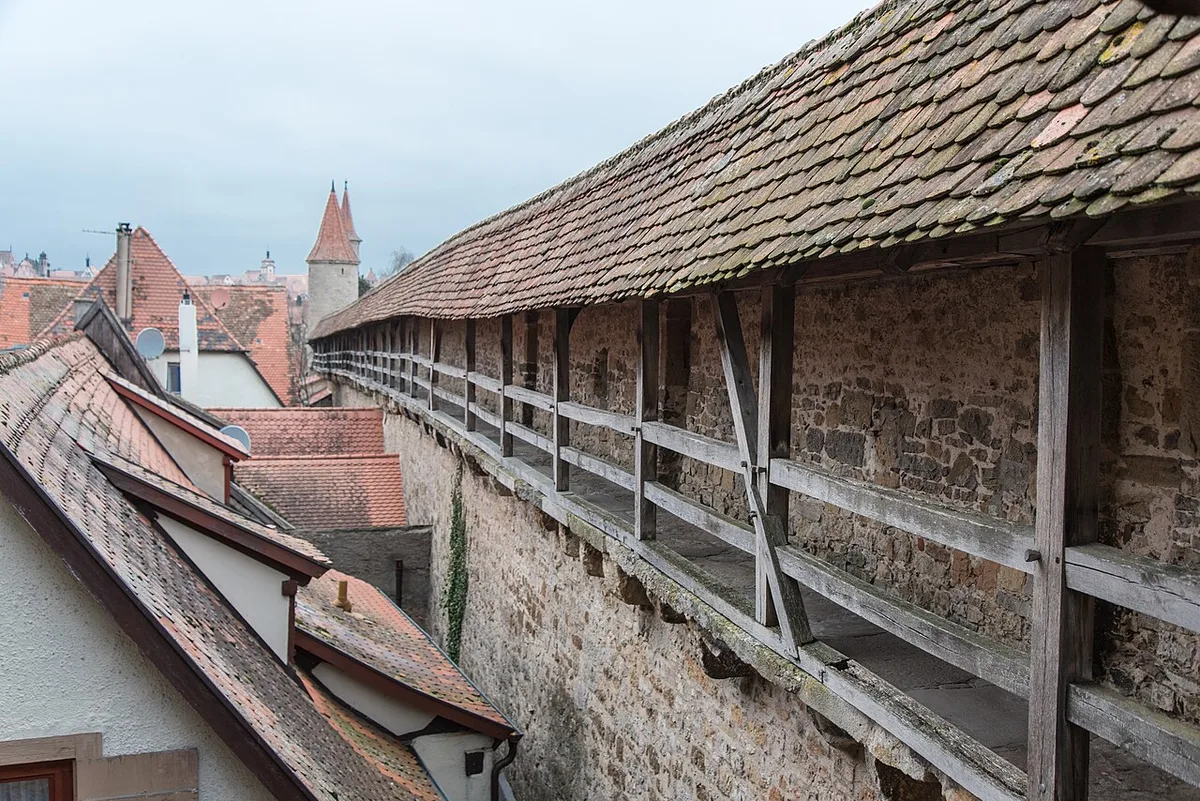
Because the gallery sits on top of the wall, the opening is not a broad promenade. The passage between the roof posts is narrow, the beams sit low in places, and there is a drop on one side, so you walk in single file and watch your head. That character is exactly why the wall-walk feels medieval rather than manicured, but it also rules out wheelchairs, pushchairs and anyone unsteady on stairs.
One thing to settle before you go: the wall-walk should not be confused with Rothenburg's ticketed interiors. Walking the Wehrgang is free, while museums, church interiors and tower climbs are separate, individually priced sights. The town's own tourism pages list the town walls and gates among the top sights, which is a useful way to check what else is ticketed nearby.
Suggested Distance and Time: Spital Gate to Klingen Gate
The classic covered stretch runs roughly 2.5 km from the Spital Gate in the south, past the Röder Gate, to the Klingen Gate in the north. Allow about an hour at a gentle pace; that is a planning estimate rather than an official figure, and it assumes you keep moving. Add time for photos at the Spital Bastion, the Röder Gate and the rooftop views toward the Markus Tower.
The most useful feature of this route is the escape hatches: several staircases drop you back into the streets whenever you have had enough. That means you do not have to commit to the whole length, and families with small children can simply turn a long walk into a short one. If you want the full loop rather than the roofed section, add the paths and castle garden on the western side for a circuit of roughly 3.5 to 4 km.
Treat any timing here as a suggestion you adjust to your own pace and stops. The route is exposed at roof height, and the covered gallery is unlit in places, so conditions change what an hour feels like.
Access Points: Choosing Where to Step Up
The southern start is the Spital Gate, roughly ten minutes on foot south of the Market Square via the Plönlein, where steps lead up to the wall-walk beside the Spital Bastion. This is the natural beginning if you are already exploring the old town and want to work northward. Begin here and the rooftops unfold behind you as you go.
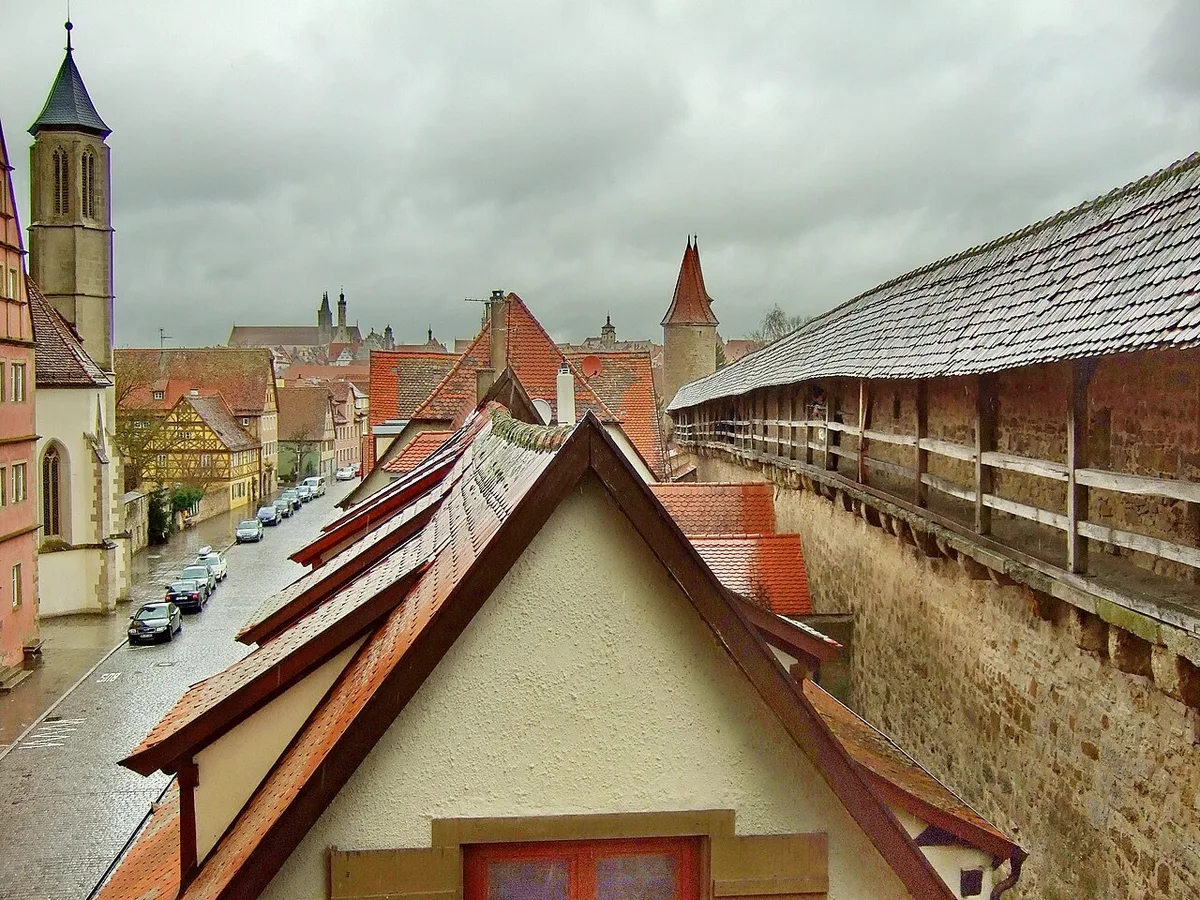
If you arrive by train, the eastern access at the Röder Gate is the quicker entry, about five minutes from the station. That makes it the best option for a short visit or for anyone arriving late in the day who still wants the wall experience. The Klingen Gate at the northern end is the logical finish, close to St. Jakob's Church and the youth hostel.
Whichever stair you take, orient yourself before climbing and decide where you intend to come down. Knowing your exit in advance keeps the walk relaxed instead of turning it into a search for the next descending staircase.
What You See Along the Way
The Spital Bastion opens the walk with its seventeenth-century double gate and zigzag passage, built to control anyone entering the southern approach. Moving north, the Röder Gate and its tower anchor the eastern stretch, and the roofline ahead gives you the Markus Tower and the Town Hall as landmarks. The wall-walk is as much about looking at the town from above as looking at the fortifications themselves.
At the northern end, St. Jakob's Church rises close to the Klingen Gate, and beyond the western walls the castle garden opens onto views over the Tauber valley. That western side is where the town and the landscape meet, and it is the reason the full loop is worth considering if you have the time. For a broader look at elevation and sightlines across town, compare the best viewpoints in Rothenburg ob der Tauber before you commit to a tower climb.
If you prefer to pair the walls with the squares and lanes inside the gates, a self-guided walking route through Rothenburg's old town squares and gates is a sensible companion plan, and the Marktplatz is the obvious point to rejoin the streets after descending.
The Donor Plaques and the 1945 Rebuilding
Hundreds of small stone plaques are set into the walls along the walk, each recording a name, family or company from somewhere in the world. They exist because an air raid on 31 March 1945 destroyed a large part of the eastern old town, and the walls were rebuilt afterwards with donations from far beyond Germany. Donors from places as far apart as the United States and Japan paid for a metre or two of wall and were honoured with an engraving.
Reading the plaques turns the walk into a lesson in how a damaged medieval town was stitched back together by strangers. It also explains why so much of what you walk on looks weathered but continuous. The town's own tourism service keeps a page on wall donations for anyone curious about how that system still works.
The Röder Tower Decision: The One Paid Climb
The Röder Tower beside the Röder Gate is the one wall tower you can climb, and it is the only part of the wall experience that charges. It has seasonal opening and a small fee paid at the top, which means you should not plan around year-round access or a fixed price. Inside there is a small exhibition about the 1945 destruction, tying the climb back to the plaques you have just walked past.
Climb it if you want a high, contained view over the rooftops toward the Markus Tower and the Town Hall and you are comfortable with a steep enclosed stair. Skip it if your priority is the free wall-walk or if you are already planning a different tower ascent. Because the tower charges separately and keeps its own hours, confirm current opening and the fee on site or through the tourism service rather than relying on any older figure.
Do not assume a single wall ticket covers everything in the fortifications. The Wehrgang and the tower are separate, and the town's museums and churches are separate again. If you specifically want to compare tower climbs with views over the old town, a Rothenburg Rathaus tower climb visitor guide covers a different ascent and helps you weigh which one earns your time.
Free Versus Paid: Keeping the Costs Straight
Walking the covered wall-walk costs nothing and, according to the travel guide that documents the route, it is open at all times. That is the single most useful fact for budget planning: the main experience of Rothenburg's fortifications is free. Everything else you might add on the same outing, whether a tower climb, a museum or a church interior, is a separate paid sight with its own entrance.
Guided walking tours are another paid layer entirely, and their prices are set by operators and change over time. If you are considering one, check the current rate directly with the operator or through the tourism service rather than trusting an old listing. For a day built around free sights, the free things to do in Rothenburg ob der Tauber are worth checking before you decide what to pay for.
If Stairs Are a Problem: The Ground-Level Alternative
The wall-walk is reached by stairs and continues on top of the wall, so it is not suitable for wheelchairs or pushchairs. The workable alternative is the path that runs along the outside of the walls at ground level, which lets you follow the fortifications without climbing. You still see the gates, the bastions and the outside face of the wall, and you can rejoin the town at the same gates.
The castle garden on the western side is also on level ground and connects naturally to the western walls, so a visitor who cannot manage the gallery can still build a satisfying circuit. If mobility is a deciding factor for your trip, describe your needs directly to the tourism service before travelling and ask which routes and towers are reported as accessible. Accessibility details change, and only the operator can confirm them.
Practical Realities on the Wall
Expect a narrow passage, low roof beams and stretches that are unlit in places, especially after dark. Bring your own light, such as a phone torch, rather than assuming the walkway is illuminated. Tall visitors should duck where the beams dip, and anyone uneasy with heights should keep to the inner side of the gallery.
The staircases that punctuate the route are what make it flexible: you can leave the wall whenever you want and re-enter the streets below. Because those same stairs are the only way on and off, plan your entry and exit points before you start. The town's visitor information is the place to confirm anything that might affect access on the day you go.
Roofed Circuit or Full Loop: How Timing Changes
The roofed circuit between the Spital Gate and the Klingen Gate is the core experience, and it is the version to choose if you have an hour and want the medieval character of the gallery. The full loop, roughly 3.5 to 4 km, adds the western paths and the castle garden, where the wall is not roofed and the walking is at a lower level. You are trading the covered gallery for valley views and a longer outing.
Decide which one you want before you start climbing, because the two routes ask for different shoes, different time and different expectations. If you only have half a day in town, the roofed section plus the old town squares is the tighter plan. With a full day, the loop and a tower climb fit comfortably.
Either way, check the wider Rothenburg ob der Tauber landmark guides for what else deserves your hours before you lock the route in.
Fitting the Walls into a Single Day
A practical shape for one day is to start at the Market Square and the Plönlein, walk south to the Spital Gate, and climb onto the wall there. Follow the covered gallery north to the Klingen Gate, then descend near St. Jakob's Church and continue to the castle garden for the valley view. That order keeps you moving in one direction and ends with the widest outlook.
If you are staying overnight, the walls are worth revisiting early in the morning before the day-trippers arrive, though you will need your own light on the darker stretches at either end of the day. For a fuller picture of how the walls fit with the rest of the town, the Rothenburg ob der Tauber city travel guides set the walk alongside markets, museums and day-trip logistics.
Plan Your Visit
Rothenburg's covered wall-walk is the rare medieval fortification you can still walk on top of, and the decision is simple once you know the shape of it. Choose the roofed Spital Gate to Klingen Gate stretch for the classic hour, add the western loop and castle garden if you want a longer walk, and treat the Röder Tower as a separate paid climb rather than part of the free route. Bring a light, watch your head, and confirm current opening and fees with the tourism service before you rely on them.
Frequently Asked Questions
Can you walk all the way around Rothenburg's walls?
Not entirely on top of the wall. The covered wall-walk runs along most of the eastern and southern side, roughly 2.5 km from the Spital Gate to the Klingen Gate. On the western side, above the Tauber valley, you walk on paths and through the castle garden instead, so a complete circuit is a mix of gallery and ground-level walking rather than one continuous roofed route.
Is the Rothenburg town wall walk free?
Yes. Walking the covered wall-walk costs nothing, and the route is documented as open at all times. Only the Röder Tower, the one wall tower you can climb, charges a small entrance fee, paid at the top, and it keeps seasonal opening. Museums, churches and guided tours in town are separate paid sights, so do not expect one wall ticket to cover them.
How long does the Rothenburg wall walk take?
As a planning estimate rather than an official figure, allow about an hour for the covered stretch from the Spital Gate to the Klingen Gate at a gentle pace, including photo stops. Families with small children should allow more. If you add the western paths and castle garden for the full loop of roughly 3.5 to 4 km, budget extra time and expect a mix of surface levels.
Why are there names on the walls in Rothenburg?
After an air raid on 31 March 1945 destroyed much of the eastern old town, the walls were rebuilt with donations from around the world. Each donor, whether an individual, family or company, was honoured with an engraved plaque on the section they paid for. Reading them along the walk shows how far the rebuilding effort reached, from the United States and Japan to other countries.
Is the wall-walk suitable for wheelchairs or pushchairs?
No. The gallery is reached by stairs and continues on top of the wall, so it cannot accommodate wheelchairs or pushchairs. The ground-level path along the outside of the walls is the practical alternative, and the castle garden on the western side is on level ground. If mobility matters for your trip, ask the tourism service to confirm current conditions on the routes you plan to use.
Is the covered walkway lit at night?
Do not count on it. The walkway is unlit in places, so bring your own light, such as a phone torch, if you plan to be on it after dark. The passage is also narrow with low beams, which makes a torch useful rather than optional. Check with the tourism service if you have questions about conditions on the day you visit.


