
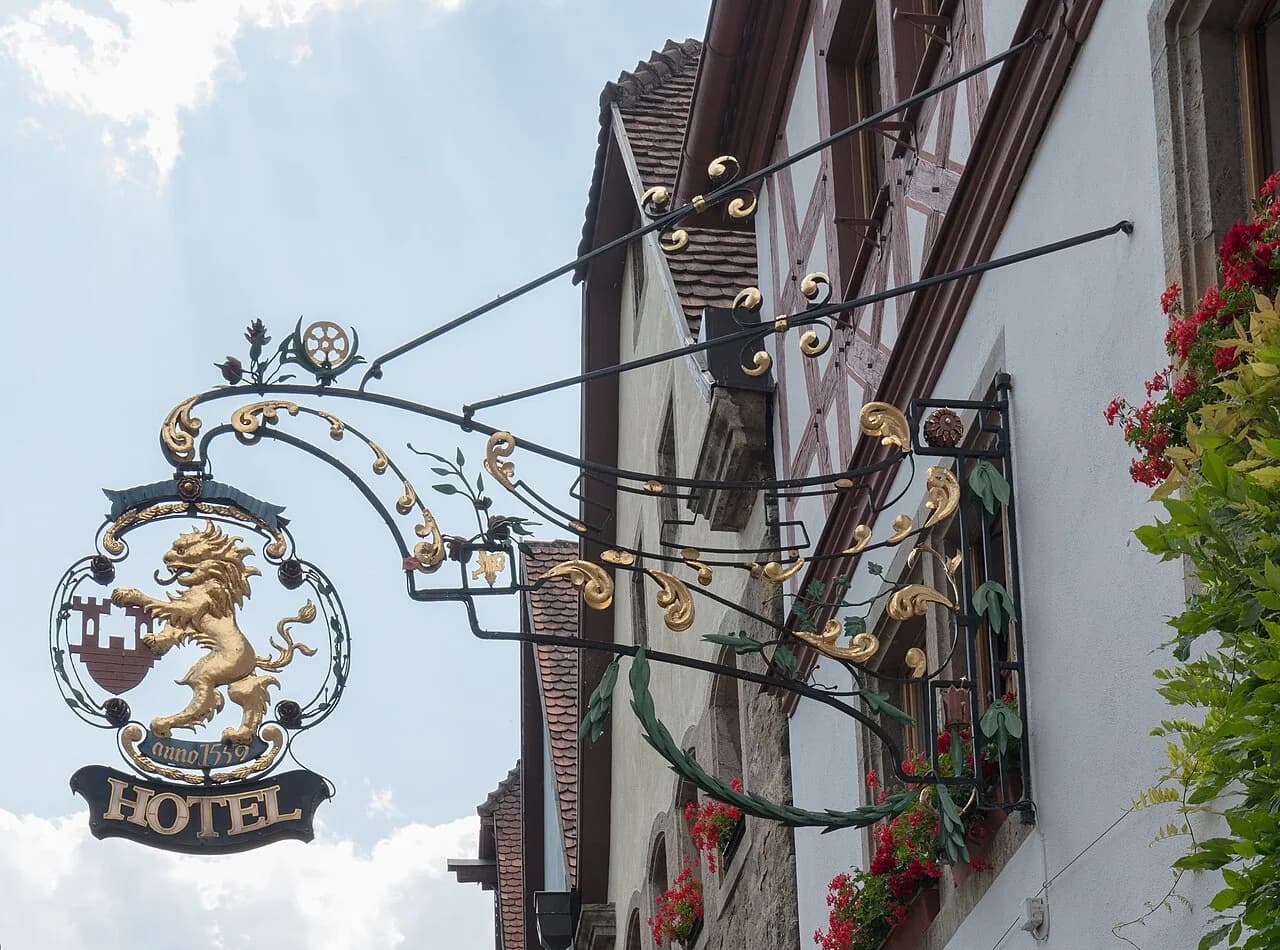
Rothenburg ob der Tauber packs its half-timbered lanes, towers and gates into a walled old town, so the hard part of photographing it is timing rather than logistics. The same square can look like a postcard at one hour and a flat grey wall at another, depending on which facades catch the sun. A suggested photographic day here is best split into two light windows rather than one long march.
This guide sorts the key compositions by what they cost in time and money: free outdoor spots such as the Plönlein, the Castle Garden and the covered wall walk, versus separately ticketed interiors you should treat as their own decision. It also separates reliable facts from advice you should verify, because opening hours, event dates and admission charges change and are best confirmed with the organiser. For the wider trip, start with the landmark visitor guides and branch into specific walks from there.
Light, Crowds and the Compact Old Town
Because the old town is compact, you can walk between the Plönlein, the Marktplatz and the Castle Garden in a single loop, which means you can revisit a spot when the light turns. The practical question is which direction a facade faces and when the tour groups arrive, not how far you have to carry your bag. Build your day in two passes, one early in the morning and one in late afternoon, so you can abandon a bad frame and return when shadows fall where you want them.
The town's own tourism service presents Rothenburg as one of Germany's most beautiful medieval towns and a highlight of the Romantic Road, with the Plönlein, the walkable town wall, the Marktplatz and the Burgtor among its historic sights, which confirms the headline landmarks worth planning around. Independent accounts cover what a walk actually feels like: one travel write-up lists the Castle Garden, Weisser Turm, Town Wall and Plönlein as the best photo spots and recommends early morning for the Plönlein, noting that mornings are quieter in the historic centre. Treat all of that as a working assumption rather than a promise, because a single coach group can empty or fill a lane within minutes.
Weather is the other variable you cannot book around. Snow, fog and low winter sun can turn a mediocre composition into a memorable one, while flat overcast light flattens the half-timbering that makes these streets photogenic. Check the forecast the evening before and decide your first stop accordingly, rather than committing to a fixed order.
The compactness also means you rarely need transport once you are inside the walls, so scouting on foot the first afternoon pays off later. Walk the loop once without a camera, note which direction each facade faces and where the light falls, then return with a plan. That single unburdened lap is often the difference between a rushed checklist and a set of photographs you actually like.
The Plönlein: What Is Actually in the Frame
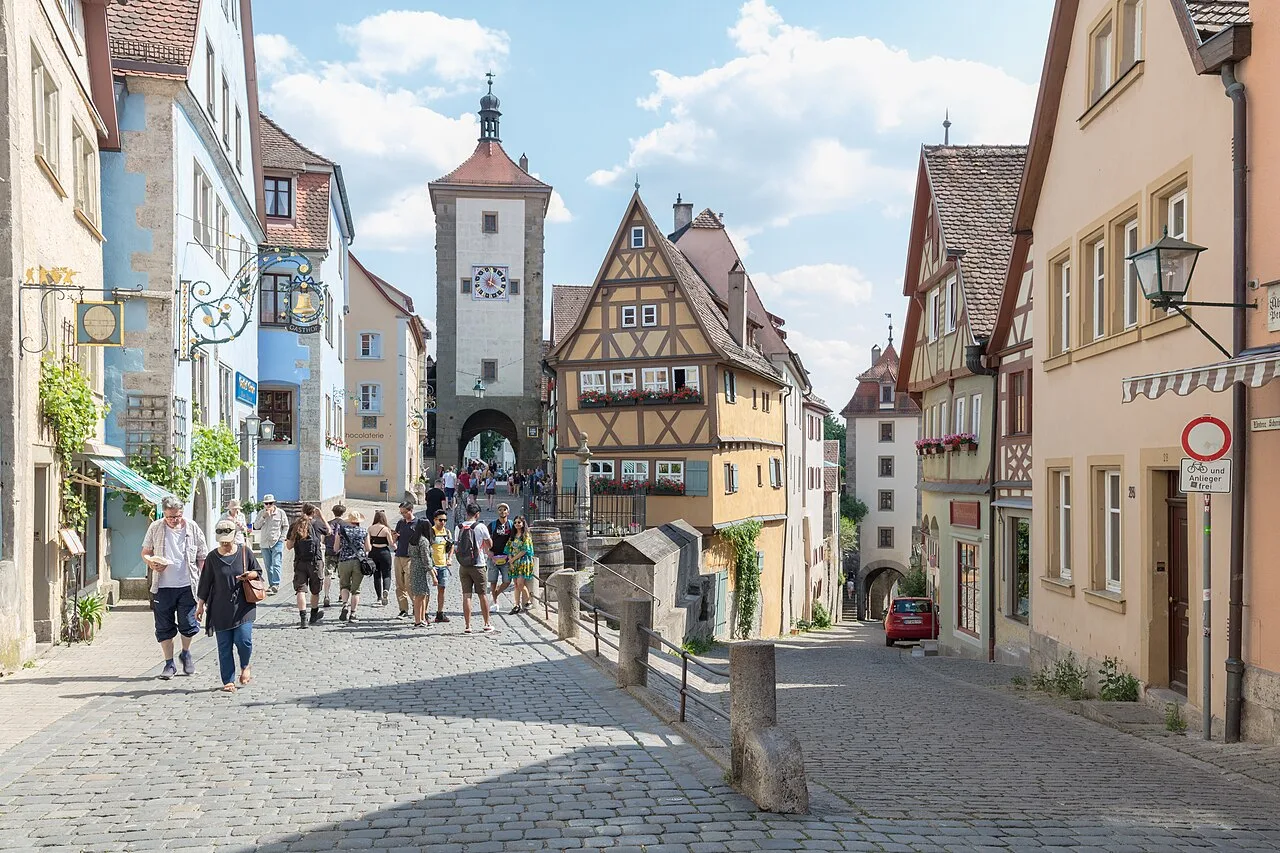
The Plönlein is the composition most people come for: a small yellow house with a fountain in front, framed by the Siebers Tower on one side and the Kobolzeller Tower on the other. One independent guide describes the little square as the picture that best illustrates Rothenburg, with its yellow and red half-timbered houses flanked by those two towers. It sits in the southern part of the old town, where two lanes fork, which is exactly why the view reads as a symmetrical postcard at ground level.
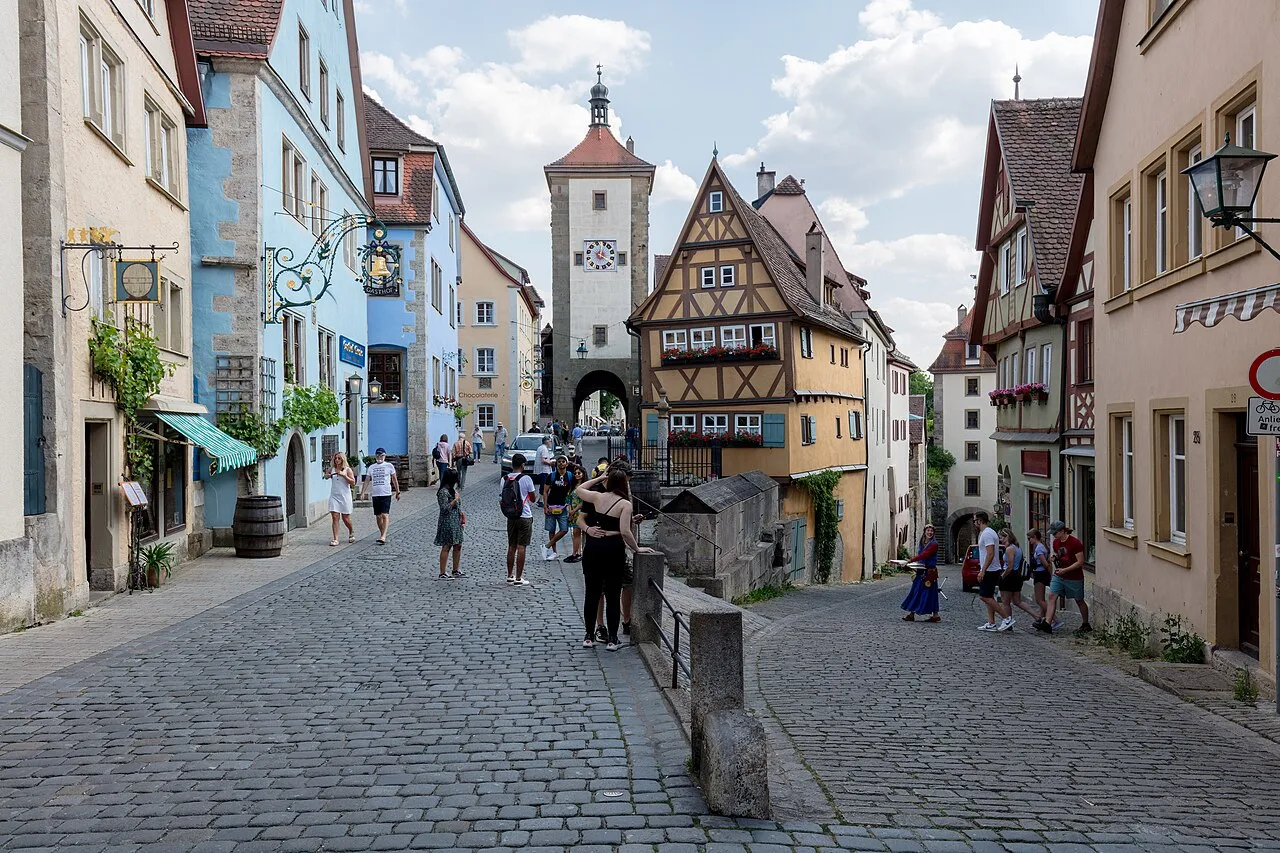
The standard working assumption is to come early in the morning for fewer people, with lunchtime as a second fallback when groups break for food, though neither hour comes with a guarantee. The real trade-off is light: shooting early can put the opposite facade in shadow even as the square empties, so you are trading soft, empty frames for warmer light on the neighbouring buildings. Decide which you value more before you set an alarm.
Stand slightly back and to the side of the fork rather than directly between the towers, so the fork of the lanes stays visible and the towers frame the yellow house instead of crowding the edges. A wide lens handles the close buildings, while a short telephoto compresses the towers and the house into a tighter arrangement if you can find the space behind you. Either way, crouch slightly to keep your horizon level, because leaning houses and a tilted wall are hard to correct later.
The Plönlein is not a standalone stop; it anchors a set of connected squares and gates that are worth walking in sequence. A self-guided walking route through Rothenburg ob der Tauber's Old Town Squares and Gates is a useful companion for planning that order, so you arrive at the fork with the light already worked out.
Marktplatz and the Town Hall Square
The tourism service lists the Marktplatz among Rothenburg's historic sights, and independent guides describe it as the city's nerve centre since the Middle Ages, ringed by colourful half-timbered houses and dominated by the Town Hall. The square is wide enough to frame with a normal lens, but the interesting compositions come from using the fountain, the arcades or a leaning facade as a foreground anchor. Photograph the space as a whole first, then work the edges where locals cross rather than the open centre.
The Town Hall belfry is a separate climb with its own ticket, so do not plan your square photographs around going up it. Treat any tower ascent as a distinct decision, and confirm the current charge and access arrangements with the operator on the day, because figures you find online may be out of date. If the tower is closed or the queue is long, the square itself still delivers without spending anything. If an elevated vantage point is the point of the day, our guide to the best viewpoints in Rothenburg ob der Tauber covers the alternatives.
The square's shape changes dramatically through the day as shadows sweep across the cobbles, so shoot it once in open light and once when the facades are in shadow for two very different images. Midday is the harshest window here, which makes it a reasonable moment to leave the open centre and work the shaded arcades instead.
Castle Garden (Burggarten): Rooftops and Vineyards
The Castle Garden, or Burggarten, is an elevated green space on the site of the former castle, looking out over red rooftops, vineyards and the Tauber valley below. One independent guide describes it as a peaceful haven with views over the rooftops and vineyards and over the south of the old town, with the Burgtor gate and its tower visible from the grounds. Because it is open ground rather than an interior, it is the most forgiving spot when the rest of your plan falls apart.
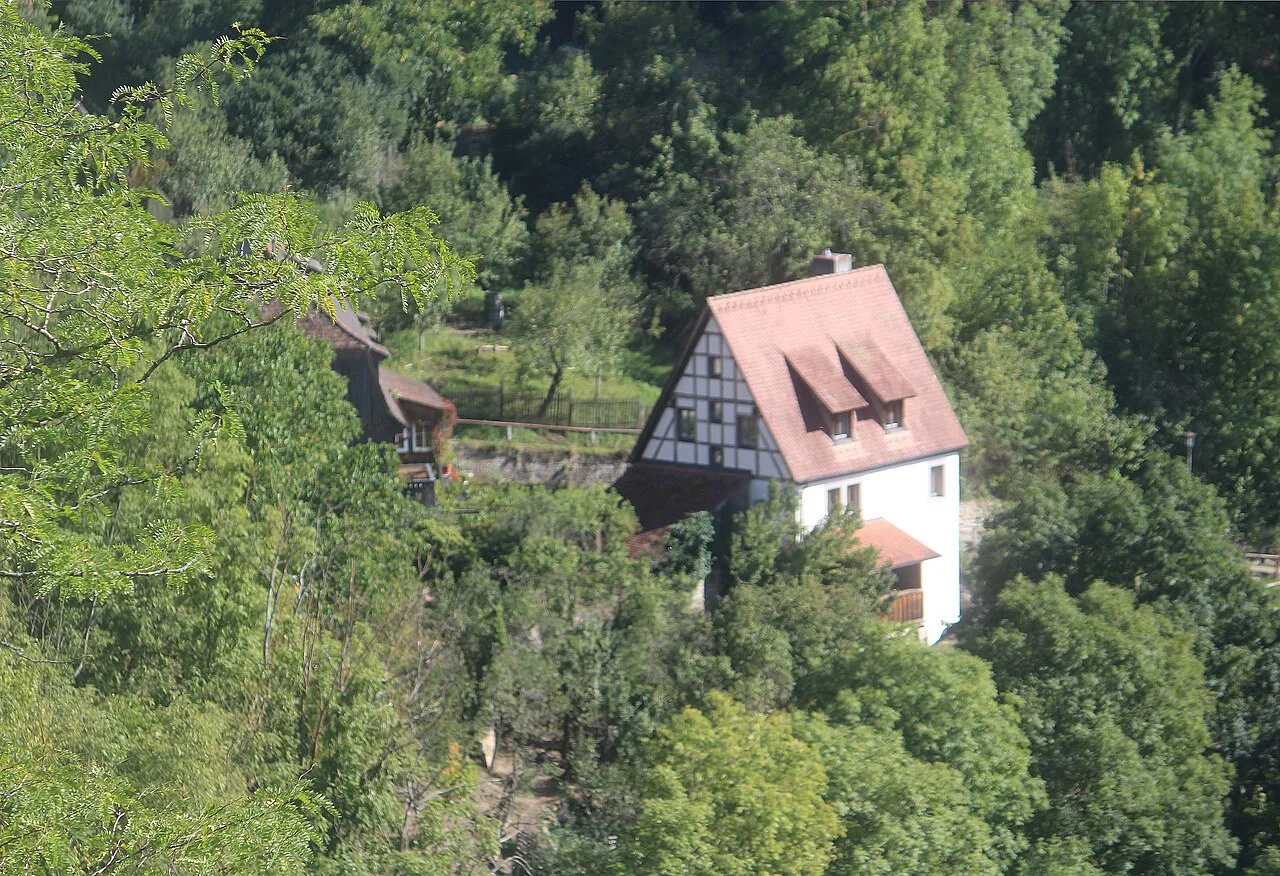
This is your practical fallback when the Plönlein is crowded or the light is flat, since you can compose over rooftops instead of into a narrow street. The view works in softer light and even under thin cloud, when the vine slopes read as texture rather than glare. Walk to the far edge toward the Burgtor and look back for a frame that includes the gate, the wall and the town behind it.
Because the garden sits above the streets, it is also a good place to use a longer lens to isolate towers and roofscapes rather than shooting everything wide. If the wind picks up, use a faster shutter speed and a slightly higher ISO rather than balancing on the wall. Save this stop for the middle of the day, when the light elsewhere is harshest and the garden is at its most comfortable.
The Town Wall and Turmweg: Free Tower Views
The covered walkway along the town wall, known as the Turmweg, is one of the few places in Germany where you can walk almost the full circuit of a medieval wall. One independent guide gives a city wall length of 4 km, a walk duration of one to three hours, round-the-clock opening and no entry fee, and lists Spitaltor, Gerlachschmiede and the Stoeberlein Tower among the places of interest, with 42 towers in the old town overall. A second travel account likewise puts the circuit at 4 km with 42 towers and gates, around ninety minutes for the full tour, and no charge. Both sets of figures come from independent travel writing rather than the town's own tourism service, so plan your budget accordingly but confirm current access locally before you commit to the full loop.
The photographic payoff is the elevated view along the wall itself, with towers receding into the distance and rooftops visible between the parapets. Look for the side stairways where you can step off and back on, because the wall is not a single unbroken shot and the best frames often come from a short detour down to street level. If you want the full circuit, treat the one-to-three-hour range as your time budget and decide what you are cutting from your shot list to fit it.
Early or late in the day the walkway is quieter and the light rakes across the tiles, but the covered sections stay dim, so expect a wide exposure range between the bright openings and the shadowed timber. Meter for the highlights and let the dark timber go deep, or bracket if your camera allows it. Carry a small torch for the darker stretches and watch your footing, since the boards are uneven and the passages are genuinely dark.
If the wall walk becomes your main event, budget it as a half-day rather than a detour and build the rest of the day around its start and finish points. Walking part of the wall in the afternoon to scout, then returning at dawn when the walkway is quieter, makes that possible. A two days in Rothenburg ob der Tauber itinerary shows how the walk can fit around other landmarks if you are staying over.
Weisser Turm and the Old Town Streets
The Weisser Turm is one of the towers the independent guides list among the best photo spots, and it works as a street-level subject rather than a viewpoint you climb. Schmiedgasse, the old blacksmiths' street, and Gerbergasse, the tanners' lane, are described by one guide as narrow cobbled lanes lined with leaning houses, with Gerbergasse quieter than the Marktplatz and once the district where hides were treated. These are compositions you can shoot at almost any hour, though the narrow lanes need direct sun to bring out the colour of the timber.
The problem here is contrast: narrow streets in a medieval town are half shadow, so your camera will fight between a bright slice of sky and a dim facade. Expose for the building rather than the sky, accept a blown-out sliver above the roofline, and let the texture of the wood and plaster carry the image. Where the lane is genuinely dark, steady yourself against a wall and shoot a short burst instead of chasing a perfect single frame.
Many of these lanes are free to walk and the Christmas shops along them are free to enter, which makes the old town streets the cheapest part of a photographic day. One independent guide notes that two Christmas shops sit in the old town, a large one next to the Town Hall and a smaller traditional one close to the Plönlein, and that photography is not allowed inside the smaller shop. If you want to shoot decorations, do it in the street rather than in the shop doorway.
Beyond the Walls: the Tauber Valley
Below the town, the Tauber river runs through a valley of meadows, vineyards and wooded slopes, and the walk down from the old town changes your whole visual register from timber and stone to landscape. One travel account describes a walking street called Kurze Steige leading down from town to the Tauber Valley and the river, with the option of walking along the water as far as you like. This is where you go when you want a wide frame rather than another facade.
Haze and season matter more here than in the streets, because you are photographing distance. Summer haze softens the far slopes and flattens contrast, while clearer autumn and winter air can give you sharper layers toward the valley. Shoot early or late for the best chance of directional light across the slopes, and use the trees and river bends as foreground so the frame has depth rather than a single flat band of green.
Because the valley sits outside the walls and below the town, allow more time than the distance suggests for the climb back up. Take water and check the weather rather than assuming the descent is short, and turn around while you still have light for the return. The payoff is the classic elevated view of the walled town from below, which is a composition you simply cannot get inside the gates.
Gear and Settings for Low Light and Narrow Streets
A wide zoom and a short telephoto cover almost everything in Rothenburg, with the wide lens for the Plönlein and the wall walkway and the telephoto for rooftop and tower compression. Add a fast prime for the shadowed lanes, since a wider aperture buys you handholdable shutter speeds when tripods are impractical on the wall. A polarising filter helps with the glare on wet cobbles but costs you about a stop of light, so have it ready to remove in the dim passages.
For low light in the lanes, raise the ISO before you drop the shutter speed below roughly 1/60 second, because handshake ruins more street frames than noise does. Bracket the high-contrast scenes where a bright opening at the end of a tunnel sits above a dark walkway, and blend later rather than accepting a silhouette. If you do carry a tripod, use it on the Castle Garden terraces in the evening rather than on the narrow wall, where it blocks other walkers.
Batteries and cards drain faster than you expect when you are shooting in cold weather and reviewing on the move, so carry a spare battery in an inside pocket. A microfibre cloth matters more than usual because autumn and winter mist condenses on a cold lens the moment you step out of a heated interior. Finally, keep your kit light: the old town rewards walking, and a heavy bag will shorten your loop more than any setting will.
A One-Night Strategy: Dawn, Midday and After Dark
If you can stay one night, split your shooting into three blocks and let the light dictate the order. Dawn belongs to the Plönlein and the empty lanes around it, when the town is at its quietest and you can work a composition without waiting for people to clear. If the forecast promises fog or snow, swap the Plönlein for the wall or the Castle Garden and shoot atmosphere instead of architecture.
Midday is for the Castle Garden and the covered walkway, where the light is at its harshest in the open squares but the elevated and covered settings stay workable. Use the middle hours to walk the wall and to scout the Marktplatz shadows for your evening return, and eat when the tour groups do so you are not queuing. If the Plönlein was crowded at dawn, this is your second chance, though the trade-off is that the opposite facade will now be lit rather than soft.
After dark, the floodlit facades and the reflections on wet cobbles transform the same streets, and the Marktplatz and Plönlein both read differently once the crowds have gone. Take a light tripod or brace on a bollard, shoot at dusk when there is still colour in the sky, and check the official tourism site for seasonal events rather than assuming year-round lighting. The town's calendar changes with the seasons, so verify anything date-specific before you build an evening plan around it.
Plan Your Photography with Local Timing
Rothenburg ob der Tauber rewards a photographer who treats timing as the main decision and distance as a minor one. Build your day around two light windows, keep the Castle Garden and the wall as flexible options, and separate the free outdoor compositions from the separately ticketed interiors so you are not caught out. The whole town is small enough to revisit a spot, which is the single biggest advantage you have.
Before you travel, confirm the details that change with the calendar: event dates, admission charges and access arrangements are best checked with the town's tourism service rather than a blog post. Start from the Rothenburg ob der Tauber hub to browse landmark guides, and use the wider Rothenburg ob der Tauber section to slot your shooting plan into a full itinerary. If a spot disappoints on the day, walk a few minutes and try again later, because in this town the light does most of the work.
Frequently Asked Questions
How much time should I set aside for photographing Rothenburg?
Allow a full photographic day if you want the Plönlein, the Marktplatz, the Castle Garden and part of the wall walk, plus a second light window in the evening for the streets. The wall circuit is commonly quoted at one to three hours in independent travel writing, and that is before you stop to compose, so treat the wall as a half-day anchor rather than a quick detour. An overnight stay gives you the cleanest split between morning and evening light.
Is the town wall walk free, and how long does it take?
Independent travel accounts describe the Turmweg wall walk as free, with a length of roughly 4 km and a walking time commonly given as between one and three hours for the full circuit. Those figures come from travel writing rather than the town's own tourism service, so confirm current access at the site before you plan the full loop. There are stairways where you can step off and rejoin later if you run short of time.
When is the best time to photograph the Plönlein?
Early morning is the standard suggestion for fewer crowds, with lunchtime as a second fallback when tour groups break. Understand the trade-off, however: shooting early can leave the opposite facade in shadow, while later light may warm the buildings but fill the square with people. Treat both windows as working assumptions rather than guarantees, and be ready to return later in the day if the first attempt is crowded or flat.
Which Rothenburg photo spots need a ticket versus being free?
The Plönlein, the old town streets, the Castle Garden and the town wall walkway are outdoor or open-access compositions that independent guides do not list as requiring a ticket. Ticketed interiors, museum collections and tower climbs are separate, and each has its own admission and access rules, so do not assume one ticket covers a complex or that a tower ascent is included in anything else. Check each site's current terms with the operator before you go.
How do I get to Rothenburg ob der Tauber?
Rothenburg sits in Franconia and is normally reached by train with a change at a nearby hub, depending on your starting city. Journey times and fares vary by route, connection and ticket type, so check current schedules and prices with the national rail operator rather than relying on a fixed figure. Once inside the walls, the old town is compact and best covered on foot.


