

Rothenburg ob der Tauber is compact enough that most visitors end up choosing between its indoor sights rather than trying to see them all properly. The Mittelalterliches Kriminalmuseum, known in English as the Medieval Crime and Justice Museum, rewards a specific kind of curiosity: law, crime and social order rather than fairy-tale romance.
The collection traces the development of European law across roughly a thousand years through 130 displays arranged on four floors, according to Germany for Visitors. That framing matters: the museum is a legal-history institution that also holds punishment equipment, not a display of instruments with a little context attached.
This guide covers what the displays actually contain, where the building sits in town, a suggested visit duration clearly labelled as a suggestion rather than an official figure, and how to fit the museum into a walk through the old town. It deliberately does not quote admission prices or opening hours, because those change and should be confirmed with the operator directly.
What the Museum Actually Covers
The subject here is legal history, not horror. Germany for Visitors describes the collection as tracing the development of European law over a 1,000-year period, and notes that the dramatic exhibits include torture devices, executioners' implements and punishments designed to humiliate. Alongside those objects sit legal documents and trial archives.
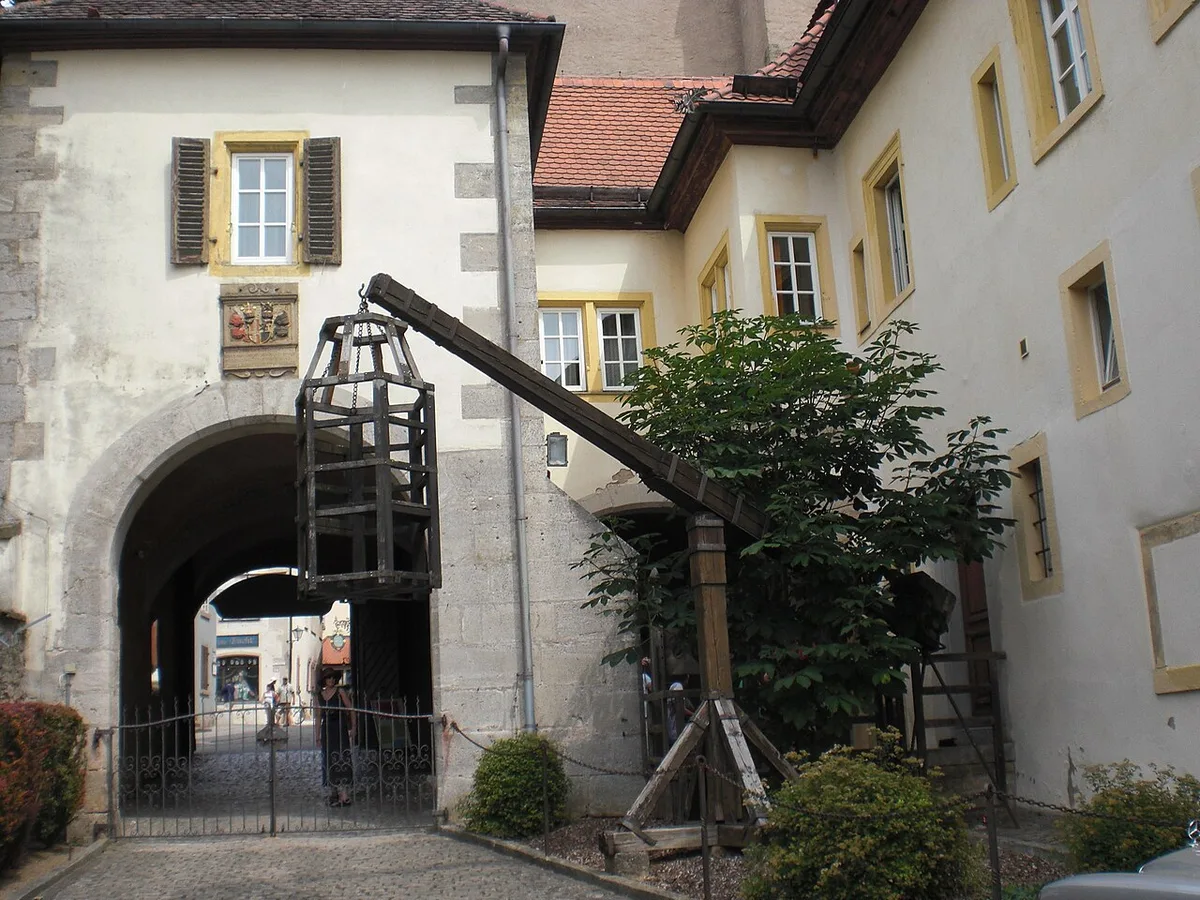
The building's own history explains the mix. Trip.com notes that what was once Rothenburg's popular medieval torture instrument museum has since been expanded into a complete legal museum, incorporating former legal documents and trial archives as well as the instruments used for punishment. Reading the collection as an evolving institution, rather than a single curated statement, makes the four floors easier to navigate.
The practical takeaway is that a visit rewards reading. The individual pieces of ironwork are striking, but the reasoning behind each sentence is what turns a room of hardware into a story about how a town governed itself. Visitors who skim objects move quickly through the building; visitors who read the document translations and trial records slow down considerably.
Where It Sits on Burggasse
The museum's address is Burggasse 3-5, 91541 Rothenburg ob der Tauber, on the northern side of the old town. It sits close to the castle garden end of town, which is useful when you are planning a route rather than wandering at random.
Rothenburg's core is small and walkable, so most visitors reach Burggasse on foot from the market square or from the station side of town. A trip report published by Trip Moments describes exiting Rothenburg station and walking ten minutes straight to the Röder Gate to enter the old town. That walk is one traveller's account rather than an official instruction, but it matches the town's compact scale.
A sensible routing decision is to treat the museum as the northern anchor of your day and walk the walls or the castle garden afterwards, rather than doubling back across the centre. That keeps the afternoon moving in one direction instead of retracing the same cobbled streets.
Exhibits Visitors Tend to Remember
Certain pieces recur in visitor accounts. Germany for Visitors mentions torture devices and executioners' implements, then singles out punishments intended to humiliate: the Donkey of Shame, used on lazy pupils, and the Shame Flute, imposed on bad musicians.
The same source notes that a dunking cage on display was used to punish bakers whose loaves were smaller than the legal minimum. The detail is worth holding onto, because it shows how tightly the regulation of trade and criminal punishment were intertwined in a medieval town.
Expect the exhibits to be spread across several floors, as the display count implies. If you want to see everything rather than the highlights, plan your route through the building rather than following whichever staircase you meet first.
How Long a Visit Realistically Takes
A recommended sightseeing time of two hours appears on Trip.com's attraction listing and is repeated in a Trip Moments itinerary that allots one hour to the museum itself. Neither is an official duration from the operator, and the two figures do not even agree with each other.
As a suggestion from this guide rather than an official figure, allow roughly one to two hours if you read selectively and keep moving. Four floors of dense material can absorb considerably more if you stop at every case, and a one-hour slot in a packed itinerary will feel rushed.
Most of the variation comes down to reading style. Visitors who skim objects finish near the lower end; anyone who works through the document translations and trial records should budget closer to two hours and accept that they may not see every room.
Who Gets the Most Out of It
Adults drawn to law, crime, punishment and social history tend to find this museum unusually rewarding, because it treats its subject as a system rather than a spectacle. If you enjoy reading about how institutions worked and how cases moved from accusation to sentence, the four floors will hold your attention easily.
Families weighing a visit with younger children have a genuine judgement call to make. The material involves execution, torture and public humiliation, and how a child responds depends on their age, sensitivity and how the displays are presented at the time, so decide as a family rather than by reputation. No reliable age threshold is available to quote here.
A workable approach for mixed groups is to split up: one adult takes the children towards the wall or the castle garden while the other works through the collection at reading pace. Rothenburg's scale makes that easy to arrange without losing an hour to logistics.
Pairing It With Rothenburg's Other Indoor Sights
If you have only one wet afternoon, you are choosing between this museum and the town's other indoor collections rather than seeing both properly. The Reichsstadtmuseum Rothenburg Imperial City Museum visitor guide covers the former imperial city's art and civic history, which overlaps less with the crime museum than you might assume.
The Käthe Wohlfahrt Christmas museum appeals to a completely different mood and is usually a shorter stop, which makes it a sensible pairing with a museum visit rather than a competitor for the same slot. Keep the crime museum for the part of the day when you have energy to read.
Rothenburg ob der Tauber with kids is worth reading if children are coming along and you want to balance a heavy indoor stop with something outdoors. A Stadtmauer walk gives younger visitors a physical outlet after a quiet, text-heavy hour or two.
The Rothenburg Rathaus tower is another separate attraction with its own arrangements and access, so treat it as a distinct stop rather than assuming it comes with any museum ticket. Checking its status on site is more reliable than relying on older trip reports.
Before You Go: Hours, Tickets and Scope
Current opening hours, seasonal closures and admission prices all need to come from the operator, because they change and this guide does not quote them. Check the museum's own site or contact it directly before you build your day around a visit. Platform listings such as Trip.com's current 10:00 to 18:00 opening line are third-party information and may not reflect the museum's own schedule.
Ticket scope is the question worth asking at the desk: whether one admission covers every floor and every part of the collection, or whether some areas are handled differently. Do not assume a single ticket covers everything simply because the museum occupies one building, and do not assume the museum's admission also includes another Rothenburg attraction.
Third-party booking pages remain useful for orientation and for a sense of scale, but hours and prices listed there may not match the museum's current arrangements. Treat the operator's own information as the authority and use platform listings only as background.
Plan Your Visit
The Medieval Crime and Justice Museum suits travellers who want a serious look at how European law developed over roughly a thousand years, and who are willing to read rather than just look. Set aside one to two hours as a suggestion from this guide, and go in knowing that the legal documents and trial archives are as much the point as the instruments.
Build the rest of the day around Burggasse so you walk out towards the walls or the castle garden instead of retracing the old town centre. Confirm hours, admission and ticket scope with the museum before you commit an afternoon to it.
Frequently Asked Questions
What is the Medieval Crime and Justice Museum in Rothenburg ob der Tauber about?
It is a legal-history museum rather than a cabinet of shock exhibits. Germany for Visitors describes its 130 displays on four floors as tracing the development of European law over a 1,000-year period, covering torture devices and executioners' implements alongside humiliating punishments. Trip.com adds that the building was formerly Rothenburg's torture instrument museum before being expanded into a complete legal museum including legal documents and trial archives.
How long should I allow for the Medieval Crime Museum?
As a suggestion from this guide, allow about one to two hours if you read selectively and keep moving. A recommended sightseeing time of two hours appears on Trip.com's listing, and a Trip Moments itinerary allots one hour, but these are third-party figures rather than operator durations. Anyone who reads every document translation and trial record should expect to spend longer.
Is the Medieval Crime Museum suitable for children?
That is a judgement call for each family, and no reliable age threshold is available to quote here. The collection deals with execution, torture and public humiliation, and how a child responds depends on their age and sensitivity. If your group is mixed, one adult can take the children towards the city walls or castle garden while the other works through the museum.
Where is the museum located in Rothenburg?
It sits at Burggasse 3-5, 91541 Rothenburg ob der Tauber, on the northern side of the old town near the castle garden. Rothenburg's centre is compact and walkable, so you can reach it on foot from the market square. One Trip Moments itinerary describes walking about ten minutes from the station through the Röder Gate into the old town.
Do I need to book tickets for the Medieval Crime Museum in advance?
There is no reliable information here on whether advance booking is required or recommended, so ask the museum directly. Ticket scope also needs confirming at the desk, since it is not clear from the available sources whether one admission covers every floor and every part of the collection. Check the operator's own site for current arrangements before you travel.
Which other Rothenburg attractions pair well with the crime museum?
The Reichsstadtmuseum covers the town's civic and art history and makes a natural companion if you want a second indoor stop. For a lighter pairing, the Käthe Wohlfahrt Christmas museum is usually a shorter visit. Outdoors, a Stadtmauer walk and the castle garden work well after a text-heavy museum session, especially with children.


