

The museum that English-language guides long called the Reichsstadtmuseum is now the RothenburgMuseum, so the old label and the current one point to the same building on the edge of the old town. It sits at Klosterhof 5 inside a former Dominican convent, and the tourism office lists it among Rothenburg ob der Tauber's top sights rather than as a side attraction.
The city tourism page states the essentials plainly: the museum has occupied the convent since 1936, the convent itself existed from 1258 to 1554, and the collections cover eight centuries across more than 2,500 square metres. The same page notes that the museum was renamed in 2019, which explains why searches for the old name can still lead to stale listings.
This guide covers what the collections actually contain, which areas are free to walk through, how the museum differs from the crime museum, and how to fit it into a day. It deliberately avoids quoting ticket prices, because admission figures circulate in outdated sources and the reliable move is to check the current fee on the organiser's own pages shortly before you travel.
Where the Museum Sits and What It Was Called
The museum occupies the former Dominican convent at Klosterhof 5, a complex whose scale and architecture still anchor the monastery courtyard around it. The city tourism listing dates the convent's existence to 1258 to 1554 and the museum's tenancy to 1936, which means the building has been a civic collection for nearly a century.
For orientation, the Klosterhof address places you just north of the main market square, within the same compact core as the town hall, St. Jakob's Church and the crime museum. Rothenburg ob der Tauber's old town is small enough that you can walk between all of these in a single morning, which makes an either-or decision about museums unnecessary.
The practical reason to fix the name in your head is search: type the old term into a map app and you may land on stale listings, whereas the current name appears on the museum's own site and on the city's museum pages. If a sign or leaflet still says Reichsstadtmuseum, treat it as history rather than a second institution.
What Is Inside: Eight Centuries of City History
The permanent collection presents the city of Rothenburg's holdings from eight centuries, including items from the Alt-Rothenburg Association alongside church and private loans. That breadth is the reason the museum reads as a city-history collection rather than a single-theme attraction, and why a quick lap can feel rushed.
Three strands are worth prioritising if your time is short. The Baumann Foundation collection traces the history of weapons in Europe from the Stone Age to the 19th century, the Judaica department presents evidence of Jewish culture in Rothenburg, and a picture gallery gathers views of the town by British and German painters.
The city tourism office also notes that the permanent display is supplemented by regularly changing special exhibitions, guided tours, cultural events and participation projects with local artists and associations. That means the exact rooms on show can shift between seasons, so treat any room-by-room list you find online as a rough sketch rather than a fixed floor plan.
The Convent Itself Is Part of the Exhibit
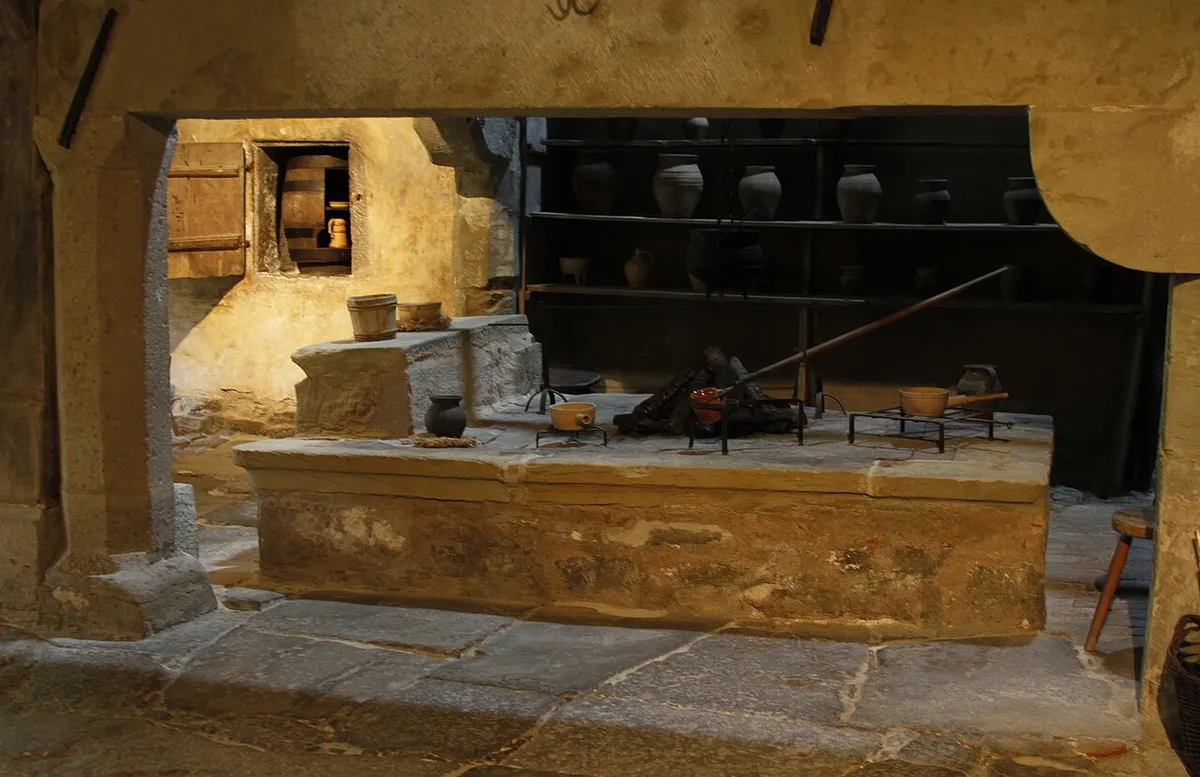
The best-preserved feature is the 13th-century monastery kitchen, which the tourism office singles out as an unusually vivid window into the everyday life of the convent's residents. Because the kitchen survives within the building rather than being reconstructed in a gallery, it makes the architecture part of the interpretation instead of a backdrop.
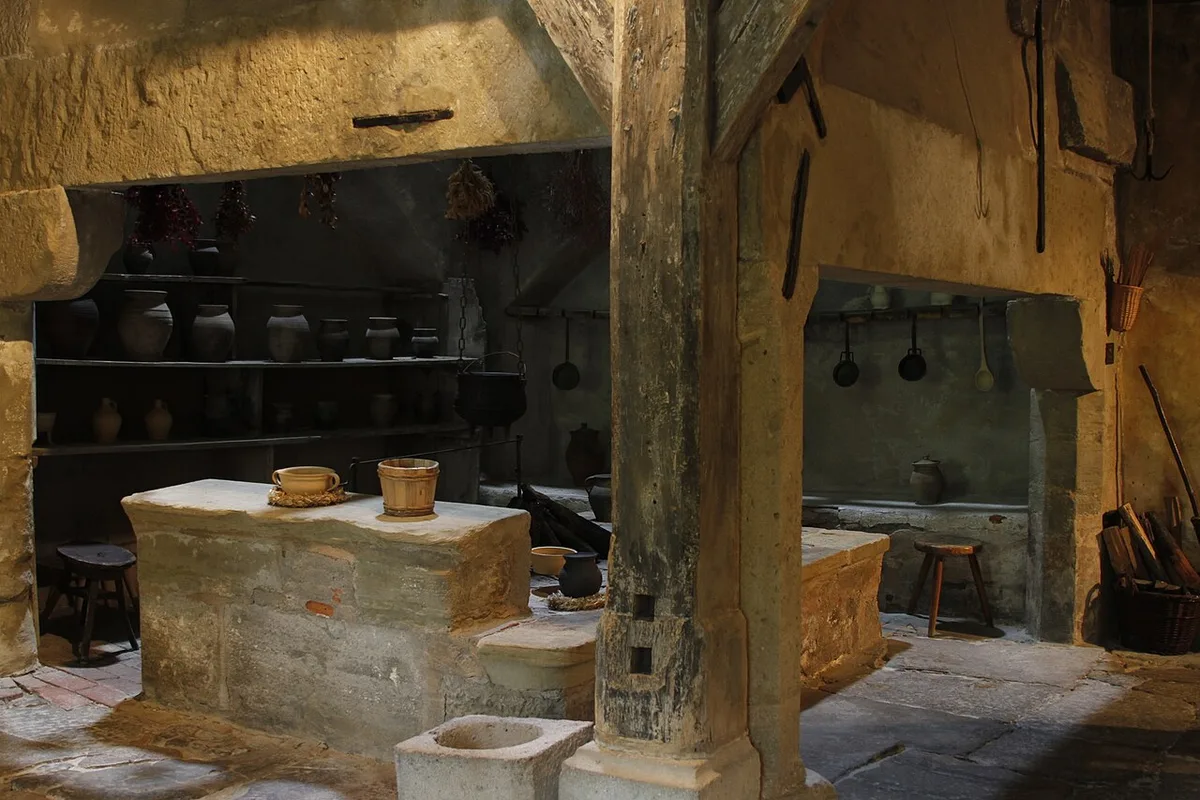
Allow time to look up as you move between rooms: the convent's scale and layout explain why the museum could spread collections over more than 2,500 square metres in the first place. Visitors who only scan display cases tend to miss this layer entirely.
The city's own top-sights roundup describes the monastery garden of the former Dominican monastery as a quiet spot off the main route, offering a sense of medieval monastic gardening. It is a sensible place to slow down at the midpoint of a museum visit rather than treating the building as a corridor between vitrines.
Free Courtyard and Garden Versus the Ticketed Interior
One of the most useful things to understand before you go is that the courtyard and garden around the convent can be enjoyed as a break in their own right, separate from the paid collection inside. The tourism listing explicitly suggests resting in the cross courtyard or in the neighbouring monastery garden, which are described as spots to pause rather than as ticketed galleries.
The city's insider-tips page goes further and lists the monastery garden of the former Dominican monastery as a quiet, lesser-known place to visit. If you are short on time or travelling with people who dislike museums, walking through the courtyard and garden still gives you a genuine sense of the complex.
The interiors, by contrast, are the part governed by an admission ticket and by the daily opening window, so plan your day around the museum's hours rather than assuming the whole complex follows one schedule. Check the current fee and any concessions on the museum's own site before you set out, since published figures in third-party guides are often several years old.
RothenburgMuseum or the Crime Museum: Choosing by Subject
The Medieval Crime Museum is a separate institution at Burggasse 3-5 with its own admission, its own hours and a very different subject: crime, punishment and legal history rather than the broad sweep of city life. The town's own museum overview describes it as a journey through the dark side of the Middle Ages, with torture instruments and punishment devices, which tells you immediately whether it matches your interests.
Choose the RothenburgMuseum if you want weapons, paintings, Judaica and the convent's own rooms, and choose the crime museum if you want the grim end of medieval justice. Treat them as two separate tickets and two separate visits; nothing in the city's own museum listings suggests one admission covers both.
If you only have one museum slot, the decision is really about mood rather than quality. A museum that explains how a free imperial city lived and traded sits oddly beside one built around punishment, so pick the framing that fits the day you are having.
Also Distinct: the History Vault and Town History Museum
Two further city-history attractions are easy to confuse with the RothenburgMuseum. The History Vault sits at Marktplatz 1 and presents historical vaults and dungeons beneath the town hall, while a separate small museum dedicated to the town during the Thirty Years' War occupies the same Marktplatz address and covers the siege events of 1631 across a set of dungeons.
That concentration at Marktplatz 1 means you can pair a town-centre history stop with the market square and town hall without walking back to Klosterhof, but each of these venues keeps its own ticket and its own timetable. Cross-check the individual operator's page on the day rather than relying on a single combined listing.
If your interest is specifically the city's civic story across centuries, the RothenburgMuseum remains the broadest single stop. The market-square venues are better treated as short, focused visits that complement rather than replace it.
How Long to Allow and Fitting It Into a Day
A suggested duration of roughly 60 to 90 minutes inside the RothenburgMuseum is a reasonable planning figure for an average visitor moving at a normal pace; treat it as advice, not an official time. Anyone who reads labels properly in the weapons collection, or lingers in the Judaica rooms, should budget closer to two hours.
For a one-day visit, the museum works best as the indoor block between outdoor stops, since it sits close to the market square and the main walking routes. Pair it with a stretch of the town walls in the morning and the market square in the afternoon, and you will cover the historic core without retracing your steps.
If the forecast is poor, the museum is an obvious substitute for a wet wall walk, and the courtyard and garden give you a dry-ish break between rooms. A rotation of indoor collections and short covered walks is the standard approach on a wet day in Rothenburg ob der Tauber.
Seasonal Opening Windows and What to Verify
The museum's published pattern is seasonal rather than fixed: broadly daily from morning to early evening in the main season, an earlier close in November and December, and afternoon-only opening in January through March, with closures noted on two dates in late December. Because those windows change by season and can be adjusted, confirm the day's hours on the museum's own site before you walk over.
Do not rely on a secondary listing that gives a single all-year time; the town's own museum overview page, for example, shows a different window from the detailed museum page, which is exactly the kind of mismatch you can resolve only by checking the operator's current information. If the museum's own site does not resolve it, the tourist office at Marktplatz 2 is the fallback for a same-day answer.
Special exhibitions and guided tours rotate through the year, so a date that suits your trip may also bring a temporary show or an event programme. Ask about both when you check hours, since the museum notes that its permanent display is regularly supplemented this way.
If you want a preview before committing an hour of your day, the tourist office publishes short digital museum clips that give a first look inside the exhibitions. That is a low-cost way to decide whether the collection appeals before you pay for entry.
Rothenburg's Other Museums at a Glance
Beyond the RothenburgMuseum and the crime museum, the city's museum landscape includes the German Christmas Museum at Herrngasse 1, tied to the Käthe Wohlfahrt Christmas Village and open year-round, and the small historic craftsmen's rooms listed among the city's insider tips. Each keeps its own operator, hours and admission, so no single ticket covers them.
The city's own digital museum page groups several of these venues into short video introductions, which is useful when you are deciding how to allocate a limited number of indoor hours. Watching one clip per candidate museum takes only minutes and prevents an afternoon spent in the wrong collection.
For planning purposes, the cleanest approach is to pick two indoor attractions maximum on a single day and leave the rest for another visit. Rothenburg's old town rewards slow movement between a small number of stops rather than a checklist.
Plan Your Visit
The RothenburgMuseum makes sense for travellers who want the city's long story told through objects, rooms and paintings rather than through crime and punishment exhibits. Its convent setting, the 13th-century kitchen and the Baumann weapons collection give it a distinct identity that no other museum in town duplicates.
Before you go, confirm the day's opening window and the current admission terms on the organiser's own pages, since both follow a seasonal pattern and third-party figures age quickly. Budget 60 to 90 minutes inside if you want a proper look, and factor in a short pause in the courtyard or monastery garden.
If your day is tight, treat the museum as your indoor anchor and build the walls, market square and church around it. Rothenburg ob der Tauber is compact enough that this ordering costs you almost no walking, and it keeps the wet-weather option open if the sky turns.
Frequently Asked Questions
What is the Reichsstadtmuseum called now?
The former Imperial City Museum has been called the RothenburgMuseum since 2019, according to the city tourism office. It is the same institution at the same address, Klosterhof 5 in Rothenburg ob der Tauber, so older guidebooks and maps that use the previous name are referring to this museum rather than to a separate attraction.
Is the RothenburgMuseum free to enter?
The ticketed part is the collection inside the former convent, and admission terms are set by the operator. The courtyard and the neighbouring monastery garden are described by the city tourism office as places to take a break, so a short stop there does not require a museum ticket. Check the current fee and any concessions on the museum's own pages before your visit, because published prices elsewhere are often out of date.
Is the RothenburgMuseum the same as the Medieval Crime Museum?
No. They are two separate museums in different locations with separate admission. The RothenburgMuseum at Klosterhof 5 covers eight centuries of city history, including weapons, paintings and Judaica, while the Medieval Crime Museum at Burggasse 3-5 focuses on crime, punishment and legal history.
How long should I spend in the RothenburgMuseum?
Plan on roughly an hour to ninety minutes for a normal-paced visit, longer if the weapons collection or the Judaica rooms interest you. This is a suggested planning figure rather than an official recommendation, and the building itself, including the medieval kitchen, justifies extra time beyond the display cases.
Can I visit the monastery garden without a museum ticket?
The city tourism office treats the cross courtyard and the neighbouring monastery garden as places to pause during a visit, and its insider-tips page lists the monastery garden among the quieter spots in town. Because access arrangements can change, confirm on arrival whether any part of the complex is restricted on the day you visit.
Does the RothenburgMuseum share a ticket with the crime museum?
The city's museum listings present them as separate institutions with their own addresses, hours and admission, and nothing in the official pages describes a joint ticket. Buy and plan each visit independently, and check each operator's own page for current terms.
When are the museum's opening hours?
The published pattern is seasonal: longer daily opening through the main season, an earlier close in November and December, and afternoon-only opening in January through March, with some late-December closures. Exact times can be adjusted, so verify the current schedule on the museum's own site or with the tourist office before you walk to Klosterhof 5.


