
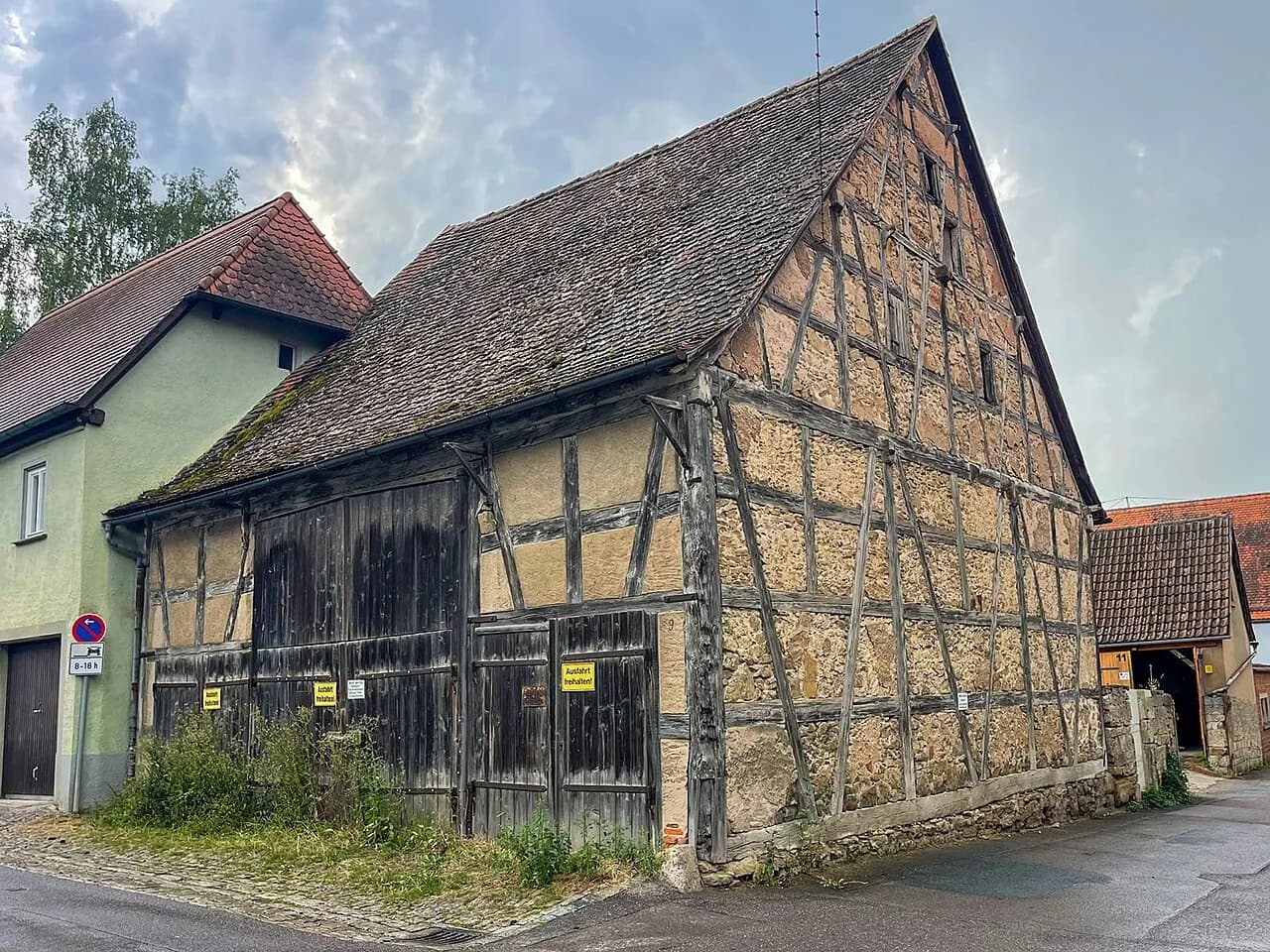
A wet day in Rothenburg ob der Tauber does not have to mean retreating to a hotel room. The walled old town is compact enough to move between indoor anchors without long exposed walks, and the tourism office maintains a dedicated page for what to do when the weather is bad, so the day has a natural structure even in steady rain.
The practical approach is to alternate long indoor blocks with short outdoor hops. Build the day around two museums, keep a tower climb as a flexible option rather than a fixed appointment, and step onto the wall-walk only when conditions look reasonable. It is also worth knowing before you go: the RothenburgMuseum follows seasonal daily hours, opening 10am to 6pm from April to October and closing on 24 and 31 December, so it belongs at the centre of a wet-weather plan.
Why Rothenburg Still Works in the Rain
Rothenburg's old town sits on a hill inside a nearly continuous ring of walls, which means almost everything on a short visit is packed into a walkable core. You are rarely far from a doorway, a cafe or a museum entrance when a shower turns heavier, and the lanes themselves are part of the experience rather than just a route between sights.
Wet weather also changes the character of the place in a way that works in your favour. Cobblestones darken, the crowds thin out around the edges of the day, and the half-timbered facades read differently under grey light. The main adjustment is logistical: bring a waterproof layer and shoes with grip, because polished stone gets slick.
The tourism office's discovery section separates its top sights from its practical planning pages, and its bad-weather entry sits alongside day-planning content such as "Rothenburg in one day" and "Rothenburg on the second day". Treat published hours as subject to change and confirm directly before you build a day around a single museum.
Rain Anchors First: RothenburgMuseum and the Monastery Complex
The city museum, now branded RothenburgMuseum, is the most substantial indoor stop in town and the best place to spend a genuinely wet morning. It occupies the former Dominican convent at Klosterhof 5, a community that existed on the site from 1258 to 1554, and the building itself is part of what you are visiting.
Plan on a visit that covers several distinct collections rather than one gallery. The permanent displays spread across more than 2,500 square metres and include the internationally known Baumann Foundation weapons collection, a Judaica department covering Jewish culture in Rothenburg, and a picture gallery of town views by British and German painters. Rotating special exhibitions mean the second half of a return visit is rarely a repeat of the first.
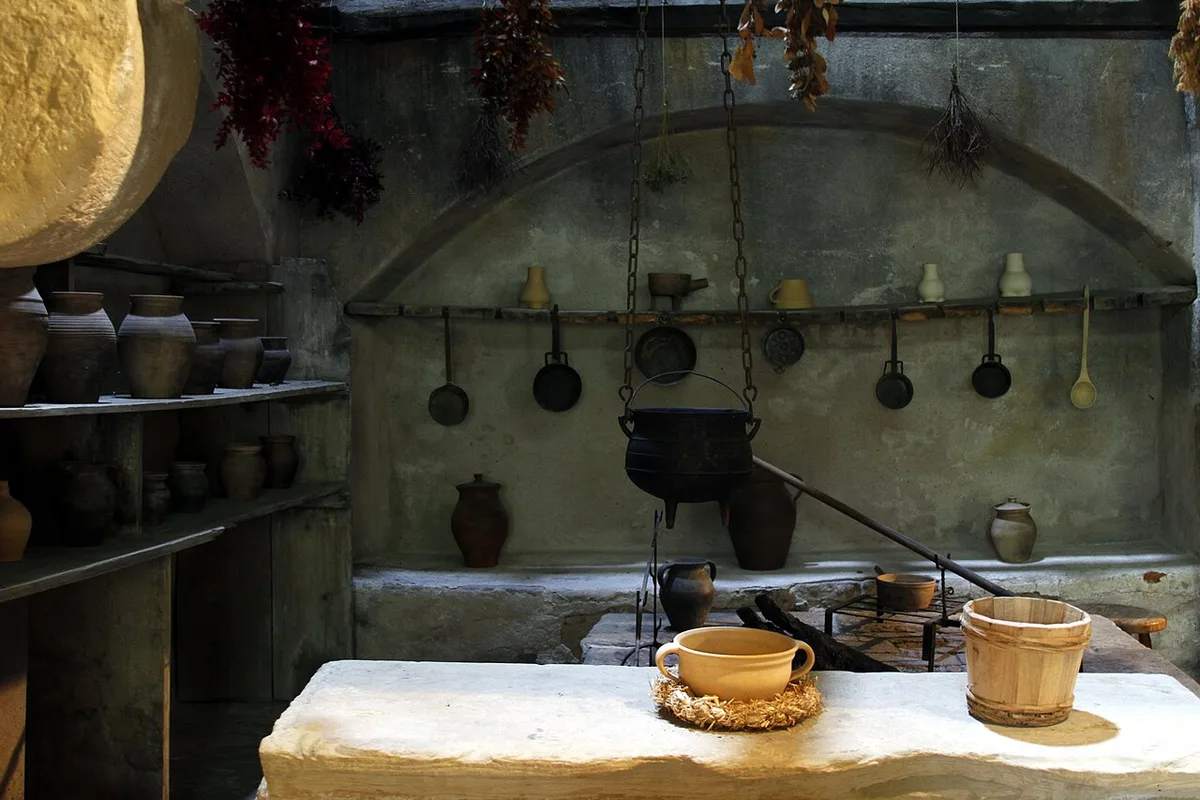
The standout single room is the well-preserved thirteenth-century monastery kitchen, which gives a concrete sense of daily life for the residents. If you need a breather rather than a full stop, the museum's picturesque cross courtyard and the neighbouring monastery garden both work as sheltered pauses without leaving the complex.
Opening hours here shift with the season: daily 10am to 6pm from April to October, daily 10am to 4pm in November and December, and daily 2pm to 5pm from January to March, with the museum closed on 24 and 31 December. The museum sits inside the wider monastery courtyard alongside other cultural venues, but a ticket for one does not automatically cover everything in the complex, so check each venue separately.
The Medieval Crime Museum as a Second Indoor Block
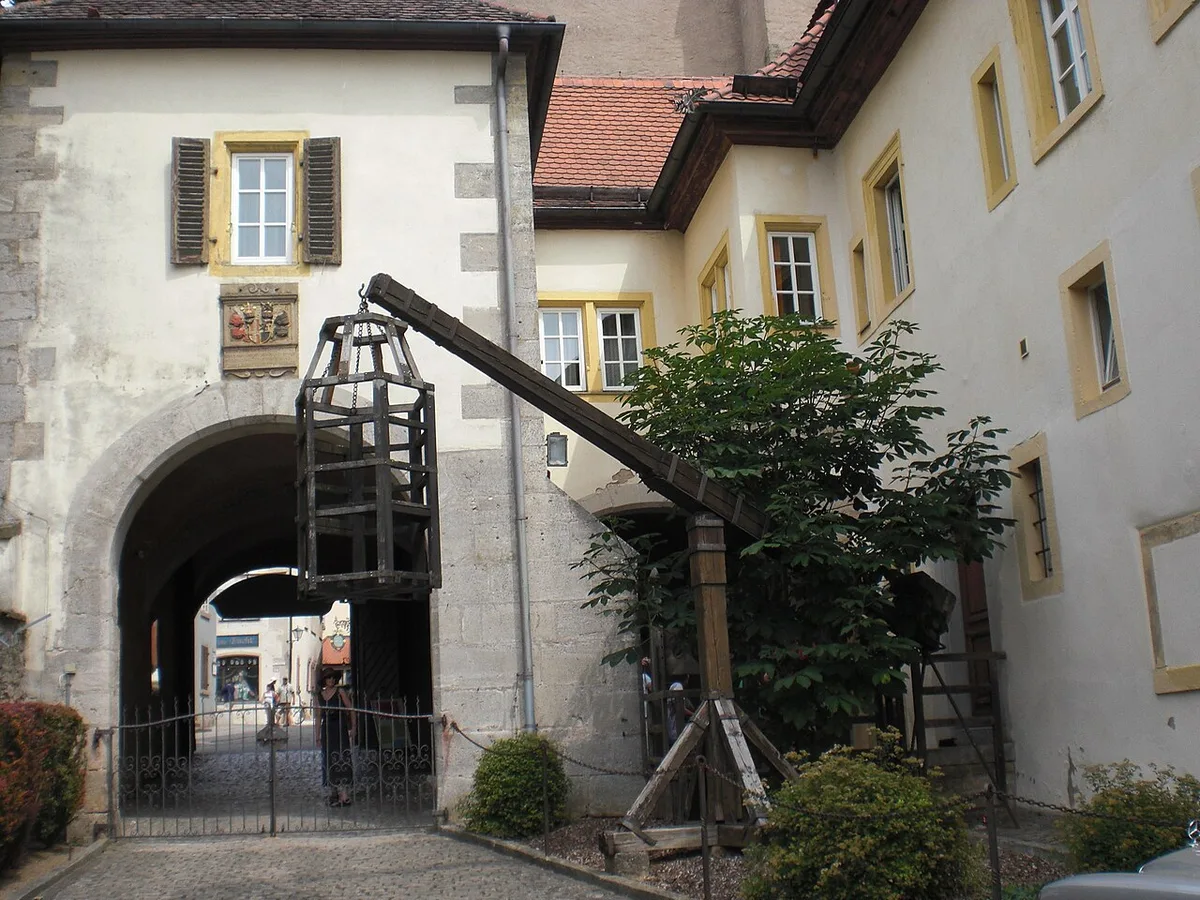
The Medieval Crime and Justice Museum at Burggasse 3-5 is the other obvious wet-weather anchor, and it appeals to a very different mood than the city museum. Its roughly 130 displays on four floors trace the development of European law over a period of about a thousand years, mixing legal documents and trial material with the torture instruments and public-shame devices that most visitors come for.
Because the content is dense rather than decorative, judge your time by reading speed rather than by floor count. Visitors who read the labels properly tend to want well over an hour, while those who skim the objects can move through much faster. It is a good candidate for the wettest stretch of the afternoon, when you want somewhere warm and quiet.
The tourism office lists the museum among its museums and offers a short digital video introduction, but it does not publish current admission prices or guaranteed daily hours in a form you can rely on from a secondary source. Check the museum's own information for the day you plan to visit rather than trusting a reprinted schedule, and do not assume a combined ticket with any other site.
Tower Views With a Weather Caveat
Two towers in Rothenburg are climbable, and they are not interchangeable. The town hall tower is the classic panorama, reached via the main portal of the town hall on the market square and up 220 steps to the viewing platform, with payment taken on the tower and cash only. Adult admission is 4.00 euros, children under 14 pay 2.00 euros, groups of ten or more pay 3.00 euros each, severely disabled visitors pay 2.00 euros, and a family ticket for two adults plus two or more children is 10.00 euros.
The town hall tower keeps broadly seasonal hours rather than year-round daily opening. From January to March and from November it opens at weekends from 12 noon to 3pm; from April to October it opens daily from 9.30am to 12.30pm and 1pm to 5pm; and during the Reiterlesmarkt period it opens daily from 10.30am to 2pm and 2.30pm to 6pm, staying open to 7pm from Friday to Sunday. Because you pay at the top after the climb, there is no sunk cost if the stairs defeat you.
The Röderturm is the easternmost tower in the city wall and the only one on the wall itself that the public can enter. It was an important registration post for the town, its bastion was added in the sixteenth century, and it was burnt out at the end of the Second World War before being rebuilt with significant support from the Alt-Rothenburg association. On the intermediate floors there is an exhibition on the development of the town and its defences.
The Röderturm runs on a looser schedule than the town hall tower: it opens for a few hours at weekends during the Christmas market, at weekends and on public holidays from 11am to 2pm in April, May, September and October, daily from 11am to 2pm in June to August, and between November and March its opening depends on the weather, with the association asking visitors to call ahead. Maintenance fees are 3.00 euros for adults and 1.50 euros for children up to 18, again paid on the tower and in cash, and a flag hanging from the window signals that it is open.
The Covered Wall-Walk: What to Expect
The wall-walk, or Wehrgang, is genuinely one of the best free things to do here, but the popular shorthand for it is misleading. Much of the eastern and southern circuit carries a covered wooden wall-walk, and you can follow it for roughly 2.5 km from the Spital Gate in the south, past the Röder Gate, to the Klingen Gate in the north. The rest of the ring is a mix of open paths, gates and the castle garden rather than one continuous roofed corridor.
Access points matter more than distance on a wet day. There are several staircases along the route where you can drop back down into town, so you can treat the wall as a series of short optional hops rather than a commitment. If the boards look slick or the wind is pushing rain sideways, coming down at the next set of steps costs you nothing.
Travellers who have walked it in wet conditions describe the boards as tricky after rain, and stretches can be closed for maintenance work, so a blocked section is normal rather than exceptional. Bring a phone light for dim or unlit sections, mind the low roof beams, and do not treat the walk as a substitute for an indoor plan.
The walk has a history worth knowing while you are up there. An air raid on 31 March 1945 destroyed a large part of the eastern old town, and the walls were rebuilt afterwards with donations from around the world, with hundreds of stone plaques recording the people, families and companies who paid for a metre or two.
A Suggested Wet-Day Sequence
For a half day, start at the RothenburgMuseum when it opens, spend a solid block on the permanent collections, and take a short break in the cross courtyard or monastery garden. Follow that with the Medieval Crime Museum if you still have appetite for reading, or a warm drink on the market square if you do not. This is a suggested shape for the day rather than any official itinerary.
For a fuller day, use the morning for the city museum, break for lunch, and take the crime museum in the afternoon when foot traffic thins. Slot the town hall tower into whichever dry window appears, and only then consider a section of the wall-walk. If rain is relentless, swap the wall for a wander through the covered arcades and shops instead of pushing a bad idea.
If you are staying overnight rather than day-tripping, spreading the indoor stops over a longer stay takes real pressure off, and a two-day plan is worth sketching so you are not cramming everything into one wet afternoon.
Food, Warmth and Drying-Off Breaks
Rothenburg's cafe and restaurant density inside the walls is high, which is a genuine advantage when you are wet. The market square area gives you the widest choice within a couple of minutes of the main museums, and a long lunch is a legitimate way to wait out a heavy band of rain.
Schneeballen, the town's spherical shortcrust pastry, is the local speciality and appears in bakery windows everywhere. It divides opinion sharply, so buy one to share before committing to a bag. For something warmer and more substantial, look for the traditional Franconian and Bavarian menus rather than the snack stalls.
Evening options also work in the rain, since indoor performances and guided walks run in the old town through much of the year. If you want a structured evening rather than a restaurant, the night watchman format is a well-known local fixture, though you should check current scheduling and pricing with the organiser rather than assuming a nightly departure.
Off-Season Reality and What to Carry
Rothenburg's indoor attractions do not run on a single shared calendar. The city museum moves to shorter daily hours in November and December and again in the deep winter months, the town hall tower drops to weekend-only opening in the colder season, and the Röderturm's winter access is explicitly weather-dependent. That means a museum-led plan needs checking rather than assuming.
The tourism office's own information desk also reduces its opening window outside the main season, including closures on Sundays and public holidays in some periods, so do not plan to arrive and simply ask. Look up the specific venue before you travel and re-check the day before.
For kit, prioritise a waterproof shell with a hood over an umbrella, since narrow lanes and low beams make umbrellas awkward on the wall. Add shoes with real tread for wet cobblestones, a small phone light for dim wall sections, and cash for the tower payments, which are taken on the tower and are cash only.
Accessibility Trade-Offs in Wet Weather
Stairs are the defining constraint here. The wall-walk is reached by steep staircases and is not accessible for wheelchairs or pushchairs, and both climbable towers involve narrow, winding steps, with the town hall tower's 220 steps being a serious undertaking in dry weather and harder in the wet.
The practical alternative is to stay at ground level. The path along the outside of the walls, the market square and the museum complex itself can all be reached without climbing, and the ground-level route past the gates gives you the defensive architecture and views without the staircases.
If a member of your group needs step-free access, build the day around the museums and the lanes and treat the wall-walk as something to see from below. Confirm specific access arrangements with each venue directly, since published summaries rarely cover every individual need.
Other Indoor Stops Worth Knowing
Beyond the two big museums, there are smaller indoor options that fit neatly into gaps in a wet day. The tourism office's sightseeing list includes the historic craftsmen's rooms, the history vault with its state dungeon displays, and the exhibition in the Röderturm, all of which offer compact, short visits.
Christmas-themed retail is unusual here in that it operates year-round rather than only in Advent. The Käthe Wohlfahrt village and its associated German Christmas Museum give you a warm, decorated indoor stop even in the middle of summer, which is a useful fallback when the rain arrives early in the day.
Churches are another option, though you should verify current access rather than relying on older guides. St. Jakob's Church was historically an important stop on the pilgrimage route to Santiago de Compostela and is home to the Altar of the Holy Blood, carved by Tilman Riemenschneider between 1501 and 1505, with the relic set in rock crystal above the central panel.
Plan the Wet Day Around Indoors, Not Around the Wall
The most reliable rainy-day plan in Rothenburg ob der Tauber treats the city museum and the crime museum as fixed points and everything else as flexible. The wall-walk and the two towers are rewards for a dry window rather than obligations, and their seasonal and weather-dependent schedules make them a poor foundation for a day built in advance.
Before you travel, confirm the specific hours for the venues you care about most, and carry cash for the tower fees, which are collected on the tower itself. Then let the weather decide the order, not the itinerary.
Frequently Asked Questions
What can you do in Rothenburg ob der Tauber when it rains?
Build the day around the RothenburgMuseum in the former Dominican convent at Klosterhof 5, which houses the Baumann Foundation weapons collection, a Judaica department and a picture gallery, plus the thirteenth-century monastery kitchen. The Medieval Crime and Justice Museum on Burggasse 3-5 is the other substantial indoor block, with around 130 displays on four floors covering European law, punishment and execution. Between and around them, the town's cafes and covered lanes give you places to dry off. Check each venue's own published seasonal hours before you commit, because they do not all follow the same calendar.
Is the Rothenburg town wall walk covered in the rain?
Only partly. A covered wooden wall-walk runs along much of the eastern and southern circuit, roughly 2.5 km between the Spital Gate and the Klingen Gate, but the full ring is a mix of roofed sections, open paths and gates, so you will be exposed at points. Travellers report the boards can be slippery after rain, and stretches occasionally close for maintenance, so treat the wall as a weather-dependent extra rather than the backbone of a wet day. Bring a phone light for dim sections, watch for low roof beams, and use the staircases to drop back into town whenever conditions worsen.
How long do you need in Rothenburg ob der Tauber on a wet day?
A half day covers one museum properly plus a meal and a wander through the lanes. A full day lets you take in both the city museum and the crime museum at a relaxed reading pace, with a break in between. If a dry window appears, a tower climb or a short stretch of the wall can be added without wrecking the schedule. None of these timings are official; they are a suggested shape for the day, and you should adjust them to how slowly you read museum labels and how much you want to sit over lunch.
Are the town hall tower and Röderturm open in winter or bad weather?
Their schedules differ. The town hall tower drops to weekend opening from January to March and from November, and changes again during the Reiterlesmarkt period, and you pay on the tower in cash. The Röderturm, which has an exhibition on the town's development and defences on its intermediate floors, has explicit weather-dependent opening between November and March, and the association that runs it asks visitors to call ahead. Check the tourism office and the operator's own information before relying on either climb, and do not assume a fixed daily window outside high summer.
Sources
- City Walls at Night? - Rothenburg ob der Tauber Forum
- Altar of the Holy Blood | Reliquarian
- Tourism Rothenburg ob der Tauber: Tourism Rothenburg ob der Tauber
- Town Walls Walk — Things to Do & How to Visit | RothenburgObDerTauber.com
- Medieval Crime Museum, Rothenburg ob der Taube | Germany for Visitorsr
- Tourism Rothenburg ob der Tauber: Museums from Rothenburg ob der Tauber digital
- Tourism Rothenburg ob der Tauber: RothenburgMuseum - the city museum in Rothenburg ob der Tauber
- Tourism Rothenburg ob der Tauber: Sights in Rothenburg ob der Tauber - Top 10 & Highlights
- Tourism Rothenburg ob der Tauber: Rothenburg from the air


