
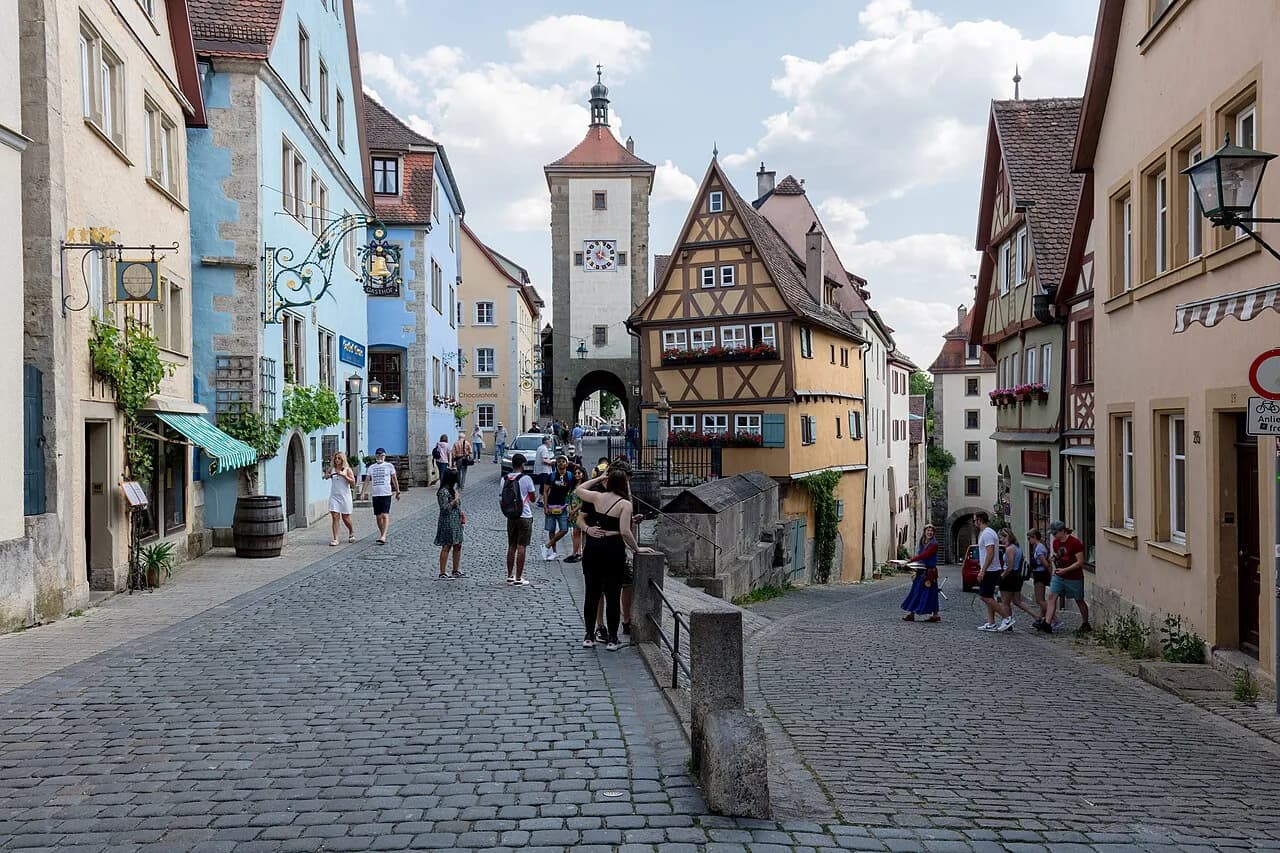
Rothenburg ob der Tauber works for families precisely because the best parts require no ticket, no queue and no attention span. The tourism board describes the old town as a place to stroll and marvel, naming the Plönlein, the walkable town wall, the Marktplatz, St. Jakob's Church and the Burgtor as its signature sights. With young children, the winning strategy is to pick two of those anchors per day and let the lanes between them do the rest.
This guide is written for parents travelling with roughly toddler-to-primary-school ages, where stamina and patience matter more than tick-list ambition. It separates genuinely free ground from paid interiors, flags which sights commonly lose young kids, and explains how seasonal events can reshape a trip. It also points to a broader set of Rothenburg ob der Tauber itineraries and city guides if you want to build a longer stay around the same base.
The Free, Walkable Core: Plönlein, Marktplatz and Burgtor
The compact old town is the main family asset: you can cover the headline sights on foot without committing to a long transit leg or a fixed entry slot. The tourism board lists the Plönlein, Marktplatz, Burgtor and the walkable town wall among Rothenburg's defining sights, and all of them sit within the same historic core. For children, that means constant small rewards, a fountain, a crooked house, a tower gate, instead of one distant payoff.
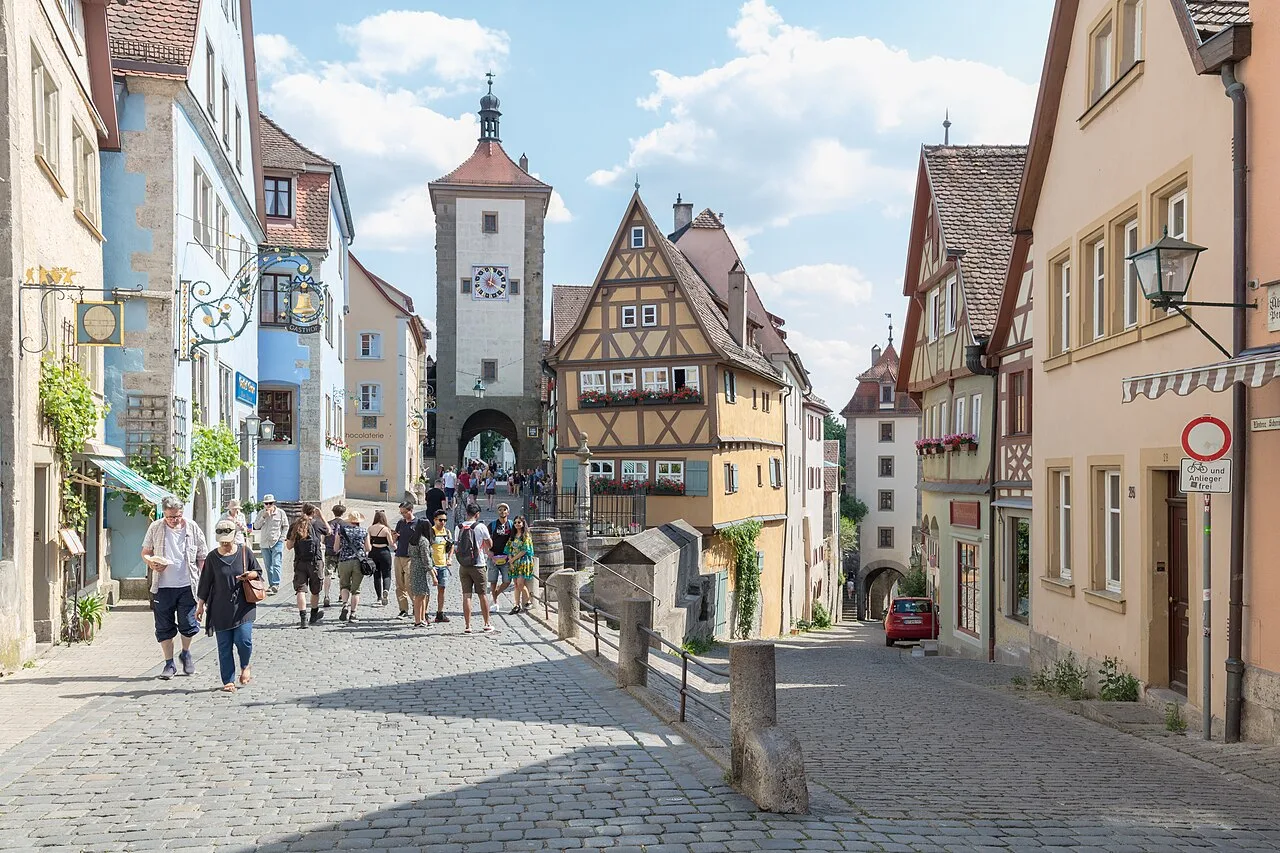
The Plönlein is the postcard shot, and it works with kids because it is a junction rather than a destination: two lanes fork around a small half-timbered house, and traffic is calm enough to let children look rather than be marched past. The Marktplatz gives you open space to regroup, and the Burgtor at the western end leads toward the castle gardens and viewpoints. Plan the free core first and treat anything with an admission desk as an optional add-on rather than the point of the day.
Because opening hours, ticket prices and even whether a given museum is running a family programme change through the year, check with the Rothenburg Tourismus Service before promising a specific interior to a child. The tourism board publishes a contact point at Marktplatz 2 and seasonal service hours, so it is the right place to confirm what is currently open rather than relying on an old blog post.
Walking the Town Wall With Children
The town wall is the single most family-friendly structure in Rothenburg because it turns a walk into an adventure: you are up on a covered timber walkway above the streets, not trailing behind a guide. The tourism board lists the begehbare Stadtmauer, the walkable town wall, as one of the city's main sights, which confirms it as a recognised visitor route rather than a local secret. Treat it as a short, supervised segment rather than an end-to-end march.
Pacing matters more than coverage. The covered walkway is narrow in places, with steps at the points where you climb up and down, so families with very young children or a stroller should expect to carry rather than push and should plan an exit point before starting. A short out-and-back over one stretch, with a snack and a look over the roofs, usually lands better than attempting the full circuit. For a detailed breakdown of the route, the Rothenburg ob der Tauber town walls and covered walkway visitor guide is the sensible next read.
Do not assume the wall is officially accessible for strollers, wheelchairs or very small walkers: accessibility rules and any temporary closures are not something a general tourism page settles. Ask at the tourist information desk on the day, and check conditions after rain or in winter, when timber surfaces and steps can be slippery. If the answer is no, the same views are available from the castle gardens and the lanes below, at no cost and with no height.
A Suggested Family Half-Day in the Old Town
This is a recommendation, not official guidance, and it assumes children who can walk a couple of hours with breaks. Start at the Marktplatz while energy is high, walk the short distance to the Plönlein for the photo and the fork in the road, then continue to the Burgtor and the castle gardens for a run-around and a view. That loop alone gives you three of the city's named highlights without paying for anything.
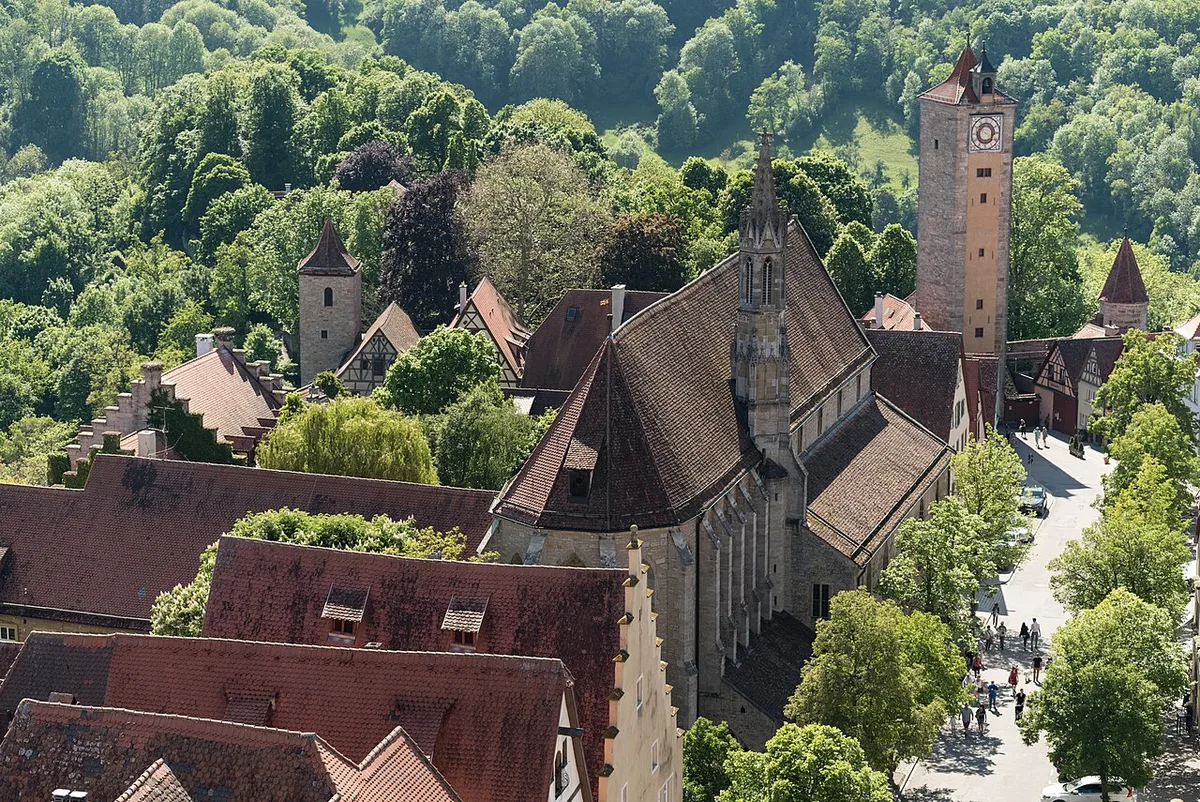
Add one wall segment after the garden break, choosing whichever stretch is closest rather than chasing a full circuit, then finish with a drink or an ice cream back near the market. A half-day shaped like this also leaves room for a museum if the mood holds, or an early return to your accommodation if it does not. Families staying two days can spread the same sights across four shorter outings, which suits nap schedules far better than one long block. If you want a structured version of this, see the 2 days in Rothenburg ob der Tauber itinerary.
Skip or Shorten: Which Indoor Sights Lose Young Kids
Not every famous Rothenburg interior earns its place in a family day. St. Jakob's Church and the town's museums are ticketed interiors with their own rules, and a small child's tolerance for glass cases and quiet rooms is usually measured in minutes rather than hours. If you only have one indoor slot, choose it deliberately and leave the rest for a return trip without children.
The Medieval Crime and Justice Museum is a good example of a sight that needs a judgement call rather than a blanket recommendation: its subject matter is crime and punishment, which some children find fascinating and others find upsetting, and the right answer depends entirely on your child. Read the Medieval Crime and Justice Museum Rothenburg visitor guide before deciding, and be ready to split the group so one adult can go in while the other stays outside. The same logic applies to guided evening programmes; if you are considering one, read up on the Rothenburg ob der Tauber night watchman tour first, since content and suitability are best judged in advance rather than on the spot.
Where a sight is borderline, use the shortest version available: a quick look at the exterior, a five-minute stop inside the entrance area, or a photo from the lane outside. Rothenburg's architecture is the attraction for most young visitors, and you lose nothing by saving the interiors for a trip when the children are older. Full landmark visitor guides for Rothenburg ob der Tauber are useful for checking what each site actually involves before you commit.
Turning the Old Town Into a Game
Commercial self-guided scavenger hunts and puzzle walks are the smartest substitute for museum time in Rothenburg, because they keep children moving through the same lanes you would walk anyway. Booking.com's activities listing for the city includes several formats, among them a self-guided city walking tour and scavenger hunt, a scavenger hunt with highlights walking tour, an interactive city tour, and a puzzle-walk style game. These are third-party products rather than city-run programmes, so read the description and reviews before booking.
The practical advantages are flexibility and pace: you start when you like, stop when a child melts down, and the route gives structure without a guide waiting on you. The trade-offs are that you need a charged phone, you get no local storytelling beyond what the app provides, and quality varies between operators. Compare the listed formats for duration and starting point rather than assuming they are interchangeable.
Because these listings sit on a commercial platform, treat prices and availability as things to confirm on the booking page in your own currency at the time you book, not as fixed figures. Do not convert a foreign-currency figure shown in a search result into euros and expect it to hold; operators and platforms adjust both pricing and inventory regularly. If a hunt is the centrepiece of your day, book it before you travel and check the cancellation terms.
Events Worth Timing a Trip Around
Rothenburg's event calendar is unusually rich for a town of its size, and several entries have obvious child appeal. The tourism board lists the Rothenburger Märchenzauber with Märchenwald, a fairy-tale themed event staged on the Marktplatz with theatre, music and children's programming, as well as the Rothenburger Reiterlesmarkt, the Christmas market in the old town, and the Historisches Festspiel 1631 Der Meistertrunk, performed in the Kaisersaal of the town hall. It also lists the Rothenburger Reichsstadt-Festtage on the Marktplatz.
Dates matter more than names here, because these are seasonal and rotating rather than year-round attractions, and the tourism board publishes them as recurring entries with specific days. The fairy-tale event and the autumn market sit in late October in the published listing, the Christmas market begins in late November, and the Meistertrunk runs at Pentecost, during the Reichsstadt-Festtage and in October. Confirm the exact dates and times with the tourism board before booking travel, and never treat a listing from a previous year as proof that this year's edition is running on the same days.
For families, the Christmas market is the strongest draw because it combines lights, food stalls and a manageable footprint, while the fairy-tale event targets children directly. The Meistertrunk is a historical play in a hall, so it suits older children who can sit through a performance. Check the tourism board's event calendar as your trip approaches, since the programme is updated through the year.
Snacks, Rest and Toilet Stops Inside the Walls
The old town is small enough that you are never far from a café or a bakery, which is the main logistical advantage of basing a family day here. Build in a proper sit-down break at the midpoint rather than snacking on the move, because tired children regulate better with a table and a drink than with a pastry in one hand. The Marktplatz and the lanes around it give you the highest concentration of options.
Public toilets inside the historic core are limited and not always obvious, so use the facilities when you pass a café or restaurant where you are a customer, and ask at the tourist information desk for the nearest option. Rothenburg Tourismus Service at Marktplatz 2 is the practical fallback for questions about facilities, current closures and what is open on a given day, and it publishes seasonal opening hours.
Where Families Actually Stay
The core trade-off is between an apartment inside the walls, which puts everything within a short walk, and a rental in a nearby village, which usually buys more space, parking and outdoor room. Airbnb's family-friendly listings for Rothenburg show a mix that makes this concrete: central apartments billed as minutes from the market square, and larger homes in places such as Colmberg, Aurach, Creglingen, Neusitz and Schrozberg, some with gardens, barbecue areas or animal enclosures nearby.
In-town wins on convenience: you can return for a nap, eat dinner early and go back out for the evening atmosphere without a drive. Village rentals win on cost per square metre, parking and outdoor space, at the price of a daily drive or a taxi into town, which matters if you plan to split the day. Check whether a listed property includes parking and whether the old-town lane it sits on is one you can actually drive to.
Read the property description for the practical family details that listings bury: whether a cot or extra bed is available, whether there is a lift or stairs, and whether parking is included or street-only. Reviews from families with young children are often more useful than the headline amenities list. Nightly rates on booking platforms vary by season and are shown before taxes and fees, so confirm the total for your dates rather than comparing headline figures.
Season and Day-Shape Decisions
Rothenburg's appeal shifts with the season, and the tourism board's 2026 theme, Rothenburg Stadt Landschaft Natur, runs through the year and links the town to its surrounding landscape. Autumn brings hiking and harvest events, late autumn brings the fairy-tale programme and the autumn fair, and the Christmas market dominates late November and December. Spring and summer give you the longest daylight for wall walks and garden time, alongside the Pentecost performance and the Reichsstadt-Festtage later in the year.
For a first family trip, choose the season by the child rather than by the calendar: a Christmas market is magical but crowded and cold, while a mild spring weekend is easier on short legs and strollers. Whatever the season, plan one anchor in the morning and one in the afternoon, and treat everything else as optional. The town's small footprint means an abandoned plan costs you very little.
Pick Two Anchors and Let the Lanes Fill the Rest
The case for Rothenburg with children is not a long list of must-sees but the density of small, free pleasures: the fork at the Plönlein, the climb onto the wall, the open space of the Marktplatz, the gate at Burgtor. Choose two of those for a morning or afternoon, add one optional paid interior if the mood holds, and stop while everyone is still enjoying it.
Before you travel, confirm seasonal event dates and opening hours with the tourism board, check accessibility and conditions on the wall on the day, and book any scavenger hunt or accommodation with cancellation terms you can live with. That way the town's shifting details, which no guide can fix a year ahead, become things you check rather than things that surprise you.
Frequently Asked Questions
How much time should a family spend in Rothenburg ob der Tauber?
A half-day is enough for the free core: Marktplatz, Plönlein, Burgtor and one short stretch of the town wall. This is a recommendation, not official guidance, and it assumes children who can walk for a couple of hours with breaks. Families who want a museum, a guided walk or a scavenger hunt should allow a full day, or spread the same sights over two shorter mornings so that nap and meal times still work. If you are staying overnight, two days lets you split the old town and the surrounding countryside.
Can you reach Rothenburg ob der Tauber by train with children?
Rothenburg has a rail connection and the old town is a short walk from the station, which makes a car-free family visit realistic for the central sights. Journey times, connections and platform details change with the timetable, so check the current schedule with Deutsche Bahn or the tourism board's arrival information rather than relying on an older guide. If you are arriving with a stroller and luggage, plan a slower walk from the station and consider a taxi for the last stretch if the weather is poor.
Where should families stay in or near Rothenburg ob der Tauber?
Inside the walls you get walkability, early dinners and the ability to return for a nap, which suits short-legged children best. Outside the walls, in villages such as Colmberg, Aurach, Creglingen, Neusitz and Schrozberg, you usually get more space, parking and outdoor room for a lower nightly cost per person. Check whether parking is included, whether the property has stairs or a lift, and whether cots or extra beds are available before booking.
Is the town wall walk suitable for young children?
It can be, with supervision and a short route. The walkway is elevated, covered in timber and narrow in places, with steps at the access points, so very young children should be carried on those sections and a stroller is not a safe assumption. Do not treat any general tourism page as confirmation of official accessibility rules; ask at the tourist information desk on the day and check conditions after rain or in winter, when the surface can be slippery.
Which Rothenburg sights are best skipped with small kids?
The ticketed interiors lose young attention fastest, especially quiet museum rooms and church interiors where children must stay still and silent. Choose at most one indoor sight per day, and judge content-dependent museums in advance rather than on the doorstep, since subject matter that fascinates one child can upset another. Where a sight is borderline, look at the exterior and move on: the lanes, the market square and the wall are what most young visitors remember.


