
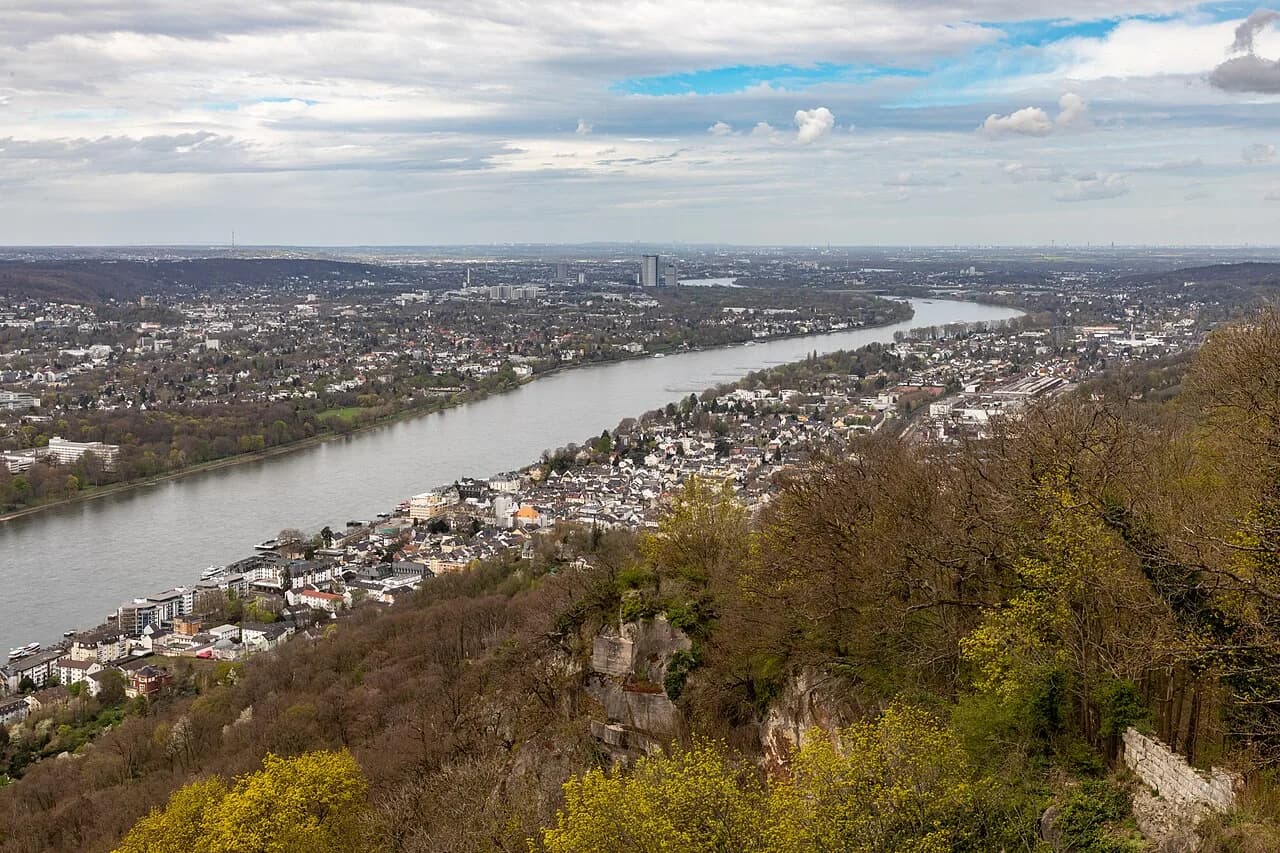
Bonn is small enough to walk and layered enough to fill two days, provided you resist the urge to crisscross the city. The old town sits around Bonngasse and Münsterplatz, while the Museum Mile lies along the former government quarter to the south, and the Rhine hills rise beyond Königswinter. Each area deserves its own half-day block rather than a sprinkling of stops across all three. One structural fact drives the second day more than any other: museum admission is not shared across the Mile. Haus der Geschichte states plainly that entry to the museum and all its exhibitions is free, while Bundeskunsthalle sells its own day ticket covering the exhibitions running at the same time.
Why Two Days Fits Bonn Better Than One
Bonn's compact centre is the reason a short trip works at all: Beethoven's birthplace, the Minster, the old town hall and the university quarter all sit within a walkable pocket. That compactness is also the trap, because the Museum Mile is a separate zone roughly south of the centre rather than a cluster of buildings beside the old town. Treating the two as one continuous stroll is what turns a relaxed weekend into a day of transit.
If you have only one day, you must choose between the Beethoven core and the museums, which is why a single-day version concentrates almost entirely on the old town and the Rhine promenade. Two days let you keep them whole instead of splitting one zone in half. Three days add breathing room for a slow river afternoon, a second museum on the Mile, or a longer Siebengebirge walk.
How to Split the Two Days Without Crossing Bonn Twice
The organising principle is simple: cluster by neighbourhood and let geography, not a checklist, set the order. Day one stays in the old town, with a possible late-afternoon extension towards Poppelsdorf. Day two runs along the Museum Mile and then, if you have the appetite, out to Königswinter on the Rhine.
A suggested shape for each day works well: a morning block of two or three hours, a lunch stop near where you already are, an afternoon block of similar length, and a low-effort evening walk. These durations are suggestions, not official timings, and museum-heavy days often run longer than you expect. Build in one unhurried gap rather than filling every hour.
Day 1 Morning: Bonngasse, Beethoven-Haus and Münsterplatz on Foot
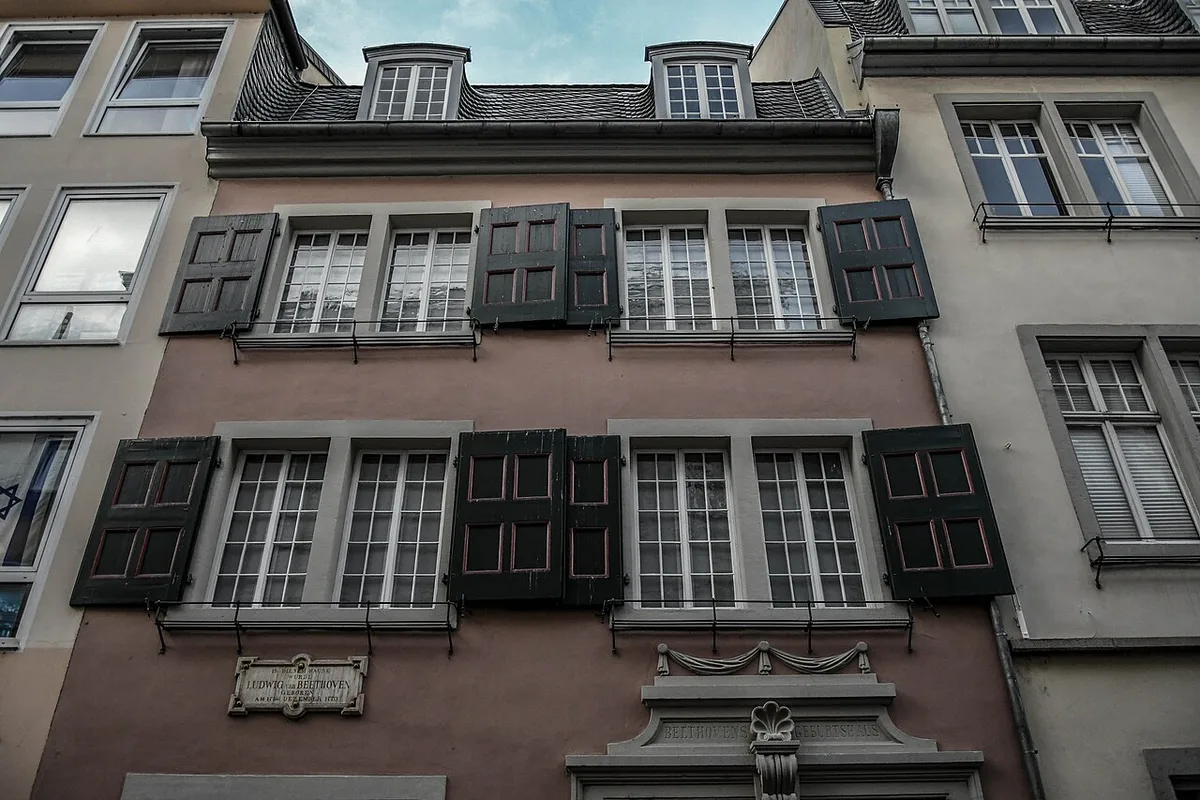
Start on Bonngasse, where the Beethoven-Haus addresses are split between the actual birthplace and nearby buildings including the ticket office and museum shop. First-time visitors looking for a single entrance are often surprised by this, so read the arrival details on the museum's own pages before you set off. The surrounding lanes open onto Münsterplatz, where the Beethoven monument stands in front of the Minster.
The Bonner Münster anchors the square and is one of Germany's older churches, with a treasury collection alongside the main building. Whether the church interior is open during your visit depends on services and any restoration work, so check locally rather than assuming. From Münsterplatz it is a short walk past the Altes Rathaus and its market square towards the university.
Day 1 Afternoon: What Beethoven-Haus Actually Contains
The Beethoven-Haus is a town house, not a grand museum, and the displays spread across three floors of a preserved eighteenth-century building. Expect manuscripts, portraits, instruments and the composer's ear trumpets, and themed rooms covering his Bonn roots through to his deafness. Because the rooms are small and the collection dense, a short visit is normal rather than a sign you have rushed.
The house offers a multimedia guide and a range of guided and educational formats, including a roughly one-hour guided tour of the birthplace and exhibitions according to its own education pages. Devices are issued at the desk subject to availability, and the museum recommends booking. The audio guide adds time, so decide before you enter whether you want the full sequence or a selective pass.
Admission prices and daily opening hours change and are not reproduced here; check the museum's admission and opening-hours pages for the day you plan to visit. Visitors with particular needs can review the museum's dedicated page, which lists easy-language, tactile and sign-language options. If you want a booked tour, note that guided formats are priced separately from museum admission and must be arranged in advance.
Day 1 Late Afternoon: Alter Zoll, the Promenade and the University Quarter
Alter Zoll sits on the old fortification line above the river, next to the university grounds, and works as a natural end point to the old-town day. The beer garden there is a seasonal pleasure rather than a year-round certainty, so treat it as a bonus rather than a fixed stop. From the terrace level you get an open view across the Rhine without leaving the centre.
The riverside paths run both north and south from the university quarter, and an evening walk in either direction is the least structured part of the itinerary. Locals use the promenade for cycling, running and meeting friends, which means the atmosphere changes with the weather and the hour. Keep the walk flexible: it is the day's decompression, not a sight to tick off.
Day 1 Alternative: Poppelsdorf Palace and the Botanical Garden
If one museum is enough for day one, spend the later afternoon in Poppelsdorf instead, where the palace grounds and the university botanical garden sit together. The garden is a teaching and research collection as well as a public space, so parts of it are working areas rather than display beds. Opening arrangements vary by season and are published by the garden itself, which is where you should confirm your date.
Poppelsdorf is a short ride or a longer walk from the centre, on the same side of town as the university rather than the Museum Mile. That makes it a cleaner add-on to day one than to day two. If mathematics and machinery appeal more than plants, the Arithmeum in the centre is the other realistic substitute, and it suits a rainy afternoon.
Day 2 Morning: Museum Mile Logistics and the Ticketing Decision
The Museum Mile groups several institutions along one axis in the former government quarter, including Bundeskunsthalle, Kunstmuseum Bonn, the Haus der Geschichte and Museum Koenig. They are neighbours, not one complex, and each sets its own admission. Decide before you travel whether you are buying one ticketed visit, two, or none at all.
Bundeskunsthalle publishes a day ticket that permits entry to all exhibitions running at the same time, along with a combined ticket valid for both Bundeskunsthalle and Kunstmuseum Bonn for concurrently running exhibitions. That combined ticket is the only shared arrangement described, and it does not extend to the other museums on the Mile. Check the current ticket page for the exact scope and conditions before you commit.
Kunstmuseum Bonn keeps its own schedule and is closed on Mondays according to its visitor information, so a Monday start would rule it out. It focuses on modern and post-war art, with Rhenish expressionists and later German work. Short digital tours and collection albums on its site are useful for previewing what is actually on view.
Day 2: Bundeskunsthalle and How Temporary Exhibitions Reshape the Visit
Bundeskunsthalle is an exhibition hall rather than a fixed collection, so what you see depends entirely on what is running during your dates. Its programme mixes large temporary shows with performances, talks and family formats, and some events are free even when the galleries are ticketed. Because the content rotates, a visit planned around one exhibition can look very different a few months later.
Two parts of the building can be used without a gallery ticket: the library is publicly accessible and free, and the rooftop is open during regular opening hours, weather permitting. The roof terrace gives a different view over the government quarter and is worth knowing about if you are short of time or money. Confirm current access on the day, since weather and events can affect it.
Day 2: Haus der Geschichte, Free Admission and a Chronological Walk
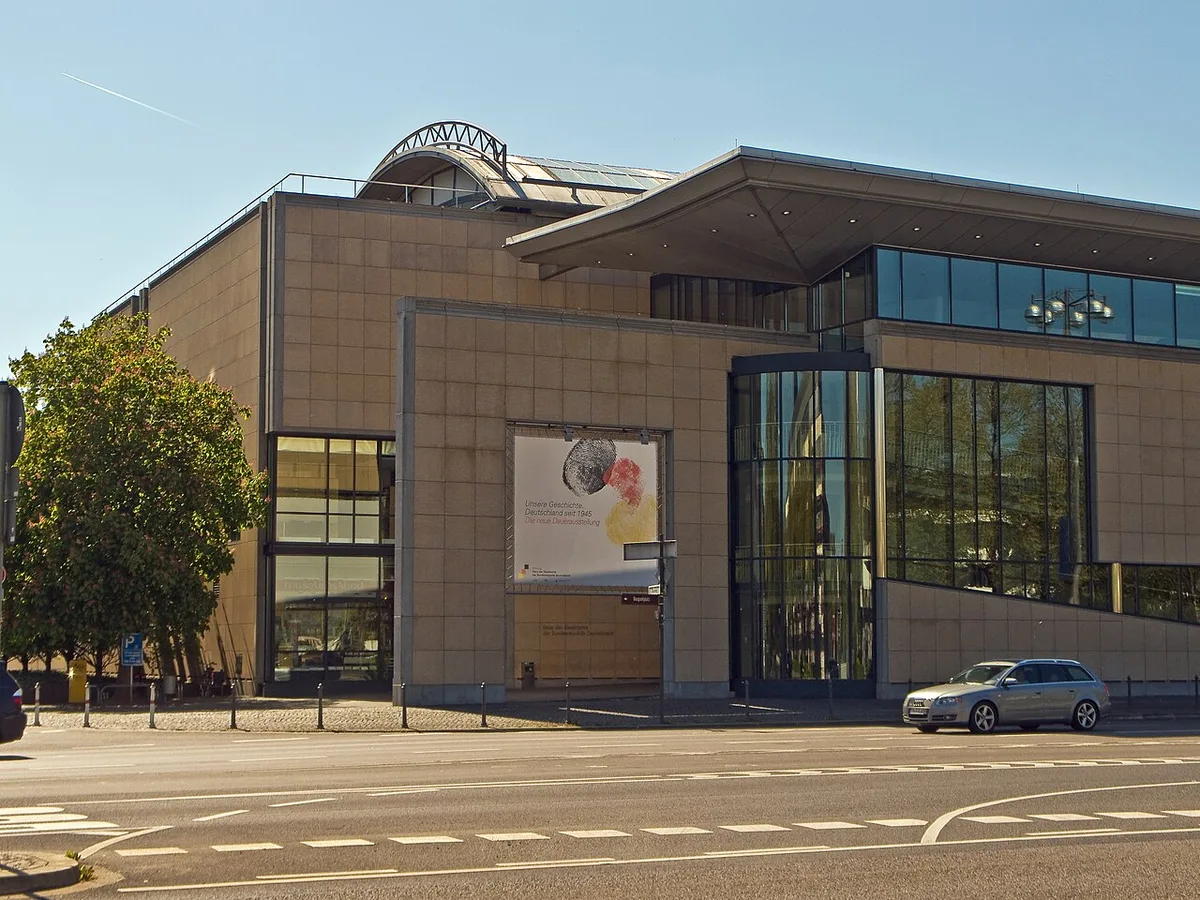
Haus der Geschichte is the simplest decision on the Mile because admission to the museum and all its exhibitions is free. Its permanent exhibition, presented under the title Du bist Teil der Geschichte. Deutschland seit 1945, traces post-war Germany chronologically from the end of the war through reunification and beyond. Expect to spend a substantial part of your day here if you engage with the material.
Opening hours are published on the museum's own site and vary between weekdays and weekends, so verify the day you intend to visit. Special exhibitions run alongside the permanent one and change on their own schedules. Because entry is free, this is the museum to prioritise when your budget is tight and the one to drop last when your time is short.
Day 2: The Combined Ticket Question Between the Two Art Venues
The pairing that most confuses visitors is Bundeskunsthalle and Kunstmuseum Bonn, which stand almost beside each other on Helmut-Kohl-Allee. A combined ticket exists for the two of them only, valid for exhibitions running at the same time in both houses. It does not cover Haus der Geschichte, Museum Koenig or the Deutsches Museum Bonn.
That distinction matters if you are trying to see two or three institutions in a single afternoon. If you want modern and post-war art plus a large temporary exhibition, the combined ticket is the natural purchase. If you would rather mix art with contemporary history, buy the single ticket for one art venue and walk to the free history museum instead.
Day 2 Afternoon Option A: A Rhine Excursion to Königswinter and Schloss Drachenburg
Königswinter sits on the Rhine south of Bonn, and Schloss Drachenburg rises above the town on the Drachenfels with the river and the Siebengebirge behind it. The castle was built in the early 1880s as a private villa and, after wartime damage and later restoration, was opened to the public in the 1970s. It is the strongest single excursion from Bonn if you want a view that the city itself cannot provide.
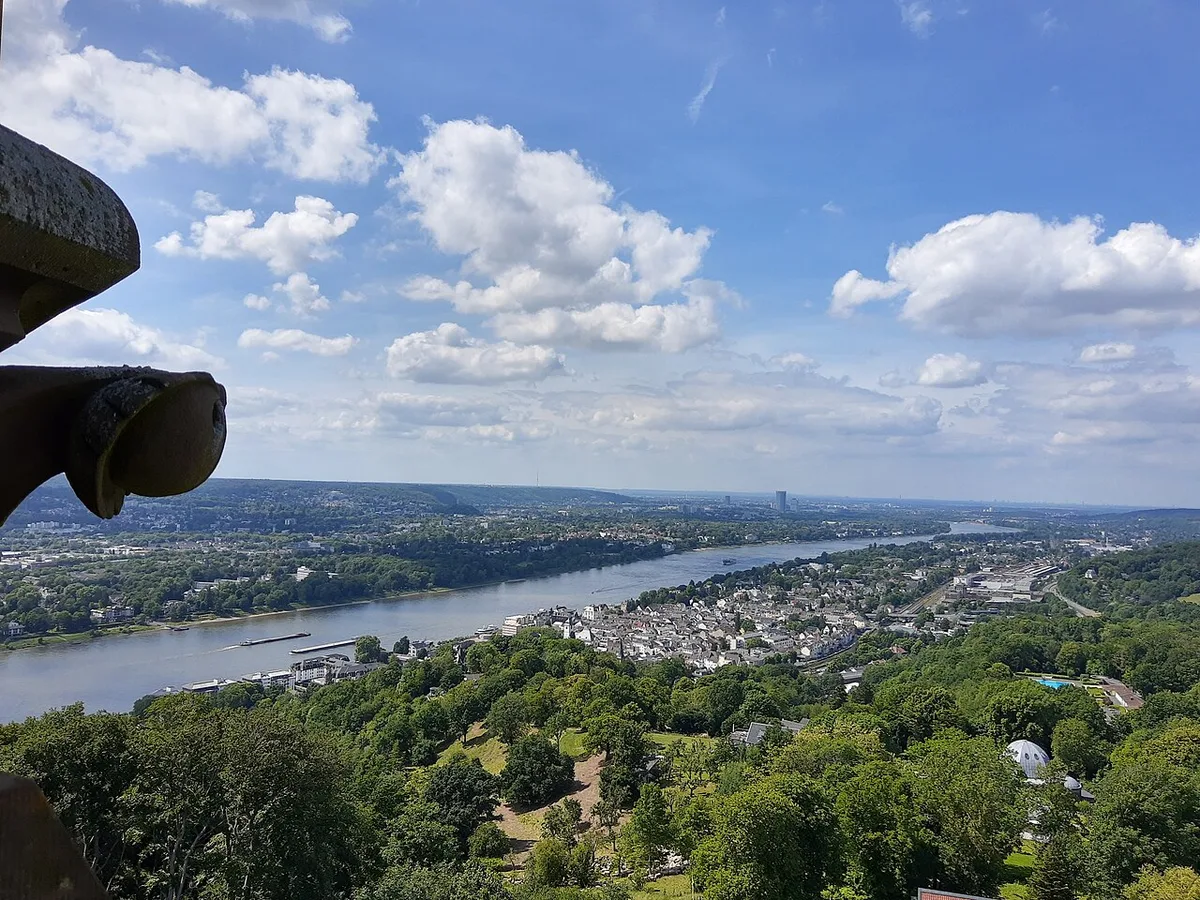
There are two ways up: the historic rack railway that has linked the town with the hill since the nineteenth century, or the footpath, which takes roughly half an hour of steady climbing. Admissions, opening times and tour arrangements at the castle change with the season, and older published figures should not be trusted, so check the castle's own site before travelling. Guided tours, including themed and foreign-language options, generally need booking in advance.
Budget this as a half-day, not an hour, because the transfer, the ascent and the castle visit add up. If the weather turns, the walk-up is the part to drop, and the rack railway becomes the sensible alternative. Staying in Bonn is the better bet when you want an unhurried evening by the river.
Day 2 Afternoon Option B: Rheinaue Park and the Riverside
If you would rather not spend the afternoon in transit, Rheinaue park offers the opposite of a museum morning: open lawns, water, footpaths and bridges across a large riverside site. The Japanese garden within it adds a compact, deliberately composed contrast to the surrounding parkland. It is the right choice on a warm day, or when you have already walked enough on hard floors.
Rheinaue and the Museum Mile are close enough that you can drift between them without a plan, which makes this the most forgiving version of day two. Bring something to eat or plan around the park's own facilities rather than assuming a full restaurant. Late afternoon light along the river is the reward for staying put.
Getting Between the Old Town and the Museum Mile
The reliable approach is to identify the stops rather than memorise line numbers, because routes and station access change. Bundeskunsthalle publishes its own arrival guidance, including the stop names used by the museums and the station that serves the Mile, which is the version to check before you travel. From the main station, the museums are a short ride rather than a long walk.
Distances in the centre are small enough that walking beats waiting for a connection, and the old town rewards wandering. For the Mile and Poppelsdorf, public transport or a taxi saves energy that you will want later in the day. Confirm any temporary stop closures on the operator's own information before relying on a particular platform.
When to Go: Spring Blossom, Summer Evenings and Winter Markets
Spring changes the character of the old town when the cherry trees along the residential streets come into flower, but the timing shifts each year with the weather and cannot be scheduled confidently. Summer favours the river, the beer gardens and long evenings on the promenade. Winter shifts the trip indoors, with museums carrying more of the day and seasonal markets adding an evening centre of gravity.
Rain is the main practical variable in any season, and Bonn's answer is straightforward: the Museum Mile works in bad weather, while the Rhine excursion does not. Plan the outdoor day for the better forecast if you have the flexibility to swap. Otherwise, keep the Drachenburg trip as the sacrificial element and spend the time in the free history museum instead.
Where to Eat and Stay, by Area Rather Than by Brand
The old town around Bonngasse, Münsterplatz and the market square is the most convenient base, putting Beethoven-Haus, the Minster and the riverside within a short walk. Staying near the main station or the university quarter keeps you on the same side of the city as the Museum Mile connection. Poppelsdorf suits anyone planning a quieter, more residential stay.
For eating, the old town offers the widest spread of casual and traditional options close to the sights, while the government quarter is thinner and relies more on museum cafes and a handful of restaurants. Booking matters on weekend evenings in the centre. Rather than chase a specific venue, pick the area you will already be in and eat there.
What to Skip If You Only Have Two Days
Skip the attempt to see every museum on the Mile; three institutions in one day produces fatigue rather than memory. Skip the Haribo store unless sweets are genuinely the point, and skip long shopping detours in the centre when the museums are the reason you came. If time is tight, drop the Rhine excursion before you drop Haus der Geschichte.
Also resist adding Cologne to a two-day Bonn trip; the distance is short but the day is not, and you will shortchange both cities. Save the neighbouring city for a separate visit and give Bonn its own rhythm. Two focused days here beat two hurried days spread across the Rhineland.
Plan Your Visit
Two days in Bonn work when day one belongs to the old town and Poppelsdorf and day two belongs to the Museum Mile and, optionally, the Rhine. The only booking decision that really shapes the trip is the Museum Mile ticketing: Haus der Geschichte is free, Bundeskunsthalle and Kunstmuseum Bonn are ticketed, and their combined ticket covers those two venues alone.
Before you travel, confirm opening hours, admission and any temporary closures on the operators' own pages, since these are the details that change most often. Beethoven-Haus, Bundeskunsthalle, Kunstmuseum Bonn, Haus der Geschichte and Schloss Drachenburg each publish their own visitor information. A five-minute check the week before you go prevents most wasted journeys.
Frequently Asked Questions
Is two days enough to see Bonn?
Yes, if you split the city into two zones rather than trying to cover everything. Give one day to the old town around Bonngasse, Münsterplatz and the university quarter, with an optional extension to Poppelsdorf, and the second to the Museum Mile with a possible Rhine excursion afterwards. Trying to combine all of it in a single day means spending much of your time moving between areas.
Is the Museum Mile in Bonn free to visit?
Partly. Haus der Geschichte states that entry to the museum and all of its exhibitions is free, so that is your guaranteed no-cost stop on the Mile. Bundeskunsthalle and Kunstmuseum Bonn both charge admission and publish their own ticket structures, and a combined ticket exists between those two venues only. Other museums along the Mile set their own prices, so check each one before you go.
Should you visit Schloss Drachenburg during a two-day Bonn trip?
It depends on what you are willing to give up. Schloss Drachenburg sits above Königswinter on the Rhine, and reaching it plus touring the castle realistically consumes half a day, which means sacrificing either a museum or a slow riverside evening. If you want a viewpoint over the Rhine valley and a castle interior, it is the strongest single excursion from Bonn. If you prefer depth in the city, stay and use the time on the Museum Mile instead.
Where should you stay in Bonn for two days?
The old town is the most practical base because Beethoven-Haus, the Minster, the market square and the riverside are all within walking distance. Staying near the main station or the university quarter keeps you close to the connection towards the Museum Mile. Poppelsdorf suits a quieter, more residential stay but adds a journey to the old-town sights.
What is the best time of year for two days in Bonn?
Spring and summer favour the outdoor parts of the itinerary: the cherry blossom streets in spring, and the Rhine promenade, beer gardens and parks in summer. Note that the cherry blossom window shifts each year with the weather and is not fixed by date. Winter pushes the trip indoors, where the museums carry the day, and adds seasonal market evenings in the centre.
Do you need to book Beethoven-Haus tickets in advance?
Beethoven-Haus recommends booking for its multimedia guides, which are handed out at the desk subject to availability, and guided tours need to be arranged ahead. Admission prices and daily opening hours are published on the museum's own pages and should be confirmed for your date. Because the house is small, visiting outside busy periods makes for a calmer experience.
How do you get between Bonn's old town and the Museum Mile?
The old town is walkable, but the Museum Mile sits in the former government quarter further south, so most visitors take public transport or a taxi for that leg. Bundeskunsthalle publishes its own arrival guidance with the relevant stop names and nearby rail options, which is the most reliable information to use. Walking the full distance is possible but will consume time you may prefer to spend in the museums.
Sources
- 15 Exciting Things To Do In Bonn Germany In 2 Days - Dutch Wannabe
- Bonn Travel Guide 2026: Top Attractions, Local Food & Travel Tips | Trip.com
- 5-Day Bonn Itinerary
- Beethoven-Haus Bonn
- Education | Beethoven-Haus Bonn
- REVIEW | Beethoven House & Museum in Bonn – Trip By Trip
- Beethoven-Haus Bonn
- Visit Poppelsdorf: 2026 Poppelsdorf, Bonn Travel Guide | Expedia
- Bundeskunsthalle
- Veranstaltung - Eröffnungstage: Interactions 2026 - Bundeskunsthalle
- Kunstmuseum Bonn Bonn | VisitArt
- Short tours - Kunstmuseum Bonn
- Guide to Schloss Drachenburg / Drachenburg Castle - tabithaschr
- Haus der Geschichte Bonn


