

Augsburg's free appeal is not a single monument but the sum of its streets, water and green edges. The Old Town is compact and walkable, which means a full morning of sightseeing can cost nothing at all beyond what you spend on coffee. This guide sticks to squares, streets, waterside paths and parks, and it deliberately leaves paid interiors out of the free column.
The city sits in Bavaria roughly an hour from Munich by car, and its historic core holds guild houses, a Renaissance town hall and a cathedral whose 11th-century origins make it one of the oldest church sites in the region. Around that core runs a canal network fed from the Lech, part of the water management system that earned UNESCO World Heritage status in 2019. The practical consequence for a visitor is that the best free sightseeing is also the easiest: walking.
Before you plan around any specific building, accept one limitation. Entry rules, seasonal timetables and renovation closures change, and no third-party guide can be treated as current authority on them. Treat everything below as a framework, and confirm the detail of any single building on the operator's own page on the day you go.
Rathausplatz: Where the Free Experience Is the Square Itself
Rathausplatz is the natural starting point, dominated by the Renaissance town hall completed in 1624 and, beside it, the tower of St Peter am Perlach. Both are impressive from ground level, and the square between them gives you the city's signature view without a ticket. Budget a relaxed half hour here as a suggestion, enough to look properly at the facades rather than photograph and leave.
The catch is that almost everything worth paying for in Augsburg sits inside something that looks free from outside. The town hall's celebrated Golden Hall is an interior with an admission charge, and the tower is a separate question again. Plan your day around the exterior, the square and the surrounding lanes, and treat any interior as an optional add-on rather than the main event.
The 70-metre tower has dominated this square since the architect Elias Holl raised it between 1612 and 1618, and historical accounts describe a climb of 258 steps to an observation platform. It has also been described as closed for renovation, with restoration work reported as ongoing, so access in any given season cannot be assumed. Check locally before you build a plan around the climb, and read our guide to the best viewpoints in Augsburg for alternatives if it is shut.
Maximilianstrasse and the Old Town on Foot
Maximilianstrasse links Ulrichsplatz with Rathausplatz and carries the widest mix of architecture in the city: Gothic, Renaissance, Rococo, Neoclassical and post-war buildings stand in sequence along one street. The Weberhaus facade is the photogenic standout, and it costs nothing to stand beneath it. Allow roughly two hours for a gentle self-guided loop through the lanes, but treat that figure as a suggestion rather than an official route length.
Aimless wandering works well here because the historic centre is small and the guild houses, fountains and canal-side corners appear without needing an itinerary. Pick two or three anchor points and let the streets between them do the work. Comfortable shoes matter more than a map, since the appeal is the walking itself.
If the weather turns, this is the part of the day that suffers first, because so much of it happens outdoors. Keep an indoor fallback in reserve rather than abandoning the walk entirely. Our suggestions for Augsburg on a rainy day cover how to reorder a city day when the sky does not cooperate.
The Cathedral Setting, Without Assumptions
The cathedral is a Romanesque building founded in the 11th century with Gothic additions from the 14th, and it is one of the most impressive structures in the city. Its setting and facade are part of any free walk through the Old Town, and that is the extent of what a budget plan should count on. Treat interior access, timetables and any question of additional areas as matters to confirm with the cathedral or the diocese rather than assume from a travel article.
Church visits in Bavaria generally come with expectations about dress and quiet, and that is a sensible default anywhere. Beyond that, do not plan around a particular door being open at a particular hour. If the interior is the reason you are going, build the rest of the day around it and verify before you travel.
The Lech Canals: The Best Free Sight in Augsburg
The canal network threaded through the city centre is the strongest free attraction Augsburg has, and one traveller account describes it as easily among the best free things to do here. You do not need an entry point or a schedule: pick up the water anywhere in the centre and follow it. The same account gives the network a total length of around 77 kilometres with roughly 500 bridges, which is its figure rather than a verified current count.
That same source flags the popular comparison with Venice as an apples-to-oranges claim, and it is worth treating it that way. The canals are interesting because they are working infrastructure running through a lived-in city, not because they beat another destination on a scoreboard. Walk them for the water towers, fountains and ordinary street life along the banks.
If you want interpretation rather than a stroll, guided water management tours exist as a paid alternative covering the canal system, water towers and fountains with a guide. That is a reasonable upgrade for a first visit, particularly if the engineering history is why you came. Otherwise the free version is simply to walk the banks and cross the bridges at your own pace.
Hochablass and Eiskanal: Free Water Heritage Outside the Centre
Two of the more interesting water sites sit away from the historic core. Hochablass, the weir that has diverted Lech water into the city canals since the late Middle Ages, is described as roughly five kilometres southeast of the centre, with Eiskanal nearby. Because they are an outer extension rather than a casual add-on, position them as a longer walk or bike ride rather than something to squeeze into a lunch break.
Eiskanal has a genuinely unusual history: it was built to control river ice and was later converted into the world's first white-water canoe course for the 1972 Summer Olympics, and it has been used for canoeing since 1945. The surrounding area is popular with locals in warm weather and gets busy, so an early start is the practical move. Guided tours are offered at Hochablass, which is the paid alternative if you want context on site.
The wider UNESCO listing covers 22 sites, and many of the associated power plants are privately owned and not open to the public, so do not assume you can tour the network end to end. Some locations are outside the city entirely. Choose one or two accessible sites and accept that the rest is background.
Parks, Herb Garden and the City Forest
The Hofgarten gives you a central green pause within walking distance of the cathedral and the Old Town, which makes it the easiest way to break up a sightseeing day. It is a park rather than an attraction, so there is nothing to queue for. Pair it with the cathedral stop and you have a natural mid-morning rest point.
The Kräutergarten am Roten Tor, a herb garden near the Red Gate, is described as a mass of flowers and herbs and the perfect place for a breather, with a rose variety named for the city among the plantings. It takes minutes rather than hours. That makes it a good filler between bigger stops rather than a destination in itself.
The Siebentischwald is the city forest and functions as Augsburg's green lung, easy to reach by bicycle, with the botanical and zoological gardens sitting on its edge. Both of those gardens charge admission, so the forest walk is the free option and the gardens are the paid one. If you are travelling as a family, our guide to Augsburg with kids helps you decide which of the two is worth budgeting for.
Free Versus Paid: Where a No-Ticket Day Quietly Fails
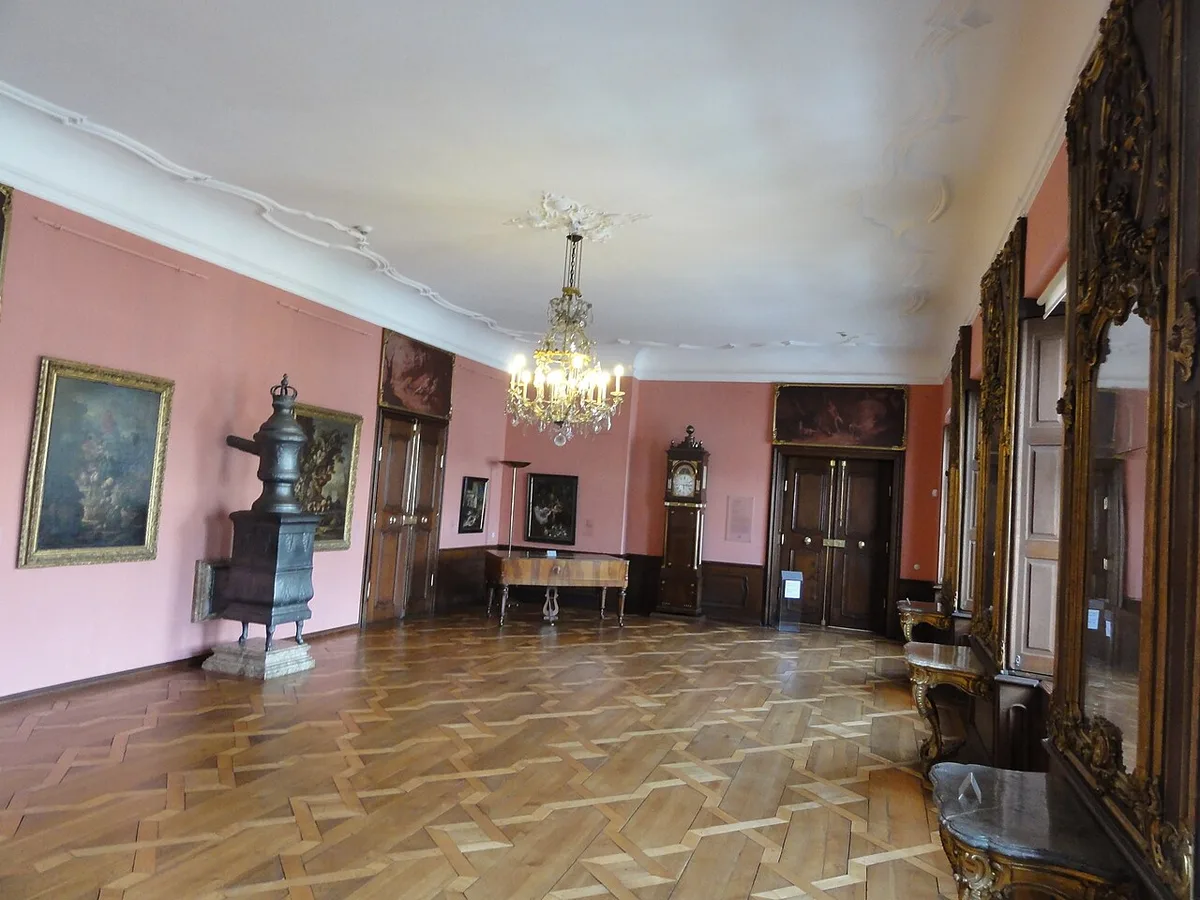
Several of the names most associated with Augsburg carry admission and should never be dropped into a free itinerary by accident. The Fuggerei, the Schaezlerpalais with its Rococo ballroom, the Golden Hall, the Roman Museum, the Brecht House and the Leopold Mozart House all fall on the paid side. The same applies to the zoo and the botanical garden at the edge of the Siebentischwald, and to the Glaspalast contemporary art venue.
Museums in Augsburg do not behave like one coordinated attraction. Different institutions in the city's art collections and museums network run their own spaces, so a ticket for one does not imply entry to another. If you want a museum day rather than a walking day, read our comparison of the best museums in Augsburg worth visiting before you commit an afternoon.
Where prices or opening times matter to your plan, check the operator's own page rather than a guide, since admission and hours are exactly the details that go stale fastest. The Roman depot exhibition at the Zeughaus, for example, publishes its own opening days and notes that times can differ. That kind of caveat is the reason to verify rather than copy.
Building a Free Half Day or Full Day
For a half day, run a simple loop: Rathausplatz first while the light is good, then Maximilianstrasse and the cathedral exterior, then the canals, then a park stop to finish. That sequence keeps you on foot the whole time and needs no tickets. It works because the distances inside the Old Town are short and the canal banks connect the pieces.
For a full day, do the Old Town and canals in the morning, take a proper lunch break, then choose one green space in the afternoon. Add Hochablass and Eiskanal only if you are willing to walk or cycle out and back, and treat that as a separate half day rather than an extension of the centre. A single day is generally described as a comfortable amount of time for Augsburg's highlights, so resist overfilling it.
If you want to fold in one paid interior, put it at the start or the end rather than the middle, so the ticket works as a deliberate choice rather than an interruption. The landmark visitor guides on this site help you decide which single interior justifies the money. Everything else can stay free.
Plan Your Visit
A genuinely free day in Augsburg is built from the square at Rathausplatz, the length of Maximilianstrasse, the canal banks and one green space, and it does not require a single ticket. The trade-off is that you see the city from outside rather than from within, which suits a place whose pleasures are architectural and unhurried. Add one paid interior deliberately if you want it, and treat that as a choice rather than a default.
Check the operator's own pages for any building you intend to enter, and confirm access to the tower or any interior before you travel, since renovation and seasonal changes are exactly the details that travel articles get wrong. If your trip extends beyond the city, our Free things to do in Munich and Free things to do in Berlin guides follow the same no-ticket logic for larger cities. Build the day around walking and water, and Augsburg is cheap in the best sense.
Frequently Asked Questions
What can you see in Augsburg for free?
The historic centre itself is the main free sight: Rathausplatz and the exterior of the Renaissance town hall, the length of Maximilianstrasse with its guild houses and the Weberhaus facade, and the cathedral's setting and facade. The canal network running through the city is free to walk, and the Hofgarten, the herb garden near the Red Gate and the Siebentischwald city forest all cost nothing to enter. What you cannot assume is interior access to buildings, which is where the free day ends.
Are the Lech canals free to walk?
Yes. The canals are working city infrastructure rather than a gated attraction, so there is no entry point, ticket or schedule. You can pick up the water anywhere in the centre and follow the banks, crossing the bridges as you go. Guided water management tours exist as a paid alternative if you want interpretation rather than a self-guided stroll.
Do you need a ticket for the town hall or the cathedral?
It depends on what you want to see. The town hall square and the building's exterior are free to stand in front of and look at, while the Golden Hall inside is an interior with an admission charge. For the cathedral, the facade and setting are part of any free walk, but interior access and opening times vary and should be confirmed with the cathedral or diocese rather than assumed from a guide.
Is the Perlachturm open to climb?
Do not plan around it. Historical sources describe a climb of 258 steps to an observation platform, but the tower has also been reported as closed for renovation with restoration work ongoing. Check the current position locally before you travel, and have an alternative viewpoint in mind in case the tower is not accessible during your visit.
Which Augsburg sights are free and which charge admission?
Free: the Old Town streets and squares, the canal banks, the Hofgarten, the herb garden at the Red Gate and the Siebentischwald forest. Paid: the Fuggerei, the Schaezlerpalais, the Golden Hall inside the town hall, the Roman Museum, the Brecht House, the Leopold Mozart House, the zoo, the botanical garden and the Glaspalast. Treat the paid list as deliberate choices rather than stops on a free route.
Is one day enough for Augsburg's free highlights?
A single day is generally described as comfortable for the city's highlights, and that holds for the free ones if you stay central. You can cover Rathausplatz, Maximilianstrasse, the cathedral exterior and the canals in a morning, then add one green space in the afternoon. Hochablass and Eiskanal sit outside the centre, so treat them as a separate half day rather than something to bolt onto an already full itinerary.


