
Aachen's old town is compact, and that is exactly why so many visitors miss its second layer. The cathedral and the Rathaus absorb almost all of the attention, and the streets immediately behind them empty out within two minutes' walk. Start with one free, firmly documented stop: the Archaeological Window in the Elisengarten, a covered pavilion where you look down at what are believed to be Roman and medieval foundations. It costs nothing, and reading the panels takes most people roughly 15 to 20 minutes — a suggested duration, not an official figure.
Beyond that pavilion, the worthwhile quieter stops are the Grashaus on Fischmarkt and the two surviving medieval city gates, the Ponttor and the Marschiertor. The City of Aachen's own archaeology team wrapped up an excavation on Münsterplatz in 2026, a reminder that the ground under the old town is still producing new evidence. Where this guide names a building, it has an address or an official listing; where sources are silent — such as named cloister remnants or specific small courtyards — that silence is stated rather than filled in.
What Counts as a Hidden Gem in Aachen
For this list, a hidden gem is a place with real historical substance that sits outside the two or three headline stops. That rules out inventing charming courtyards or cloister fragments, because no reliable Aachen source describes any by name; if a guide cannot name a specific building or address, it is filling space. Everything here is either a documented landmark with a public address or a documented free viewpoint, such as the Lousberg ridge on the northern edge of the centre.
The second rule is to separate ground from building. In Aachen you can stand in front of a monument for free and still be locked out of the interesting part, which is why the following sections always say whether you are paying for a view of a facade or for a ticket into a collection. Where a ticket is involved, check the operator's own page on the day rather than trusting a figure quoted in an older blog.
Third, this is a walking list, not a coach itinerary. Aachen's old town and main station sit within easy walking distance of each other, and the compact centre means you can string these stops together without planning transport. Where a stop does push you outside the ring — the city gates, the Lousberg — that is called out explicitly so you can decide whether the extra distance is worth it.
Getting Oriented: The Route Charlemagne and the Old Town Layout
Aachen's tourist office promotes the Route Charlemagne, a marked trail that links the sites associated with the emperor, and the brass markers are a low-effort way to understand how the old town fits together. The route also makes the geography obvious: the cathedral, the Rathaus and the Katschhof form a tight core, and everything else radiates outward from there. Understanding that cluster is what lets you recognise which stops are genuinely off the main flow.
The core also explains why so little of the old town feels like a museum set. Aachen was badly damaged in the Second World War and rebuilt, so the surviving historic fabric is patchy rather than continuous, and the empty-feeling corners are often exactly where older structures once stood. Walking the ring rather than the radial streets is the fastest way to see that pattern.
The Grashaus on Fischmarkt
The Grashaus at Fischmarkt 3 appears on the Aachen tourist service's own list of attractions, which is a useful signal: it is recognised, but it does not draw the same crowd as the cathedral two minutes away. It is one of the medieval buildings that gives the Fischmarkt area its character, and because the surrounding square is small and partly residential, most visitors pass through without registering what they are standing beside. Visitor details: Official event website.
Treat this as a facade-and-square stop rather than an interior you can count on touring. Interior access to Aachen's historic civic buildings can change with events and administrative use, so the sensible approach is to enjoy the exterior and the square, then check current visitor information if you specifically want to go inside. That way a closed door never ruins the walk.
The Archaeological Window in the Elisengarten
The Archaeological Window sits in the Elisengarten just behind the Elisenbrunnen, and it is the single best free stop on this list. Inside a covered pavilion you look down at what are believed to be Roman and medieval foundations uncovered during park excavation work in the early 2000s; the structure was originally meant to be temporary, but the city commissioned a permanent one so the site stays visible. Entry is free, and reading the panels takes most people roughly 15 to 20 minutes.
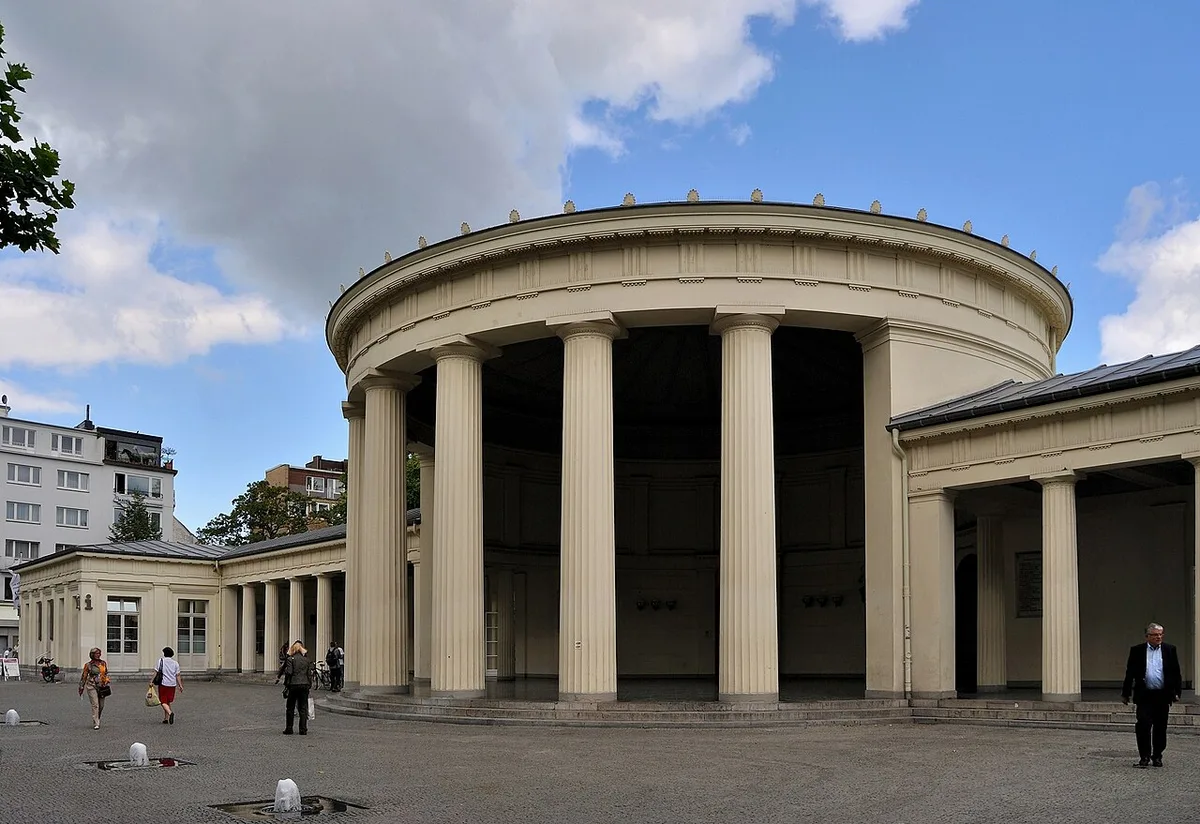
Because it is small and unsignposted in an obvious way, it is easy to walk past; look for the pavilion in the green space rather than a grand entrance. Pair it with the Elisenbrunnen next door, which is where Aachen's spa history becomes visible above ground. Between the two you get the city's Roman and nineteenth-century layers within a few dozen metres.
Ponttor and Marschiertor: The Two Surviving Medieval Gates
Aachen once had eleven medieval city gates; only the Marschiertor and the Ponttor remain. Both are substantial stone structures rather than picturesque fragments, and both sit outside the compact old-town core, which is precisely why they feel quieter than the cathedral square. If you have extra time and enjoy tracing how a city once defended itself, they are a satisfying pair to hunt down.
Marschiertor's position near the train station makes it the easier of the two to fold into an arrival or departure, while the Ponttor stands closer to the Pontviertel, the student quarter where the bars and inexpensive restaurants cluster. That means you can combine the Ponttor with an evening in the Pontviertel rather than treating it as a separate excursion. Neither gate needs a ticket to admire from the outside.
Be realistic about what a gate is: it is a piece of fortification, not an attraction with displays inside. The reward is the scale, the stonework and the sense of standing on a line the city has long since outgrown. Budget a short look rather than an hour.
The Elisenbrunnen and the Spa Layer
The Elisenbrunnen is the neoclassical pavilion that announces Aachen's identity as a spa town, and the structure around the spring was completed in 1827. Two warm sulphur springs still run there, which is why the smell reaches you before you see the building. It is not a site that fills an afternoon, but it is the right place to understand why emperors cared about this city at all.
Practically, the square in front of the Elisenbrunnen is also where the tourist information point sits, which makes it a sensible first stop if you want a map, a current event listing or advice on guided walks. Beginning here rather than at the cathedral means you start with orientation and then walk into the historic core with a plan. It also puts you within a couple of minutes of the Archaeological Window.
Quiet Squares, Alleys and the Anna Strasse Detail
The pleasure of Aachen's old town is in the small streets rather than a single set-piece square. Anna Strasse in particular carries a run of small boutiques and specialist shops that make it worth walking slowly rather than using as a through-route, and the surrounding lanes reward the same treatment. If you set out with no fixed target and simply loop the blocks behind the Rathaus, you will cover most of what this section describes.

From there the character shifts as you head north toward the Pontviertel, the student quarter around Pontstrasse, where cafes, bars and inexpensive food take over from shopfronts. That transition is one of the nicer half-hour walks in the city, and it ends naturally at the Ponttor. It also gives you a reason to schedule the gate at the end of a wander rather than as a separate trip.
One honest caveat: Aachen's tourism material does not name specific small courtyards in the old town, and older blogs are inconsistent about them. Rather than chasing a named courtyard that may not exist, treat any open gateway or passage you find as a bonus and keep moving. The reliable stops are the ones with addresses and official listings.
Free Ground Versus Paid Interiors: The Cathedral Distinction
Aachen Cathedral itself is free to enter, but the choir and the upper level containing the imperial throne are only accessible as part of a guided tour. That is a critical distinction, because plenty of visitors assume the free entry means everything inside is open to them. Photography inside the cathedral is subject to a small contribution, and opening times can shift around services and concerts, so checking the cathedral's own visitor page on the day is worth the two minutes.
The Cathedral Treasury is a separate, ticketed exhibition space with its own entrance and its own opening pattern, and it is not covered by walking into the church. Online ticket purchasing has time restrictions, and the operator also sells tickets on site at the cathedral information centre, so the box office is the fallback if you decide late. Treat any price you read in a 2017-era blog as historic rather than current.
The same logic applies across the city's museum landscape: a single museum ticket for one collection does not automatically admit you to another. If your plan depends on a specific combination, confirm it with each operator rather than assuming. That is the single most common planning error visitors make in Aachen.
Small Museums Worth the Detour
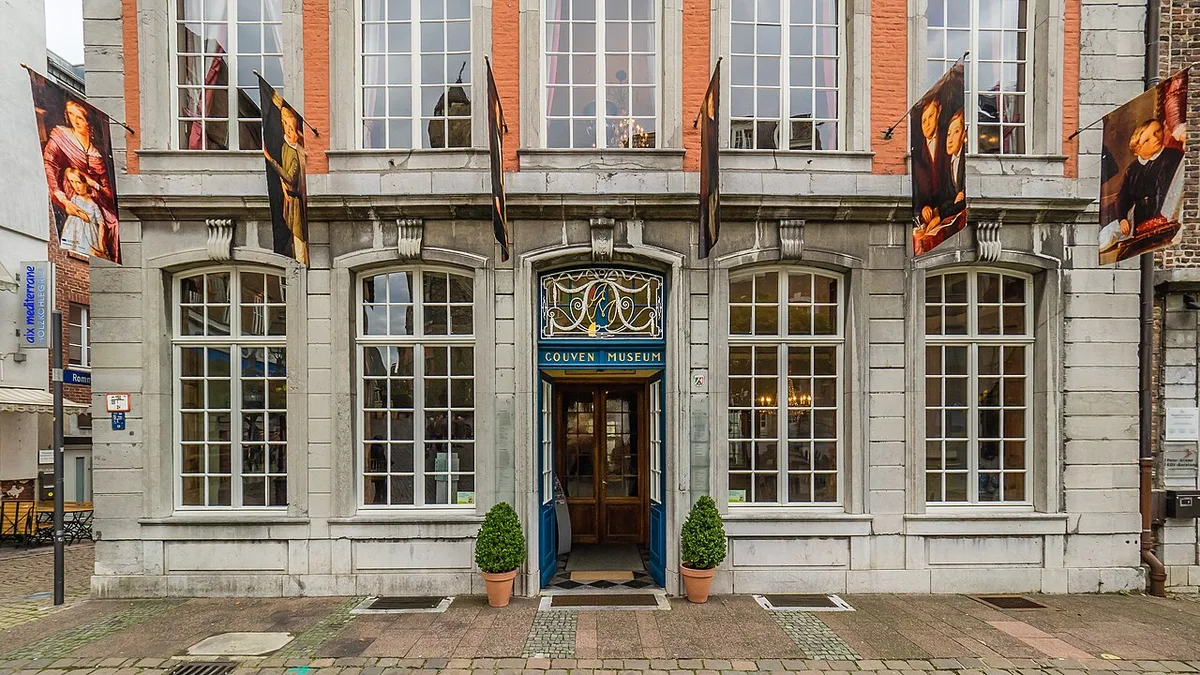
The Couven Museum at Hühnermarkt 17 occupies a house tied to the apothecary Adam Coebergh, who began building there in 1662, and it presents domestic interiors of the eighteenth and early nineteenth centuries. Its published opening hours are Tuesday to Wednesday afternoons and Thursday to Sunday from morning until late afternoon, with occasional closures and late openings announced on the museum's site. Guided tour places are limited and cannot be reserved, with tickets sold at the desk shortly before the start.
The Suermondt-Ludwig-Museum on Wilhelmstrasse holds the city's art collection, with a medieval sculpture collection that is among the more significant in Germany, alongside Dutch and Flemish painting and a small collection of nineteenth and early twentieth century works. It publishes its own opening hours, closes on Mondays and lists a set of public holidays when it stays shut, and parts of the building can be closed for construction. If you are coming for one specific room, check the site before you travel.
If you want the city's history told in one place, the Centre Charlemagne on the Katschhof covers the story from the Carolingians to the present and doubles as a starting point for the Route Charlemagne. It is the natural companion stop if you are following that route, and it sits directly between the cathedral and the Rathaus.
A Suggested Half-Day Walk Through the Quiet Stops
Give this route an afternoon, roughly four hours of walking and looking, and treat that duration as our own suggestion rather than an official figure. Start at the Elisenbrunnen, where you can pick up a map and current listings at the tourist information point, then walk the few dozen metres into the Elisengarten for the Archaeological Window. From there, cross toward Fischmarkt for the Grashaus, then loop the small streets and Anna Strasse before heading into the cathedral square.
From the cathedral square, continue to the Rathaus and the Katschhof, then push north through the Pontviertel to finish at the Ponttor. If you still have energy and daylight, the Lousberg ridge on the northern edge of the centre offers the best free overview of the city, and the walk up is a genuine change of scale from the alleys. Marschiertor is better saved for the following morning on your way to or from the station.
If you are building a longer stay, this walk slots into a fuller programme comfortably, and the same stops work well as the second day of a weekend in the city. The key is not to compress the quiet stops into the same ninety minutes as the cathedral. They are what makes the second visit different from the first. For wider planning, see 2 Days in Aachen.
Timing Your Visit Around Events and Seasonal Closures
Aachen runs a busy event calendar, and the tourist service publishes public guided walks in the old town and an evening stroll departing from the Tourist Info Elisenbrunnen on scheduled dates. These change by date and language, so the only reliable approach is to check the upcoming departures page and book what actually fits your stay. Do not rely on a tour time quoted in an older article.
The Christmas market is the city's largest seasonal draw, and dates for any year must be confirmed through the official tourism channels because they change annually. Outside that window, the quieter stops on this list are at their best on ordinary weekdays when the old town belongs to residents. Churches and museums can close at short notice for services, events or maintenance, so build flexibility into any fixed plan.
The City of Aachen also publishes short-notice service and closure notices, which is a useful habit to check if a specific facility is central to your trip. It is not a substitute for operator pages, but it catches things like sudden building closures that would otherwise waste a morning.
Why the Smaller Stops Are Worth the Detour
Aachen's great strength is that its most famous building is not a fortress that guards the rest of the city. Walk two minutes in almost any direction from the cathedral square and you reach the Grashaus, a free archaeology pavilion, quiet shopping streets or a fourteenth-century gate, usually without another visitor in sight. The reason to return to Aachen is rarely the thing you saw first.
Plan around verification rather than fixed assumptions: confirm opening times with the cathedral, the Couven Museum and the Suermondt-Ludwig-Museum before you travel, treat any price you read online as needing confirmation, and check the tourist service listings for walks and events on the dates that actually exist in your trip. That habit is what turns a short stopover into a genuinely useful visit.
Frequently Asked Questions
Are there free things to see in Aachen beyond the cathedral?
Yes. Entry to Aachen Cathedral itself is free, and the Archaeological Window in the Elisengarten is also free to visit, with panels that take most people around 15 to 20 minutes to read. The surviving medieval gates, the Ponttor and Marschiertor, are public monuments you can view from the street at no cost, and the Lousberg ridge offers free viewpoints over the city. Paid elements are the separate ones: the Cathedral Treasury and museum interiors such as the Couven Museum.
What are the lesser-known sights in Aachen's old town?
The Grashaus on Fischmarkt, the Archaeological Window in the Elisengarten behind the Elisenbrunnen, and the small streets and squares behind the Rathaus are the core of it. Add the Elisenbrunnen itself, which explains the city's spa identity, and the transition north into the Pontviertel student quarter around Pontstrasse. The two surviving medieval city gates sit outside the compact core but are easy to add if you have extra time.
How long do Aachen's smaller sights take to visit?
The Archaeological Window takes most people around 15 to 20 minutes. The Elisenbrunnen is a brief look unless you linger on the square, and the city gates are short stops rather than full attractions. Allow roughly an hour and a half to two hours to link the Grashaus, the Elisengarten and the old-town streets on foot, and add museum time separately if you want interiors. These are our own suggestions, not official figures, so pace them to your own interest.
Is the Cathedral Treasury included with cathedral entry?
No. Walking into Aachen Cathedral is free, but the Cathedral Treasury is a separate ticketed exhibition with its own entrance and its own opening pattern. Its own information centre sells tickets on site, and online sales have time restrictions, so the desk is the practical fallback. Prices quoted in older travel blogs should be treated as historic rather than current; confirm the figure with the operator before you go.
Which Aachen museums need a paid ticket?
The Cathedral Treasury, the Couven Museum, the Suermondt-Ludwig-Museum and the Centre Charlemagne are ticketed, and each is run and priced separately rather than under one shared admission. Opening hours differ between them, and all three can close for public holidays, construction or internal events, so check each operator's own page for the day you plan to visit. Do not assume a ticket for one collection admits you to another.
Where are Aachen's surviving medieval city gates?
Marschiertor and Ponttor are the last two of Aachen's original eleven medieval gates. Marschiertor sits on the southern side of the centre close to the main station, which makes it convenient on arrival or departure, while Ponttor is on the northern edge toward the Pontviertel student quarter. Both are best reached on foot from the old town and are viewed from the outside at no cost.
Sources
- Willkommen in Aachen | Stadt Aachen
- Top Things to Do in Aachen: The "City of Charlemagne" | Tall Girl Big World
- Weekend In Aachen: Germany Travel Guide - The Curious Creature
- Official event website
- Aachen Tourismus - aachen tourist service
- Home - Couven Museum
- Hammocks at Lousberg Terrace – View of Soers from Lousberg loop from Aachen | túra | Komoot
- Startseite - Suermondt-Ludwig-Museum


