
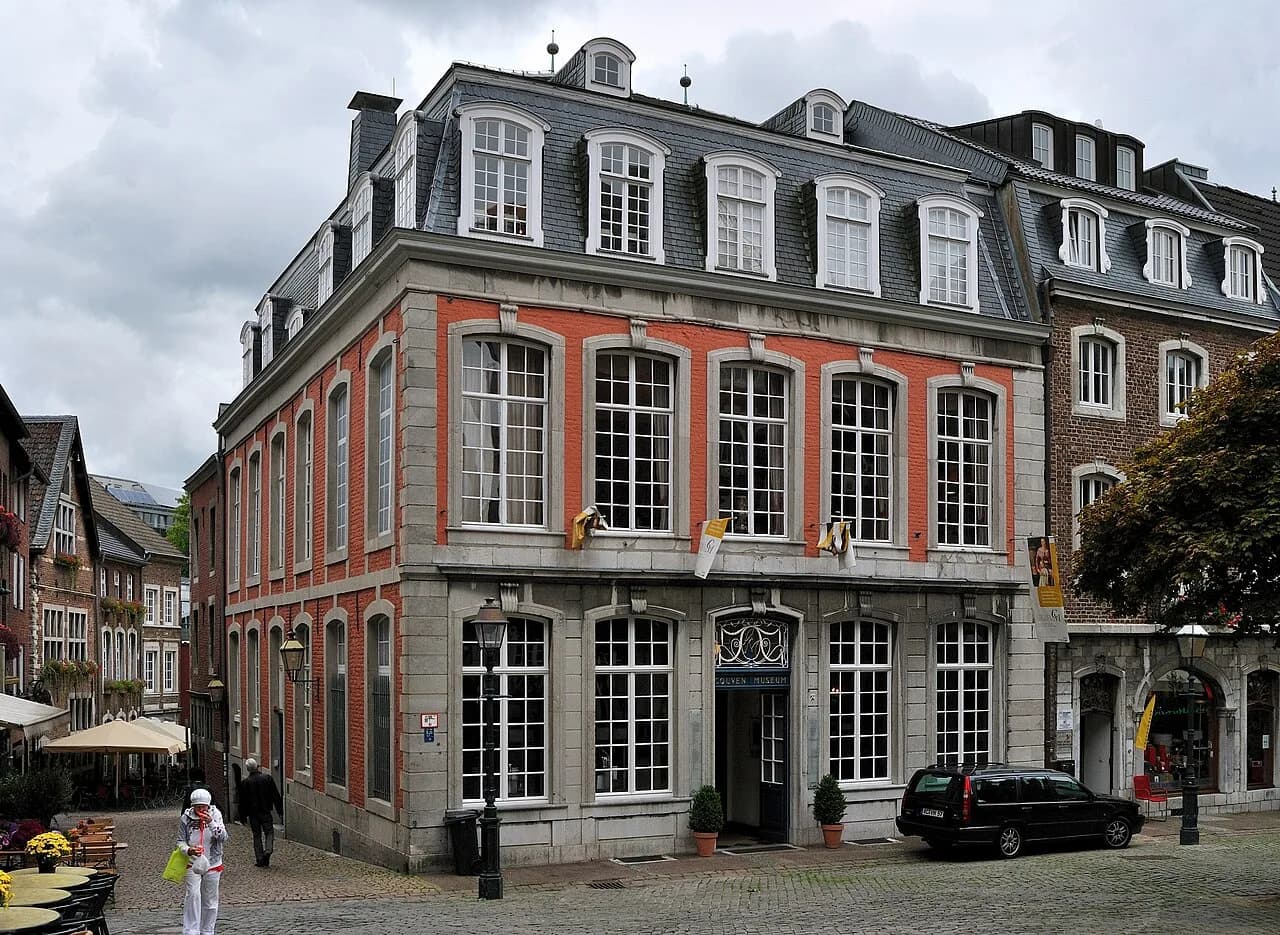
The Couven Museum occupies a gabled patrician house at Hühnermarkt 17 in Aachen's old town. The single most useful planning fact is the opening pattern: the museum lists Tuesday and Wednesday from 1:00 p.m. to 5:00 p.m. and Thursday to Sunday from 10:00 a.m. to 5:00 p.m., so a morning start is only possible from Thursday onwards. Inside, the rooms present domestic culture of the 18th and 19th centuries through ensembles of furniture, fireplaces, paintings, porcelain and silver, and the house history explains why the interiors feel both grand and lived-in.
The building's own story runs from a seventeenth-century pharmacy to a twentieth-century museum, and the house is a better anchor for a visit than any list of highlights. If you are fitting the stop into a wider day, the city itinerary surfaces for Aachen help you place the museum alongside other sights.
The House Behind the Name
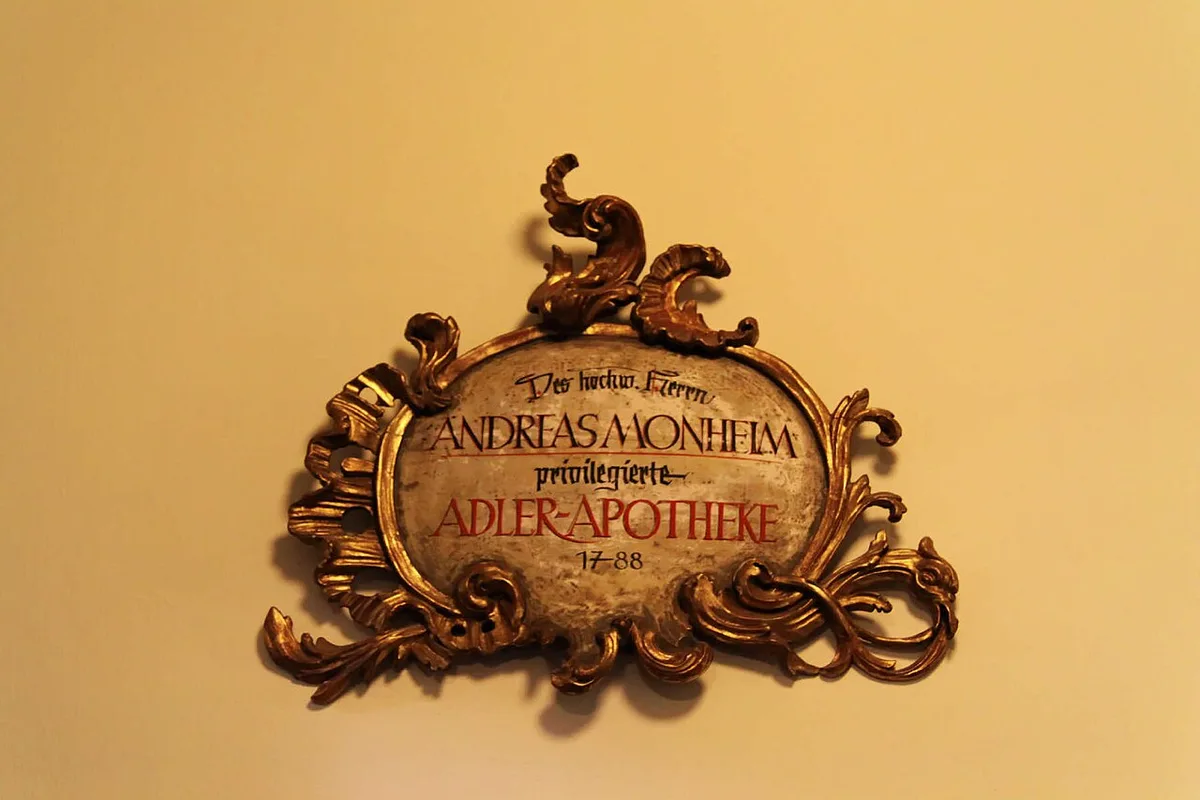
The building began as a pharmacy. From 1662 the pharmacist Adam Coebergh built the house at Hühnermarkt and established the Eagle Pharmacy there, which is why it is still referred to as the Coebergh House. That commercial origin matters when walking through the rooms, because the house was adapted for a prosperous household and business rather than designed as a museum from the start.
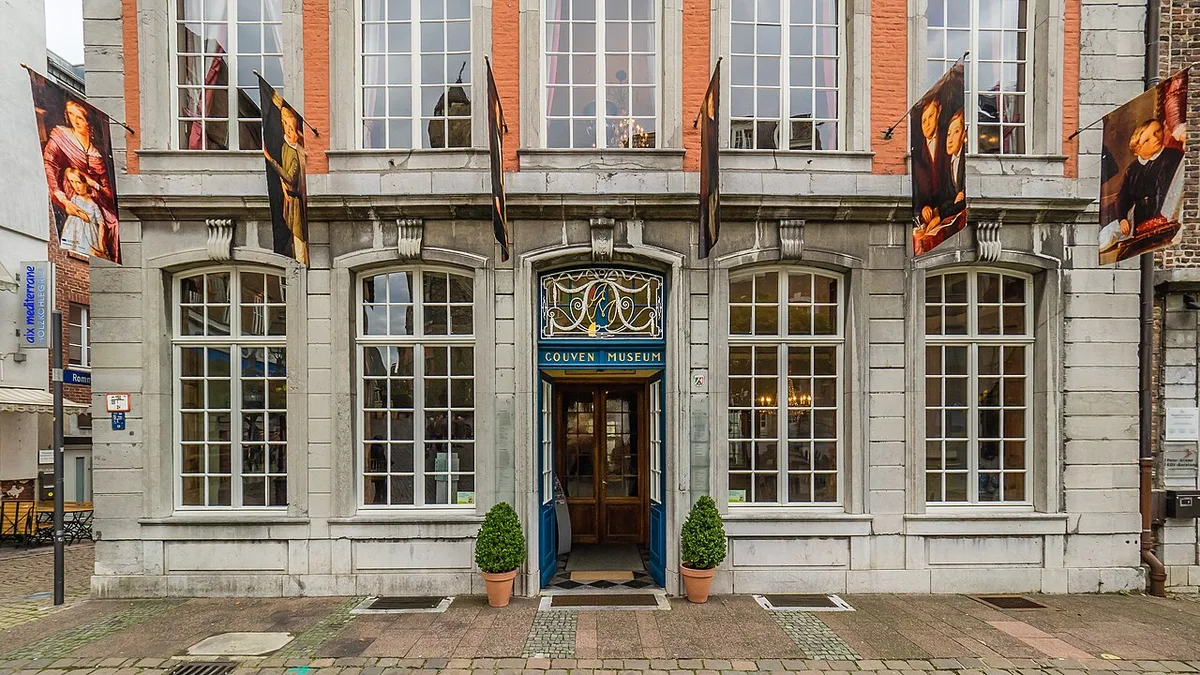
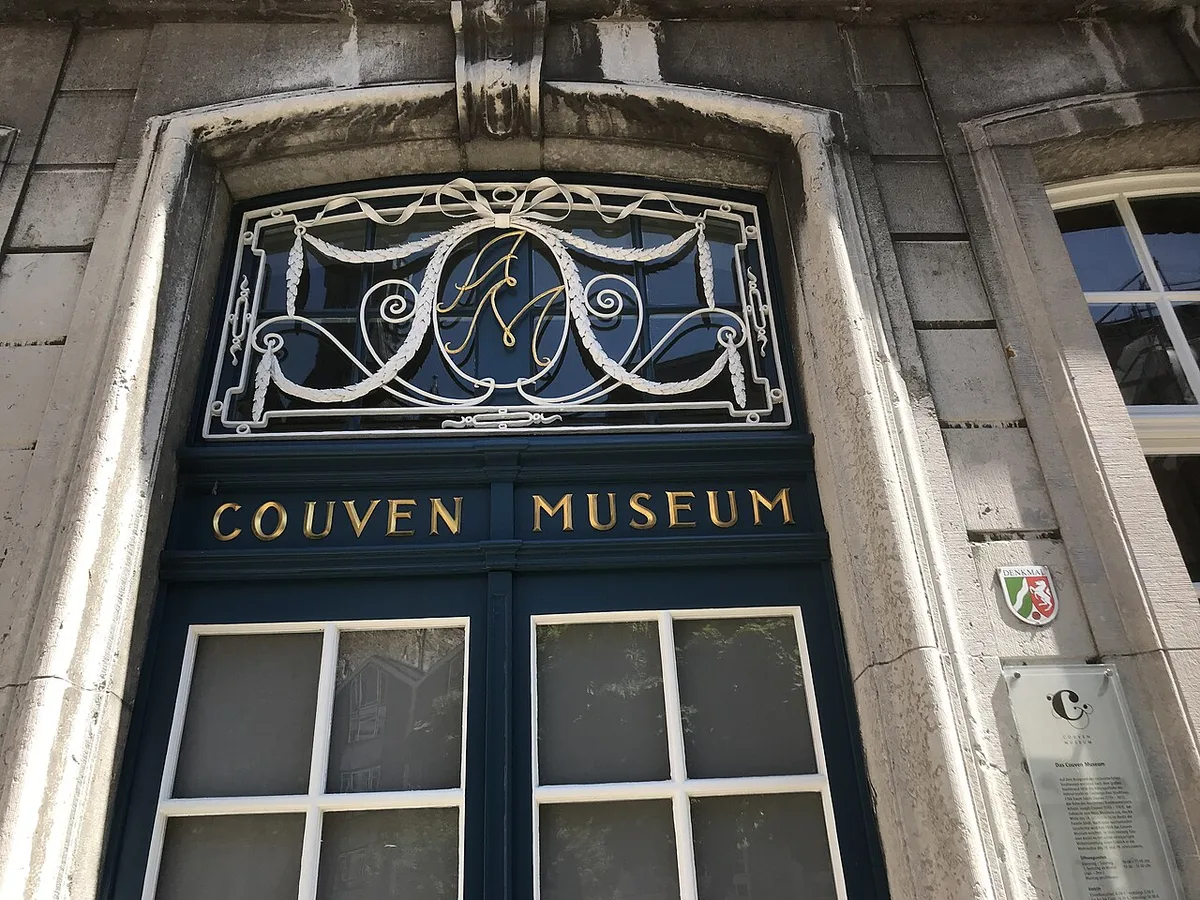
The remodelling that gives the museum its name followed a change of ownership. After Andreas Monheim acquired the building in 1783, he had it remodelled three years later by the architect Jakob Couven. After the Second World War, the City of Aachen bought the house from the Quadflieg family in 1951, and the Couven Museum opened here in 1958, so the interiors are a twentieth-century museum installation inside a seventeenth- and eighteenth-century shell.
Reading the house this way changes what you look for. Ceiling heights, window positions and room proportions are original constraints the curators worked with, and the displays are arranged as period rooms rather than as a chronological survey of a royal collection. If you want the political and urban history of Aachen itself, the Centre Charlemagne museum visitor guide covers that city narrative, while the Couven is best treated as a domestic interior.
What You Actually See Inside
The museum describes its rooms as ensembles of furniture, fireplaces, paintings, porcelain and silver. This is an applied-arts and interiors museum, so expect cohesive room settings rather than a sequence of individually spotlit masterpieces. The strength of a visit lies in noticing how objects, wall treatment and light work together in each space.
The museum guide is built around exactly that idea. It is described as a lively tour through the house's period rooms and is available in German, English, French and Dutch; the museum lists it at 7 euros. Because stock and language availability can change, it is worth asking at the ticket desk when you arrive rather than assuming a specific edition will be there.
Photography habits, bag rules and similar in-house etiquette are handled by the museum rather than by any external guide, so treat general museum etiquette advice as a baseline and follow the notices on site. If you are prioritising stained glass, reliquaries and goldsmith work instead, the Aachen Cathedral Treasury visitor guide addresses that separate collection, which sits in a different part of the city's heritage landscape.
Tickets and Entry Mechanics
The museum publishes rules for guided tours in more detail than it does for standard admission. For guided tours, the number of participants is limited, reservations are not possible, and participation tickets are available at the ticket desk from 30 minutes before the tour starts. In practice that means arriving early and accepting that a full tour cannot be pre-booked online in the way many visitors expect.
One concession is stated plainly: admission and guided tours are free for everyone up to the age of 21 from the City of Aachen and the Aachen City Region. That is a residency-based rule, not a blanket youth discount for all international visitors, so check your eligibility before counting on it. For regular adult admission prices, the museum site is the authoritative place to look, and the city tourism listing is a useful cross-check for current visitor information.
The museum's published ticketing detail concerns guided-tour participation, and separate publications are priced separately, including the exhibition catalogue at 8 euros and a theatre catalogue at 30 euros as listed on the site. Ask at the desk what a given ticket includes on the day of your visit instead of assuming that one ticket covers every room or special exhibition.
If you are comparing city museums as a group, confirm any combined or city museum pass with the museum or the city's museum service, because the published pages here do not describe one. An Aachen Rathaus visitor guide covers a different building and a different ticketing arrangement again, since the town hall is a working civic building with its own access rules.
Opening Hours, Museum Mornings and Dated Closures
The standard pattern is Tuesday to Wednesday 1:00 p.m. to 5:00 p.m. and Thursday to Sunday 10:00 a.m. to 5:00 p.m., as the museum lists it. That asymmetry is the key planning fact: a Thursday-to-Sunday visit gives you a full morning, while a Tuesday or Wednesday visit only works from early afternoon. Plan the rest of your day around that split; a one-day Aachen itinerary works well alongside a single-museum stop.
The early Tuesday and Wednesday window of 8:30 a.m. to 1:00 p.m. is not general opening. It applies to booked groups, school classes and visitors with prior registration for public guided tours and courses, so an individual traveller cannot simply turn up before 1:00 p.m. on those days. The school offer, for example, is free with registration required through the museum service, which is a different booking route from ordinary admission.
The museum also publishes dated exceptions rather than annual rules. A temporary closure from Monday 13 April to Friday 17 April was announced for the dismantling of the costume exhibition, with reopening from Saturday 18 April 2026 during regular hours, and the site has listed individual variations such as opening later on one October Wednesday and staying closed on one October Friday. Treat each notice as specific to its date and confirm current status on the museum's site before travelling, rather than extrapolating a seasonal pattern.
Recent Special Exhibitions
Two exhibitions were listed on the museum site with their run dates. The special exhibition Ink meets Indian ink: Ink Pots and Ink Drawings ran from 26 September 2026 to 18 April 2027, and the cabinet exhibition Farina: An Italian Spring Morning in the Flacon ran from 1 May 2026 to 2 November 2026. Because these dates were published by the museum, they were the ones to plan around, but exhibition schedules change, so check the museum's current listings before your travel date.
The ink exhibition was thematically about writing and drawing, drawing on ink pots and ink drawings, while the Farina show was a cabinet-scale display built around perfume and scent, connected to Giovanni Maria Farina's description of a fragrance reminiscent of an Italian spring morning. That contrast is useful for thinking about future exhibitions: one approach is object- and graphic-based, the other is small-scale and sensory in theme, and the cabinet format means it occupies a compact space within the visit.
The safest approach to ticketing for these shows is to ask at the desk. The museum's published ticketing statements cover guided-tour participation and separately priced publications, not a blanket rule that every exhibition is included in every admission ticket. If a temporary exhibition is the main reason for your visit, say so on arrival so staff can tell you exactly what applies that day. A two-day Aachen itinerary can help you allow time for a museum stop plus other city sights.
Who Should Visit and Who Should Skip It
Visit the Couven Museum if you enjoy rococo and eighteenth-century interiors, applied arts, porcelain, silver and the experience of standing inside a furnished townhouse. It rewards slow looking and reading, and the house history gives the rooms a coherence that a mixed decorative-arts display often lacks. Anyone interested in how prosperous European households actually lived will find the format more engaging than a wall of vitrines.
Consider skipping it if your priority is large-scale painting collections or you have limited time and want a single broad city museum. In that case the Suermondt-Ludwig-Museum visitor guide covers a different, art-focused proposition, and choosing between them is a matter of subject interest rather than quality. Two compact city stops in one day is realistic only if you accept a short visit to each.
Families should weigh the format honestly: the museum is a historic house with furnished rooms, not an interactive discovery centre, though the free school programme shows that it does engage younger audiences in organised settings. If you are travelling with children and want a self-directed visit, plan a shorter stay and use the museum guide for structure, and weigh what else in the city suits younger visitors if the historic rooms are not a natural fit.
If you are assembling a wider Aachen itinerary, the city-level guides are the right place to decide how the Couven fits alongside other stops. Use the museum's own pages for anything that changes, such as hours and exhibition dates, and use route guides for the shape of the day.
Plan Your Visit
The Couven Museum works best when you treat it as a house rather than a checklist. Fix the day first, because Tuesday and Wednesday visits only open in the afternoon, confirm the listed hours and any dated closure notice on the museum site, and decide whether you want to try for a guided tour, remembering that places are limited and cannot be reserved.
If the period rooms are the appeal, go; if you want a large art collection, put your time into a different Aachen museum and save this one for a return visit. Either way, the gabled house on Hühnermarkt rewards a little preparation, and checking the museum's own notices is the single most reliable habit for a smooth visit.
Frequently Asked Questions
What are the Couven Museum's opening hours?
The museum lists Tuesday and Wednesday from 1:00 p.m. to 5:00 p.m. and Thursday to Sunday from 10:00 a.m. to 5:00 p.m. An earlier Tuesday and Wednesday window of 8:30 a.m. to 1:00 p.m. applies only to booked groups, school classes and visitors registered in advance for public guided tours and courses, not to general admission. Because the museum also publishes dated exceptions, check its current notices before you travel.
How do I get tickets for a guided tour at the Couven Museum?
Guided-tour places are limited and reservations are not possible. Participation tickets are sold at the ticket desk from 30 minutes before the tour begins, so arriving early is the practical strategy. Ask at the desk what a given ticket includes on the day, since the museum's published ticketing detail concerns guided-tour participation rather than a blanket rule covering every room or exhibition.
Does one ticket cover the special exhibitions?
The museum's published statements about tickets concern guided-tour participation and separately priced publications, so it is not safe to assume that all rooms or all special exhibitions are included in a single admission ticket. Prices for the museum guide and exhibition catalogues are listed separately from admission. Ask at the ticket desk what your ticket covers on the date you visit.
Is the Couven Museum worth visiting, or should I skip it?
It suits visitors who enjoy rococo and eighteenth-century interiors, furniture, fireplaces, porcelain and silver presented as coherent room settings, and who are happy to read and look slowly. If your priority is a broad fine-art collection, a different Aachen museum will serve you better. The decision is about subject interest rather than quality.
Is the museum guide available in English?
The museum describes its guide to the period rooms as available in German, English, French and Dutch, and lists it as a separately priced publication. No stock guarantee is published, so if you want a specific language edition, ask at the ticket desk when you arrive rather than assuming it will be on the shelf.


