
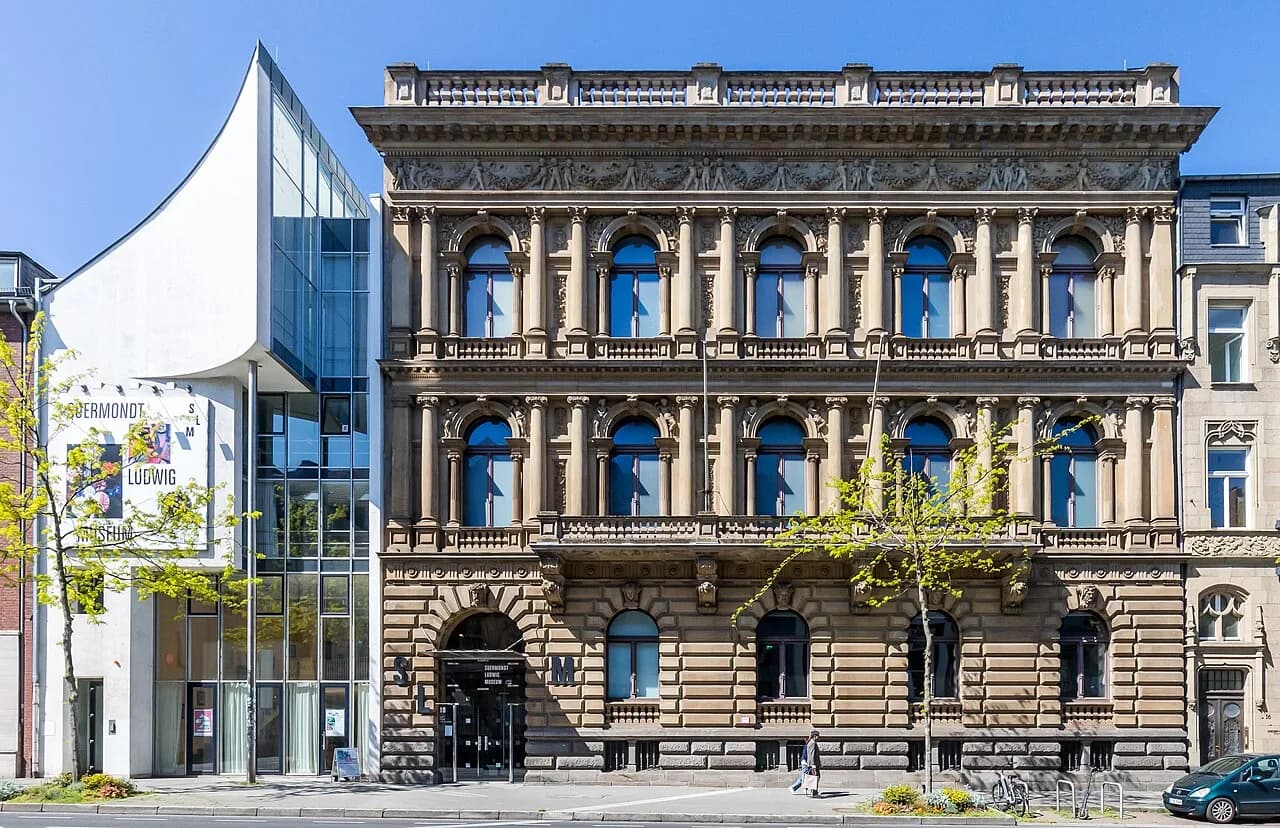
The Suermondt-Ludwig-Museum is Aachen's fine art museum, housed in the 19th-century Haus Cassalette town palace on Wilhelmstrasse. Its collections run from medieval sculpture and altarpieces through Dutch and Flemish Golden Age painting to 19th and 20th century art, and a visit fits naturally into a day in the city centre. As part of the wider set of things to do in Aachen, it rewards planning rather than a spontaneous dash between the cathedral and the town hall.
One concrete planning fact shapes any visit: the museum closes on Mondays, and on Tuesdays and Wednesdays it opens only in the afternoon. On Thursday to Sunday it opens from morning until late afternoon, with last admission half an hour before closing. Before travelling, confirm the current schedule on the visitor information page, because public holiday opening and short-notice internal closures are published there.
What the Suermondt-Ludwig-Museum Actually Is
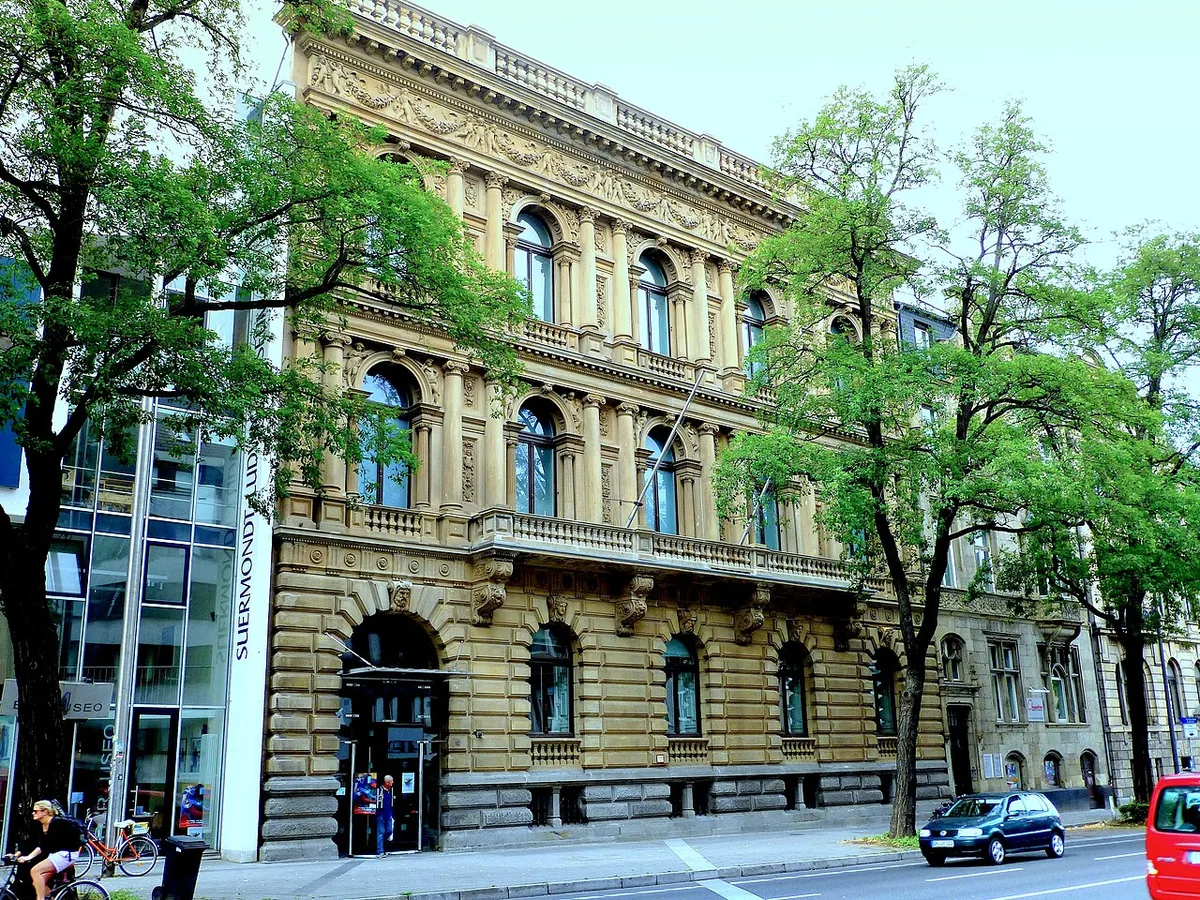
Haus Cassalette, a grand 19th-century city palace, provides the setting, and the museum describes itself as Aachen's parlour. The building combines older and newer extensions, which explains the level changes and indirect routes you will notice between galleries. This is a civic collection with a long collecting history rather than a single-donor blockbuster museum.
The collection divides into medieval sculpture, panel painting from the 15th to 18th centuries, Italian and Spanish old masters, Dutch and Flemish 17th-century painting, 19th and 20th century art, prints and drawings, town history, and special collections. The Civic Cabinet of Arts and Curios, known in German as the Bürgerliche Kunstkammer, gathers a cabinet-of-curiosities selection of objects from Aachen citizens' collections. All of this sits under one roof, so a single admission covers the permanent displays when they are open.
Opening Hours and Closures: What to Check First
The regular pattern is Tuesday and Wednesday from 1 pm to 5 pm, and Thursday to Sunday from 10 am to 5 pm, with last admission at 4.30 pm. Mondays are closed. The museum publishes its opening hours in both German and English, so use the official visitor information page in your preferred language.
Closure dates are specific rather than general: the published list includes Carnival Sunday, Rose Monday, Easter Monday, Whit Monday, 24 December, 25 December and 31 December, plus certain February dates. At the same time, the museum states that it opens on Good Friday, Easter Saturday and Easter Sunday, and it asks visitors to note its special opening hours on public holidays. That mix is exactly why you should check the current page in the week before a holiday visit rather than assuming a standard Sunday timetable.
The museum also posts short-notice closures for internal events, such as a full-day shutdown in October for an internal function. These are announced on the homepage banner rather than buried in the visit pages. If you are making a special trip, a quick homepage check on the morning of your visit costs nothing.
Admission Fees, Free Entry and the Museum Card
The museum publishes a fee schedule effective from 1 March 2026, so treat older quoted prices you find elsewhere as unreliable and check the official figures yourself. The fee schedule covers regular entry, concessions, group rates, and the separate Museum Card "6 for 6". No online booking is required, which is unusual for a city art museum and convenient if you decide to drop in.
One group gets in free rather than reduced: guests up to and including 21 years of age who live in Aachen or the surrounding city region. That regional condition matters, so families visiting from outside the area should not assume their teenagers qualify. Surcharges may apply for special events, and the museum does not publish the amounts, so ask at the desk if a surcharge is a deciding factor.
The Museum Card "6 for 6" is a separate multi-venue product: one admission each to five museums and the Town Hall, valid for six months. Do not expect a single ticket to cover every museum in the city, and do not assume the card is worthwhile unless you plan several visits. ASEAG bus combination tickets can also bundle a bus journey with museum admission for the city or city-region zones, which is worth pricing against a plain ticket.
Getting There: Address, Buses and Parking
The museum stands at Wilhelmstrasse 18 in Aachen, and it is reachable on ASEAG bus lines 3, 13 and 4. If you arrive by car, the museum's own directions list three nearby options: the Contipark car park on Lothringerstrasse, parking at Kaiserplatz by Aquis Plaza, and a car park on Adalbertsteinweg. There is no museum-run car park, so factor in a short walk from whichever you choose.
Bicycle parking, taxi drop-offs and exact walking distances are not published by the museum, so plan the final leg using a mapping app on the day. The ASEAG website is the place to confirm timetables and combination-ticket terms before you travel. If the bus and the museum are both on your list, buying the combination ticket from the driver is the simplest sequence.
Accessibility in a Historic Building
In principle, all rooms on all floors can be reached by lift, but the museum warns that the building's history creates differences in floor levels and indirect routes for wheelchair users. A standard wheelchair is available in the first-aid room next to the foyer, and there is a barrier-free toilet. Staff are described as happy to assist, which is the practical fallback if a route is awkward.
Access notes can change when building work is under way, so confirm your route with the museum before a visit if you rely on step-free access throughout. Ask specifically about the entrance, the lift and any currently closed sections. For other city sights, check access details separately rather than assuming they match the Suermondt-Ludwig-Museum's arrangements.
Collection Highlights: Medieval Sculpture and Altarpieces
The ground floor holds what the museum calls one of the most important sculpture collections in Germany, covering the 12th to 16th centuries. The Sculpture Rooms are reached through the Fireplace Room and via a ramp. Cathedral sculpture from France, Cologne Madonnas from the 14th and 15th centuries, and Lower Rhine works by Tilman Riemenschneider, Arnt van Tricht and Henrick Douwermann fill the sequence.
The rear rooms display East German, South German and Alpine sculpture, including the Swabian Altar of Mary from around 1510 and the Saxon Altar of the Holy Kinship of 1511. Both are described as large, fully intact framed altarpieces, and the museum notes that woodcarvers such as Daniel Mauch and Hans Multscher built its international reputation. The Vaulted Room reconstructs a church-like setting, with the Geldrian Altar of St Peter from around 1500 surrounded by medieval implements and a Cologne Madonna from 1180.
The Christian Boltanski archive installation from 1994 remains in the museum as a working artwork, with archive files, a wooden rack and twelve incandescent lamps. Because the files are still used, the artwork changes over time. This is the one section where a short label read genuinely changes what you are looking at, so allow a few minutes.
Collection Highlights: Old Masters and the Golden Age
On the first floor, the painting displays begin with the Cologne School and Southern German and Early Dutch panel painting, including an Adoration of the Magi and Albrecht Bouts' diptych of Christ and Maria. The Italian and Spanish room holds a large Jusepe de Ribera Adoration of the Shepherds, flanked by Francisco Zurbarán, Bartolomeo Manfredi, Tintoretto and Luis de Morales. A doorway leads to the Tapestry Room, where Brussels tapestries hang alongside antiquities.
German and Dutch panel painting and winged altarpieces of the 15th and 16th centuries fill the Skylight Rooms, with works by Ambrosius Benson, the Master of Delft and Derick Baegert. Lucas Cranach's Judith with the Head of Holofernes hangs here, as do Joos van Cleve and a small Cornelis Engebrechtsz. If you have limited time, these two rooms alone justify the first-floor detour from the sculpture galleries.
Dutch and Flemish 17th-century painting occupies the third room and rear staircase landing, with Jan Boeckhorst's Fall of the Damned, Jacob Jordaens' Feeding of the Infant Jupiter and Frans Snyders' allegorical rooster painting. The surrounding Cabinet Rooms hold the Golden Age material, including Rembrandt with his Portrait of a Young Man, pupils and contemporaries such as Frans Hals, and still lifes by Willem Claesz Heda and Willem Kalf, plus landscapes by Jacob van Ruisdael. The museum singles out the Heda and Kalf still lifes as art-historical highlights, and the hanging rewards slow looking rather than a checklist.
19th and 20th Century Art and Glass Painting
The second-floor painting galleries open with the Biedermeier period, introduced by Johann Baptist Bastiné, a pupil of Jacques-Louis David, and Carl Spitzweg's idyllic scenes. Late Romanticism is represented through the Düsseldorf School and its circle, and the transition to the 20th century comes with a major Max Liebermann work. Classical Modernism follows with Alexej von Jawlensky and Lovis Corinth, alongside regional artists such as Walter Ophey.
The same floor shows glass painting, tracing technical and stylistic development into 20th-century stained glass. Prints and drawings form a separate study collection, which is not necessarily on view at all times. Because the upper floor is the most likely to be affected by building work, think of the second-floor galleries as a bonus rather than the core of a first visit.
For an entirely different Aachen collection, the Couven Museum visitor guide covers the city's best-known period interiors, a useful contrast to the Suermondt-Ludwig-Museum's broad art survey. Aachen: Itineraries and City Travel Guides helps you sequence museum time with the cathedral and old town. Choosing one museum deeply usually beats skimming three, especially with the weekday afternoon closures here.
The Civic Cabinet of Arts and Curios and Current Restrictions
The Bürgerliche Kunstkammer on the first floor displays Aachen citizens' collected curiosities, including an Egyptian mummy, powder flasks and the Lobkowitzscher Kaiserpokal. The presentation echoes Renaissance and Baroque Kunstkammer and Wunderkammer traditions, where completeness mattered more than authenticity, so fossils sit beside Greek vases and replicas beside originals. It is a cabinet of curiosities in the literal sense, and a good counterweight if the painting galleries start to blur.
One current restriction affects planning: the second floor is closed for building work, with no published end date. The museum states that rooms can be temporarily inaccessible for various reasons and thanks visitors for their understanding. If the 19th and 20th century paintings or the glass painting are your main reason to visit, ask staff what is on view before buying a ticket.
Temporary exhibitions run alongside the collection, and the museum announces a changing programme, including contemporary projects and photography. What is on during your visit depends on dates that shift through the year, so check the current exhibitions page rather than relying on a guidebook. If you are deciding between attractions, the Centre Charlemagne Visitor Guide covers the city's history museum and makes a natural pairing with this one.
Suggested Visit Length and Practical Decisions
Two to three hours is a reasonable self-guided allowance for the sculpture rooms, first-floor painting and the Civic Cabinet, with the upper floor only if it is open. This is a suggestion, not an official figure, and art-focused visitors should allow longer. The last-admission cut-off half an hour before closing means an afternoon start can quietly shorten your visit.
No online booking is required, so a ticket bought at the desk is the normal route. Cards are widely used in German museums, but the museum does not publish its payment methods, so carry a little cash as a precaution. Guided tours for school classes can be booked outside opening times, which is a separate offer from ordinary visitor access and should not be read as late opening for the public.
Nearby, the cathedral treasury is a separate ticketed attraction and works well as a companion visit within walking distance. If the forecast is uncertain, the Aachen on a rainy day guide suggests ways to build a mostly indoor day around the city's museums. Booking nothing in advance gives you the flexibility to swap the order when the weather turns.
Plan Your Visit
The two decisions that matter most are when you go and what you want to see. Avoid Monday entirely, and treat Tuesday and Wednesday as afternoon-only visits; Thursday to Sunday gives you a full morning or afternoon window. Check the visitor information page for current hours, admission figures and holiday exceptions before you travel.
Inside, prioritize the ground-floor sculpture rooms and the first-floor Old Masters, then add the Civic Cabinet and whatever temporary exhibition is running. Accept that the second floor may be closed, and ask staff on arrival about access routes if you need step-free movement. With a plan built around the published schedule, the Suermondt-Ludwig-Museum is one of Aachen's most rewarding indoor stops.
Frequently Asked Questions
What are the opening hours of the Suermondt-Ludwig-Museum in Aachen?
The published pattern is Tuesday and Wednesday from 1 pm to 5 pm, and Thursday to Sunday from 10 am to 5 pm, with last admission at 4.30 pm. Mondays are closed. The museum notes special opening hours on public holidays and lists specific closure dates, so check the visitor information page before a holiday visit.
Is the Suermondt-Ludwig-Museum free for children and young people?
Free entry applies to guests up to and including 21 years of age who live in the city of Aachen or the Aachen city region. That regional condition is part of the published rule, so young visitors from outside the area should expect the standard or concession rate instead. Current fee levels are published in a schedule on the visitor information page.
Do I need to book Suermondt-Ludwig-Museum tickets in advance?
No. The museum states that no online booking is required, so you can buy admission on arrival. Surcharges may apply for special events, and group rates are listed in the published fee schedule, so ask at the desk if either applies to your visit.
How do I get to the Suermondt-Ludwig-Museum by bus or car?
The museum is at Wilhelmstrasse 18 and is served by ASEAG bus lines 3, 13 and 4. Motorists can use the Contipark car park on Lothringerstrasse, parking at Kaiserplatz by Aquis Plaza, or a car park on Adalbertsteinweg, then walk a short distance. ASEAG offers combination bus and museum tickets for Aachen city and city-region zones, and the ASEAG website has the current terms.
Is the Suermondt-Ludwig-Museum barrier-free for wheelchair users?
A lift reaches all floors in principle, but the historic building has level differences and indirect routes that wheelchair users should expect. A standard wheelchair is available in the first-aid room next to the foyer, and there is a barrier-free toilet. Staff can advise on the easiest route, especially while building work affects parts of the building.
What are the must-see highlights in the Suermondt-Ludwig-Museum collection?
Start with the ground-floor sculpture rooms, which include French cathedral sculpture, Cologne Madonnas and the intact Swabian Altar of Mary and Saxon Altar of the Holy Kinship. On the first floor, look for Ribera's Adoration of the Shepherds, Cranach's Judith, Rembrandt's Portrait of a Young Man and still lifes by Heda and Kalf. The Civic Cabinet of Arts and Curios adds the Lobkowitzscher Kaiserpokal and an Egyptian mummy.
Is the upper floor of the Suermondt-Ludwig-Museum currently open?
The museum states that the second floor is closed for building work and does not publish an end date. Because rooms can also be closed temporarily for other reasons, ask staff what is accessible on the day. The 19th and 20th century paintings and the glass painting displays are the sections most affected.


