Aachen Tourist Service publishes the Centre Charlemagne's address as Katschhof 1, its opening days as Tuesday to Sunday, and its regular hours as 10:00 to 18:00 with Monday closed. The same listing gives an adult rate of 10,00 € and a reduced rate of 6,00 €, and its calendar of dates shows Tuesday to Sunday openings rather than Mondays. Treat those as published figures and check the operator pages before you travel. For wider planning, see Aachen landmark visitor guides.
That location matters as much as the content. The museum sits on Katschhof, the square between the cathedral and the town hall, so it slots naturally into a morning or afternoon, and it is the quickest way to understand the city behind its two most famous buildings.
What the Centre Charlemagne Is and Where It Sits
The museum occupies Katschhof, the open square separating Aachen Cathedral from the Rathaus. ArrivalGuides describes it as a modern city museum in the heart of the historical centre whose displays explain how Aachen became the residence of the Carolingian rulers and the medieval city of coronations.
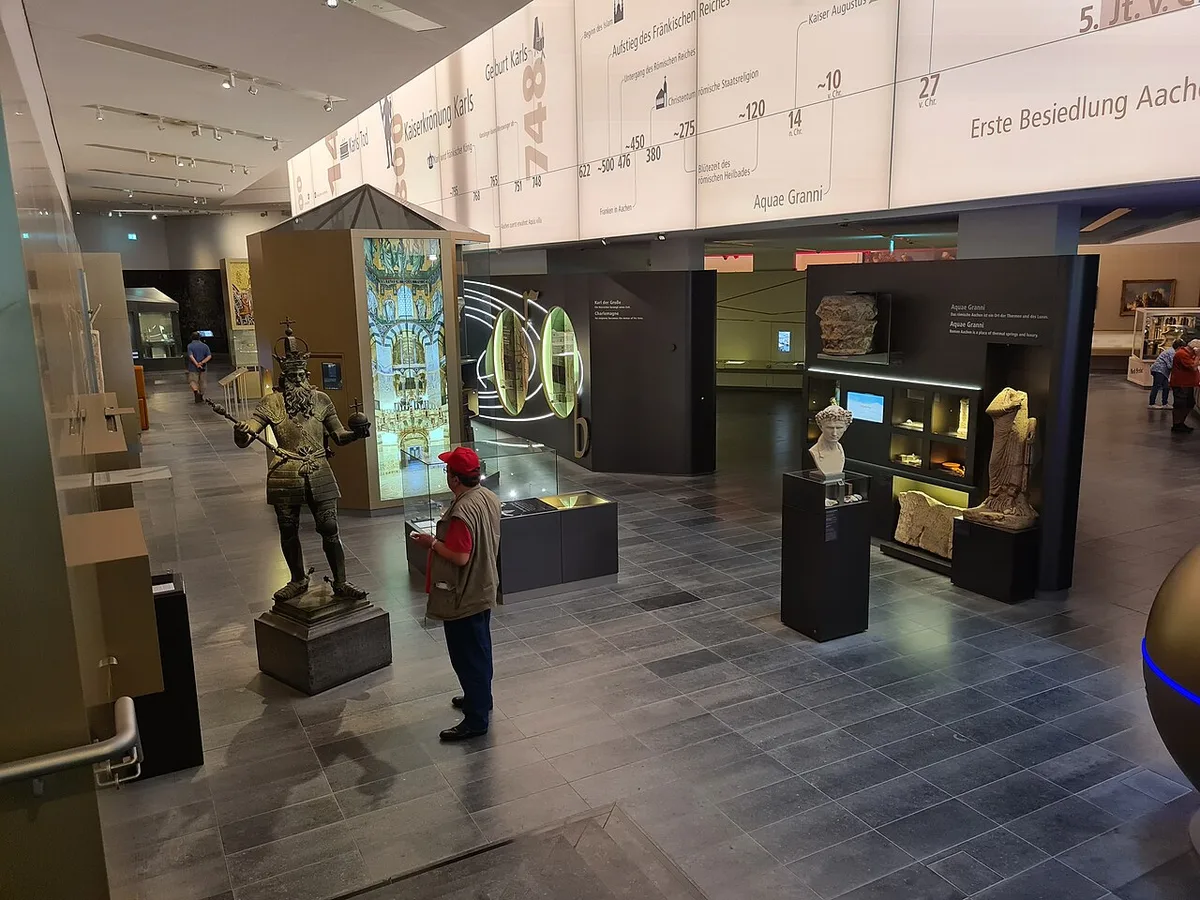
The building is contemporary rather than historic, which matters for expectations. Anyone hoping for period rooms or Carolingian stonework will find those across the square instead. Come here to be told the story of the city in sequence, with the buildings left to deliver the atmosphere.
ArrivalGuides also identifies the museum as the starting point of Route Charlemagne, the route connecting the city's important places, and lists its address as Katschhof 1. That reframes how you use it: if you intend to follow the route at all, beginning here gives you the city's backstory before you meet the individual sites.
Inside the Permanent Exhibition: Aachen from Settlement to European City
The museum's own site describes a multimedia walk through the entire history of the city, from the earliest settlement through the Roman town and the Pfalz of the Carolingians, on through the fashionable Baroque spa resort and into today's diverse European city. That full arc is the strongest argument for visiting even if you already know a lot about Charlemagne.
The Geschichtslabor is the part that adds most for visitors who have already seen the cathedral. Rather than repeating imperial politics, it makes Carolingian everyday culture something you can experience directly. If you are travelling with older children or teenagers, this is usually the section that holds attention longest.
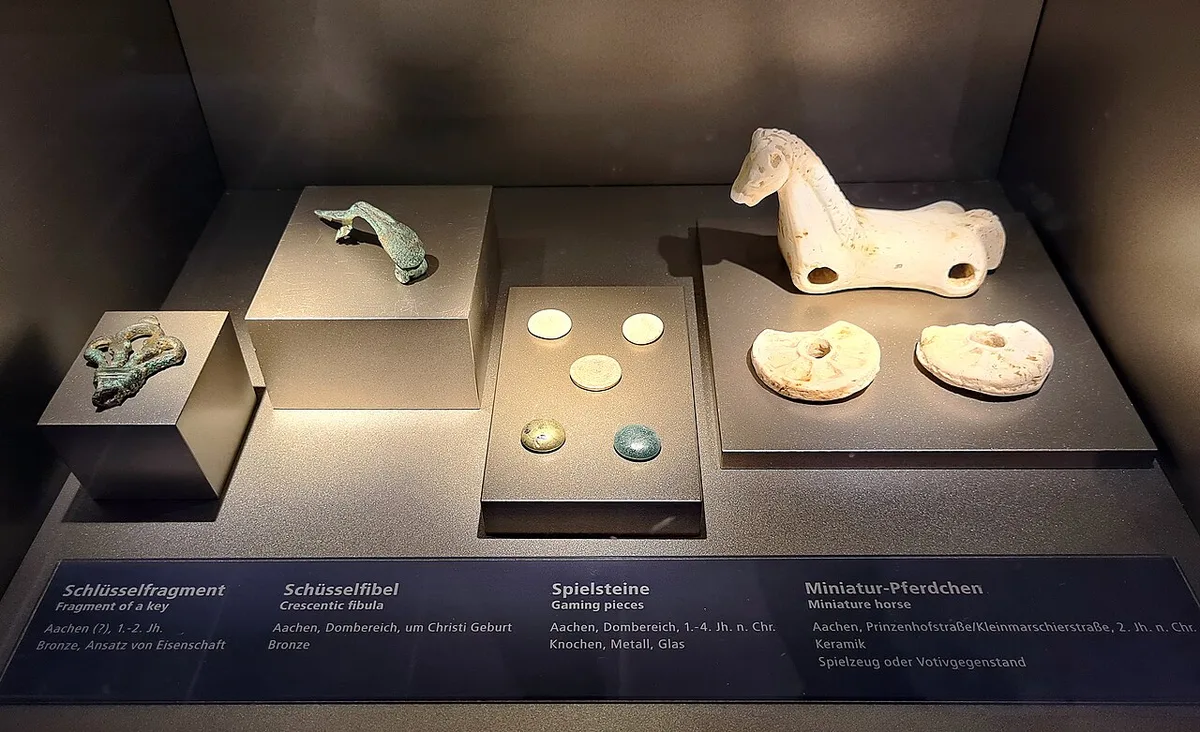
The exhibition also covers the less glamorous chapters. Wanderlog describes exhibits ranging from Roman artifacts to medieval treasures, with displays on significant events in the city's past including sieges, fires and changes in control. That breadth is what distinguishes the Centre Charlemagne from the Cathedral Treasury and the Rathaus: the treasury shows sacred treasure, the town hall shows civic power, and this museum shows how the city lived through both.
Aachen Tourist Service classifies the exhibition as a bad-weather offer suitable for any weather and aimed at young people, adults, families, senior citizens, groups and school classes, with content pitched for children from 10 years. That makes it a sensible anchor for an itinerary that has to survive a rainy afternoon, and it signals a museum designed for a general audience rather than a specialist one.
Route Charlemagne: What the Museum's Role Changes
Route Charlemagne links the major historic sites across Aachen, and ArrivalGuides places the Centre Charlemagne at its starting point. In practice the museum is where the individual stops stop being disconnected buildings and become one narrative. Doing it first gives you a framework, so later sites read as evidence rather than isolated monuments.
If you only have one day, the sequencing question is whether to spend indoor time on context or outdoor time on the landmarks themselves. The museum is compact enough that it does not have to be an either-or decision. Use it as the first stop, then walk the route with a clearer sense of what you are looking at.
Planning a longer stay changes the balance. The three days in Aachen itinerary spreads the cathedral, the Rathaus and the museum across separate slots instead of compressing them into one day, which suits anyone who wants to read the displays rather than pass through them. Decide whether you want the route as a structured day or as a loose set of stops before you start.
Tickets and What Your Admission Actually Covers
Admission to the Centre Charlemagne is its own ticket. Aachen Tourist Service publishes it at an adult rate of 10,00 € and a reduced rate of 6,00 €, with free admission for guests up to and including 21 years of age, for people with disabilities holding a pass marked B or H including accompanying persons, and for holders of the Aachen Pass. Reduced pricing applies to pupils not in a school group, students, trainees and honorary pass holders. Rates can change, so confirm them before your visit.
What matters more than the figures is the scope. This is a ticket for this museum, and nothing in the operator or tourism-board information supports a combined admission with the Rathaus. A third-party aggregator quotes a non-euro figure that should not be treated as the museum's price. Check the operator's own site for the current rate before you budget.
The cathedral is separate again. Its operator states that admission to the cathedral is free, that the choir and the Hochmünster with the imperial throne are only accessible as part of a guided tour, and that the Cathedral Treasury is ticketed independently. Keep those sums out of your museum budget and treat each Katschhof site as its own line item.
Separate Sites, Separate Tickets: The Katschhof Complex
The most common planning mistake around Katschhof is assuming one admission covers the square's buildings. It does not. The Centre Charlemagne, the Rathaus and the cathedral each operate their own arrangements, and the evidence for this museum describes a standalone ticket rather than a shared one.
The Rathaus is worth treating as its own visit, with its own ticketing and its own access rules. Its rooms are sometimes unavailable when the building is in civic use, so checking ahead matters more there than at the museum. Reading the Aachen Rathaus visitor guide before you go will save you a wasted walk across the square.
The cathedral's operator states that the building is not open to visitors during church services and that opening hours may change at short notice because of services, concerts or events, recommending a call to confirm. That variability is another reason to treat the museum as the fixed point in your day: it can anchor the itinerary while you work the more changeable sites around it.
Should You Visit the Centre Charlemagne Before the Cathedral?
History-first visitors should go to the museum first, and the reason is simple. The cathedral is spectacular but it does not explain itself, and without context the Carolingian octagon and the throne read as impressive objects rather than the centre of an empire. An hour or so here beforehand changes what you notice inside.
Cathedral-first visitors have a different logic, and it is defensible. The cathedral is free to enter and is the reason many people come to Aachen, so securing that experience before anything else removes the risk of running out of time. If your day is short, or you are visiting with people who have limited stamina for museums, do the cathedral while you are fresh and treat the museum as the optional add-on.
The awkward case is a Monday. Monday is the closed day evidenced for the museum, and there is no basis for assuming a weekend or market-season arrangement reopens it. If your only full day in Aachen is a Monday, the cathedral and the square become your priority and the museum moves to another day or another trip.
If what you really want is the imperial treasure rather than city history, the Cathedral Treasury is the stronger match and sits beside the cathedral. The treasury holds around 130 works of art displayed across three floors according to the cathedral's operator, including the Cross of Lothair and the Bust of Charlemagne. Choose based on whether you want objects or narrative.
Practical Notes and What to Verify
Allow a suggested visit of one to one and a half hours, and treat that as a planning estimate rather than an official figure. The museum is compact, and the time you actually need depends on whether you read the displays or rely on the multimedia stations. Visitors who already know the history will move through faster than first-timers.
Language provision is worth checking before you go. Wanderlog notes that multimedia screens provide information in English and that an optional English audio option exists, while some visitors have found the on-site commentary mostly in German. Their listing also repeats the same Katschhof address and Tuesday-to-Sunday hours, which is a useful cross-check.
The available information does not confirm group-booking procedures, accessibility provisions or photography rules at this museum, so do not assume any of them. Check the operator's site or contact the museum directly if those details matter to your visit. The same goes for temporary exhibitions, which can change the shape of a visit.
If you want spa time alongside the history, the Carolus Thermen carries Aachen's thermal tradition into the present and is a practical counterweight to a museum-heavy morning. The visitor guide to Carolus Thermen sets out what to expect there. Build it into a longer stay rather than trying to fit it beside a single-day itinerary.
Plan Your Visit
The Centre Charlemagne earns its place in an Aachen itinerary not by competing with the cathedral but by explaining it. On Katschhof, with its own admission, a city-history exhibition running from the Roman town to the modern European city, and a Carolingian everyday-culture lab, it works best as the first thing you do. Confirm the current opening days, hours and admission on the operator and tourism-board pages before travelling, and check the cathedral's own page separately.
For a wider view of the city, the Aachen landmark guides cover the cathedral, the Rathaus and the surrounding sights, and the Aachen itineraries hub helps you assemble them by duration. Decide early whether your priority is objects or narrative; that single choice settles the order of your day.
Frequently Asked Questions
What is the Centre Charlemagne and where is it?
It is Aachen's modern city museum, housed on Katschhof between the cathedral and the Rathaus, at Katschhof 1. The permanent exhibition tells the story of the city from its earliest settlement through the Roman town and the Carolingian Pfalz to the Baroque spa era and the present, and the museum also functions as the starting point of Route Charlemagne. It is the best place to understand the city before visiting its individual landmarks.
How much does admission cost and who gets in free?
Aachen Tourist Service publishes an adult rate and a reduced rate, along with free admission for guests up to and including 21 years of age, for people with qualifying disability passes marked B or H and their accompanying persons, and for holders of the Aachen Pass. Reduced pricing applies to pupils not in a school group, students, trainees and honorary pass holders. Rates can change, so confirm the current figures on the operator or tourism-board page before your visit.
Is the Centre Charlemagne ticket the same as the Rathaus or cathedral ticket?
No. The museum has its own admission, and there is nothing in the operator or tourism-board information to support a shared ticket with the Aachen Rathaus. The cathedral is separate as well: its operator states that entry to the cathedral itself is free, but the choir and the imperial throne are only accessible as part of a guided tour, and the Cathedral Treasury is ticketed independently. Budget each of the Katschhof sites separately.
Should I visit the Centre Charlemagne before or after the cathedral?
Go to the museum first if you want context, because the cathedral's architecture and throne make more sense once you understand Aachen's role as a Carolingian and coronation city. Do the cathedral first if your time is limited or you are visiting with people who prefer fewer indoor stops. Either order works, but avoid planning the museum on a Monday, its evidenced closed day.
How long should I allow for a visit?
A suggested duration of roughly one to one and a half hours is a reasonable planning estimate, not an official museum figure. Visitors who already know the history will move faster, while those who work through the multimedia stations and the Geschichtslabor will need longer. If you plan to combine it with the cathedral and the Rathaus, treat it as one component of a half day rather than the whole outing.
Is the museum open on Mondays?
The evidenced closed day is Monday, with opening Tuesday to Sunday. There is no confirmed basis for assuming that a weekend or market-season arrangement reopens the museum on a Monday. If your only available day in Aachen is a Monday, check the operator's current dates before you plan around it.
Is the Centre Charlemagne a good rainy-day or family option?
Yes. Aachen Tourist Service lists the exhibition as a bad-weather offer suitable for any weather and aimed at adults, families, groups, senior citizens and school classes, with content pitched for children from 10 years. It is compact and indoors, which makes it easier to manage than an outdoor itinerary in poor weather. The Geschichtslabor on Carolingian everyday culture is usually the section that engages younger visitors most.