The Aachen Cathedral Treasury, or Domschatzkammer, is a separately ticketed museum rather than a chapel you pass through on a cathedral visit. Aachen tourist service publishes indicative categories of eight euros for an adult, four euros for a child, four euros for a reduced ticket, and family cards at eight euros for one adult with up to four children and sixteen euros for two adults with up to four children, all as published price information rather than a confirmed operator rate for a future date. The same listing notes that the treasury, together with the cathedral, was added to the UNESCO World Heritage List in 1978.
The cathedral interior itself is free to enter, which surprises many first-time visitors, while the treasury charges admission. Treat the two as separate stops in one visit rather than one combined ticket. This guide covers what is inside the museum, what the published prices mean, who qualifies for a reduced rate, and how the treasury fits into a wider Aachen day.
Opening hours, last entry, ticket validity and booking rules are not established by the sources used here, so verify them with aachen tourist service or the cathedral's own site before you travel. The treasury sits in Aachen's historic centre, close to the cathedral, the Rathaus and the Elisenbrunnen, so it pairs naturally with the rest of the old town.
What the Aachen Cathedral Treasury Actually Is
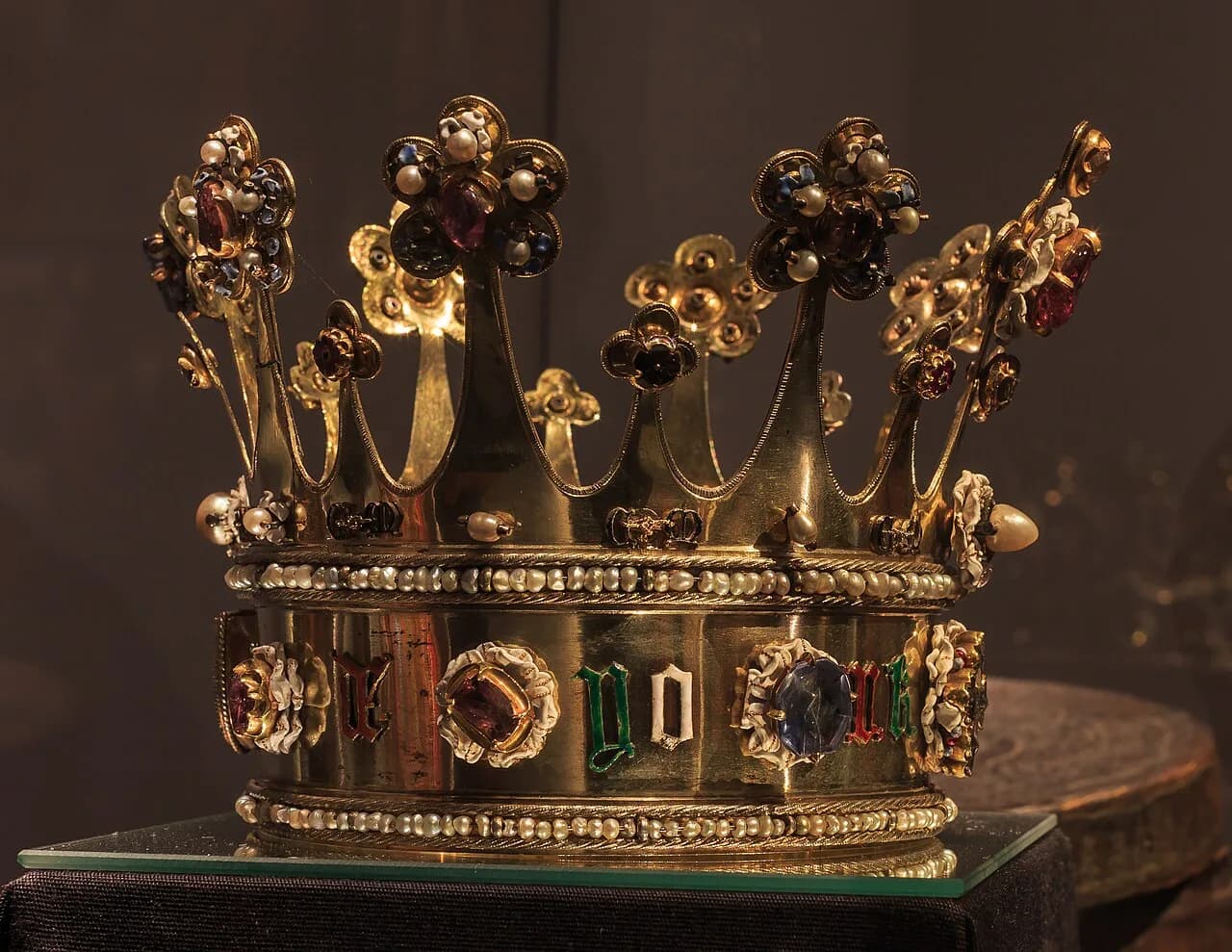
Aachen tourist service describes the treasury as holding over twelve centuries of sacred art connected to Aachen Cathedral since the time of Charlemagne, and calls it the most important ecclesiastical treasury north of the Alps. It notes that the treasury, together with the cathedral, was added to the UNESCO World Heritage List in 1978. So when the site is described as a single World Heritage monument, the listing covers both the church and this collection.
Charlemagne chose Aachen as the centre of his empire and was buried in the cathedral he founded, which is why so much of the treasury's material ties back to his court and its memory. Travel writing on Aachen describes the collection as containing Carolingian, Gothic, Late Antique and Staufen artefacts, so it reads as a history of European sacred art rather than a single-period display. Visitors expecting a small church cupboard are usually surprised by the scale.
Because it is classed as a museum in the historic centre, the treasury has its own entrance, its own staff and its own admission. That distinction is the single most useful thing to understand before you arrive: you are visiting a museum that happens to sit beside a World Heritage church, not a side chapel. Plan your ticket decision accordingly.
The Three Headline Highlights
The Lothair Cross is one of the pieces visitors most often come for, an Ottonian processional cross set with gems around a central cameo. It belongs to the treasury's core of imperial-era objects, and it is the kind of piece where the setting matters as much as the stone: the goldwork, the enamel and the reuse of an antique gem all show how earlier material was deliberately folded into later Christian art. Travel writing on Aachen names the Cross of Lothair among the treasury's highlights.
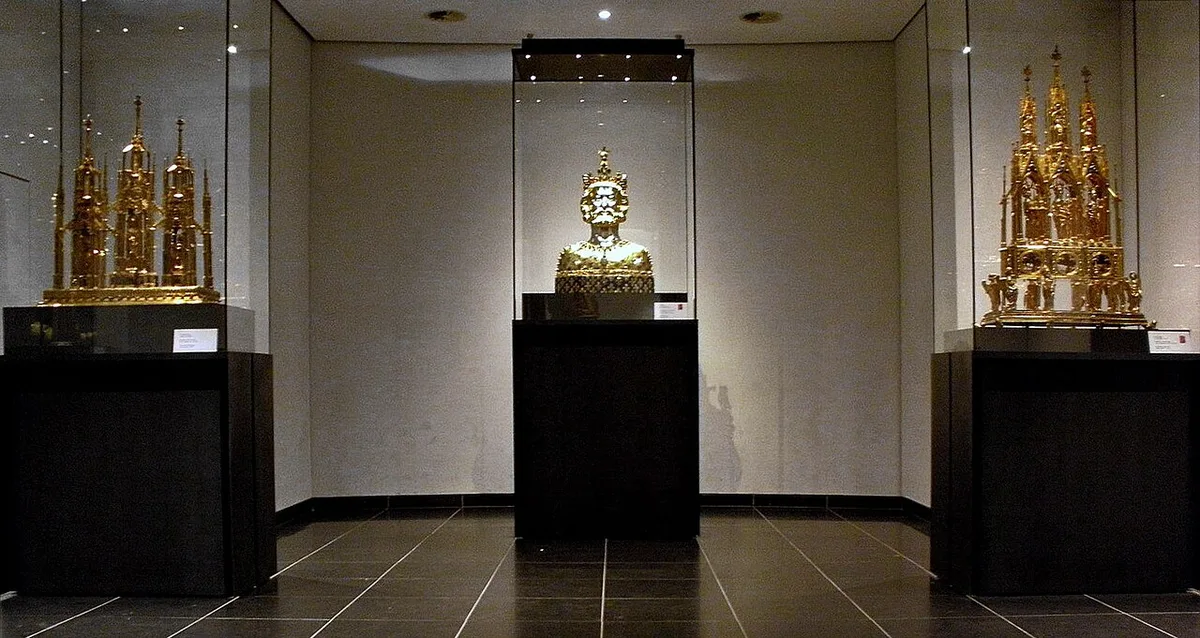
The gold bust of Charlemagne is the image many people carry away, a Gothic reliquary head that turns the emperor into a devotional object. Seeing it in person clarifies why Aachen's identity is so bound up with one ruler: the treasury does not just preserve Charlemagne's memory, it crafted and displayed it. Look for the modelling of the face and the way the bust is designed to be seen from a distance in procession.
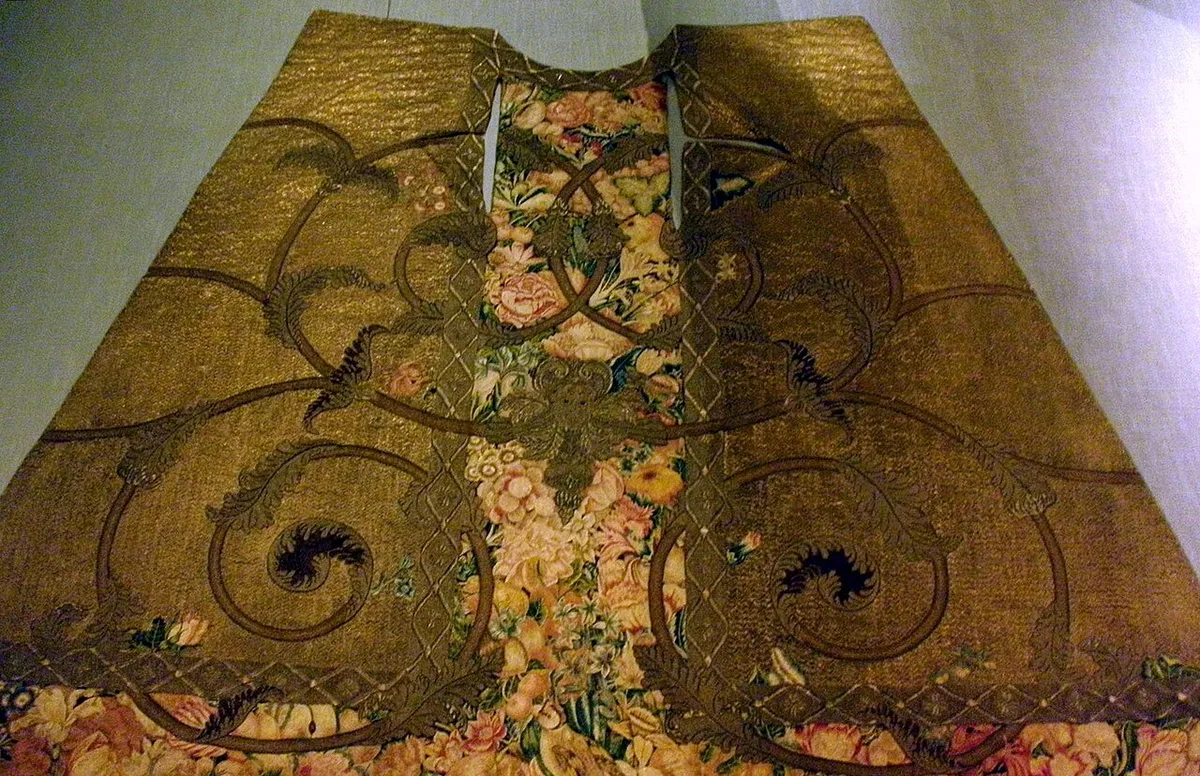
The Barbarossa Chandelier is a large Romanesque wheel chandelier that is also cited as a highlight of the cathedral interior, a useful reminder that Aachen's great objects are split between the two spaces. The treasury also holds reliquaries, liturgical objects, textiles and manuscripts, and travel writing on Aachen specifically mentions Charlemagne's hunting knife. A sensible approach is to identify the three headline pieces first, then let the rest of the collection fill your remaining time.
Free Cathedral Access vs Paid Treasury Entry
Cathedral entry is free, while the treasury charges admission, and nothing in the published information says a treasury ticket includes the church interior. Travel writing on Aachen notes that the cathedral is free to enter and that a photography permit is sold separately, so confirm the current figure on site rather than assuming.
The practical consequence is that you should not budget one ticket for the whole World Heritage site. Decide in advance whether you are doing the free cathedral visit, the paid treasury, or both, because the treasury is where the collection is and the cathedral is where the architecture and mosaics are. Skipping one to save time means genuinely missing part of what made Aachen famous. The Aachen Cathedral visitor guide covers the church side, including its mosaics and coronation history, in more detail.
If you are short on time, the cathedral's free interior is the quicker stop, while the treasury rewards at least a focused pass. Read the cathedral guide alongside this one so you know which half of the complex you are prioritising.
Tickets, Price Categories and Reduced-Rate Eligibility
Aachen tourist service publishes an adult rate, a child rate, a reduced rate and two family cards: one for a single adult with up to four children and one for two adults with up to four children. It prices the adult ticket at eight euros and the child and reduced tickets at four euros. Treat those numbers as indicative published information from the tourism service rather than a confirmed operator price for your travel date, and check the operator's own page before you buy, because prices and categories can be revised.
The reduced rate as published applies to pupils and trainees aged eighteen and over, students up to and including the age of twenty-seven, unemployed and welfare recipients, and severely disabled persons holding a pass marked with the letters B and H. A corresponding ID card must be presented, so carrying the right document is not optional if you intend to claim the lower price. Family cards are aimed at households with children up to and including seventeen.
Do not carry over prices from other Aachen museums when planning your budget; each institution sets its own admission, so if you combine the treasury with the town hall or a city museum, treat every ticket as its own purchase. The safest habit is to check the treasury's published price categories close to your travel date and to ask at the desk about any combined offers rather than assuming they exist.
Accessibility, Facilities and Suitability
Aachen tourist service lists a handicapped accessible WC and suitability for pushchairs, along with a bad-weather offer and group and child-friendly labelling. Those are useful signals, but they are not a guarantee of step-free access through every gallery. Older buildings often mix level floors with thresholds and stairs, so ask the staff about the specific route if mobility is a concern.
The tourism listing labels the treasury suitable for children of all ages, though the appeal of reliquaries and manuscripts varies sharply by age. Groups and bad-weather days are also flagged, which makes sense for a compact indoor collection in a city where the main sights cluster tightly. If you are travelling with a pushchair, confirm the lift or ramp situation at the entrance rather than relying on the general listing.
There is no published information here on guided tour schedules, languages or security rules for the treasury, so treat any such detail you read elsewhere as unverified until the operator confirms it. Contact details for aachen tourist service are published with the listing if you need to ask ahead. For a mobility-sensitive visit, an email before you travel is more reliable than a web summary.
Who the Treasury Suits and How Long to Allow
As a suggested duration rather than an official figure, allow roughly forty-five to ninety minutes for the treasury if you read labels and linger on the highlights; a quick circuit takes less. The cathedral interior can be seen in a shorter window, so the combined stop fits comfortably into half a day. These timings are planning estimates, not published opening or last-entry data.
The treasury is a strong choice for a rainy day, for travellers who want objects rather than architecture, and for anyone with a specific interest in medieval goldwork. Visitors with limited time who mainly want the cathedral's mosaics and Charlemagne's tomb can reasonably prioritise the church instead. Families will get more from the treasury if they pick the three headline pieces and leave rather than trying to absorb every case.
If you are weighing the treasury against smaller city museums, the treasury is the one directly tied to the World Heritage listing, which is why it is usually the higher priority for first-time visitors. Centre Charlemagne is the complementary stop if you want the city's broader history after the sacred art. The Centre Charlemagne museum visitor guide explains what that museum adds to an Aachen trip.
Common Mistakes to Avoid
The most frequent error is assuming the treasury is free because the cathedral is free. They are separately funded and separately accessed, and a cathedral visit does not get you into the museum. Budget for the treasury ticket as a distinct line item and check the published categories before you go.
The second mistake is assuming one ticket covers everything in the complex, including other city museums. Nothing in the published information supports that, so buy each admission on its own terms. The third is arriving without checking hours, which is risky for a museum that may keep different opening times from the church next door.
The fourth is skipping the treasury as a mere add-on. It contains the objects that explain why Aachen mattered, including the Lothair Cross and the Charlemagne bust, and dropping it leaves the story of the site incomplete. If you only have time for one paid attraction in Aachen, this is usually the one with the strongest case.
Where It Fits in a Wider Aachen Itinerary
Aachen's historic centre is compact, so the treasury can be combined with the cathedral, the Gothic Rathaus and the Elisenbrunnen without much walking between them. Travel writing on Aachen notes that the main attractions are tightly packed together in the city centre and that the town hall dates back to the fourteenth century. The town hall adds the civic and coronation side of the city's history. The Aachen Rathaus visitor guide covers what to expect there if you are building a full day.
If you want a slower day, the Carolus Thermen and the old-town lanes fill the time between the main sights, and the city's thermal history gives context to why Romans and Charlemagne valued the location. The spa is a separate paid attraction with its own arrangements, so treat it as its own stop. The Carolus Thermen visitor guide explains how that fits into a relaxed itinerary.
For a fuller set of options across the city, the main Aachen: Landmark Visitor Guides hub collects the individual attraction pages, and the Aachen itineraries and city travel guides cover how to sequence a day or a weekend. Both are useful if you are deciding whether the treasury is your anchor or one of several stops. Start with the treasury if the sacred art is the reason you are coming.
Plan Your Treasury Visit
The Aachen Cathedral Treasury is a separate, ticketed museum beside a UNESCO World Heritage cathedral that is free to enter. Keep those two facts straight and most of the other decisions fall into place: you pay for the treasury, you check its published categories before you travel, and you carry ID if you intend to claim a reduced rate. Treat the Lothair Cross, the Charlemagne bust and the Barbarossa Chandelier as your anchors and let the rest of the collection fill the time you have.
Opening hours, last entry, ticket validity and booking rules are not established by the sources used here, so confirm them with aachen tourist service or the cathedral's own website before setting out. If you are building a day around it, pair the treasury with the cathedral, the Rathaus and a walk through the old town, and read the wider Aachen guides if you want more options. A little verification beforehand turns a good visit into a smooth one.
Frequently Asked Questions
Is the Aachen Cathedral Treasury included with cathedral entry?
No. The cathedral interior is free to enter, while the treasury is a separate museum with its own admission charge and its own entrance. Nothing in the published visitor information indicates that a treasury ticket includes the church, so plan for two separate visits if you want both. Check the operator's current arrangements before you travel.
How much does the Aachen Cathedral Treasury cost?
Aachen tourist service publishes indicative categories covering an adult rate, a child rate, a reduced rate and two family cards, with the reduced rate tied to specific eligibility conditions. Those figures are published price information rather than a confirmed operator rate for a given date, so check the day's price on the operator's page or at the desk. Reduced admission requires a corresponding ID card.
What are the must-see highlights in the Aachen Cathedral Treasury?
The three pieces most often named are the Lothair Cross, the gold bust of Charlemagne and the Barbarossa Chandelier, alongside the reliquaries, liturgical objects, textiles and manuscripts that make up the wider collection. Start with those three if your time is limited, then explore the cases that interest you most. The collection spans more than twelve centuries of sacred art.
Do you need to check opening hours before visiting the treasury?
Yes. Current opening hours, days, last-entry times and any booking requirements are not established by the sources used here, so verify them directly with aachen tourist service or the cathedral's own website close to your travel date. The treasury is a museum with its own schedule, which may differ from the cathedral's. A quick check avoids a wasted trip.