

The Aachen Rathaus is not a conventional museum. It is a Gothic town hall on the Markt, built over the remains of Charlemagne's palace, and it is still used by the city council today. Aachen's museum listings describe the Rathaus as holding the largest history paintings of the Romantic era, faithful copies of Charlemagne's sabre and a Carolingian manuscript, and a copy of the imperial crown. These are the specific objects that draw visitors, and they are the reason the building appears on the Route Charlemagne.
Because access to the interior can change with council business, you should treat the Rathaus as one stop within a compact old-town circuit rather than a standalone attraction with fixed public hours. The city of Aachen publishes notices about the building and its historic rooms, and the municipal website is the place to check before you travel.
What the Aachen Rathaus actually is
The Rathaus stands on the Markt, the central square of the Altstadt, and its address is simply Markt in the 52062 postcode. Guidebook descriptions consistently present it as a distinctive example of Gothic architecture originally built in the fourteenth century on the ruins of Charlemagne's palace, and as a building that has witnessed coronation festivities across the centuries. Crucially, it remains in civic use: the council still meets here and the historic halls can host events, which is why public access is never as simple as walking up to a ticket window during all opening hours.
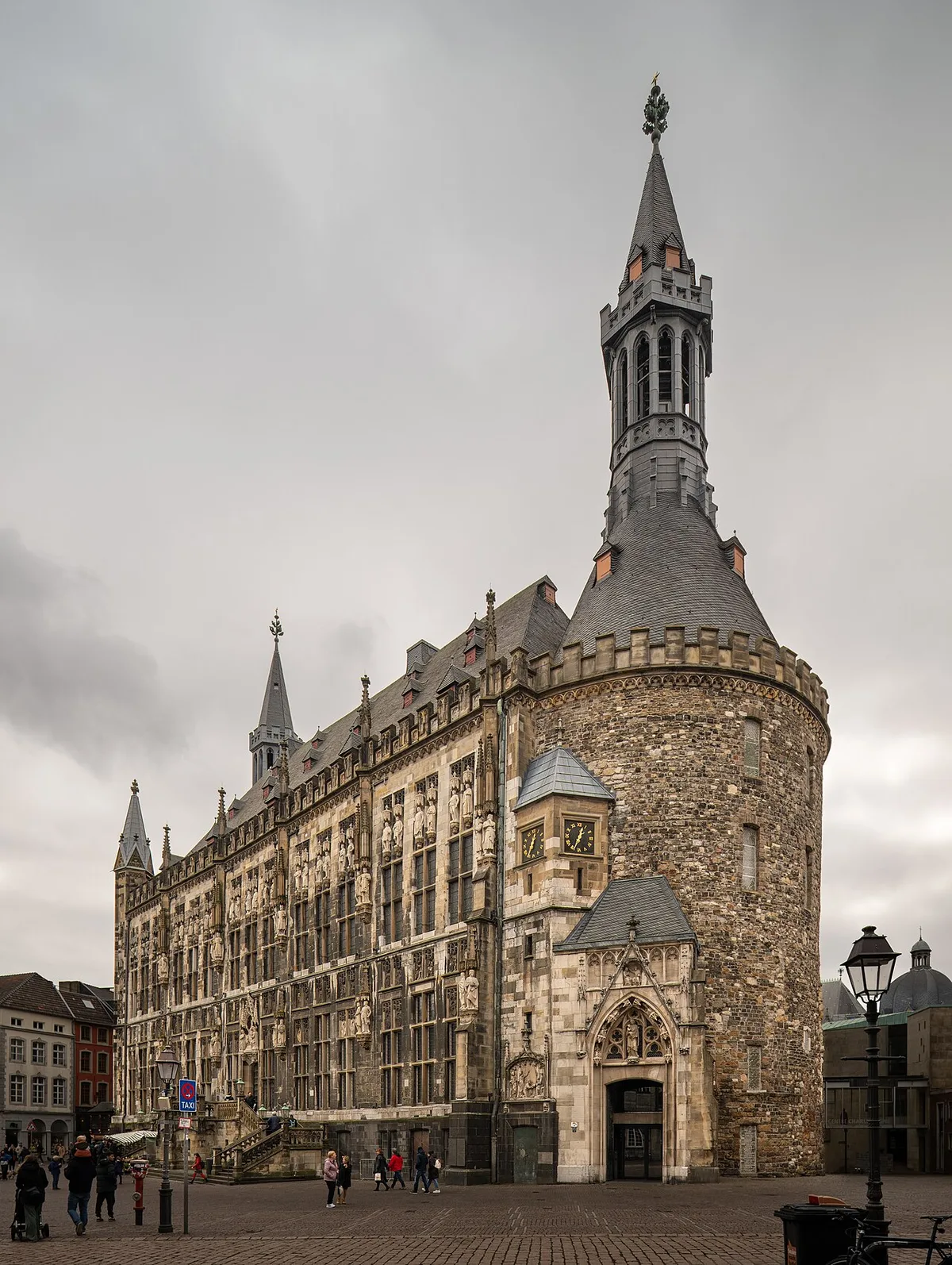
For orientation purposes, the building sits in the middle of the walkable historic core, within a few minutes of the Cathedral and the Katschhof square that links the two. If you are building a route through the centre, the Rathaus is a natural anchor point rather than a detour. Plan your approach from the Markt side so you see the facade in context, then loop toward the Cathedral.
Why the site matters: Charlemagne's palace and the coronation tradition
Charlemagne chose Aachen as his imperial residence and built the palace complex here, with the Cathedral's octagonal chapel at its spiritual centre. The Rathaus occupies part of that palace footprint, which is why the building carries more historical weight than its modest size suggests. Guides to the city routinely describe the Cathedral and the Rathaus as forming the midpoint of Aachen's historic identity.
Aachen was the coronation church for German kings from 936 to 1531, and the town hall became part of the ceremonial stage for the festivities that followed those coronations. That context is what makes the historic rooms worth seeing if you can get in. If you cannot, the exterior and the Markt setting still communicate the site's role in the imperial story.
What the city and museums publish about the rooms
Aachen's own museum listings describe the Rathaus as holding the largest history paintings of the Romantic era, faithful copies of Charlemagne's sabre and a Carolingian manuscript, and a copy of the imperial crown. These are the specific objects that people come to see, and they are the reason the building appears on the Route Charlemagne. Note the careful wording: these are copies of regalia, not the originals, and the originals are not here.
Because the descriptions of the rooms come from museum and city sources rather than from a dedicated Rathaus ticket page, treat the precise contents as indicative rather than exhaustive. If a particular object matters to you, it is worth confirming what is currently on display with the Aachen Tourist Service before your trip. Museum displays rotate and rooms close for events, so a quick check saves disappointment.
How long to spend and how to sequence the old town
A reasonable suggestion, and nothing more than that, is to allow twenty to forty minutes for the exterior and the Markt if you cannot go inside, or an hour if you are able to join an interior visit. That estimate is a planning convenience, not an official figure, and it depends entirely on what access is available on the day. Build slack into your schedule rather than treating it as fixed.
A compact circuit that works well runs from the Markt and Rathaus through the Katschhof to the Cathedral, then onward to the Cathedral Treasury if you want the deeper treasury collections. Keep the sequence flexible so that if the Rathaus interior is closed you can simply continue to the Cathedral without reshuffling your day.
The ticket and access question
This is the part where most visitors make assumptions that turn out to be wrong. There is no reliably published, standalone Rathaus admission price or opening schedule that this guide can confirm, and there is no confirmed combined ticket linking the Rathaus with Centre Charlemagne. Anyone who tells you otherwise, including an old blog post, may be working from outdated information.
The sensible approach is to ask the Aachen Tourist Service at the Elisenbrunnen what is currently open, and to check the city website for any notices about the building. Access can depend on whether council or events are using the rooms, so a phone call or a stop at the tourist office on arrival is more useful than any fixed plan. Bring this question with you rather than assuming door-in access.
Pairing the Rathaus with Centre Charlemagne and the Cathedral
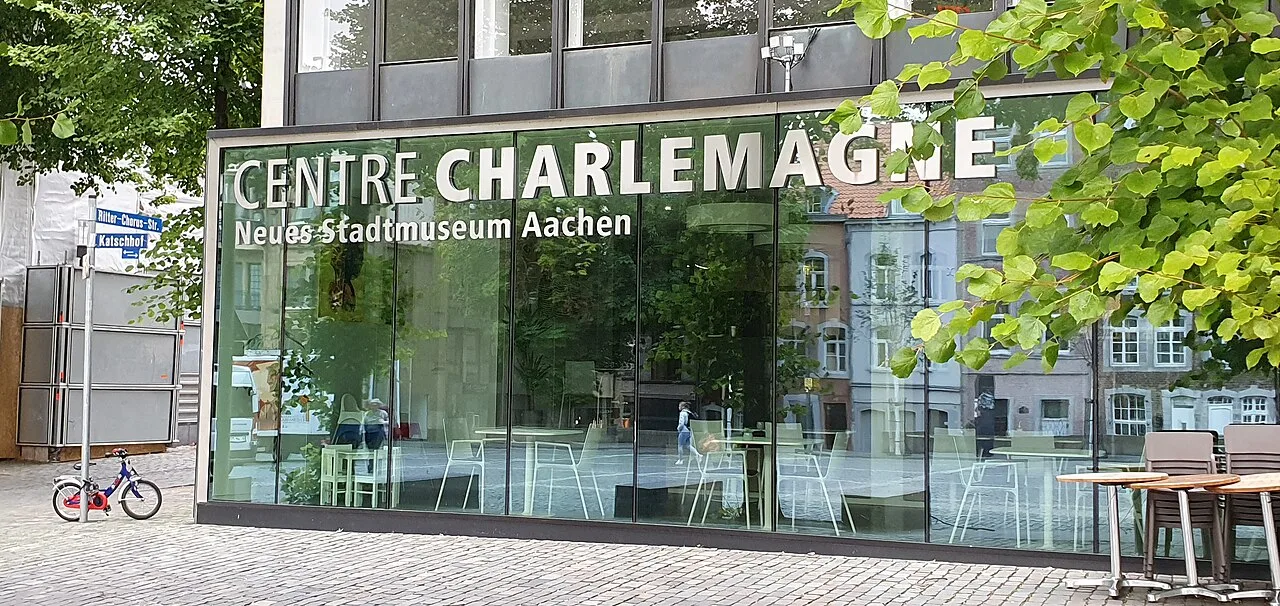
Centre Charlemagne is a modern city museum on the Katschhof and functions as the starting point of the Route Charlemagne, the trail that connects the city's key historic sites. That makes it the logical first stop if you want the story before the buildings. Start at the museum for the Carolingian context, then walk the short distance to the Rathaus and Cathedral with that framework in mind.
The Cathedral itself is free to enter as a place of worship, with a small fee for photography inside, and the choir and imperial throne are accessible only on guided tours. The Cathedral Treasury is a separate ticketed collection in its own right with its own admission, so do not assume one ticket covers everything. Each of these is a distinct visit with its own rules.
Nearby context: Markt, Katschhof and the rest of the centre
The Markt in front of the Rathaus is where much of the square's atmosphere comes from, and during the Christmas season the surrounding squares fill with market stalls. Outside market season it is simply a good place to pause and orient yourself between the Rathaus, the Cathedral and the shopping streets. The fountain on the square is a commonly used meeting point.
If you want a quieter counterpoint to the historic core, the Couven Museum at Hühnermarkt shows eighteenth and nineteenth century domestic interiors in a converted townhouse and is a short walk away. Opening hours there are published by the museum itself, so check those directly if you plan to add it. The contrast between courtly history and everyday domestic life works well in the same afternoon.
Practical notes before you travel
Aachen's old town is compact and walkable, and most visitors arrive on foot from Aachen Hauptbahnhof or by bus into the centre. There is no need for a car inside the Altstadt, and parking is limited around the Markt. Wear shoes suitable for cobblestones, since the surfaces around the square and Katschhof are uneven.
Check the city website and the tourist service site shortly before your visit for any notices about the Rathaus, the Cathedral or temporary closures affecting the centre. Checking twice, once when you plan the trip and once a day or two before, is the simplest way to avoid arriving to a closed door. If the Rathaus is unavailable, the Cathedral and Centre Charlemagne still justify the trip.
Plan Your Visit
Treat the Aachen Rathaus as a working civic building with a remarkable past rather than a museum you can count on entering. The exterior, the Markt setting and the site's association with Charlemagne's palace are reliable; the interior access is not. Build your day around the Cathedral and Centre Charlemagne, and slot the Rathaus in as the context that ties the two together.
Before you travel, confirm current access and opening arrangements with the Aachen Tourist Service, and check the city website for any notices about the building. That single step saves the most common mis-planning mistake: assuming a Gothic town hall open to the public on the same terms as a museum.
Frequently Asked Questions
Is the Aachen Rathaus free to visit?
No confirmed, published admission price for the Rathaus can be treated as current. The building is a working town hall rather than a standard museum, so access and any charges are best confirmed directly with the Aachen Tourist Service or on the city of Aachen website before you travel. Do not rely on older guidebooks or blog posts for pricing.
Can you go inside the Aachen Rathaus?
The building is in civic use, which means interior access can be affected by council business and events. Whether you can see the historic rooms on a given day is not something that can be assumed from published information alone. Ask at the Aachen Tourist Service at the Elisenbrunnen or check the city website for the current situation before you plan your visit around it.
What is there to see in the Aachen Rathaus?
Aachen's museum listings describe the Rathaus as holding large nineteenth-century history paintings and copies of imperial regalia, including a copy of the imperial crown and Charlemagne's sabre, along with a Carolingian manuscript. These are copies, not original regalia, and the precise contents on display can change. Confirm with the tourist information service if a specific object matters to you.
Is the Aachen Rathaus part of the Route Charlemagne?
Yes, the Rathaus appears as one of the stops connected by the Route Charlemagne, the trail linking Aachen's key historic sites. Centre Charlemagne on the Katschhof serves as the starting point for the route, so beginning there gives you the context for the Rathaus and Cathedral before you see them. This makes the museum a sensible first stop rather than an afterthought.
How long does a visit to the Aachen Rathaus take?
A suggested allowance of twenty to forty minutes for the exterior and the Markt, or around an hour if you are able to go inside, is a planning convenience rather than an official figure. The real answer depends on what access is available on the day and whether you linger over the facade. Budget more time for the Cathedral and Centre Charlemagne, which are the deeper visits.
Is there a combined ticket for the Rathaus and Centre Charlemagne?
No combined Rathaus and Centre Charlemagne ticket can be confirmed from published information, and you should not assume one exists. The Cathedral and its Treasury are separate visits with their own admission arrangements. Check each site's own information or ask the Aachen Tourist Service if you want to understand the ticketing situation before you go.


