

Three days in Aachen buys you something a rushed day trip cannot: time to treat the cathedral as a working church rather than a photo stop, to give the treasury its own unhurried block, and to leave the country for a single day without losing the city in the process. One sourced detail shapes the whole plan: the operator states the cathedral is open daily from 7 am to 6 pm, that tourist visits are possible on weekdays from 11 am, and that admission is free. Because services, concerts and events can shift those hours at short notice, an hour of slack on Day 1 is worth more than any other piece of preparation.
Before you fix anything, understand that free entry, the paid treasury and paid guided tours are three different products with three different logics. Treating them as one block is the most common planning mistake visitors make here, and it is the distinction that keeps the rest of the itinerary honest.
How to Structure Three Days Without Repeating Yourself
Give the first day entirely to the old-town core: the cathedral, the treasury, the Markt with the Rathaus, and the surviving medieval gates on the ring of streets that replaced the walls. The second day is deliberately slower, built around the spa culture that made Aachen a destination long before Charlemagne, plus the Elisenbrunnen spring pavilion and a climb to the Lousberg viewpoint. The third day removes you from Aachen altogether for a border-country trip, which also gives the city a rest day inside your schedule.
This structure works because Aachen's sightseeing core is compact and walkable, so cramming it into one day is technically possible but leaves no room for the parts that need a fixed time slot. Booking a cathedral guided tour forces you to build the rest of the day around it instead of the other way round, and a spa visit consumes half a day on its own, so stacking it against a fixed tour slot invites a rushed, unsatisfying visit. Keep the third day flexible enough that a late return does not ruin the next morning.
If you are weighing whether you actually need three days, compare the shape of a shorter trip first. A 2 days in Aachen itinerary covers the cathedral and old town comfortably and squeezes in the spa, but it leaves no room for spending a full day outside the city, which is the single element that makes three days feel meaningfully different from two.
Day 1: The Cathedral, the Treasury and the Old Town
Start at the cathedral itself. The operator's visitor page states that the cathedral is a Roman Catholic church, that it is open daily from 7 am to 6 pm, that a touristic visit is possible on weekdays from 11 am, and that admission is free. The same page advises checking the homepage for the current week's opening hours and calling the Dominformation if you are unsure, because special church services, concerts or events can change the hours at short notice.
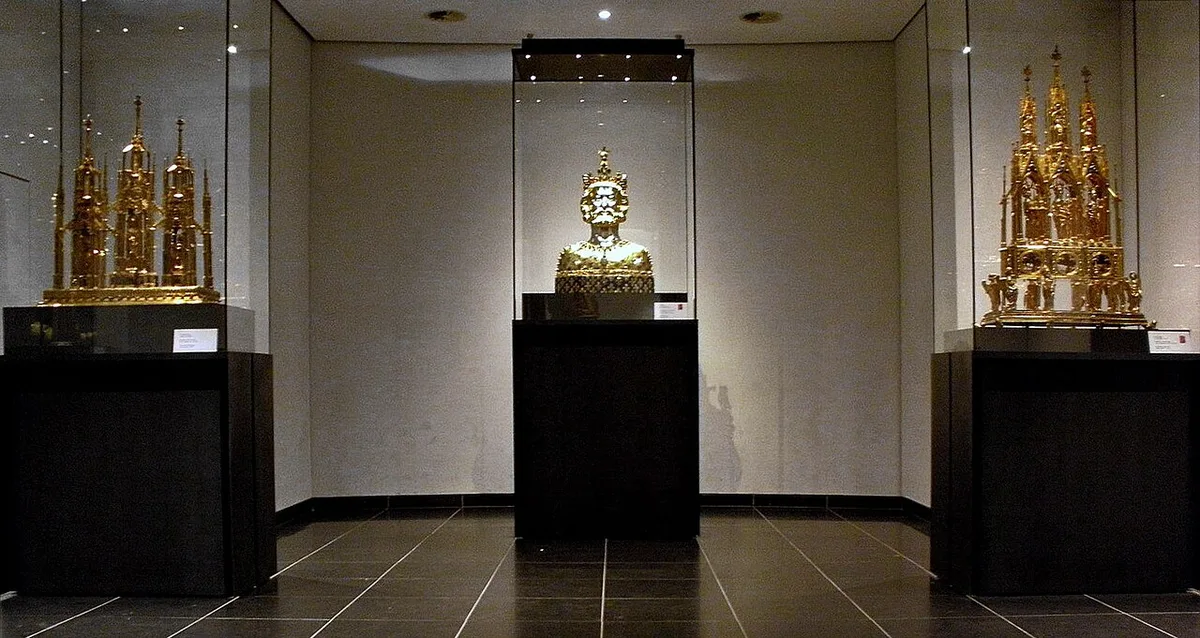
The treasury is a separate ticket and a separate building. The operator lists the Cathedral Treasury as open Mondays from 10 am to 2 pm and Tuesdays to Sundays from 10 am to 6 pm, with tickets bought in person at the Cathedral Information Centre, and admission listed as 8 euros full price and 4 euros reduced, plus an audioguide at 2 euros and family tickets at 8 and 16 euros. Those figures come from the cathedral operator and are the ones to trust over any older blog listing; always re-check on the operator page before you travel.
Because the operator states that the treasury exhibits about 130 works of art on three floors, it rewards a deliberate rather than a rushed visit. Give it a proper block after the cathedral rather than treating it as an add-on at the end of the day, when energy and attention are lowest. If your trip falls on a Monday, remember the treasury closes early that afternoon.
The rest of the old town fills the afternoon on foot. The Markt and the Gothic-baroque Aachener Rathaus sit minutes from the cathedral, and the Ponttor and Marschiertor survive as the two remaining medieval city gates. Farther out, the Couven Museum at Hühnermarkt 17 occupies a house remodeled in the 1780s by the architect Jakob Couven and opened as a museum in 1958, and it publishes its own opening hours, including seasonal and short-notice exceptions, so check before walking over.
Ordering Day 1: Free Entry, Ticketed Treasury, Guided Tour
The single most useful planning distinction in Aachen is this: admission to the cathedral is free, the treasury requires a ticket, and the Choir and the Hochmünster with the imperial throne are only accessible as part of a guided tour. That last point is what catches people out, because the throne is the image most visitors arrive for, and wandering in will not get you to it. A visitor guide to the cathedral makes the same point, describing how the throne that Charlemagne is associated with can only be viewed on a paid tour.
Build the day around a booked tour slot rather than the other way round. The cathedral operator states that guided tours in English are currently offered daily at 2 pm and on request, that German tours run hourly between 11 am and 5 pm Monday to Thursday, 11 am and 6 pm Friday and Saturday, and 1 pm and 4 pm on Sundays, and that the maximum group size is 25 people. Prices for individuals are listed as 8.50 euros for adults and 4.50 euros reduced, while group bookings must be arranged in advance by email.
Book before you arrive if your dates are fixed, because the operator notes that online purchase is currently only possible up to 12 hours before your visit, with an additional contingent at the box office in the Dominformation for anyone who decides late. If you are debating whether the tour is worth an hour of your day, weigh it against the alternative: without it you see the octagon and the nave but miss the throne and choir entirely. That trade-off usually resolves in favour of the tour.
Photography, Quiet Hours and Service Closures
The cathedral is an active place of worship, and the practical rules reflect that. The operator states that visitors who wish to photograph the interior should pay a contribution of 1 euro to the Domschweizer, that tripods, selfie sticks and flash photography are not allowed, and that a written permit is required for commercial, media and academic filming. These rules shape how long you linger, because a phone camera is fine but a full tripod setup is not an option.
During church services the cathedral is not open to visitors, which is the main reason a printed plan can go wrong on a Sunday morning or during a concert. The operator advises checking the current week's opening hours and calling the Dominformation if you are unsure. Building a flexible hour into Day 1 absorbs most of this risk without much effort.
Accessibility details are also worth reading in advance rather than improvising at the door. The operator asks wheelchair users to ring the bell at the entrance so staff can set up portable ramps that are rated up to 300 kg, asks power-chair users to enter via the Krämertür on Krämerstraße, and notes the same 300 kg weight limit on the treasury lift. A quick read of the operator page the day before removes most of the guesswork.
If the weather turns, the cathedral and treasury are the two most weather-proof stops in the city. That makes them the natural pivot for wet days, and it is worth having a wet-weather alternative lined up for Days 2 and 3.
Day 2: Spa Culture, the Elisenbrunnen and the Lousberg
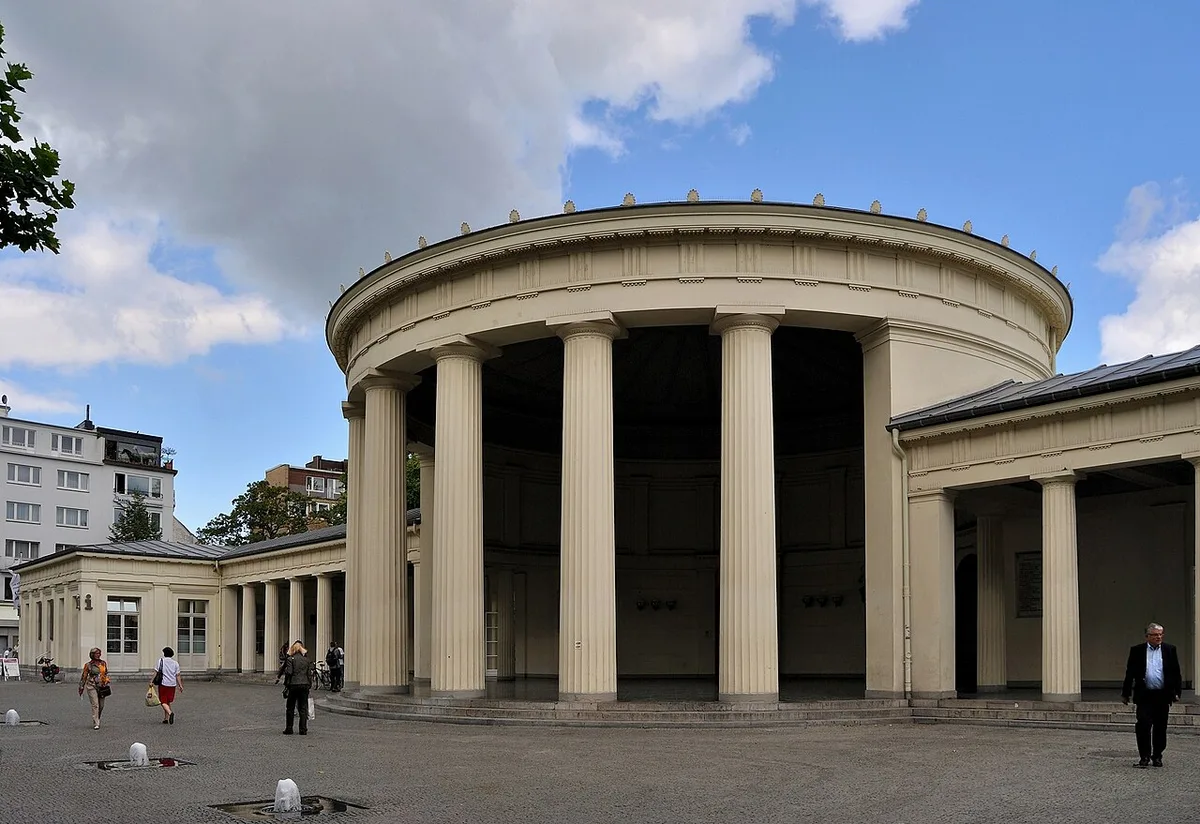
Day 2 is built around what made Aachen a city in the first place: water. The Elisenbrunnen pavilion, originally built in 1827 according to listings, showcases the sulfurous springs that drew visitors long before thermal tourism became a modern industry, and it sits close to the old town, making it an easy first stop. From there the day shifts gradually from the urban core to the green ring of parks and wooded hills that surrounds it.
The spa is the centrepiece. Carolus Thermen is the modern thermal complex in the city, listed by the city's own visitor service among its attractions, and a visit there realistically consumes half a day once you include changing, resting and the post-sauna slow return. Do not stack it against a fixed cathedral tour slot on the same afternoon, because the point of a spa afternoon is that it has no fixed end time. Prices and hours change, so check the operator's own pages rather than relying on older write-ups.
Lousberg is the other half of the day. A recorded walking route describes a roughly 8.4 kilometre loop with about 140 metres of climbing, rated moderately difficult, that starts and ends at a bus stop and takes most walkers a little over two hours. Along the way it passes the columns that locals call Aachen's Acropolis, the remnant of a Belvedere destroyed during the Second World War, and a terrace with hammocks where you can sit and look out over the valley.
Walking the Lousberg is best treated as a suggestion rather than a fixed itinerary. Comfortable shoes matter more here than almost anywhere else on the trip, and the loop is best started with enough daylight left to finish comfortably.
Day 3: Maastricht, Monschau or the Three Country Point
Aachen's real advantage is that three countries meet within a short trip of the city, which is why Day 3 is best spent outside Germany. The three main candidates for a border day trip are Maastricht in the Netherlands, Monschau on the German side of the Belgian border, and the Drielandenpunt where Germany, the Netherlands and Belgium meet, and each one changes the shape of the day rather than just the scenery. A travel blog with local knowledge lists Maastricht and Monschau as reachable by bus in about an hour, and notes that Maastricht is supposed to be a pretty city with cafés, shops and museums.
Choose by trip style rather than by preference for one town. Maastricht gives you a full Dutch city day with cafés, shops and museums, which suits travellers who still want an urban rhythm. Monschau is a small historic town of half-timbered houses, which suits a slower day with a shorter walking radius. The Drielandenpunt is a short cross-border walk with the novelty of standing in three countries at once, which suits an easy day that leaves the evening free back in Aachen.
Each option has a real trade-off. A full town day abroad uses most of your energy and returns you late, while the three-country point is compact and can feel underwhelming if you wanted a substantial destination. Monschau sits between the two, offering a genuine town without the scale of Maastricht. Pick deliberately rather than defaulting to whichever name you have heard most.
If you would rather see less of Aachen but more of the region, this day is the one to keep. If you would rather deepen your understanding of the city, swap it for a second old-town day and add the Centre Charlemagne or the Ludwig Forum, which replaces breadth with depth.
Getting Around: On Foot, by Bus and by Regional Train
The old-town core is genuinely walkable, and the cathedral, treasury, Markt, Rathaus and Elisenbrunnen all sit within a short walking radius of each other. A visitor guide to the cathedral notes that the Hauptbahnhof is southeast of the city, under 20 minutes from the cathedral on foot, or part of the way by bus. For anything on wheels, use the operator's own live tools rather than a printed plan.
ASEAG, the regional transport operator, publishes a journey planner, a departure monitor and live traffic notices on its own site, which is the right place to check before you leave in the morning. Schedules change, lines can be diverted, and short-notice disruptions happen often enough that a plan built a month earlier can go stale. Treat ASEAG's departure board as the source of truth on the day, not a blog post.
For cross-border travel, check the day before rather than trusting a printed schedule. One travel blog explains that Deutschlandticket coverage applies to the regional and regional express trains in its list, but not to the high-speed and long-distance categories, so which ticket you hold changes which journey you can take. Look up the specifics on the operator's own pages rather than relying on a general summary.
Practical Logistics and Where the Fourth Day Tempts You
Three days in Aachen works because the city is compact enough to cover on foot and interesting enough to reward a slower pace. You could stretch it to four days by adding a second border destination or more of the region's villages and countryside, but that trades depth in Aachen for breadth around it. Decide what you want before you book, because both versions are valid and both feel complete on their own terms.
Suggested durations, to be clear, are just that: allow a long morning for the cathedral and treasury together, a full afternoon for the spa or the Lousberg, and a full day for any border trip. None of these is an official visit length, so adjust to your own pace and energy. Build a little slack around the cathedral, because services can shift the hours.
If you are comparing Aachen against larger German cities before committing, it helps to see how the same three-day shape works elsewhere. A 3 days in Berlin itinerary runs on scale and transit, while a 3 Days in Dresden itinerary trades city time for a day in Saxon Switzerland, and both use the same logic you are applying here.
One more practical note: the city tourist office publishes public guided walks, package offers and a visitor info point at the Elisenbrunnen, which is a useful fallback if something upstream in your plan falls through. Its opening hours differ by season, so check the tourist service site directly rather than relying on a printed leaflet.
Plan Your Visit
Three days in Aachen rewards a structured plan more than most city breaks, because the cathedral's opening hours move with its religious calendar and the throne is only reachable on a booked guided tour. Lock the tour slot first, add the treasury as its own block, then build a slower second day around water and hills and a third day outside Germany. Confirm anything time-sensitive directly with the operator on the day.
The single most useful habit for this trip is to check the source that actually operates each site before you go: the cathedral operator for cathedral, treasury and tour hours, ASEAG for transport, and the city tourist service for walks and packages. Between them you have the live answers, and the plan you build around them will hold.
Frequently Asked Questions
Is Aachen Cathedral free to enter?
Yes. The cathedral operator states that admission to the cathedral is free, and that the church is a Roman Catholic place of worship open to everyone, so visitors are asked to respect the sacred nature of the place. The treasury is a separate ticketed collection with its own opening hours, and guided tours of the cathedral are also ticketed, so do not assume one price covers the whole cathedral complex. Photography inside the cathedral is permitted subject to a contribution to the Domschweizer, and tripods, selfie sticks and flash are not allowed. Because cathedral hours can change around services and events, the operator recommends checking the current week's opening hours before you go.
Do you need a guided tour to see Charlemagne's throne and the choir?
Yes. The cathedral operator states that the Choir and the Hochmünster with the imperial throne are only accessible as part of a guided tour, so walking into the cathedral will not bring you to them. English tours are currently offered daily at 2 pm and on request, with German tours running at intervals through the day, and the maximum group size is capped at 25 people. Booking ahead is wise if your dates are fixed, because online purchase is currently only possible up to 12 hours before the visit, though there is an additional contingent at the box office in the Dominformation. Current individual and group tour prices are listed on the cathedral operator's own price list.
Is a border day trip worth one of your three days in Aachen?
For most travellers, yes. Aachen's position near the Belgian and Dutch borders is its defining feature, and a border day is the element that makes three days feel different from two. Maastricht offers a full Dutch city day, Monschau is a smaller historic town with a gentler pace, and the Drielandenpunt is a compact cross-border walk where the three countries meet. A travel blog with local knowledge lists Maastricht and Monschau as reachable by bus in roughly an hour. Which one you pick should depend on how much town time and walking you want, not on which name you happen to have heard most often. If you would rather deepen your Aachen visit, swap the border day for a second old-town day and more museums.
How do you get to Aachen Cathedral from the station?
The cathedral sits in the heart of the old town, and Aachen Hauptbahnhof is southeast of the centre. A visitor guide notes that the station is under 20 minutes from the cathedral on foot, or that you can take a bus part of the way. With luggage that walk feels longer than it looks on a map, so it is worth either staying close to the old town or catching a short bus ride for part of the route. The regional operator publishes a journey planner and departure monitor you can check on the day rather than relying on a pre-printed schedule.
What should you do in Aachen if it rains?
Head for the cathedral and its treasury, which are the two most weather-proof stops in the city and are both in the old town. Once the weather closes in on your planned outdoor day, the Lousberg walk is the first thing to postpone, since its paths and viewpoints are the whole point. The Couven Museum and the city's other indoor spaces also make sensible second options if you have already seen the cathedral complex. Always verify opening hours before setting out, because the Couven Museum publishes short-notice closures and seasonal exceptions on its own site.
Sources
- ASEAG ► Größtes Verkehrsunternehmen im Aachener Verkehrsverbund
- The Easiest Day Trips From Aachen (by Train!) | Tall Girl Big World
- A place to visit - Aachener Dom Aachener Dom - A place to visit
- Visiting Aachen Cathedral in Germany | Jana Meerman
- Home - Couven Museum
- Hammocks at Lousberg Terrace – View of Soers from Lousberg loop from Aachen | túra | Komoot


