

Aachen is a compact city whose historic core can be explored almost entirely on foot. The Elisenbrunnen, the cathedral and the town hall stand within a few minutes of one another, and the main station sits southeast of that centre. One itinerary account suggests the walk from the Hauptbahnhof to the tourist information office takes about ten minutes.
One decision shapes the rest of your planning: whether to base yourself near the station for onward travel, or in the old town for atmosphere. A travel account describes the station as southeast of the centre and under twenty minutes from the cathedral on foot. Treat that as a rough estimate, not an official time.
Why Aachen Rewards Walkers
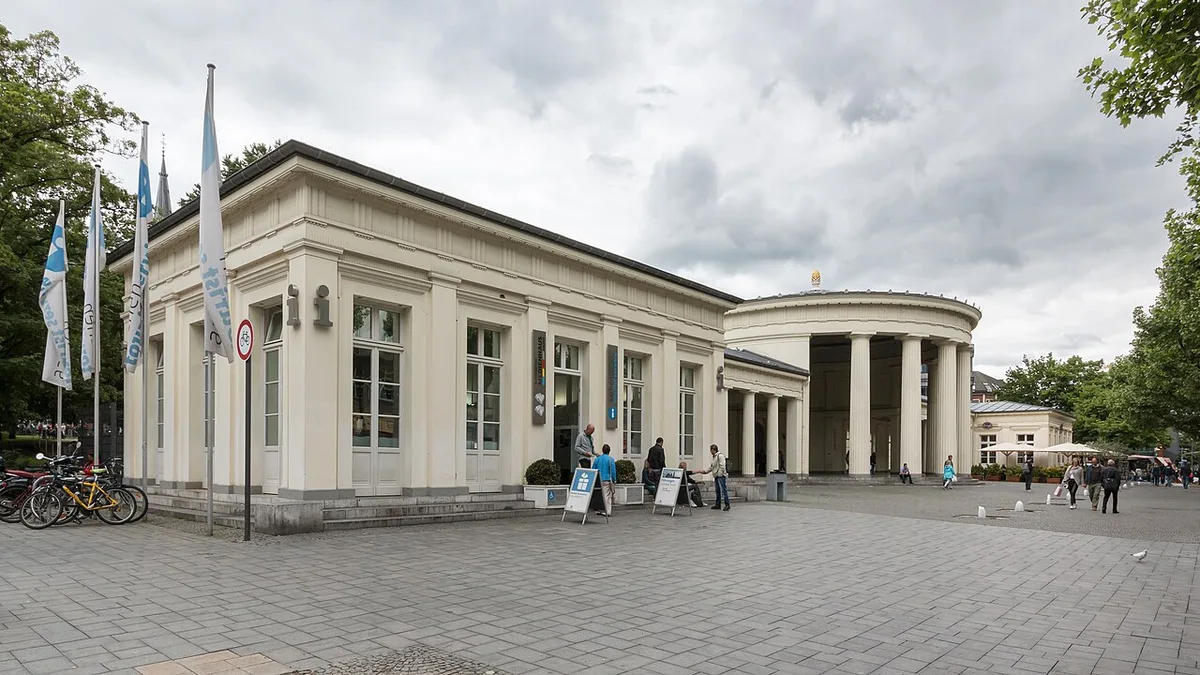
The old town clusters around the cathedral and the Rathaus, with the Elisenbrunnen pavilion and the Elisengarten a short step to the south. Travel writers describe this core as compact and easily walkable, which means you can string together the main sights without a ticket. Plan around the squares rather than a street grid and you will rarely be more than a few minutes from the next stop.
The main station lies southeast of that core, and the walk from the platforms to the cathedral is a well-known approach rather than a hidden one. One travel account puts the Hauptbahnhof at under twenty minutes from the cathedral on foot, and treats that figure as a rough estimate rather than an official time. Treat it as a planning number, then check your own pace. Starting with the cathedral interior is one way to anchor a one day in Aachen itinerary before wandering the surrounding lanes.
Walking also solves the awkward final leg after the thermal baths, though not effortlessly. One long-form itinerary notes that getting from Carolus Thermen back to the central station takes about half an hour on foot and suggests a quick bus ride instead. That single stretch is the strongest argument for buying a short ticket rather than committing to a walking-only day. Everything between the station, Elisenbrunnen and the cathedral remains comfortably on foot.
Arriving at Aachen Hauptbahnhof
Aachen Hauptbahnhof is the city's rail gateway and the natural first stop for anyone continuing by bus. The station area has food and a bakery, which matters if you arrive before the centre's shops open. From the main exit the old town sits in one general direction rather than a maze. One itinerary account notes the station is southeast of the centre, with the tourist information office roughly a ten-minute walk from the platforms. Further visitor details appear in 1 Day in Aachen: The Top Things to Do & See on a Day Trip | Tall Girl Big World.
Buses link the station with the centre and with districts further out, so travellers who want to skip part of the walk can ride instead. One travel account names bus lines 11, 21 and 51 as options covering part of the route toward the cathedral area, and describes the station as southeast of the centre. Use those numbers as a starting point for timetable searches rather than as a guaranteed current route set, and confirm them with the operator before relying on them.
The station is also the launch point for longer trips, including coach connections to cities further afield. Because rail and coach departures change with the season, check the operators directly rather than trusting a printed plan. A station-side hotel keeps early departures low-stress if your itinerary leans on day trips.
Walking the Old Town: Elisenbrunnen to the Cathedral to the Rathaus
A sensible walking axis starts at the Elisenbrunnen, the neoclassical pavilion built to frame Aachen's thermal springs, which also houses the tourist information office. From there the Elisengarten holds a free archaeological window where you look down at excavated foundations, a small detour that costs nothing. Continuing north brings you to the cathedral and then the Katschhof and Rathaus, so the whole spine is a near-continuous stroll.
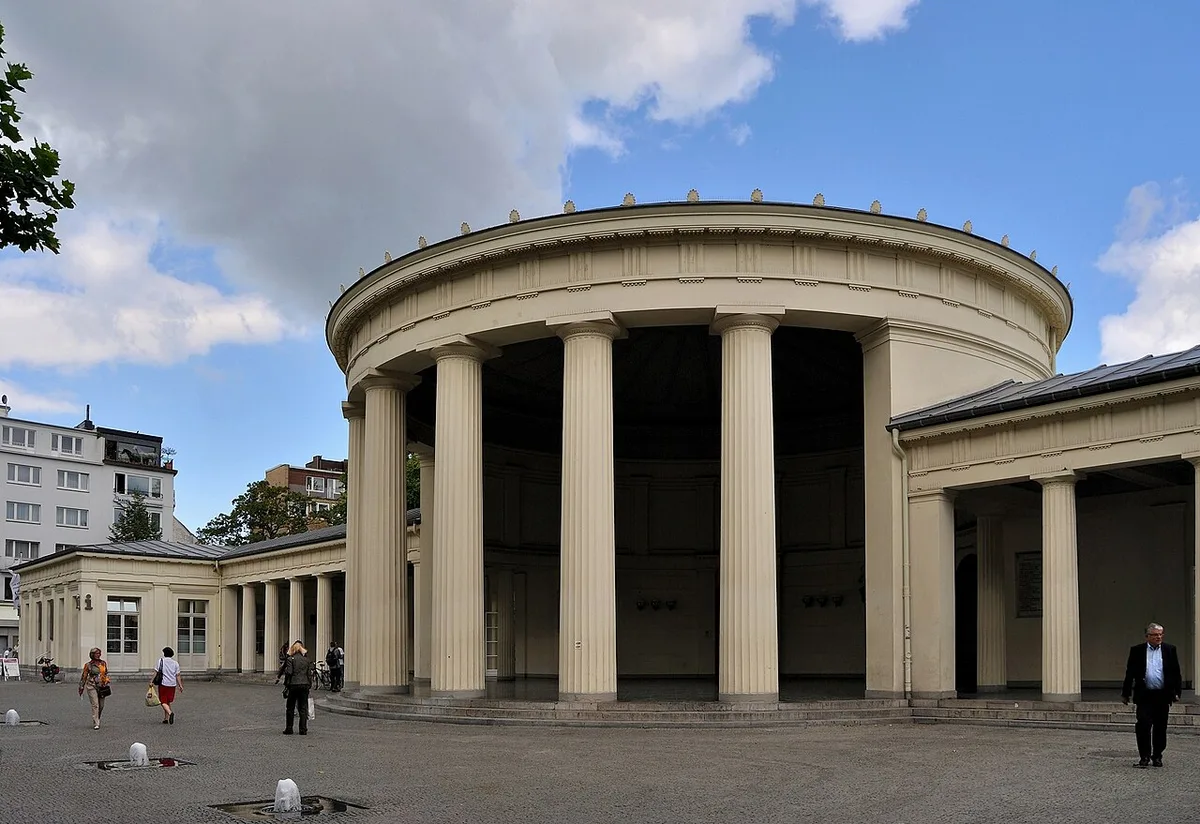
Aachen Tourismus lists the cathedral, the Rathaus, the Elisenbrunnen, the Centre Charlemagne and the Domschatzkammer among its featured places, which confirms the geography visitors actually use. Because these sit within a few minutes of each other, you can split the day between free ground-level sightseeing and paid interiors without much transport planning. Keep in mind that entering a square is not the same as entering a collection.
Where the pedestrian core ends, the city becomes more ordinary and bus-and-car oriented, which is the point at which a ride makes sense. Frankenberger Park, for instance, sits further out along Bismarckstraße, and the walking route from the Hauptbahnhof is described as roughly a kilometre and a half straight along that road. If a park or an outlying district is on your list, plan one bus leg rather than extending the old-town walk indefinitely.
Using the ASEAG Bus Network
ASEAG runs the local bus network, and its website is the authoritative place to read routes, stops and fare rules for the city. Rather than memorising line numbers from a blog, use the operator's own journey planner and stop lists, which reflect current service and diversions. This approach also protects you from outdated information, since bus corridors shift with construction and school terms.
Fares in German city networks are usually organised by zone or by short-trip categories, and the exact price depends on the ticket type and the area you cross. Because the operator's site is the only reliable source for current pricing, buy through ASEAG machines, the driver where permitted, or the official app, and check the ticket scope before boarding. Do not assume a single ticket covers a cross-border leg, since validity rules are a separate question from the urban fare.
Named stops are a better mental model than line numbers. Elisenbrunnen, Hauptbahnhof and the Vaals bus station all appear as scheduled stops on the sightseeing route published by its operator, which shows how the city's bus geography is anchored to identifiable places. Learn those three anchors and you can read almost any local route diagram without memorising the network. If you need the broader picture of an Aachen visit, the city hub collects the landmark guides.
The Hop-On Hop-Off Sightseeing Bus
Aachen has a double-decker city tour that works as orientation rather than as a hop-on shuttle for the old town. Its operator describes a roughly two-hour round trip with fifteen stops where you may leave the bus and rejoin a later departure, and the route reaches the thermal baths, the Tivoli area, the university hospital and over the border into Vaals. That makes it useful on a first afternoon when you want the geography of the whole city before committing to specific sights.
The same published page gives operational detail that you should confirm rather than assume, including a seasonal window, a reduced winter timetable, and a stop currently suspended because of a construction site. It also states that boarding begins at the Elisenbrunnen stop, which links the tour to the tourist information office. Because these specifics change, check the operator's page close to your travel date instead of relying on any printed summary.
Ticketing for the tour is separate from the ASEAG city network, and the operator publishes its own price categories and validity period. Treat any figure you see secondhand as historical and verify the current adult, child and group rates with the operator, especially if you plan to leave the bus and reboard. If your priority is the cathedral and old town, the tour adds breadth but not access, since those sights are already a short walk apart.
Cross-Border Trips: Vaals and the Dreiländerpunkt
The three-country point where Germany, the Netherlands and Belgium meet lies southwest of the city, and the sightseeing bus route includes both the Vaals bus station and a stop at the Dreiländerpunkt with a photo break. That combination makes Vaals the practical hinge: it is a Dutch town with its own bus station and shops, and the border monument is a short onward hop. Visits to the observation towers, labyrinth and surrounding attractions are separate, ticketed decisions rather than part of getting there.
Ticket validity across the border is the piece most travellers get wrong, and it is worth checking twice. Whether your ASEAG ticket, a regional ticket or a Dutch operator's fare applies depends on the zone system in force, and the operators are the only places that state this reliably. Ask before boarding or buy the appropriate cross-border product, then keep the ticket with you. A broader overview of cross-border excursions belongs with day trips from Aachen.
Plan the return leg before you set out, since services thin out in the evening and improvising a taxi at dusk is unappealing. The walking route to the border crossing is easy once you reach the area, and route planners confirm public transport stops at both ends. That said, timetables across borders change, so verify the last convenient departure with the operator on the day.
Choosing a Day-Trip Base
Staying near the Hauptbahnhof is the pragmatic choice if your trip mixes Aachen with Cologne, Düsseldorf, Liège or Maastricht, because you walk to your platform rather than crossing town with a suitcase. Staying in the old town trades that convenience for atmosphere, putting the cathedral, squares and evening restaurants on your doorstep. Neither is wrong; the deciding factor is how many of your days involve a train.
If you have two days rather than one, the balance shifts toward the centre, because you spend more time walking and less time transiting. A two-day structure lets you give the first morning to the cathedral and treasury and keep the second for outlying sights or a border excursion. Building in one bus-dependent outing per day is a reasonable compromise between ambition and energy.
Practical Pitfalls to Plan Around
Sunday and Monday are the two days that most often disrupt a transport-light plan. One detailed city itinerary warns that most stores close on Sundays and some museums close on Mondays, and advises booking thermal bath passes in advance and packing a swimsuit. Those closures change your day's shape more than any bus timetable, because a closed museum turns a walking morning into a shopping-and-cafes morning.
For the cathedral specifically, entry to the building and access to the treasury are separate matters, and visitor guidance has historically distinguished the two. The interior is generally free to enter, while the treasury carries its own entrance fee, so treat any specific figure you read as indicative and confirm current conditions with the cathedral before planning around them. The imperial throne has also been described as viewable only on a paid tour rather than on general admission.
The thermal baths sit toward Burtscheid, which is the one routine journey where the walk back to the station becomes a genuine consideration. If you are ending a long day there, check the last convenient bus departure rather than assuming you will want the walk. Building that leg into your plan is the difference between a relaxed evening and a rushed one.
Plan Your Visit
Aachen works best when you treat walking as the default and buses as the exception: arrive at the Hauptbahnhof, walk into the old town, and use a ticket only for the thermal baths, an outlying park or the cross-border trip. Confirm fares, timetables and ticket validity with ASEAG and the tourism office before you travel, since those are the details most likely to have changed.
Two days is enough to see the cathedral, walk the Elisenbrunnen-to-Rathaus axis and still reach Vaals and the three-country point. If you only have one day, keep the plan inside the old town and save the border trip for a return visit. Check the tourist office for current guided walks and any local service changes before you finalise your route.
Frequently Asked Questions
Is Aachen easy to get around without a car?
Yes, for the centre. The old town around the cathedral, Elisenbrunnen and Rathaus is compact and walkable, and the main station is a reasonable walk from that core. You only really need a bus for the thermal baths, outlying districts and cross-border trips, so a car is more of a parking liability than a convenience.
How far is Aachen Cathedral from the main train station?
It is a walkable distance rather than a transport journey, and travel accounts describe it as under about twenty minutes on foot. Treat that as an estimate rather than an official figure and check your own route on arrival, since station exits and pedestrian crossings affect the walk. Buses covering part of the way are also available if you prefer to ride.
Do I need a bus ticket to see Aachen's old town?
No. The cathedral, Rathaus, Katschhof, Elisenbrunnen and the surrounding shopping streets sit within a small area you can cover entirely on foot. A ticket only becomes useful if you add the thermal baths, a park or an outlying district, or if you want to take the sightseeing bus for orientation.
How do I get to the Dreiländerpunkt from Aachen?
The most straightforward option is to reach Vaals, the Dutch border town with its own bus station, and continue from there to the three-country point. The sightseeing bus route includes both Vaals and a stop at the Dreiländerpunkt, but you should verify current timetables and ticket validity with the operators, since cross-border rules and schedules change.
Is there a hop-on hop-off bus in Aachen?
Yes. A double-decker city tour runs a round trip with multiple stops where passengers can leave and rejoin a later departure, and the route reaches the thermal baths, the campus area, Vaals and the three-country point. The operator publishes the season, timetable and fare categories, so confirm those details shortly before your visit.


